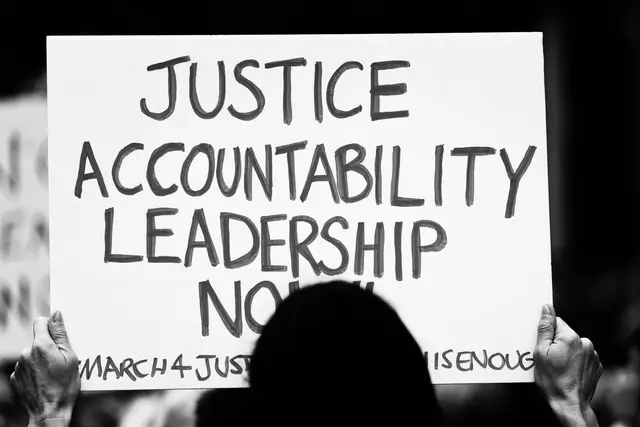



US sanctions on the ICC may impair more than the Court’s ability to exercise its jurisdiction; they challenge the Court’s effectiveness, institutional capacity and the future of international criminal justice.
The ICC Under External Pressure
The growing confrontation between the United States and the International Criminal Court (ICC) has now entered a new phase. On 13 July 2026, Reuters reported that the Trump administration was pursuing a broader effort to diplomatically and economically isolate the ICC, including possible additional sanctions and pressure on States Parties to withdraw from the Rome Statute (Holland et al., 2026). The International Federation for Human Rights (FIDH) subsequently characterised the effort as a campaign to dismantle the Court (International Federation for Human Rights [FIDH], 2026). The reported measures could threaten the operational ability of the world’s only permanent international criminal court.
This is not the first time the United States has confronted the ICC. Executive Order 14203, signed by President Donald Trump in February 2025, created a sanctions framework targeting individuals involved in specified ICC investigations concerning the United States and its allies (The White House, 2025). The US administration argued that the Court had exceeded its jurisdiction by launching “preliminary investigations” concerning US personnel and, on 21 November 2024, issuing arrest warrants for Israeli Prime Minister Benjamin Netanyahu and former Israeli Minister of Defence Yoav Gallant (International Criminal Court [ICC], 2024). Since neither the United States nor Israel is a party to the Rome Statute, the US administration has argued that the ICC lacks jurisdiction over US and Israeli nationals without their consent (The White House, 2025).
Nevertheless, the disagreement underlying this dispute reveals an issue beyond jurisdiction. Unlike a national court embedded within a domestic enforcement system, the ICC has no police force of its own and depends heavily on States and other actors for evidence, witness protection, arrest and surrender. Article 86 of the Rome Statute requires States Parties to cooperate fully with the Court, while Article 87(5) separately permits the Court to invite cooperation from non-party States (ICC, 1998, arts. 86, 87(5)). Sanctions may therefore leave the Court’s formal jurisdiction unchanged while making the cooperation required to exercise that jurisdiction more difficult to secure. This raises a broader question for international law: can international justice be undermined through persistent political and economic pressure from major powers even where the Court’s legal jurisdiction remains unchanged?
Evolution of US Sanctions Against the ICC
The Rome Statute, adopted on 17 July 1998 and in force since 1 July 2002, establishes the jurisdiction of the Court over genocide, crimes against humanity, war crimes and the crime of aggression (ICC, 1998, art. 5). Under Article 12, the Court may exercise jurisdiction where the relevant territorial or nationality conditions are satisfied, while Article 13 provides the mechanisms through which a situation may be brought before the Court. The United States was one of seven countries that voted against the Rome Statute, despite being involved in negotiations for its establishment. Although the Clinton administration signed the Statute, the United States later notified the UN Secretary-General on 6 May 2002 that it did not intend to become a party and considered itself to have no legal obligations arising from its signature (U.S. Department of State, 2002).
Despite initial opposition, the relationship between the United States and the ICC softened during George W. Bush’s second term. In 2005, the United States abstained from United Nations Security Council Resolution 1593, which referred the situation in Darfur to the ICC. This demonstrated a degree of willingness to support the Court’s work despite the United States’ non-party status (United Nations Security Council, 2005).
Relations deteriorated again under the first Trump administration, with National Security Adviser John Bolton announcing in 2018 that the United States would neither recognise nor provide assistance to the ICC (Trump White House Archives, 2018). This confrontation culminated in Executive Order 13928 in 2020, which authorised sanctions against certain ICC officials and other persons (Trump White House Archives, 2020). Although the Biden administration revoked the sanctions and visa restrictions in 2021 (U.S. Department of State, 2021), Donald Trump’s return to office brought a renewed and expanded sanctions policy through Executive Order 14203 in February 2025 (The White House, 2025).
Executive Order 14203 established a targeted sanctions framework rather than an automatic prohibition on all cooperation with the ICC. It blocks property and interests in property of designated persons within US jurisdiction or the possession or control of US persons, prohibits specified dealings involving them, authorises further designations for certain ICC-related activities or material support, and imposes entry restrictions (The White House, 2025). The framework has continued to expand. On 18 August 2026, the Office of Foreign Assets Control (OFAC) added Tomoko Akane and Abdoulaye Seye to the Specially Designated Nationals List and issued General License 12, authorising a limited wind-down of transactions involving them through 17 September 2026 (Office of Foreign Assets Control [OFAC], 2026a, 2026b).
Legal Basis of Dispute
The dispute between the United States and the ICC is closely connected to the scope of the ICC’s jurisdiction over the situation in Palestine. Understanding the legal basis of this jurisdiction is therefore crucial to assessing the US objection to the Court. On 31 December 2014, Palestine lodged a declaration under Article 12(3) of the Rome Statute accepting the Court’s jurisdiction over alleged crimes committed in the occupied Palestinian territory, including East Jerusalem, since 13 June 2014. Palestine acceded to the Rome Statute on 2 January 2015, and the Statute entered into force for the State of Palestine on 1 April 2015. On 22 May 2018, Palestine referred the situation to the Prosecutor under Articles 13(a) and 14 of the Rome Statute (ICC, 2025a, paras. 4–7; United Nations Treaty Collection, n.d.).
The jurisdictional framework of the ICC is primarily established by Article 12 of the Rome Statute, which recognises both territorial and nationality jurisdiction. Under Article 12(2)(a), the Court may exercise jurisdiction where the conduct in question occurred on the territory of a State Party or a State that has accepted the Court’s jurisdiction. Under Article 12(2)(b), jurisdiction may also arise where the accused is a national of a State Party or a State that has accepted the Court’s jurisdiction. Article 12(3) further allows a non-party State to accept the exercise of jurisdiction by the Court on an ad hoc basis. These provisions do not create a general rule excluding nationals of non-party States, but instead establish the relevant preconditions for exercising the Court’s jurisdiction (ICC, 1998, art. 12).
The US objection also engages the pacta tertiis principle reflected in Article 34 of the Vienna Convention on the Law of Treaties, under which a treaty does not create rights or obligations for a third State without its consent. On that basis, critics argue that States Parties cannot use the Rome Statute to confer jurisdiction over nationals of non-party States. The competing position is that Article 12(2)(a) does not impose a treaty obligation on the non-party State. Instead, it permits the ICC to exercise jurisdiction over conduct occurring on the territory of a State Party, which would itself ordinarily possess territorial criminal jurisdiction over foreign nationals. Non-party status therefore bears differently on jurisdiction over an individual and on the treaty obligations of that individual’s State of nationality (ICC, 1998, art. 12; Vienna Convention on the Law of Treaties, 1969, art. 34).
Article 13 contains the mechanisms through which a situation may be brought before the Court. Article 13(a) allows a referral by a State Party, Article 13(b) a referral by the United Nations Security Council, and Article 13(c), read in conjunction with Article 15, allows the Prosecutor to initiate an investigation proprio motu, subject to the requirements of the Statute. In the situation in Palestine, the proceedings were triggered through a referral by Palestine as a State Party under Article 13(a), rather than through a Security Council referral (ICC, 1998, arts. 13–15).
On 5 February 2021, Pre-Trial Chamber I determined that the Court’s territorial jurisdiction extends to Gaza and the West Bank, including East Jerusalem. On 21 November 2024, the Chamber rejected Israel’s challenges at that stage and issued arrest warrants for Benjamin Netanyahu and Yoav Gallant. The procedural position later developed. On 24 April 2025, the Appeals Chamber reversed the ruling concerning Israel’s Article 19 jurisdictional challenge and remanded the matter for a decision on its substance; its judgment did not suspend the arrest warrants. On 16 July 2025, Pre-Trial Chamber I refused to withdraw or vacate the warrants or suspend the Prosecutor’s investigation. Israel’s non-party status therefore did not, by itself, prevent the Court from issuing or maintaining the warrants, but jurisdiction over alleged conduct and the treaty-based obligations of a non-party State remain distinct legal questions (ICC, 2021, 2024, 2025a, 2025b).
The US objection to the exercise of ICC jurisdiction over nationals of non-party States is not entirely new. It also arose concerning alleged crimes involving, among others, CIA personnel and members of the US armed forces in the situation in Afghanistan. In March 2020, the Appeals Chamber authorised the Prosecutor to proceed with the investigation. This illustrates the broader US objection to the Court exercising jurisdiction over US nationals despite the United States not being a party to the Rome Statute (ICC, 2020).
This disagreement over the interpretation of the Rome Statute forms the legal basis of the current dispute. In light of it, the United States introduced sanctions targeting the Court, asserting that they are necessary to protect its sovereignty and that of its allies.
Implications for International Justice
The effects of the sanctions may extend beyond the individuals formally designated. Where sanctions disrupt financial services, technology, contracting, evidence collection or cooperation, they may also affect investigations, defence representation, victims’ participation and the Court’s broader ability to administer proceedings. These consequences should be distinguished from the Court’s jurisdiction itself: sanctions do not amend the Rome Statute, but they may impair the practical exercise of the mandate created by it.
The ICC operates according to the principle of complementarity. Under Article 17 of the Rome Statute, a case is generally inadmissible where a State with jurisdiction is genuinely investigating or prosecuting it; the Court intervenes where relevant national proceedings are absent or the State is unwilling or unable genuinely to carry them out (ICC, 1998, art. 17). As of 4 September 2026, the Rome Statute has 125 States Parties, although several States have deposited withdrawal notifications scheduled to take effect in 2027. That number should not be equated with uniform political support. The Court nevertheless remains an institution created and sustained through the treaty commitments of its States Parties (United Nations Treaty Collection, n.d.).
Measures that increase the risk of cooperating with the ICC may also discourage banks, governments, NGOs or private actors from supporting the Court’s work. These effects were visible following the 2020 US sanctions, when financial institutions and other service providers reportedly reevaluated their relationships with the ICC to avoid violating US sanctions (Human Rights Watch, 2020). Similar effects appeared following the 2025 sanctions, when the Court began seeking alternative providers to reduce its exposure and firms started restricting access to banking, financial and technology services (Reed, 2026). These developments show how sanctions may not directly interfere with the ICC’s jurisdiction, but can impair its practical capacity to exercise that jurisdiction effectively.
Separately, the sanctions may raise concerns regarding judicial independence. The Court’s independence depends on judges and other officials being able to perform their functions without external political or economic pressure. When they are threatened with sanctions in response to their involvement with the Court, its institutional independence may be undermined. This is distinct from the operational difficulties arising from restrictions on services or cooperation and raises separate concerns about the Court’s ability to perform its mandate without external interference.
For this reason, FIDH urges States Parties to reject pressure to withdraw from the Rome Statute, mitigate the effects of the US sanctions, and reinforce political and financial support for the Court. It also calls on States to protect ICC officials, victims, witnesses and civil society organisations from sanctions and to work through international organisations to defend the independence of international justice (FIDH, 2026).
Looking Forward: From Pressure to Resilience
Public expressions of support from States Parties and regional organisations remain important, but statements alone do not resolve the practical problems created by the US sanctions. Addressing those problems requires both immediate continuity measures and longer-term institutional resilience.
In the short term, States Parties should focus on preserving the Court’s day-to-day access to banking, payment services, technology providers and financial resources. Possible measures include protected or alternative payment channels, emergency host-State arrangements, contingency funding and national licences or legal protections for service providers cooperating with the Court. States should also safeguard continued support for ICC officials, counsel, witnesses, victims’ representatives and civil society organisations. In the longer term, a coordinated framework among States Parties could provide a more predictable collective response to future political or economic pressure on international judicial institutions.
States Parties must also focus on ensuring that the ICC is less vulnerable to external pressure. Several States, including Belgium, have suggested using the EU Blocking Statute as a potential tool to protect European actors from the effects of US sanctions (de Kruijf, 2025). The Blocking Statute is designed to counter the harmful extraterritorial effects of specified foreign laws and economic sanctions (European Commission, n.d.; European Union, 1996). Its current Annex includes specified US measures concerning Cuba and Iran, but not the US sanctions against the ICC. Applying it to ICC-related sanctions would therefore require an amendment to the Annex. Even then, it would not provide complete protection from US sanctions. Instead, it would prohibit EU operators from complying with the listed foreign measures, deny effect to certain foreign judgments, and allow the recovery of damages resulting from their application. Its use could therefore create competing EU and US legal pressures rather than eliminate sanctions exposure entirely (European Commission, n.d.).
Beyond Jurisdiction: Preserving the ICC’s Effectiveness
The current challenges posed by US sanctions on the ICC extend beyond a dispute over the Court’s jurisdiction. They show how political and economic pressure may be used as a tool for undermining international organisations without altering their legal authority. Rather than existing in isolation, the sanctions may be seen as the outcome of deliberate policy choices and political preferences.
The response of States Parties to this conflict will be decisive for the long-term impact of these measures on international law. Although political support remains essential to reaffirming the Court’s legitimacy, practical measures must also be used to protect its independence. If States Parties remain silent, this may raise concerns about whether they are willing to defend an institution they collectively created.
In the long run, the future of this dispute will depend heavily on how States Parties respond and whether they are prepared to establish a united front in protecting the Court and the system of international criminal justice it represents. Their response will provide a clearer indication of whether the international community is willing to defend the ICC despite persistent political pressure from one of the world’s most powerful States.
References
de Kruijf, L. (2025, February 27). Could the EU “Blocking Statute” protect the ICC from US sanctions? Atlantic Council. https://www.atlanticcouncil.org/blogs/econographics/could-the-eu-blocking-statute-protect-the-icc-from-us-sanctions/
European Commission. (n.d.). Extraterritoriality (blocking statute). Retrieved September 4, 2026, from https://finance.ec.europa.eu/eu-and-world/open-strategic-autonomy/extraterritoriality-blocking-statute_en
European Union. (1996). Council Regulation (EC) No 2271/96 of 22 November 1996 protecting against the effects of the extraterritorial application of legislation adopted by a third country. Official Journal of the European Communities. https://eur-lex.europa.eu/legal-content/EN/TXT/?uri=CELEX:01996R2271-20180807
Holland, S., Lewis, S., & van den Berg, S. (2026, July 13). Trump administration launches effort to isolate International Criminal Court. Reuters. https://www.reuters.com/world/trump-administration-launches-effort-isolate-international-criminal-court-2026-07-13/
Human Rights Watch. (2020, December 14). US sanctions on the International Criminal Court. https://www.hrw.org/news/2020/12/14/us-sanctions-international-criminal-court
International Criminal Court. (1998). Rome Statute of the International Criminal Court. https://www.icc-cpi.int/sites/default/files/RS-Eng.pdf
International Criminal Court. (2020, March 5). Judgment on the appeal against the decision on the authorisation of an investigation into the situation in the Islamic Republic of Afghanistan (ICC-02/17 OA4). https://www.icc-cpi.int/sites/default/files/CourtRecords/CR2020_00828.PDF
International Criminal Court. (2021, February 5). Decision on the “Prosecution request pursuant to article 19(3) for a ruling on the Court’s territorial jurisdiction in Palestine” (ICC-01/18-143). https://www.icc-cpi.int/court-record/icc-01/18-143
International Criminal Court. (2024, November 21). Situation in the State of Palestine: ICC Pre-Trial Chamber I rejects the State of Israel’s challenges to jurisdiction and issues warrants of arrest for Benjamin Netanyahu and Yoav Gallant. https://www.icc-cpi.int/news/situation-state-palestine-icc-pre-trial-chamber-i-rejects-state-israels-challenges
International Criminal Court. (2025a, April 24). Judgment on the appeal of the State of Israel against Pre-Trial Chamber I’s “Decision on Israel’s challenge to the jurisdiction of the Court pursuant to article 19(2) of the Rome Statute” (ICC-01/18-422). https://www.icc-cpi.int/court-record/icc-01/18-422
International Criminal Court. (2025b, July 16). Decision on the State of Israel’s request to have arrest warrants withdrawn, vacated, or declared of no force or effect and to suspend the Prosecutor’s investigation (ICC-01/18-457). https://www.icc-cpi.int/court-record/icc-01/18-457
International Federation for Human Rights. (2026, July 20). Campaign to dismantle the Court shows why international justice—and those who defend it—must be protected. https://www.fidh.org/en/issues/international-justice/international-criminal-court-icc/united-states-escalates-attack-on-the-icc
Office of Foreign Assets Control. (2026a, August 18). International Criminal Court-related designations; Venezuela-related designation; issuance of International Criminal Court-related general license. U.S. Department of the Treasury. https://ofac.treasury.gov/recent-actions/20260818
Office of Foreign Assets Control. (2026b, August 18). General License No. 12: Authorizing the wind down of transactions involving certain persons blocked on August 18, 2026. U.S. Department of the Treasury. https://ofac.treasury.gov/media/936716/download?inline
Reed, K. (2026). Sanctioned justice: State (non)responses to US sanctions against the ICC. Journal of International Criminal Justice, 24(1), 39–46. https://doi.org/10.1093/jicj/mqag037
Trump White House Archives. (2018, September 10). Protecting American constitutionalism and sovereignty from the International Criminal Court. https://trumpwhitehouse.archives.gov/briefings-statements/protecting-american-constitutionalism-sovereignty-international-criminal-court/
Trump White House Archives. (2020, June 11). Executive order on blocking property of certain persons associated with the International Criminal Court. https://trumpwhitehouse.archives.gov/presidential-actions/executive-order-blocking-property-certain-persons-associated-international-criminal-court/
United Nations Security Council. (2005, March 31). Resolution 1593 (2005) (S/RES/1593). https://docs.un.org/en/S/RES/1593%282005%29
United Nations Treaty Collection. (n.d.). Rome Statute of the International Criminal Court. Retrieved September 4, 2026, from https://treaties.un.org/pages/ViewDetails.aspx?src=TREATY&mtdsg_no=XVIII-10&chapter=18&clang=_en
U.S. Department of State. (2002, May 6). United States and the International Criminal Court. https://2001-2009.state.gov/r/pa/prs/ps/2002/9968.htm
U.S. Department of State. (2021, April 2). Ending sanctions and visa restrictions against personnel of the International Criminal Court. https://2021-2025.state.gov/ending-sanctions-and-visa-restrictions-against-personnel-of-the-international-criminal-court/
Vienna Convention on the Law of Treaties, 23 May 1969, 1155 U.N.T.S. 331. https://legal.un.org/ilc/texts/instruments/english/conventions/1_1_1969.pdf
The White House. (2025, February 6). Imposing sanctions on the International Criminal Court. https://www.whitehouse.gov/presidential-actions/2025/02/imposing-sanctions-on-the-international-criminal-court/