
Everything you need to know
The EPIS Guideline, our publishing and peer review standards, frequently asked questions, press recognition, the EPIS Award, and downloadable resources — all in one place.
The EPIS Guideline
The EPIS Guideline is a comprehensive resource ensuring consistency and clarity across all of our work — from organisational structure to publication standards. It is publicly available and updated regularly.
Organisational Structure
A clear overview of all EPIS branches, groups, and leadership roles — helping Fellows understand where they fit within the broader EPIS ecosystem.
Publication Style Guide
Detailed formatting standards for all EPIS publications — including citation style, heading hierarchy, abstract requirements, and word count guidelines by format.
Writing Best Practices
Editorial guidance on argumentation, evidence use, policy analysis methodology, and the standards expected of professional-quality research publications.
Quality Standards
The rigour and professionalism that underpin all EPIS work, including peer-review processes, editorial oversight, and the criteria for publication approval.
Open the EPIS Guideline
The complete Guideline as a PDF — organisational structure, publication standards, and the criteria every EPIS publication is held to.
Publishing and Peer Review Policy
The EPIS Publishing and Peer Review Policy sets high professional standards for all think tank publications to ensure scientific diligence, academic fairness, and editorial integrity aligned with COPE international standards.
Overview of Core Principles and Measures
Responsibilities of the Stakeholders
Defines explicit standards for authors (rigorous contribution, transparency, conflict disclosure), peer reviewers (objective, confidential, unbiased evaluations), and the editorial team (independent, fair, and procedural governance).
Forms of Scientific Misconduct
Prohibits unethical practices including plagiarism (and self-plagiarism), data fabrication and falsification, redundant or simultaneous submissions, and authorship disputes.
Handling Violations and Suspected Cases
Outlines standardised, COPE-aligned investigation processes and escalation measures ranging from formal errata and expressions of concern to permanent article retractions for severe misconduct.
Frequently Asked Questions
Q01What does EPIS stand for?
EPIS takes its name from the ancient Greek word epistḗmē — meaning insight, knowledge, ability, and science. The name reflects the organisation's mission: to bring rigorous, evidence-based analysis to the European policy debate.
Q02What exactly does EPIS do?
EPIS is one of Europe's largest student-organised think tanks. It operates four branches: the EPIS Network (community and delegations), the Thinktank FASP (foreign affairs and security policy research), the Thinktank GETS (global economics and trade strategy), and the EPIS Consultancy (invitation-only advisory work). Together, these branches give Fellows structured pathways into the world of policy — from publishing research to attending high-level conferences.
Q03Who can join EPIS?
EPIS is open to students and recent graduates from any discipline. No prior policy experience is required. Network membership is open to anyone; Thinktank membership requires a short application including a CV and cover letter. The self-assessment tool on the Fellowship page helps identify which branch and group best fits your profile.
Q04How does EPIS work on a day-to-day basis?
EPIS operates through structured groups — Working Groups, Report Groups, and Format Groups — each led by a Resort Leader. Communication is primarily asynchronous and structured, with monthly check-ins led by group leaders. EPIS is built for the realities of student life: flexible, remote-first, and designed to fit around your academic commitments.
Q05What is the difference between the Network and the Thinktank?
The Network is EPIS's open membership tier — no mandatory research obligations, but full access to events, delegations, the internship marketplace, and the EPIS community. The Thinktank is the research tier: Fellows join a Working or Report Group and contribute to published outputs. Both are valuable; the right choice depends on your time and ambitions.
Q06Does EPIS take political positions?
No. EPIS is politically, economically, and ideologically independent. Publications reflect the views of their individual authors and are peer-reviewed; they do not represent an institutional position. This independence is fundamental to EPIS's credibility as a think tank.
Q07What is the EPIS Consultancy?
The EPIS Consultancy offers invitation-only Associate Fellow positions for specialists in foreign and security policy. It provides strategic consulting for organisations navigating complex geopolitical and regulatory environments, drawing on the expertise of experienced Thinktank Fellows.
Q08How do I contact EPIS?
External enquiries — from potential partners, media, or institutions — are handled by the Director for External Affairs. Fellow suggestions and internal matters are addressed through Internal Affairs. Use the contact page to reach the relevant department.
EPIS in Press
Where EPIS and its Fellows have been written about, quoted, or published outside our own channels.

Why NATO must not neglect its young talent
Read the piece ↗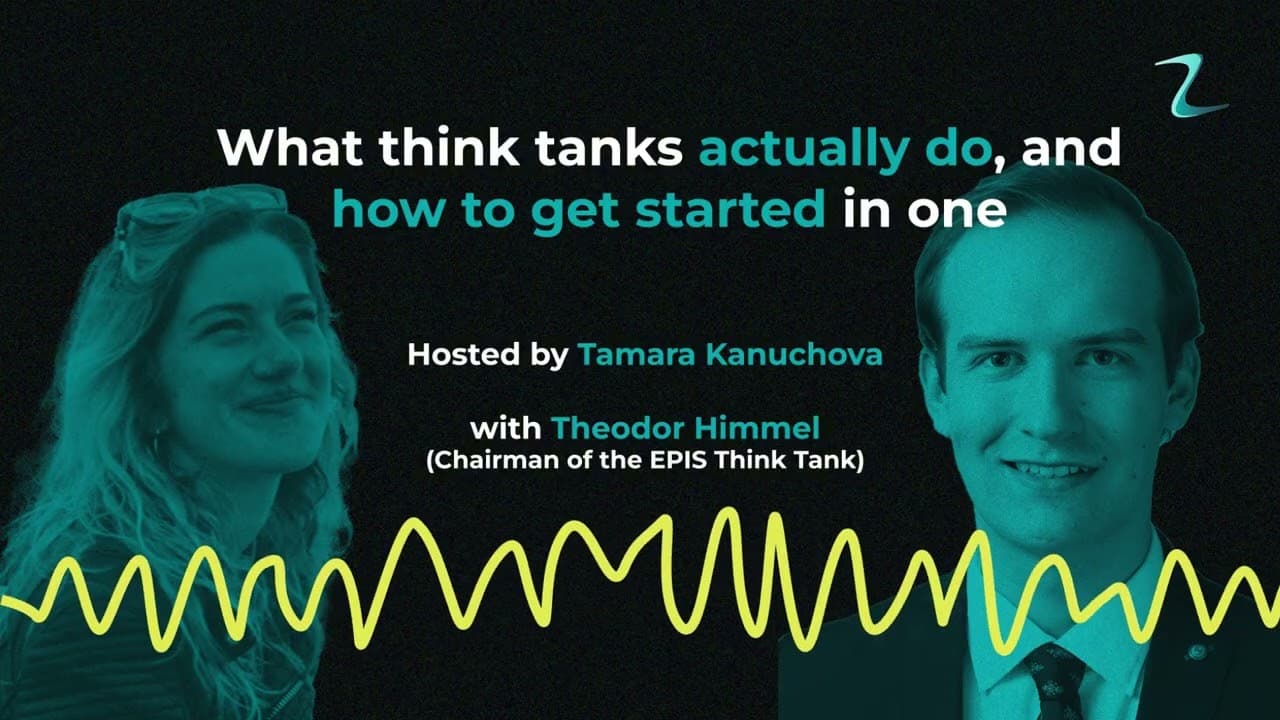
Theodor Himmel from EPIS think-tank: On what think-tanks actually do, and how to get started in one
Read the piece ↗ Photo: CIDAN
A Special Commendation to the EPIS Thinktank at the European Award for Citizenship, Security and Defence
Read the piece ↗The EPIS Award
The EPIS Award is given annually for EPIS Publications. At the end of each year, all publications are put to a vote across three categories, each endowed with a small financial compensation.
EPIS Magazine & Report Articles
Academic articles and in-depth reports published in the EPIS Magazine or through the EPIS Report Groups, assessed on research quality, analysis depth, and academic rigour.
EPIS Blog
Shorter analytical pieces published on the EPIS Blog, assessed on clarity of argument, topicality, and the quality of policy insight.
EPIS Working Groups
Outputs produced through the EPIS Working Groups — policy briefs, research papers, and group analyses — assessed on collaborative quality and practical relevance.
How publications are judged
Clarity of research question and scope
Quality of sources and academic grounding
Depth of analysis and originality of approach
Practical applicability of findings
Rigour and transparency of research method
Logical structure and internal coherence
Language quality and academic writing standards
Presentation, formatting, and visual clarity
Citations, references, and compliance with EPIS style
Documents
Journalists, partners, and Fellows can download the following documents directly. For media enquiries, please contact the Director for External Affairs.
EPIS Study Guide
The comprehensive EPIS Study Guide — covering the fundamental principles of foreign affairs and security policy, from political systems to global security dynamics. Designed for undergraduate students and newcomers to the field.
Open Study Guide →Logo & Brand Assets
Official EPIS logos for all branches — Thinktank, Consult, Network, and general — in multiple formats. For use in partner communications, events, and co-branded publications.
Download Brand Kit →EPIS Flyer
The official EPIS information flyer — suitable for printing and distribution at university events, career fairs, and partner organisations.
Open Flyer →Our team is happy to help — reach us directly.
Whether you are a prospective Fellow, a potential partner, or a journalist, we aim to respond to all enquiries within 48 hours.