



In recent months, South Africa has witnessed numerous episodes of xenophobic protests and violence targeting migrants, many of which have turned violent and even deadly (ISS, 2026). Vigilante groups, often illegally armed with sticks and spears, have gone door to door to loot or burn foreign-owned homes and businesses (ACLED, 2026), at times evicting them from their homes, while journalists have been assaulted after reporting such episodes (ISS, 2026).
The government has also carried out a crackdown on undocumented migrants. This has resulted in more than 178,000 African immigrants fleeing the country to return to neighbouring countries including Zimbabwe, Malawi, Mozambique and Lesotho (Associated Press, 2026). This migration took place within the context of a ‘migration management’ campaign launched by the South African government during the first week of June (BBC News, 2026).
Protests demanding tighter border control and mass deportations culminated in nationwide demonstrations held on 30 June 2026, declared by various civic groups, including March and March and Operation Dudula, as an unofficial deadline for immigrants without valid documentation to leave the country (SWP, 2026). The mobilisation covered around 100 locations, with the largest marches occurring in Johannesburg, Pretoria, Durban and Pietermaritzburg. (Chatham House, 2026). Immediately afterwards, approximately 25,000 foreign nationals left the country, a figure that escalated to 53,449 individuals processed for deportation or repatriation by 11 July.
The rise of anti-immigration movements in South Africa and the protests of June 30
South Africa has been the stage of unrest of similar nature in 2008 (when 62 deaths were registered), 2015, 2019 and 2021 (SWP, 2026); according to experts, however, this outbreak is characterised by an unprecedented scale and, most importantly, by the wide demographic of protesters and the extent to which it has become politically coordinated (Chatham House, 2026).
The rise of civic organisations such as March and March and Operation Dudula reflects deep-seated structural drivers within the South African economy. A precarious labour market, general disappointment and dissatisfaction with the record of the African National Congress (ANC) and local governments, high crime rates, and scarce access to basic public services such as housing, water, electricity and medical treatment fuel mobilisation. Particularly, a general unemployment rate of 32%, with youth unemployment exceeding 60% (SWP, 2026), creates a demographic highly susceptible to narratives of resource competition, consequently allowing these movements to frame themselves as necessary interventions for the economic protection of local citizens.
Operation Dudula (isiZulu for ‘to force out’) was founded as a movement during the outbreak of the Covid pandemic and later registered as a political party in 2023. It advocates for the deportation of unregistered migrants and the establishment of a preferential line for South Africans in the job market. Framing foreign nationals as a threat to local communities and livelihoods, it channels local discontent into a form of vigilantism: multiple physical attacks on migrants by members of this organisation have been documented (ACCORD, 2026). March and March operates in a similar manner and, even though it was only founded in 2024, it appears to have an even greater reach. It has vowed to continue protesting until the local and municipal elections on 4 November unless its demands regarding undocumented immigrants are met (ACLED, 2026), and it is already pressuring food delivery and retail companies to disclose how many foreign nationals they employ (Daily Maverick, 2026a).
Despite their informal structure, both movements have positioned themselves as a significant actor in South Africa’s socio-political discourse thanks to their political visibility (ACCORD, 2026), obtained by targeting their audience primarily through grassroots organising, social media campaigns and street protests (ACCORD, 2026).
On the day of the protests, organised by a coalition of more than 20 civil society groups (Al Jazeera, 2026), staff born outside South Africa were asked to work remotely by their employers for safety reasons (SWP, 2026). More than 900 people were arrested by the police (Daily Maverick, 2026a), and one person was shot dead in Johannesburg’s Alexandra township, where residents were looting foreign-owned informal stores known as spaza shops (Al Jazeera, 2026).
Government response and internal opposition
On 7 June 2026, the ten-party Government of National Unity (GNU) announced its five-pillar Comprehensive Approach to Migration Management to address both undocumented immigration and associated social tensions; this plan is overseen by an Inter-Ministerial Committee (IMC) and implemented through the Border Management Authority, which focuses on increased labour inspections and intensified border security (South African Government News Agency, 2026).
After the protests of 30 June, it explicitly sent its ‘appreciation to the South Africans who participated in peaceful protests against irregular migration and commended the National Joint Operations & Intelligence Structures for enforcing peaceful protests on 30 June 2026’ (South African Government, 2026), without mentioning any measures aimed at curbing xenophobic attacks or strengthening migrants’ rights. On the contrary, it hailed the deportation or repatriation of 53,000 people which followed the unrest as a success (SWP, 2026).
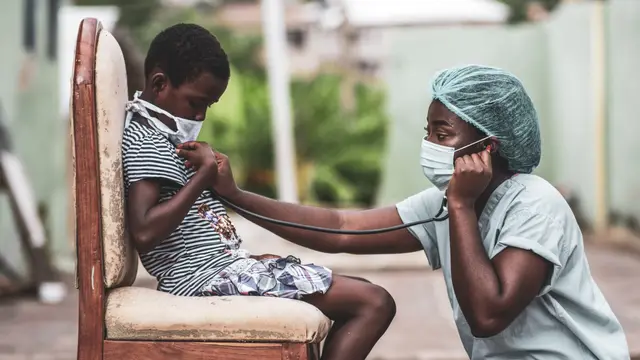
Internally, a civil society coalition of over 160 organisations alongside trade union federations mobilised to advocate for the safety of foreign nationals, while legal bodies including Lawyers for Human Rights and the Scalabrini Centre initiated High Court actions to uphold asylum rights, maintain non-refoulement principles, and enforce the 2019 National Action Plan to Combat Racism and Xenophobia (SWP, 2026). Additionally, advocacy groups have raised concerns over the forced movements of vulnerable groups, most notably thousands of children who have been pulled out of schools and HIV patients who have been cut off from life-saving treatment (Associated Press, 2026b).
The protests also strained South Africa’s diplomatic relations with several African countries, primarily Nigeria, Ghana and Mozambique, which initiated the repatriation of their citizens and sought to place the events on the African Union agenda (Daily Maverick), with Ghana going as far as submitting a petition to the ICC prosecutor in an attempt to seek accountability after years of recurring attacks on migrants (Associated Press, 2026b).
Electoral context and future security implications
As South Africa approaches the 4 November local government elections, mobilisation around migration has become deeply interwoven with the political landscape under the Government of National Unity (GNU), where the Democratic Alliance (DA) leads the Ministry of Home Affairs while the Patriotic Alliance (PA) maintains pressure for even more stringent immigration measures, amidst weekly protests organised by groups like March and March.
However, the state’s current posture relies heavily on reactive policing, border intensification, and mass deportations, which fail to resolve the institutional bottlenecks that leave hundreds of thousands of applicants in bureaucratic limbo (Daily Maverick, 2026b). Simultaneously, as conventional democratic channels appear uncommunicative, community protest increasingly becomes the primary mechanism to compel state attention; yet law enforcement alone cannot remedy underlying governance gaps such as the weak enforcement of labour standards and inadequate documentation systems (Daily Maverick, 2026b). Furthermore, curtailing migrant-run informal shops does not automatically benefit local youth; rather, it risks creating commercial vacuums that are primarily absorbed by large corporate retail chains.
To achieve long-term stability and social cohesion, South Africa’s government should move away from political spectacle and temporary enforcement toward structural governance reform, establishing an efficient, humane, and lawful immigration framework. It should do so while addressing the following three interconnected policy dimensions: transitioning from reactive crisis management to administrative efficiency, reforming informal sector economics, and aligning domestic enforcement with regional economic governance.
References
African Centre for the Constructive Resolution of Disputes. (2026). Exploring the ideology of Pan-Africanism and Operation Dudula in South Africa’s political landscape: Youth activism in an era of xenophobia. ACCORD. https://www.accord.org.za/conflict-trends/exploring-the-ideology-of-pan-africanism-and-operation-dudula-in-south-africas-political-landscape-youth-activism-in-an-era-of-xenophobia/
Africanews. (2026). South Africa: Protesters set September 30 deadline for undocumented migrants. https://www.africanews.com/2026/09/11/south-africa-protesters-set-september-30-deadline-for-undocumented-migrants/
Al Jazeera. (2026). More than 900 arrested during South Africa’s anti-migrant protests. https://www.aljazeera.com/news/2026/7/2/more-than-900-arrested-during-south-africas-antimigrant-protests
Armed Conflict Location & Event Data Project. (2026a). How did South Africa’s 30 June 2026 anti-illegal migration demonstrations unfold? ACLED. https://acleddata.com/expert-comment/how-did-south-africas-30-june-2026-anti-illegal-migration-demonstrations-unfold
Armed Conflict Location & Event Data Project. (2026b). Anti-immigration protests in South Africa. ACLED. https://acleddata.com/expert-comment/ladd-serwat-anti-immigration-protests-south-africa
Associated Press. (2026a). Why more than 178,000 immigrants have fled or been deported from South Africa. AP News. https://apnews.com/article/immigration-migrants-immigrants-africa-deported-repatriated-a708b48293d6b5c70a6e320f8defdd9e
Associated Press. (2026b). South Africa migrants and the International Criminal Court. AP News. https://apnews.com/article/south-africa-migrants-international-criminal-court-cdaec6e9071ebb1f3cc6f0f6d4700d68
BBC News. (2026). South Africa anti-immigrant protests and ‘March and March’ demonstrations. https://www.bbc.com/news/articles/cvgj2prd4p8o
BBC News Pidgin. (2026). South Africa anti migrants protest: SA police arrest more foreign nationals, announce about 90,000 repatriations of undocumented migrants. https://www.bbc.com/pidgin/articles/cwyqz18d54zo
Chatham House. (2026). Does South Africa’s anti-immigrant backlash signal the beginning of a long-term shift? https://www.chathamhouse.org/publications/the-world-today/2026-09/does-south-africas-anti-immigrant-backlash-signal-beginning
Daily Maverick. (2026a). After the June 30 deadline: What did SA’s anti-immigration marches actually achieve? https://www.dailymaverick.co.za/opinionista/2026-07-10-after-the-june-30-deadline-what-did-sas-anti-immigration-marches-actually-achieve/
Daily Maverick. (2026b). Afrophobia: South Africa’s migration crisis is a governance crisis. https://www.dailymaverick.co.za/opinionista/2026-07-21-afrophobia-south-africas-migration-crisis-is-a-governance-crisis/
FairPlanet. (2026). As xenophobic violence resurfaces, South African government watches on. https://www.fairplanet.org/story/as-xenophobic-violence-resurfaces-south-african-government-watches-on/
Institute for Security Studies. (2026). SA police and protesters must put lives first as 30 June looms. ISS Africa. https://issafrica.org/iss-today/sa-police-and-protesters-must-put-lives-first-as-30-june-looms
South African Government. (2026). Full statement on the Cabinet meeting of 1 July 2026. https://www.gov.za/news/cabinet-statements/full-statement-cabinet-meeting-1-july-2026-03-jul-2026
South African Government News Agency. (2026). Government unveils comprehensive plan to tackle illegal immigration. https://www.sanews.gov.za/south-africa/government-unveils-comprehensive-plan-tackle-illegal-immigration
Stiftung Wissenschaft und Politik (SWP). (2026). Anti-migration protests in South Africa: Winning votes on the backs of the most vulnerable. https://www.swp-berlin.org/en/publication/mta-spotlight-79-anti-migration-protests-in-south-africa
United Nations Office of the High Commissioner for Human Rights. (2026). South Africa: UN committee raises alarm over racist killings, displacement and xenophobic violence. https://www.ohchr.org/en/press-releases/2026/08/south-africa-un-committee-raises-alarm-over-racist-killings-displacement-and