

International Economic Relations
Economics as the language of power
The Working Group International Economic Relations examines trade policy, sanctions regimes, supply chain geopolitics, and the intersection of economics and foreign policy. It analyses international financial institutions, investment flows, and the political economy of globalisation. Monthly briefings offer data-driven insights into the economic dimensions of international security and diplomacy.
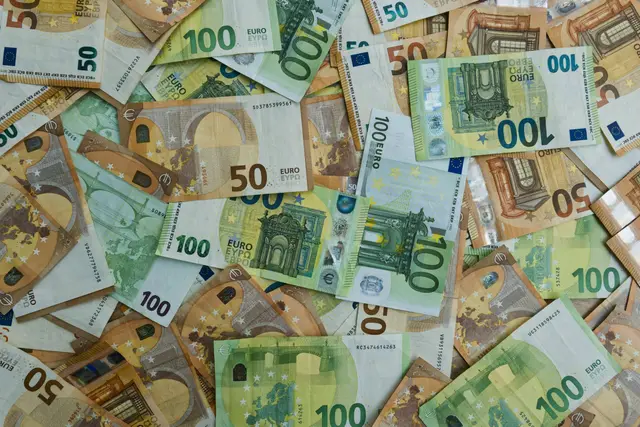
Off-budget rearmament: How is Europe attracting private capital to bank its rearmament?
Since 2022, European efforts to mobilise private capital for rearmament have lagged: aerospace and defence account for just 1.5% of business development company holdings, leaving small defence firms with a €1–2bn debt-financing gap. Beyond ethical concerns, reliance on government contracts and 3-…
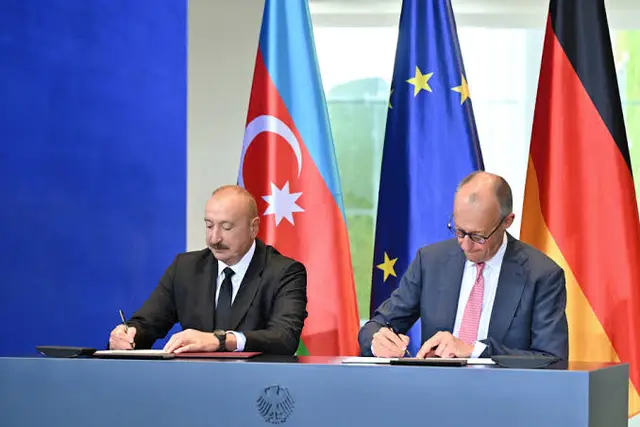
The Azerbaijan-Germany Partnership and the Paradox of Energy Security
The Azerbaijan–Germany Strategic Partnership of July 2026 signals political intent, but Europe’s retreat from fossil-fuel financing means the volumes it calls for cannot materialise without capital that current policy withholds.

US sanctions and Venezuela’s energy security?
The origins of Venezuela’s lasting energy security crisis and its effects on the country’s public order and broader economy are often explained in light of the United States’ increasingly interventionist foreign policy in the region. The United States administration’s promotion of great power dip…
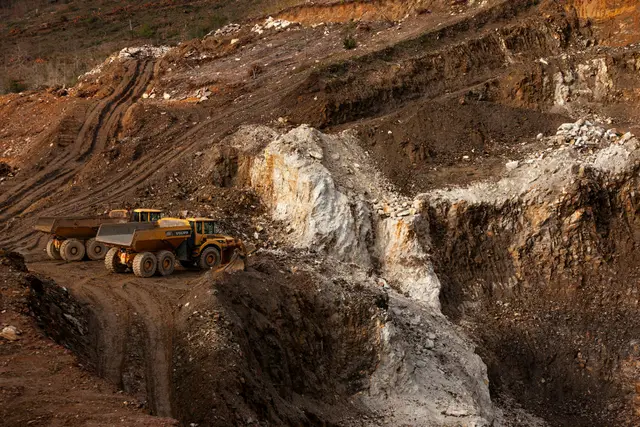
Securing Europe’s Supply of Raw Materials
China’s April 2025 rare-earth export controls exposed the EU’s dependency, and vulnerability. This article asks whether a single market for waste and recycling, championed by Draghi, could turn Europe’s own end-of-life products into a genuine strategic asset securing critical raw material supply.

The United States-Mexico-Canada Agreement (USMCA)
The USMCA strengthens trade by protecting businesses, innovators, and workers while promoting economic growth and closer cooperation among its member countries.

The AI Infrastructure Leverage Framework
Governments can shape AI by using infrastructure, energy, and regulation as bargaining tools to secure compute-sharing, data residency, and public benefits without nationalizing private firms.

WTO Appellate Body Crisis: Who Really Loses?
How has the paralysis of the WTO’s Appellate Body since 2019 affected members unequally? While larger economies have adapted through the MPIA and bilateral settlements, smaller members lack the legal capacity and leverage to navigate the post-AB order. With the US absent from the MPIA and reform …

Beyond OPEC: The UAE’s Strategic Shift
Main question: Why is the UAE leaving OPEC, and what are the consequences for geopolitics and global energy markets? Argument: The UAE seeks greater economic flexibility and strategic independence from Saudi-led OPEC policies. Conclusion: The withdrawal reflects a fragmenting global energy order …
Bigger Without Losing Better
Main question: How can the EU achieve enlargement without letting budget redistribution strains create disruptive domestic political deadlocks? Argument: The EU must implement a formalized rule of limited fiscal impact containing a double threshold on national gross national income shifts. Conclu…

European STEM Mobility Guarantee
Main question: How can Europe eliminate financial and administrative barriers to provide equal access to cross-border STEM experiences for all students? Argument: The EU must establish a STEM Mobility Guarantee using funded grants, a centralized digital portal, and standardized micro-credentials.…
Central Asian Vantage Point
Main question: How can European consultancies use Central Asia strategically? Argument: European consultancies can act as institutional and informational intermediaries, helping local states and firms adopt EU-compatible standards while also gaining insight into Russia- and China-linked regional …

CPEC and EU Connectivity
Pakistan can strengthen EU trade and connectivity through transparent governance, sustainable development, and standards-based cooperation under CPEC and the Global Gateway Initiative..
The Mutual Industrial Resilience Program
How can the EU overcome structural vulnerabilities while reforming its slow, politically driven enlargement? The EU must deploy the €30B Industrial Resilience Facility and an EIB-backed 70% political risk insurance mechanism to embed candidates into European energy, technology, and manufacturing …
The Future of the Petrodollar
Main question: How might the energy transition affect the role and underlying strengths of the USD as the world’s reserve currency. Argument: one of the main pillars of USD dominance in global reserves is the ‘petrodollar’ system in which oil sales are denominated in dollars, requiring central ba…
The Weak Yen Trap
Q: Does Japan’s dollar exposure prevent the BoJ from raising rates? Arg: Low rates fuel carry trades that weaken the yen, while $1T+ in U.S. Treasuries ties Japan to U.S. monetary cycles — a self-reinforcing trap. Concl: Gradual normalisation is the best exit, but political pressures keep the sta…

The Euro as an international currency
– Should the ECB push the Euro internationally to incentivise smaller economies to take the Euro on as their anchor currency? – The general trend point towards a de-risking internationally with countries increasingly preferring baskets over a single currency, and the most attractive policy remain…
Monetary Blocs and International Currency
As in the past, the fragmentation of the global economy and the formation of geopolitical blocs inevitably lead to the emergence of monetary blocs and changes in the system of international payments and international currency. In this text, we will attempt to outline some key elements of the dyna…

Who Controls Money?
How do cryptocurrencies affect financial stability and security compared to gold? Both rely on scarcity but differ in relation to state power. Gold is embedded in state systems and supports stability, while cryptocurrencies enable decentralized transfers outside institutions. This weakens sanctio…

The Euro: Power without Autonomy?
Main question: Why has the euro’s monetary power not translated into full EU strategic autonomy? Argument: While the euro functions as a growing geoeconomic tool (sanctions, trade, finance), its impact is constrained by EMU’s incomplete architecture, dollar dominance, and fragmented political and…

Digital Currencies and their Implications
1. Asks how the introduction of the digital euro could impact International Relations, through changes in monetary power. 2. The digital euro could strengthen the European Union by increasing monetary sovereignty, reducing reliance on U.S.-based payment systems, and expanding the EU’s regulatory …