

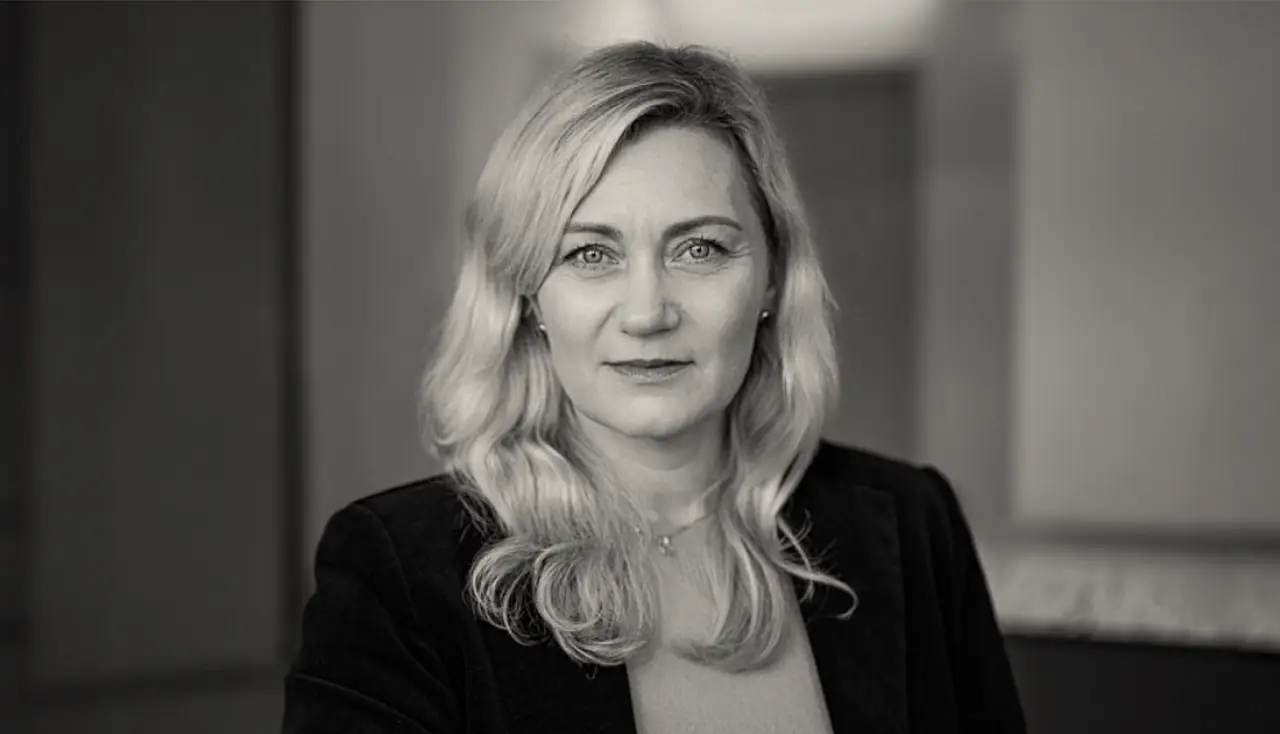
Inclusion is too often treated as an add-on – a “nice-to-have” – rather than as a prerequisite for effective peacebuilding.
A Guest Contribution by Chris Coulter, Executive Director of the Berghof Foundation
We are at a moment of devastating human suffering and profound global instability. From the wars in Ukraine, Iran and Lebanon, from the destruction in Gaza to protracted crises in Sudan and Ethiopia, we are witnessing the highest number of violent conflicts since the end of World War II.
At the same time, governments are increasingly turning to defence spending and deterrence as primary tools of security. Across Europe and beyond, military budgets are rising, while investments in diplomacy, prevention, and conflict transformation struggle to keep pace. We are witnessing a worrying trend: the quiet downgrading of the crucial work of peacebuilders worldwide.
Security, a concept I envision encompassing human wellbeing, justice, and peace, is being narrowed – redefined largely in terms of military deterrence. We currently see in the Iran war that acts of violence can easily lead to spiralling escalation, costing thousands their lives, destroying civilian infrastructure, and driving millions out of their homes.
However, mediation between parties in conflict is an indispensable strategic tool in security policy. It helps clarifying the interests and needs underlying entrenched positions – an important step towards preventing misconceptions, easing tensions and containing or even preventing violence. What is clear to me is that in order to reach a political solution, genuinely sincere negotiations – in Iran and elsewhere – are essential.
Yet what defines whether negotiations lead to short-term solutions or lasting peace? One lesson in the 55-years history of Berghof stands above all others: sustainable peace requires patience, a wholehearted commitment to inclusion, and a willingness to engage with complexity.
This requires putting local actors always first. Peace cannot be dictated from the outside but needs to be decided by the parties in conflict themselves – many transactional deals fail because they ignore this simple truth. It requires practising multipartiality – engaging with all sides of a conflict empathically and transparently. And it means committing to long-term processes that truthfully tackle past grievances.
Sustainable peace is achievable – but only if we adhere to those principles.
Understanding power
My own path into peacebuilding was shaped by my academic background in cultural anthropology and even more so by my own ethnographic work during my time at Uppsala University. At the beginning of the 2000s, I lived for 18 months in war-torn Sierra Leone studying how women participate in and are affected by war. I had the privilege of speaking with over 100 women, many of whom had been abducted by rebels and had faced unspeakable atrocities, some of whom had become fighters in the war themselves – all of them taught me an invaluable lesson about their resilience and strength in the face of violence.
Anthropology taught me to look beyond formal institutions and to pay attention to the networks of influence, the social norms, the unspoken hierarchies that often determine how societies function.
In Sierra Leone, I specifically analysed power structures based on gender identity to understand the role of women before, during and after the war. One apparent truth in what I found is that peace and war – which we often falsely put into a dichotomic relationship – are much more linked and exist in parallel. Where does war end and peace begin? And which structural forms of violence persist even when a formal peace agreement has been signed? Looking closely at continuities of gendered violence, such as in the Sierra Leonean context, we begin to understand that war cannot be understood without closely observing the social, political and economic spheres.
What my ethnography taught me for my peacebuilding work is something simple but often overlooked: sustainable peace requires understanding societies from within. It demands empathy – not as a soft skill, but as a strategic necessity. Without it, peace processes risk failing those they are meant to benefit most.
This insight is borne out repeatedly in practice. When I was advising the negotiation teams in Havana, trying to transform decades of violence into a negotiated solution, I saw how peace agreements gain tremendously from genuine societal buy-in. Signatures on paper neither automatically translate into societal trust nor immediate profound change for those affected. Yet, thoughtfully designed, truly inclusive peace processes make a difference.
Inclusion of women at every level
My work with women in Sierra Leone also taught me much about the importance of the inclusion of women voices not only in academic studies but more importantly in peacebuilding work. Once violence ends, and dialogue and mediation efforts gain momentum, marginalising or even excluding 50 per cent of the population is a real hindrance to any attempt to resolve conflict peacefully and lastingly.
Last year marked 25 years since the adoption of United Nations Security Council Resolution 1325 (UNSCR 1325), a landmark framework recognising the importance of women’s participation in peace and security processes. One year earlier, 26 years ago, I was part of a group of young Swedish women contributing to what would become UNSCR 1325. It was exhilarating to be part of this historic moment.
And, sure, there has been progress: greater awareness, more policies, stronger networks.
Yet the gaps remain stark. Women’s representation in formal peace negotiations is still disproportionately low. Inclusion is too often treated as an add-on – a “nice-to-have” – rather than as a prerequisite for effective peacebuilding. At the same time, we are witnessing a troubling backlash against gender equality across the world. Some governments openly reject the feminist agenda, while others commit to the bare minimum.
What is missing is sustained, meaningful implementation.
Governments and multilateral institutions must redouble their efforts to mainstream the women, peace and security agenda – not only in rhetoric but in practice. This means ensuring inclusion at every level, from high-level negotiations to direct support for women’s organisations that understand local realities and needs.
Peace is built on trust and local action
What else is needed for successful peacebuilding? Above all, trust – because trust is the foundation of peace. It is built slowly, through consistent engagement, dialogue, and the creation of spaces where different actors can interact safely. It is also fragile – easily undermined if processes are perceived as exclusionary or imposed.
Our approach at the Berghof Foundation is based upon partnership, ownership and involving multiple levels of society. Conflict transformation is a long-term process that requires collaborative efforts by multiple actors. Therefore, we build reliable and transparent partnerships based on mutual trust and respect.
Equally important is the link between local and national levels. Too often, formal negotiations operate in isolation from the realities of everyday life. Bridging this gap – connecting grassroots perspectives with high-level decision-making – is essential. When local actors see their experiences reflected in national processes, agreements gain legitimacy. When they do not, those agreements risk becoming hollow.
In Yemen, for example, consultation groups in key governorates, established by the Berghof Foundation in partnership with the Yemeni Political Development Forum (PDF), have played a critical role in maintaining access to essential service provisions, including electricity, water, and waste management, even amid ongoing conflict.
Whilst national negotiations are currently at a standstill in Yemen and there is a lack of coordination between the state institutions of the conflict parties, these consultation groups – comprising members of political parties, eminent personalities, women and civil society representatives – have helped reach agreements to manage water supply systems across frontlines. These agreements help ensure a continuous flow of water and are expected to significantly improve living conditions by restoring a service disrupted for almost ten years.
These efforts rarely capture international attention, yet they provide communities with the tools to improve living conditions – and, ultimately, these efforts can improve societal backing for broader peace efforts.
Adapting peacebuilding to a more complex world
One challenge, however, is that the nature of conflict itself is evolving. Today’s conflicts are rarely confined to two clearly defined parties. They involve a complex mix of state and non-state actors, and they must take into consideration various global interests. At the Berghof Foundation, our answer is investing in multi-level mediation approaches that engage actors across different layers of society. This also means working with non-state actors who are often central to conflict dynamics but excluded from formal processes.
Another challenge is that peacebuilding needs to adapt to climate change effects, which are fuelling conflicts, exacerbating resource scarcity and displacement, and creating new layers of vulnerability. On the one hand, it means integrating climate considerations into our work, recognising that environmental stress is not a peripheral issue but a core driver of instability. On the other hand, we consider environmental issues and climate change effects to be entry points for community dialogues and peace talks.
In Iraq, for example, community dialogues contributed to a community water agreement, increased trust between villages and helped shape a new sense of shared responsibility and common vision. This shows how incorporating climate and environmental security into peacebuilding measures can lay the foundations for lasting peace by addressing not only tensions but also the environmental pressures that often trigger them.
Learning to navigate complexity, not avoid it
For students entering this field, these challenges can feel daunting. My advice is this: do not shy away from that complexity.
The most important skills you can cultivate are not quick solutions, but the ability to navigate ambiguity with empathy and critical thinking. Systems thinking – understanding how political, social, economic, and environmental factors interact – is essential. So is the capacity to truly listen and to engage with perspectives that may challenge your worldview.
You also need to be ready to stay around for a while. Peacebuilding is long-term work. Progress is often incremental, and setbacks are inevitable. Patience is not a passive quality in this field; it is an active commitment to staying engaged even when results are not immediate.
Above all, recognise that your contribution matters. You are entering a field that is more necessary than ever – one that requires new ideas, diverse perspectives, and a willingness to question dominant narratives.
Peace is possible if we choose to build it differently
After many years of studying conflict and practising peace, the possibilist in me says sustainable peace is achievable. But it will not emerge from negotiation rooms alone, nor from deals that prioritise speed over substance.
It will depend on whether we invest in building trustful relationships and solidarity systems that make peace possible. In an increasingly polarised world, we must re-learn to empathise with other opinions, engage with adversary ideas, and work closely to solve our common challenges.
So, in my view, the question is not whether peace is possible. It is whether we have the patience to engage with the many levels of peacebuilding.


