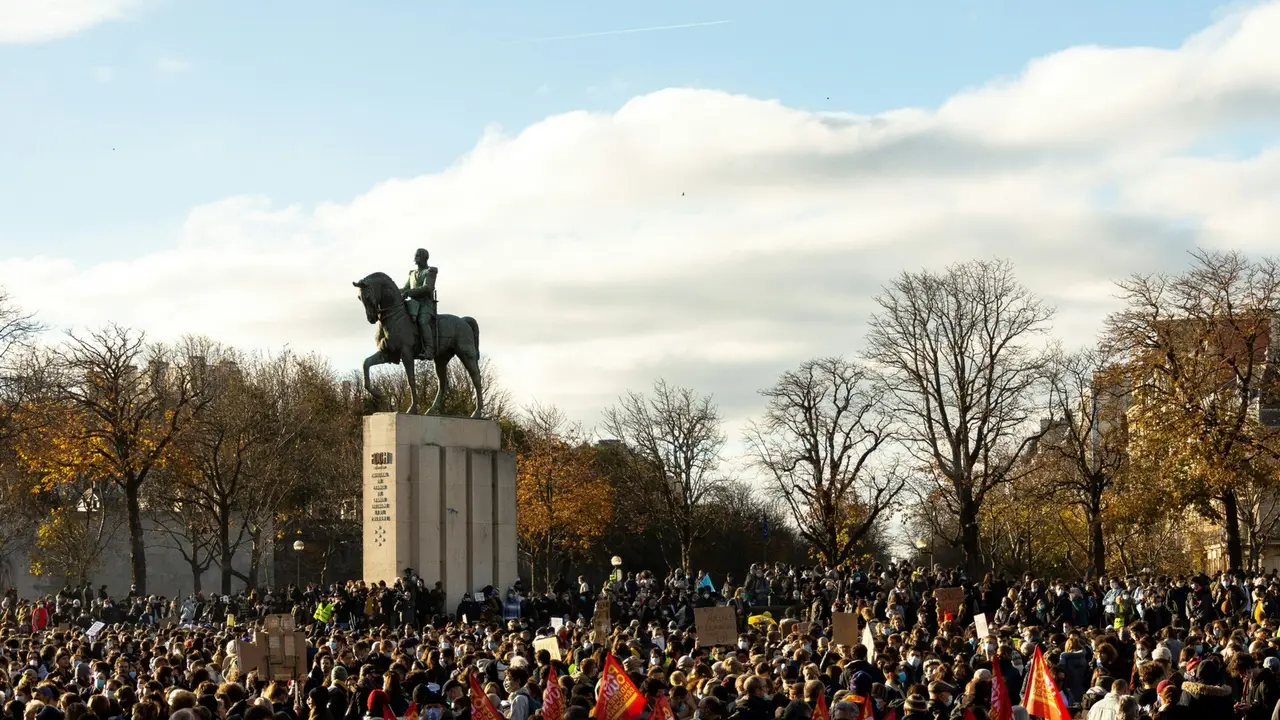
The nationwide protests on 17 November mark another chapter in France’s recurring social unrest, fuelled by economic difficulties and political instability. The government reportedly counted 146,000 demonstrators who took to the streets across the country this Tuesday, while the CGT reported more than 500,000 participants. In Paris, police recorded 28,000 people. Due to wage stagnation and the rising cost of living, public-sector workers protested, demanding higher wages and improved public services.
As protests continue to take place, concerns appear to extend beyond mere economic demands and begin to include calls for responses from authorities and attention to the consequences for fundamental freedoms.
In a collective opinion piece addressing previous protests, senior civil servants, magistrates and public officials denounced the alleged excessive use of police force, mass detentions, preventive bans on demonstrations and restrictions on freedom of expression. In this context, also on 17 November, the Paris Administrative Court decided to suspend a five-day preventive police ban on undeclared gatherings within 100 metres of several educational institutions, deeming it disproportionate and a manifestly unlawful infringement of fundamental freedoms, as the police had failed to sufficiently substantiate the alleged risks.
Taken together, these developments show how recurring social unrest in France has triggered broader institutional challenges. Although the number of protestors varies from protest to protest, ongoing economic and political issues suggest that demonstrations will not end anytime soon.
Beyond the immediate social unrest, political fragmentation and growing controversies over civil liberties are testing the relationship between citizens and public institutions. Therefore, with the 2027 presidential election approaching, the question is no longer whether the government can contain social unrest, but whether French political institutions will still be able to restore public confidence in an increasingly divided society.