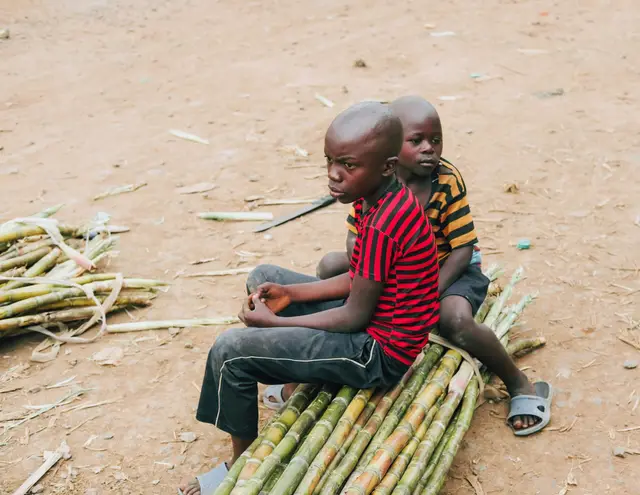



For the past couple of years, whenever the Democratic Republic of the Congo (DRC) gets featured in international news headlines, more likely than not, the news concern is either armed conflict in the country’s east or a story related to mining, particularly rare earth metals. Recently, however, a new public health concern has been dominating the headlines. On the 15th of May, the DRC’s Ministry of Public Health, Hygiene and Social Welfare announced an outbreak of the Bundibugyo virus (Orthoebolavirus bundibugyoense).
Better known as Ebola, an infectious disease with a fatality rate of about 50%, the outbreak marks the 17th recorded outbreak of the disease discovered in 1976 near its namesake River, the Ebola River, in the northern DRC. The disease is thought to spread to humans from fruit bats of the Pteropodidae family, which are natural hosts of various Orthoebolaviruses. What makes this outbreak different to most previous outbreaks in the DRC is not just the sheer number of cases but also the particular strain of Ebola causing infections. While the DRC, for example, experienced another Ebola outbreak as recently as 2025, the CDC reports that it only involved 64 cases and involved a more common strain, Orthoebolavirus sudanense. The 2026 outbreak, however, has, as of Friday, the 25th of July, since its discovery, been linked to 2,973 cases, including 1,309 deaths, making it the fastest-spreading Ebola outbreak ever recorded.
Tracing the Outbreak
Although the Democratic Republic of the Congo (DRC) officially declared the outbreak on May 15, 2026, the virus had likely already been quietly spreading for months and may have begun as early as January.
- January-February 2026: the initial spillover from animals to humans. Retrospective epidemiological tracing suggests that early, undetected infections originated in the mining town of Mongbwalu in northeastern Ituri Province.
- May 15, 2026: The DRC’s Ministry of Health officially confirmed the presence of the Bundibugyo virus after laboratory testing by the National Institute of Biomedical Research (INRB). On the same day, Uganda also confirmed a case in its capital, Kampala.
- May 17, 2026: Recognising the high risk of regional transmission, the World Health Organisation (WHO) declared the situation a Public Health Emergency of International Concern (PHEIC).
- May – June 2026: The virus spread into neighbouring provinces within the DRC, and continued to spread in Uganda, although at a much slower pace
- July 15th, 2026: The DRC provinces of Ituri, North Kivu, South Kivu, Haut-Uele and Tshopo have reported cases, with Ituri remaining at the centre of the outbreak, accounting for 89.6% of reported cases.
- July 16, 2026: After no new cases were reported since the 21st of July, Uganda discharged its last recovered patient after two negative test results, initiating a 42-day countdown to officially declare the end of its outbreak.
- Late July 2026: The DRC’s epidemic, although slowing down in its transmission speed, continues to spread, making it the fastest-growing Ebola outbreak on record.
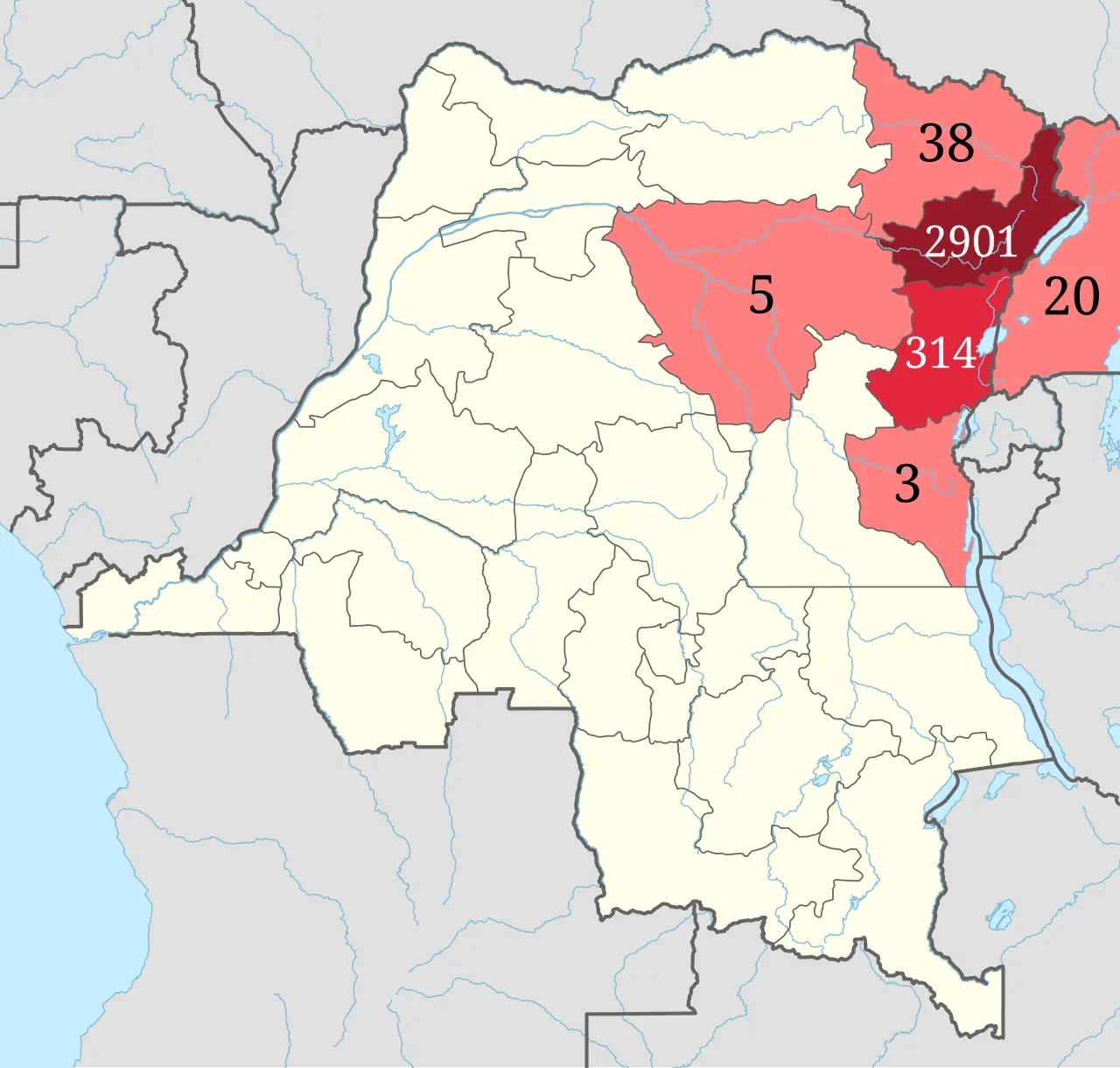
Today, CDC modelling shows the potential for the epidemic to surpass the 2014-2016 West Africa outbreak that, until today, constituted the worst Ebola outbreak with more than 11,000 deaths despite taking eight months from the first case to reach 1,000 deaths, something the 2026 DRC outbreak is quickly outpacing.
The Geographic Challenge
It was in Mongbwalu, a gold-mining town of some 130,000, that the 2026 Ebola outbreak first began to spread. It is from there that it spread across the Ituri region, including the regional capital of Bunia, a city of more than 1 million inhabitants, with a factor in its spread thought to be the character of Mongbwalu. Like many cities in Ituri Province with significant gold deposits, the city is largely made up of mobile artisanal miners and traders from all throughout the region that move to wherever mining conditions are the best, a factor thought to have helped significantly in facilitating the spread of the disease. As many cities spring up quickly as gold deposits get discovered, cities are often improvised and crowded, with public services lagging behind, leading to situations such as in Mongbwalu, where authorities believe as many as 80 people died from Ebola before health officials became aware of the health emergency.
State of DRC Healthcare
Beyond geographic factors that slow the state’s ability to detect and respond to the crisis, the state’s capacity to respond is further hampered by the fragile state of the public healthcare system in the DRC. As such, when first testing for an outbreak on a suspected case in a healthcare worker, the diagnostic tests in a local laboratory were calibrated for the wrong strains of Ebola with the laboratory there used testing methods intended to detect the Zaire strain of Ebola, which is the strain behind most of the DRC’s previous Ebola outbreaks, including the 2018-2020 epidemic in the country’s east that killed more than 2,200 people. Only the eastern city of Goma, controlled by M23 rebels, and the capital, Kinshasa, had the equipment to test for other strains through genetic sequencing and when tests were finnally sent to the capital for further analysis, the samples arrived at 17 degrees Celsius instead of the at 4 degrees Celsius they should have been kept at, while measured out in microlitre rather than millilitre quantities, reducing the number of tests that could be performed.
The DRC’s public health service’s ability to respond to the crisis is further complicated by a series of attacks towards public health care workers. These can largely be traced to misinformation about the outbreak, including claims that Ebola simply doesn’t exist, or that organisations like the Red Cross are only there for monetary gains. As of July 9th, the BBC verified 12 cases of community resistance to Ebola control measures via social media. These events of resistance leading to violence towards healthcare staff often originate from communities interfering with or not agreeing with safe burial practices, intended to ensure that the highly contagious bodies of the deceased do not infect others. As such, conflict can arise when health officials do not allow relatives to bury bodies independently and perform customary funeral rites that have in past outbreaks facilitated the spread of Ebola. In response to such a violent instance, vandalism against a treatment centre near the town of Nyakunde in Ituri Province, the UN peacekeeping mission in DR Congo, MONUSCO, deployed a mobile base staffed by Nepalese peacekeepers near the facility to ensure its continued safe operation.
Furthermore, the security concerns are paired with disputes over health care worker salaries, with performance bonuses outstanding for months on end and some workers reportedly going completely unpaid since the outbreak began. The dangerous conditions, stemming from security concerns, working in close contact with those infected, having as of 15 July resulted in 119 confirmed cases, as well as 36 deaths amongst healthcare workers, paired with the outstanding payments, have resulted in some 100 health workers going on strike at the Elikya Ebola Treatment Centre in Bunia, disrupting patient care.
The Race for a Vaccine
Unlike the Zaire ebolavirus strain, which was responsible for the 2018 – 2020 DRC epidemic and for which the highly effective Ervebo vaccine has been developed, there are currently no approved vaccines or specific therapeutics for the Bundibugyo strain. Consequently, in late May 2026, the World Health Organisation (WHO) issued emergency guidance concluding that existing Zaire-targeted vaccines offer insufficient cross-protection and should not be deployed programmatically in response to Bundibugyo strain outbreaks outside of controlled research settings. This initial absence of targeted medical countermeasures left frontline responders heavily reliant on traditional containment strategies such as contact tracing, isolation, and safe burial practices.
However, the unprecedented speed of transmission in the 2026 outbreak has mobilised a remarkably rapid global scientific response. On June 1, 2026, the Coalition for Epidemic Preparedness Innovations (CEPI) announced an emergency fast-tracking of three trial vaccines:
- University of Oxford and Serum Institute of India (SII): Using the same underlying technology as the AstraZeneca COVID-19 vaccine, the researchers developed a candidate in less than 60 days.
- Moderna: Utilising its mRNA technology, Moderna received an initial investment from CEPI to accelerate promising preclinical testing and Phase 1 trials.
- IAVI: A vaccine based on the rVSV platform, the same approach as used with the approved Zaire strain Ebola vaccine.
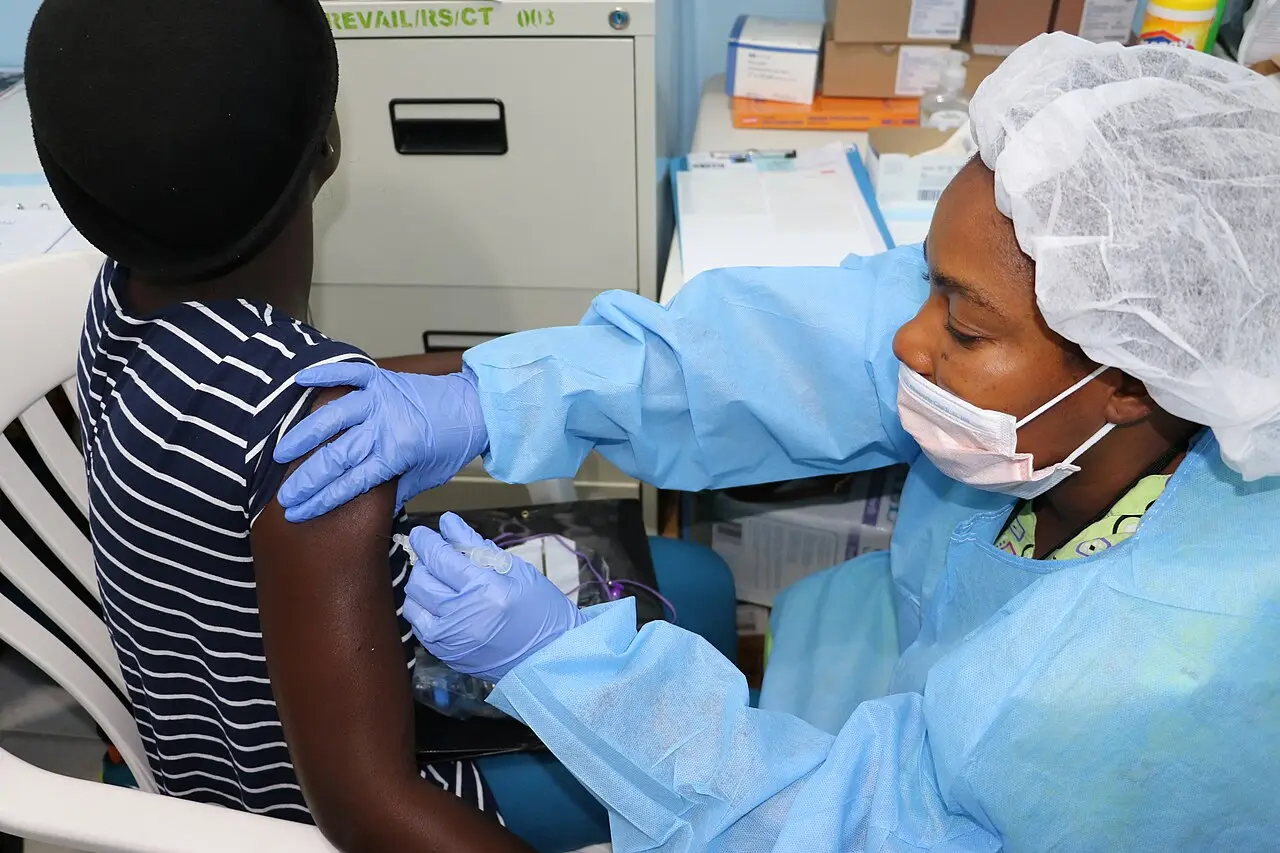
While the IAVI vaccine has been considered particularly notable for its potential to induce rapid protective immunity with a single dose, making it, according to the World Health Organisation, the most promising candidate, it is the vaccine candidate developed by the University of Oxford and the Serum Institute of India for which Phase 1 medical trials have first begun, with 50 healthy volunteers aged 18-55 being recruited for the trial, and the BBC reporting on July 24 that the first dosage had been administered to a UK man.
ODA Cuts
Responding to the 2026 Bundibugyo Ebola outbreak in the Democratic Republic of the Congo represents a complex public health emergency. Geographic vulnerabilities, a fragile healthcare infrastructure, community resistance, and a rapidly spreading viral strain with no previously approved countermeasures mean the crisis threatens to eclipse the devastation of past epidemics. While the unprecedented speed of fast-tracked vaccine trials offers a crucial lifeline, scientific breakthroughs alone cannot overcome systemic failures in the health system.
Crucially, the global and local response to this epidemic has been severely hampered by historic declines in Official Development Assistance (ODA). In the lead-up to the outbreak, major economic powers drastically reduced their foreign aid budgets, with the OECD reporting that total global aid fell by 23.1% in real terms during 2025, marking the most severe single-year contraction ever recorded.
Such ODA cuts deeply destabilised the DRC’s health sector at the worst possible time. The International Rescue Committee (IRC) noted that severe reductions in health funding weakened critical disease surveillance systems, leading to a dangerous delay in the detection of the outbreak’s initial spread in Ituri Province. Furthermore, organisations like Physicians for Human Rights have documented how abrupt cuts to USAID (U.S. Agency for International Development) and other global health initiatives reduced availability of essential protective equipment, laboratory access, and operational capacity just as the virus began to escalate.
Ultimately, the trajectory of this epidemic serves as a stark warning. Defeating the 2026 Ebola outbreak will require not only medical innovation, such as new vaccines, but also a renewed, steadfast commitment from the international community to reverse these damaging ODA cuts and invest robustly in long-term global health infrastructure.