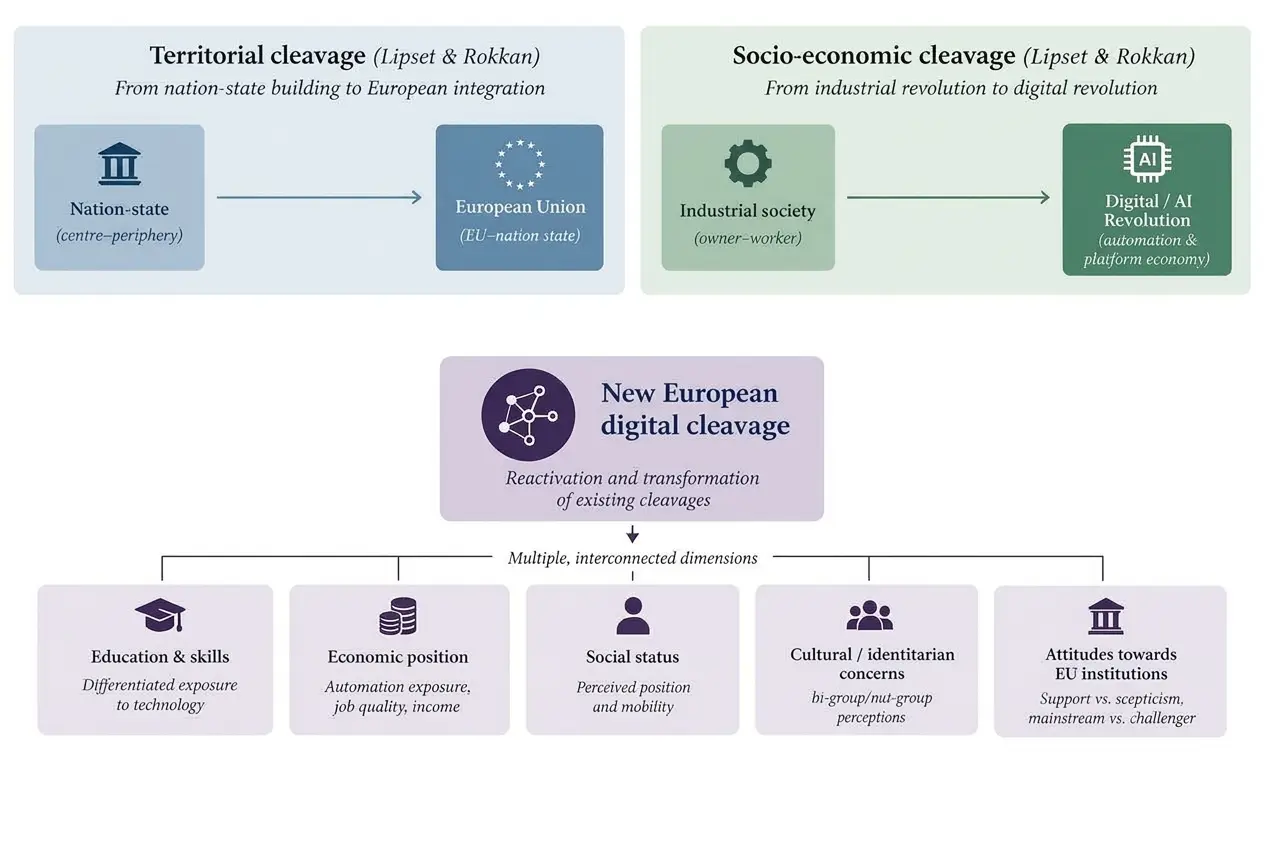
People around the world navigate times of increasing uncertainty as crises—wars, financial bubbles, and health emergencies—grow more frequent. Globalisation has contributed to these insecurities, presenting public opinion with negative externalities. Growing immigration, commodity price structures, and wealth inequality represent salient issues underpinning negative political evaluations (Williamson, 2002). Often, a reactionary stance towards globalisation is driven by populist platforms (Rodrik, 2018) alongside a perceived socio-economic and cultural divide between self-categorised ‘winners and losers’ of globalisation, a phenomenon closely tied to pre-existing social and party structures (Steiner et al., 2020). Negative evaluations of globalisation, shifting identities, and feelings of subjective deprivation are thus crucial determinants of this new line of functional demarcation in Western societies (Teney et al., 2014).
As Hooghe & Marks (2018) argue, a transnational cleavage hinging on the defence of a national way of life has emerged in European politics, possessing “the potential to cross-cut and restructure partisan divisions” (Evans, 1999, p. 220) in 21st-century Europe. Political entrepreneurs consequently have an incentive to leverage the EU’s territorially fragmented representation to politicise core-periphery dynamics based on member states’ growth models and economic interdependencies (Bruszt & Vukov, 2024). This demarcation thus narrows the scope of national institutions and reinforces the ‘political paradox of globalisation’, whereby transnational issues undermine the independence of national political processes (Kriesi et al., 2008).
Building on this tension—and focusing specifically on these frictions between national and European political representation—this piece investigates the potential of AI-driven technological change and its implications for European labour markets. It examines how these changes will affect European political behaviour and support for European integration. Under the framework of cleavage theory (Lipset & Rokkan, 1967), it outlines key hypotheses and suggests future lines of research worth exploring.
A framework for assessing AI-driven automation on the labour market
Automation can be defined as “the general substitution or augmentation of human work with artificial tools capable of acting themselves to complete tasks” (Bhorat, 2023). A growing body of literature in the field of labour economics has investigated the impact of technological progress and the advent of AI-led automation on industries and jobs. Autor et al. (2003) provided evidence for a decline in routine cognitive and manual tasks, and a parallel increase in demand for nonroutine cognitive tasks in the United States’ labour force.
Routine-biased technological change directly implies employment and wage polarisation, meaning high-skill and low-skill service jobs are inversely and positively affected compared to middle-skill jobs (Autor & Dorn, 2013; Goos et al., 2014). This creates a displacement effect, altering task content while simultaneously raising the productivity effect in certain industries and reducing the labour share of value added in others (Acemoglu & Restrepo, 2019; Autor & Salomons, 2018). Even though middle-skill jobs requiring specific literacy, numeracy, and problem-solving skills may not shrink in the short term according to some projections (Autor, 2015), the impact of rapid technological change during transitional phases of innovation and development on the job market has the potential to favour a spike in levels of inequality (Acemoglu & Restrepo, 2018, 2022).
It is still early to account for precise estimates about the impact of artificial intelligence on the wider economy, but early estimates found that a structured use of an AI assistant increases worker productivity by 14 percentage points, on average. Unpacking these findings, beginner and low-skilled workers benefit the most from AI-based workflows, precisely around 34 percentage points more (Brynjolfsson et al., 2023). A more recent but contested estimate, not taking into consideration a key distinction between easy and hard tasks, forecasts an increase in total factor productivity (TFP) of less than one percentage point – around 0.66% (Acemoglu, 2024).
Measuring task exposure and job displacement effects caused by AGI
Artificial generative intelligence (AGI) refers “to a group of AI algorithms and models that are capable of producing new content, including texts, images, videos and problem-solving strategies, with human-like creativity and adaptability” (He et al., 2025). Despite disagreements over its macroeconomic impact, AGI will foster growth and augment working capacity amid accelerated digitalisation, regardless of national trade openness (Hulsegge et al., 2026).
As a result, tasks performed at work will also change considerably. An early assessment by Eloundou et al. (2024) predicts that almost half (46%) of jobs are potentially susceptible to drastic changes regarding the content and nature of tasks performed at work. A similar interpretation is offered by Massenkoff & McCrory (2026), employing a different measure of AI displacement risk and observed exposure which directly accounts for data resembling real-world application usage at the workplace. Unpacking AI exposure into AI Capability indicators offers an even more sophisticated understanding for different occupations and allows us to identify the specific skills that might be at risk of greater future exposure. As shown in Figure 2 below (OECD, 2026), current AI capability maps closely to routine information-processing and administrative tasks, whereas health, education, and social-related activities present the highest capability gaps.
Again, major developments can already be tracked in the labour market, even if the literature offers different interpretations about their causes. On the one hand, some scholars argue that generative artificial intelligence is slowing down the hiring capacity for junior and entry-level professionals, concentrating the early shock on young job seekers trying to enter cognitive sectors (Palladino et al., 2026; Facius & Iacono, 2026). Recent findings argue that this is driven by growth in senior management hires in foreign affiliates of AI-adopting companies (Chandar & Klein Teeselink, 2026). On the other hand, a reading of this phenomenon attributes a bigger role to the post-pandemic rise in working from home and hybrid arrangements, which act as a major confounder when assessing the impact of AI on hiring trends (Lambert & Schindler, 2026).
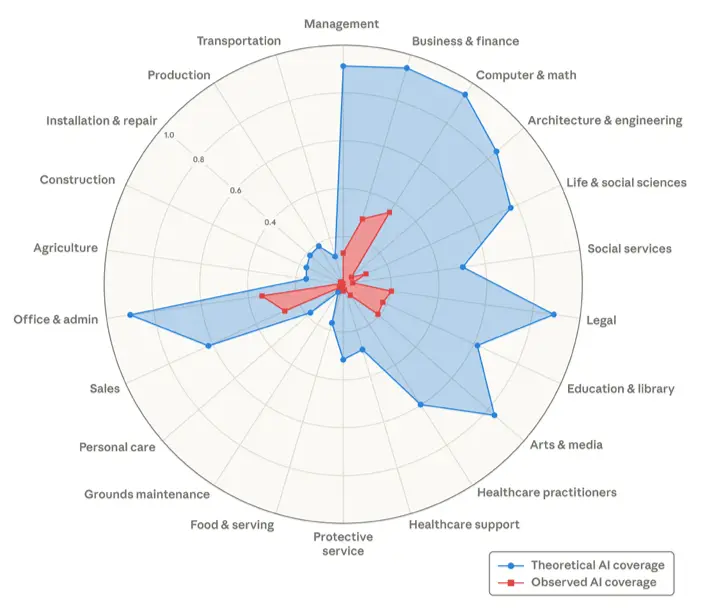
Figure 1: Theoretical capability and observed exposure by occupational category. Source: Massenkoff & McCrory, 2026.
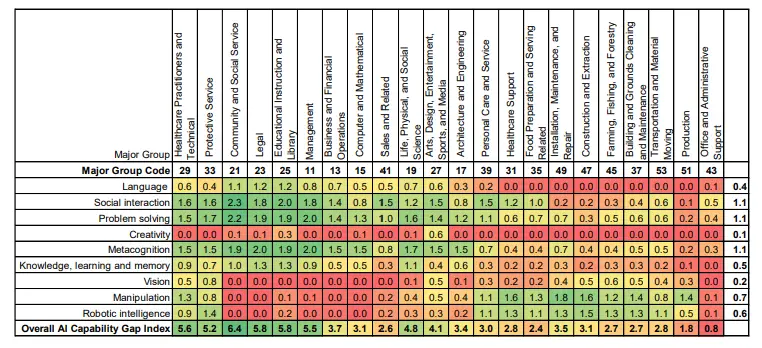
Figure 2: Gap between occupational capability demands and current AI capabilities and total AI Capability Gap Index, by major occupational groups. Source: OECD, 2026.
The consequences of these transformations will affect European member states unevenly. A study focusing on the demand for digital skills in online job advertisements (OJAs) between 2022 and 2024 suggests the presence of a digital divide between Central and Eastern European countries and EU core areas in Western Europe (Musinszki et al., 2025). Relatedly, a report from the European Commission (EC, 2026) highlights asymmetries in AI adoption for work-related purposes, with only 54% of Europeans interviewed employing such instruments for work-related or personal reasons. Importantly, these findings suggest that AI adoption will favour innovation ecosystems which are already robust in terms of adoption capacity and infrastructure (EIS, 2026). Triangulating job exposure with task complementarity, a North-South European divide emerges. Countries such as Belgium, Denmark, and Sweden show high levels of both exposure and complementarity, while Luxembourg, the Netherlands and Ireland score high on exposure but lack equivalent amounts of complementarity. On the contrary, Greece and Italy display the greatest shares of likely suffering workforce: the former around 34% and the latter 32% circa (Goodger et al., 2026).
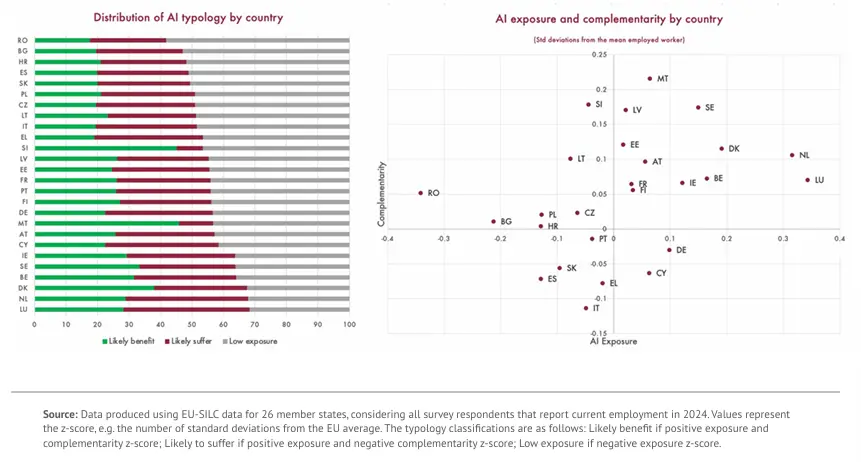
Figure 3: AI exposure, complementarity and typology by country. Source: Goodger et al., 2026.
The impact of AI on redistribution preferences and the “declining middle”
The impact of AI-driven technological change in the labour market brings with it considerable political consequences. On one side, data show that the relationships between strike activity and the degree of industrial robotisation are highly mediated by the institutional context of specific countries, suggesting high between- and within-regional variation and (possibly) asymmetries (Van Overbeke, 2026). On the other side, it seems clear that technology-induced job loss (TIJL) pushes individuals’ attention toward the prioritisation of economic problems such as inflation and welfare redistribution (Heinrich & Witko, 2021). However, there is mixed empirical evidence about the preferred measures to mitigate those problems. Scholars have determined two main patterns.
First, not all people feel threatened by automation, preferring passive unemployment protection measures (consumption-oriented welfare policies) vis-à-vis direct educational and labour market reintegration (human capital-oriented welfare) policies (Kurer & Häusermann, 2022). Further research corroborates the idea that concerns with globalisation or automation do not necessarily translate into higher social investment (Nicoli et al., 2025). In the case of low-skilled workers, being sceptical about technological change does not automatically translate into greater support for the welfare state (Lim, 2020).
Nonetheless, when people single out the objective risks of technological change from their subjective self-perception of automation-led labour and market risks, they tend to be more supportive and even actively ask for more social protection, both in the form of a Universal Basic Income (UBI) and a Generalised Minimum Income (GMI) (Guarascio & Sacchi, 2021). In line with these results, Thewissen & Rueda (2019) observe that Europeans working in routine and highly exposed occupations concur with the idea that governments are best placed to alleviate differences in income levels. This gap may stem from citizens conflating traditional automation with generative AI, obscuring how AI directly affects their jobs.
Some research also found that people negatively affected by technological progress are more likely to support reactionary and non-mainstream political platforms (Frey et al., 2018). At the aggregate (district) level as well as at the individual level, robot exposure in Western European states is positively correlated with support for nationalist and radical-right parties holding an anti-cosmopolitan agenda (Anelli et al., 2019). However, when it comes to cognitive routine workers and “survivors”, observations are not univocal. In particular, some studies convey that the perception of one’s own relative social and positional decline within society and social hierarchy drives public preferences for right-wing populist parties among the so-called “declining middle” (Kurer, 2020).
Contrary to these findings, Buzzelli et al. (2025) observe a shift towards more libertarian and laissez-faire attitudes instead of support for more authoritarian policies in routine cognitive workers, or ‘survivors’. They also find supporting evidence for a libertarian shift in the presence of an ‘upgrading’ occupational trajectory, which is consistent with results indicating an increased support for Conservative parties and/or incumbent politicians for individuals experiencing the economic benefits of digitalisation in the workplace (Gallego et al., 2022).
Drivers of support for European integration
To better understand the socio-economic and political consequences of AI-driven automation, we briefly review the core, distinct but interconnected, dimensions shaping support for European integration (Kriesi et al., 2025).
The first stresses the importance of economic factors. Sociotropic models of economic voting are predictive of people’s support for the European Community and politicians endorsing the European project (Eichenberg & Dalton, 1993; Anderson, 1995). In particular, individual-level data show how a positive personal and national financial self-perspective is associated with positive attitudes towards European integration (Gabel & Whitten, 1997; Gabel, 1998).
A second line focuses on cultural factors. Lacking a common European sense of solidarity pushes people away from the European Union, with even stronger effects in the presence of an exclusive attachment to a specific territorial community (Carey, 2002). Perceived cultural threats, such as immigration, are also important predictors of citizens’ likelihood of supporting European integration (McLaren, 2002).
A third explanation acknowledges the importance of educational levels and citizens’ degree of cognitive mobilisation. On the one hand, the more educated a person is, the more likely they are to express support for European integration (Gabel & Palmer, 1995; McLaren, 2007). On the other hand, higher levels of cognitive engagement, that is to say, a favourable disposition to meaningfully digest European issues, are also correlated with higher levels of support for the European Union (Inglehart, 1970).
The fourth illustration relies on the normative and institutional constituents of support for European integration. Some scholars show how institutional trust and satisfaction with democracy impact citizens’ evaluation of the EU (Sánchez-Cuenca, 2000; Anderson, 1998). Likewise, others point their attention towards the importance of institutional spillovers between national and European institutions and the devolution of core political competencies (Dominioni et al., 2020).
Cleavage Theory in 21st Century Europe
Cleavage theory was originally formulated by Lipset & Rokkan (1967) to explain how historical processes related to the formation of the nation-state and 19th-century industrialisation created internally comparable but externally recognisable groups. In this section, we employ its framework to understand how drivers of support for European integration can shape electoral behaviour in contemporary Europe and create new electoral alignments.
The European integration project has developed in times when the impact of globalisation on the socio-economic dimensions generated a conflictual relationship between (supranational) integration and national demarcation (Kriesi et al., 2012). At the same time, long-term historical data show a convergence over time and a ‘Europeanisation’ of national party systems, which was later on reinforced by greater and more centralised EU policy-making. Electoral systems in European countries have become progressively more homogeneous in their structure, uniform in their development, exhibiting growing similarities between policy programmes and cohesion within party families across time (Caramani, 2015; Bartolini, 2007). Indeed, research highlighted the increasing importance of functional alignments rather than territorial cleavages in shaping support for the process of European integration and the construction of a European polity (Truchlewski et al., 2025).
Different readings are offered in the literature. Some scholars have pointed their attention towards the role of collective identities and ideologies in shaping 21st-century cleavage formation, examining voter alignments and party restructuring on the particularism-universalism divide (Bornschier et al., 2024). Others argue that contemporary cleavage formation shapes the national political space along the globalisation and modernisation vectors, comprising both economic and cultural considerations (Katsanidou & Jungmann, 2025). Data also suggest that cross-cutting external threats and crisis contexts, such as wars and the COVID-19 pandemic, drive people’s bounded solidarity in favour of an increased shared feeling of belonging across different territorial polities (Oana & Truchlewski, 2024; Moise et al., 2025).
Contemporary cleavages are not equivalent to older ones. Electoral data corroborate the hypothesis that Western Europe is characterised by multiple fully-fledged and autonomous cleavages (Crulli & Emanuele, 2025). Notably, a new bloc volatility and fragmentation dataset helps visualise the increased salience of a transnational cleavage, especially in Western Europe (Gunderson, 2025). To account for these changes, Zollinger & Attewell (2025) describe contemporary cleavage structures as characterised by an underlying shift from industrial to knowledge-based service economies. Within this architecture, the underlying logic of conflict rests “between those who fundamentally embrace or are willing to adapt to a knowledge society shift in its varied manifestations, and those who rather defend an older economic and social order”.
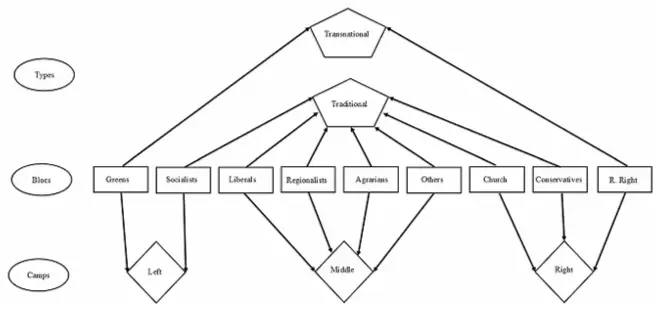
Figure 4: Summary of the relationships between contemporary blocs, camps and cleavage types. Source: Gunderson, 2025.
The digital revolution and future political realignments
Cleavage theory offers a useful framework to interpret the implications of technological change and digital (AI) automation. Consequently, this chapter complements what has been discussed in the previous one.
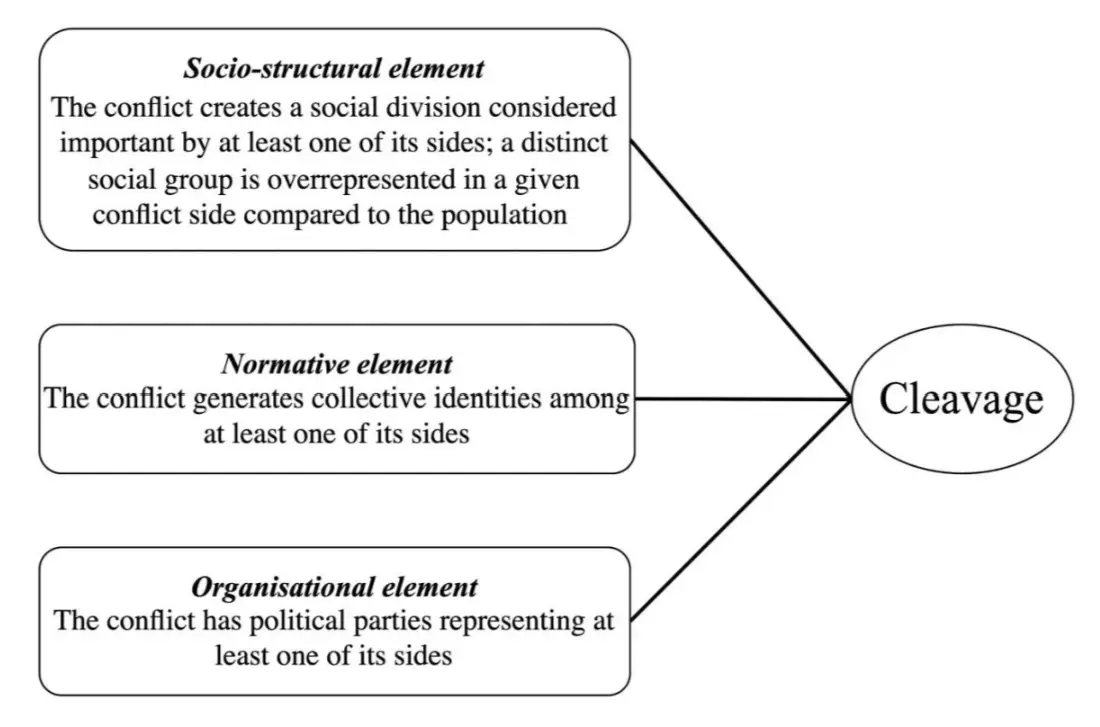
Figure 5: How conflicts become cleavages. Source: Crulli & Emanuele, 2025.
Education is becoming more and more important in influencing or even predicting political voting. It can be argued that a systematic and latent educational cleavage emerged with the advent of mass higher education between the 1960s and the 2000s, within which a distinction between academically educated and not-academically educated has become visible (Garritzmann, 2025). Holding a tertiary educational degree shapes the future occupational trajectory of individuals and is reflected in their economic gains and in the perceived value of their societal position. For instance, GAL (green, alternative, and libertarian) parties are mostly supported by people with a post-secondary or tertiary degree. People with secondary education only mostly support TAN (traditional, authoritarian, and nationalist) parties (Hooghe et al., 2025). There is even evidence of differences between specific university curricula in the upper-educated group. Degrees in arts and humanities correlate with support for socially liberal parties. Degrees in business and technical domains translate more into supporting economically right-wing and socially conservative parties (Martin et al., 2025).
Where globalisation hits low-skilled workers as a consequence of off-shoring practices, automation driven by AI will strike middle-class workers the most (Kurer & Palier, 2019). The way these people will be able to cope with the negative externalities of AI hinges on whether they have a long-term working contract and their ability to co-determine key business decisions (Van Overbeke, 2024). The effects of international trade exposure and export competition significantly erode support for the European Union and its output-based legitimacy in people with jobs displaying high-routine-task intensity levels. The effects are even more pronounced in the presence of individual-level redistribution preferences (Lee, 2026).
On the basis of the idea concerning nascent transnational and cross-cutting politically charged functional divides (Nicoli, 2020; Caramani, 2024), we hypothesise that Euroscepticism will grow among the people more exposed and vulnerable to AI-driven automation – namely females, less educated, and younger middle-class and routine workers. The main triggers could be based on lack of career opportunities and negative economic returns, as well as on a perceived cultural and identitarian competition and threat deriving from the presence of heterogeneous ethnic communities. How individuals within this emerging cleavage crystallise their political preferences requires further research, specifically to: (i) isolate education’s role as a catalyst or mitigating factor, and (ii) clarify the mediating role of European institutions.
Conclusion
European societies are mutating as a consequence of globalisation and digital automation. This phenomenon feeds into older cleavage structures, which is to say group-level politicised inequalities, and shapes political behaviour accordingly. In particular, the labour market consequences of AI adoption affect people’s support for redistribution policies and increase between-level inequality and polarisation among different socio-economic groups. As a result, support for incumbent politicians and major institutions, in this case European ones, is heavily challenged and skewed in favour of challenger/non-mainstream parties.
Many elements could drive people’s electoral preferences while adapting to the transformations delivered by AI-driven automation waves. At the top, education reinforces societal divisions on the basis of people’s level of schooling exposure and attendance – compulsory education vs. university and public vs. private. As a result, individuals’ self-perceived societal positions may decline and be affected in economic terms, as well as trigger cultural and identitarian concerns toward other groups.
Consequently, this emerging social fragmentation constitutes a fully-fledged cleavage, analogous in nature yet distinct in kind from the industrial cleavage originally mapped by Lipset and Rokkan. The main goal of this paper is not only to posit the emergence of such a digital cleavage, but to extend its electoral impact at the European level. As European leaders highlight AGI as critical for EU competitiveness, citizens will inevitably and increasingly evaluate political options through a transnational lens, establishing fertile ground for a digital European cleavage.
References
Acemoglu, D. (2024). The simple macroeconomics of AI (NBER Working Paper No. 32487). National Bureau of Economic Research. https://doi.org/10.3386/w32487
Acemoglu, D., & Restrepo, P. (2018). The race between man and machine: Implications of technology for growth, factor shares, and employment. American Economic Review, 108(6), 1488–1542. https://doi.org/10.1257/aer.20160696
Acemoglu, D., & Restrepo, P. (2019). Automation and new tasks: How technology displaces and reinstates labor. Journal of Economic Perspectives, 33(2), 3–30. https://doi.org/10.1257/jep.33.2.3
Acemoglu, D., & Restrepo, P. (2022). Tasks, automation, and the rise in U.S. wage inequality. Econometrica, 90(5), 1973–2016. https://doi.org/10.3982/ECTA19815
Anderson, C. J. (1995). Economic uncertainty and European solidarity revisited: Trends in public support for European integration. In C. Rhodes & S. Mazey (Eds.), The State of the European Union: Vol. 3. Building a European Polity? (pp. 111–133). Lynne Rienner Publishers.
Anderson, C. J. (1998). When in doubt, use proxies: Attitudes toward domestic politics and support for European integration. Comparative Political Studies, 31(5), 569–601. https://doi.org/10.1177/0010414098031005002
Anelli, M., Colantone, I., & Stanig, P. (2019). We were the robots: Automation and voting behavior in Western Europe (SSRN Scholarly Paper No. 3419966). https://doi.org/10.2139/ssrn.3419966
Autor, D. H. (2015). Why are there still so many jobs? The history and future of workplace automation. Journal of Economic Perspectives, 29(3), 3–30. https://doi.org/10.1257/jep.29.3.3
Autor, D. H., & Dorn, D. (2013). The growth of low-skill service jobs and the polarization of the US labor market. American Economic Review, 103(5), 1553–1597. https://doi.org/10.1257/aer.103.5.1553
Autor, D. H., Levy, F., & Murnane, R. J. (2003). The skill content of recent technological change: An empirical exploration. The Quarterly Journal of Economics, 118(4), 1279–1333. https://doi.org/10.1162/003355303322552801
Autor, D., & Salomons, A. (2018). Is automation labor share-displacing? Productivity growth, employment, and the labor share. Brookings Papers on Economic Activity, 2018(1), 1–87. https://doi.org/10.1353/eca.2018.0000
Bartolini, S. (2007). Restructuring Europe: Centre formation, system building and political structuring between the nation-state and the European Union. Oxford University Press.
Bhorat, Z. (2023). Automation anxiety and a right to freedom from automated systems and AI (Carr Center Discussion Paper Series No. 2023-02). Harvard Kennedy School.
Bornschier, S., Haffert, L., Häusermann, S., Steenbergen, M., & Zollinger, D. (2024). Cleavage formation in the 21st century: How social identities shape voting behavior in contexts of electoral realignment. Cambridge University Press. https://doi.org/10.1017/9781009393508
Brynjolfsson, E., Li, D., & Raymond, L. (2023). Generative AI at work (NBER Working Paper No. 31161). National Bureau of Economic Research. https://doi.org/10.3386/w31161
Bruszt, L., & Vukov, V. (2024). Core-periphery divisions in the EU? East-west and north-south tensions compared. Journal of European Public Policy, 31(3), 850–873. https://doi.org/10.1080/13501763.2023.2290205
Buzzelli, G., Nicoli, F., & Sacchi, S. (2025). Automation and political realignment: The impact of ‘losers’ occupational trajectories on core political values. Political Studies, 00323217251334017. https://doi.org/10.1177/00323217251334017
Caramani, D. (2015). The Europeanization of politics: The formation of a European electorate and party system in historical perspective. Cambridge University Press. https://doi.org/10.1017/CBO9781316340035
Caramani, D. (2024). A cleavage-based conceptualisation of politicised global integration. Journal of European Public Policy, 31(10), 3372–3395. https://doi.org/10.1080/13501763.2024.2309197
Carey, S. (2002). Undivided loyalties: Is national identity an obstacle to European integration? European Union Politics, 3(4), 387–413. https://doi.org/10.1177/1465116502003004001
Chandar, B., & Klein Teeselink, B. (2026). How does AI change labor demand? Evidence from 41 Countries. Stanford Digital Economy Lab Working Paper.
Crulli, M., & Emanuele, V. (2025). Bringing Rokkan into the twenty-first century: The cleavage structure of Western Europe. Journal of European Public Policy, 1–30. https://doi.org/10.1080/13501763.2025.2486080
Dominioni, G., Quintavalla, A., & Romano, A. (2020). Trust spillovers among national and European institutions. European Union Politics, 21(2), 276–293. https://doi.org/10.1177/1465116519894356
Eichenberg, R. C., & Dalton, R. J. (1993). Europeans and the European Community: The dynamics of public support for European integration. International Organization, 47(4), 507–534. https://doi.org/10.1017/s0020818300028083
Eloundou, T., Manning, S., Mishkin, P., & Rock, D. (2024). GPTs are GPTs: Labor market impact potential of LLMs. Science, 384(6702), 1306–1308. https://doi.org/10.1126/science.adj0998
European Commission (EC). (2026). The AI-adoption divide: Who benefits, who doesn’t, and what it means for workers. Economy and Finance Reports.
European Innovation Scoreboard (EIS). (2026). European Innovation Scoreboard. European Commission.
Evans, G. (1999). Europe: A new electoral cleavage? In G. Evans & P. Norris (Eds.), Critical elections: British parties and voters in long-term perspective (pp. 207–222). SAGE Publications. https://doi.org/10.4135/9781446218518.n11
Facius, D., & Iacono, R. (2026). Labor market consequences of generative AI: Early evidence from Norway (CESifo Working Paper No. 12752). CESifo.
Frey, C. B., Berger, T., & Chen, C. (2018). Political machinery: Did robots swing the 2016 US presidential election? Oxford Review of Economic Policy, 34(3), 418–442. https://doi.org/10.1093/oxrep/gry007
Gabel, M. (1998). Interests and integration: Market liberalization, public opinion, and European Union. University of Michigan Press. https://doi.org/10.3998/mpub.15828
Gabel, M. J., & Palmer, H. D. (1995). Understanding variation in public support for European integration. European Journal of Political Research, 27(1), 3–19. https://doi.org/10.1111/j.1475-6765.1995.tb00466.x
Gabel, M., & Whitten, G. D. (1997). Economic conditions, economic perceptions, and public support for European integration. Political Behavior, 19(1), 81–96. https://doi.org/10.1023/A:1024801923824
Gallego, A., Kurer, T., & Schöll, N. (2022). Neither left behind nor superstar: Ordinary winners of digitalization at the ballot box. The Journal of Politics, 84(1), 418–436. https://doi.org/10.1086/714920
Garritzmann, J. L. (2025). From educational conflicts to an educational cleavage? The multiple transformations of educational conflicts from medieval to post-industrial times. West European Politics, 49(3), 617–635. https://doi.org/10.1080/01402382.2025.2512295
Goodger, S., Valetto, P., & Kuiper, E. (2026). Fostering AI resilience in the EU labour market. European Policy Centre.
Goos, M., Manning, A., & Salomons, A. (2014). Explaining job polarization: Routine-biased technological change and offshoring. American Economic Review, 104(8), 2509–2526. https://doi.org/10.1257/aer.104.8.2509
Guarascio, D., & Sacchi, S. (2021). Technology, risk and social policy: An empirical investigation (LEM Working Paper Series No. 2021/16). Scuola Superiore Sant’Anna.
Gunderson, J. R. (2025). Cleavage size and stability in turbulent times: Introducing the bloc volatility and fragmentation dataset. West European Politics, 49(3), 785–811. https://doi.org/10.1080/01402382.2025.2564030
He, R., Cao, j., & Tan, T. (2025). Generative artificial intelligence: A historical perspective. National Science Review, 12(5), nwaf050. https://doi.org/10.1093/nsr/nwaf050
Heinrich, T., & Witko, C. (2021). Technology-induced job loss and the prioritization of economic problems in the mass public. Review of Policy Research, 38(2), 164–179. https://doi.org/10.1111/ropr.12418
Hooghe, L., & Marks, G. (2018). Cleavage theory meets Europe’s crises: Lipset, Rokkan, and the transnational cleavage. Journal of European Public Policy, 25(1), 109–135. https://doi.org/10.1080/13501763.2017.1310279
Hooghe, L., & Marks, G. (2025). How does the education cleavage stack up against the classic cleavages of the past? West European Politics. Advance online publication. https://doi.org/10.1080/01402382.2025.2452789
Hulsegge, G., Dhondt, S., & Van Den Tooren, M. (2026). Globalization and digital transformation: Are impacts on skills and inequality in four future scenarios converging? Innovation: The European Journal of Social Science Research. Advance online publication. https://doi.org/10.1080/13511610.2026.2656886
Inglehart, R. (1970). Cognitive mobilization and European identity. Comparative Politics, 3(1), 45–70. https://doi.org/10.2307/421501
Katsanidou, A., & Jungmann, N. (2025). Rethinking political space in Europe: The modernisation and globalisation dimensions. Journal of European Public Policy, 1–24. https://doi.org/10.1080/13501763.2025.2501091
Kriesi, H., Grande, E., Dolezal, M., Helbling, M., Höglinger, D., Hutter, S., & Wüest, B. (2012). Political conflict in Western Europe. Cambridge University Press. https://doi.org/10.1017/CBO9781139169219
Kriesi, H., Grande, E., Lachat, R., Dolezal, M., Bornschier, S., & Frey, T. (2008). West European politics in the age of globalization. Cambridge University Press. https://doi.org/10.1017/cbo9780511790720
Kriesi, H., Moise, A. D., & Oana, I.-E. (2025). The determinants of transnational solidarity in the EU. West European Politics, 48(6), 1243–1269. https://doi.org/10.1080/01402382.2024.2340336
Kurer, T. (2020). The declining middle: Occupational change, social status, and the populist right. Comparative Political Studies, 53(10–11), 1798–1835. https://doi.org/10.1177/0010414020912283
Kurer, T., & Häusermann, S. (2022). Automation risk, social policy preferences, and political participation. In T. Kurer & S. Häusermann (Eds.), Digitalization and the welfare state (pp. 139–156). Oxford University Press. https://doi.org/10.1093/oso/9780192848369.003.0008
Kurer, T., & Palier, B. (2019). Shrinking and shouting: The political revolt of the declining middle in times of employment polarization. Research & Politics, 6(1). https://doi.org/10.1177/2053168019831164
Lambert, P. J., & Schindler, Y. (2026). The broken ladder: AI, remote work, and early-career hiring (CAGE Working Paper). University of Warwick / London School of Economics.
Lee, J. (2026). Pushed by markets, pulled by machines: Economic pressures and the backlash to the European Union. European Union Politics, 27(1). https://doi.org/10.1177/14651165251395305
Lim, S. (2020). Embedding technological transformation: The welfare state and citizen attitudes toward technology. European Political Science Review, 12(1), 67–89. https://doi.org/10.1017/S1755773919000341
Lipset, S. M., & Rokkan, S. (1967). Cleavage structures, party systems and voter alignments: An introduction. In S. M. Lipset & S. Rokkan (Eds.), Party systems and voter alignments: Cross-national perspectives (pp. 1–64). Free Press.
Martin, N., Kappe, R., & Scott, R. (2025). Subject choice at school and the new transnational cleavage in electoral politics: Evidence from English administrative data. West European Politics. Advance online publication. https://doi.org/10.1080/01402382.2025.2521582
Massenkoff, M., & McCrory, P. (2026, March 5). Labor market impacts of AI: A new measure and early evidence. Anthropic Research. https://www.anthropic.com/research/labor-market-impacts
McLaren, L. M. (2002). Public support for the European Union: Cost/benefit analysis or perceived cultural threat? The Journal of Politics, 64(2), 551–566. https://doi.org/10.1111/1468-2508.00139
McLaren, L. (2007). Explaining mass-level Euroscepticism: Identity, interests, and institutional distrust. Acta Politica, 42(2–3), 233–251. https://doi.org/10.1057/palgrave.ap.5500191
Moise, A. D., Oana, I.-E., Truchlewski, Z., & Wang, C. (2025). Two functionalist logics of European Union polity formation under external threat: Evidence from a conjoint experiment. European Union Politics, 26(2), 369–392. https://doi.org/10.1177/14651165251320870
Musinszki, Z., Horváthné Csolák, E., & Lipták, K. (2025). Analysis of labour market expectations in the digital world based on job advertisements. Administrative Sciences, 15(7), 282. https://doi.org/10.3390/admsci15070282
Nicoli, F. (2020). Democratic deficit and its counter-movements: The Eurocentric–Eurosceptic divide in times of functional legitimacy. In M. Baldassari, E. Castelli, M. Truffelli, & G. Vezzani (Eds.), Anti-Europeanism (pp. 13–29). Springer. https://doi.org/10.1007/978-3-030-24428-6_2
Nicoli, F., Sacchi, S., Burgoon, B., & Buzzelli, G. (2025). Labour market risks and preferences for EU unemployment insurance: The effect of automation, globalization and migration concerns. European Political Science Review, 17(3), 449–469. https://doi.org/10.1017/S1755773924000316
Oana, I., & Truchlewski, Z. (2024). Bounded solidarity? Experimental evidence on cross‐national bonding in the EU during the COVID crisis. European Journal of Political Research, 63(3), 815–838. https://doi.org/10.1111/1475-6765.12636
OECD. (2026). The OECD AI exposure measure: Mapping the OECD AI Capability Indicators to occupations. OECD Publishing. https://doi.org/10.1787/f3da0f0a-en
Palladino, M. G., Bergeaud, A., Bertheau, A., Bunel, S., & Degos, O. (2026). Generative AI: The first changes in the labour market are affecting young people (Eco Notepad Post No. 463). Banque de France. https://www.banque-france.fr/en/publications-and-statistics/publications/generative-ai-first-changes-labour-market-are-affecting-young-people
Rodrik, D. (2018). Populism and the economics of globalization. Journal of International Business Policy, 1(1–2), 12–33. https://doi.org/10.1057/s42214-018-0001-4
Sánchez-Cuenca, I. (2000). The political basis of support for European integration. European Union Politics, 1(2), 147–171. https://doi.org/10.1177/1465116500001002002
Steiner, N. D., Mader, M., & Schoen, H. (2020). The globalisation divide in the public mind: Belief systems on globalisation and their electoral consequences. West European Politics, 43(1), 77–102. https://doi.org/10.1080/01402382.2019.1623403
Teney, C., Lacewell, O. P., & De Wilde, P. (2014). Winners and losers of globalization in Europe: Attitudes and ideologies. European Political Science Review, 6(4), 575–595. https://doi.org/10.1017/s1755773913000246
Thewissen, S., & Rueda, D. (2019). Automation and the welfare state: Technological change as a determinant of redistribution preferences. Comparative Political Studies, 52(2), 171–208. https://doi.org/10.1177/0010414017740600
Truchlewski, Z., Natili, M., & Oana, I.-E. (2025). Understanding public support for EU polity building in hard times: The role of territorial, functional, and crisis politics. Journal of European Public Policy, 1–28. https://doi.org/10.1080/13501763.2025.2506606
Van Overbeke, T. (2024). It’s the robots, stupid? Automation risk, labour market resources and incumbent support in Europe. Research & Politics, 11(1). https://doi.org/10.1177/20531680241228914
Van Overbeke, T. (2026). The robots strike back? Industrial action, automation and the mediating role of institutions in Europe. Transfer: European Review of Labour and Research, 32(1), 13–32. https://doi.org/10.1177/10242589261432618
Williamson, J. G. (2002). Winners and losers over two centuries of globalization (NBER Working Paper No. 9161). National Bureau of Economic Research. https://doi.org/10.3386/w9161
Zollinger, D., & Attewell, D. (2025). Updating cleavage theory for the twenty-first century. West European Politics, 49(3), 591–616. https://doi.org/10.1080/01402382.2025.2560781