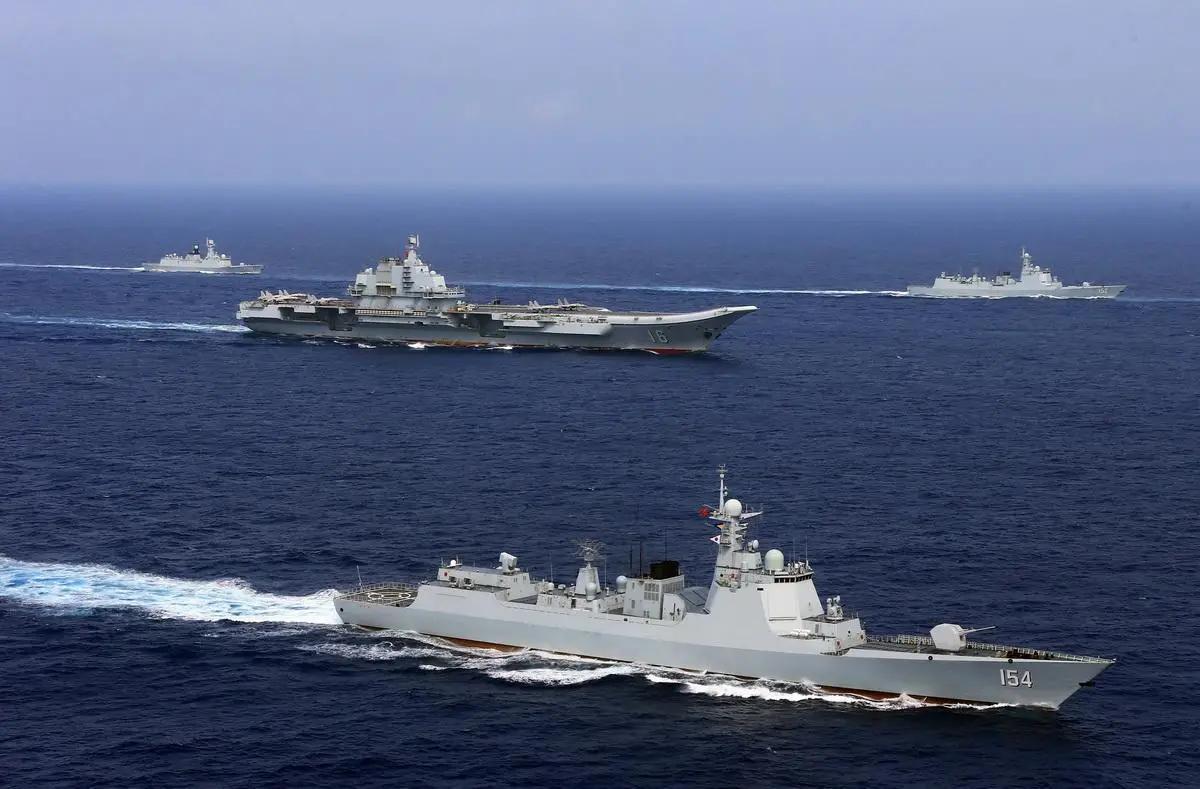
China Expands Naval Operations in the Western Pacific
Taiwan’s Defence Minister, Wellington Koo, said that China is conducting “area denial” drills in the Western Pacific. The unannounced military exercises involve, among others, the aircraft carrier Liaoning and its carrier group. The anti-access/area denial (A2/AD) exercises are aimed at preventing allied forces, and in particular the US, from coming to Taipei’s aid in the event of a conflict over Taiwan. Last week, Taiwan’s Secretary-General of the National Security Council, Joseph Wu, reported that more than 100 Chinese vessels had been deployed for operations around Taiwan, in the South China Sea and into the Pacific. These drills are taking place a week before the APEC summit in Shenzhen, at which a meeting between US President Trump and Chinese President Xi is expected.
Strategic Signalling Ahead of the Trump-Xi Meeting
The exercises are a strategic signal from Beijing to Washington. The deployment of an aircraft carrier, as well as the coordination of such a large number of vessels across several maritime regions, demonstrates the PLA’s technological and strategic capabilities. Although the US maintains a strong military presence in the Indo-Pacific, such as in Guam, and the defence of the First Island Chain is a central component of American security strategies, these A2/AD manoeuvres could significantly increase the costs and risks of any potential US intervention in a conflict over Taiwan. Furthermore, the timing of the exercises was chosen strategically. Trump faces domestic political pressure following the mid-term elections, the results of which can partly be attributed to the costly war against Iran. A Chinese show of force ahead of the US President’s visit could sow doubts within the US administration about taking a hard line against China and maintaining commitments towards Taiwan.