

I. Introduction
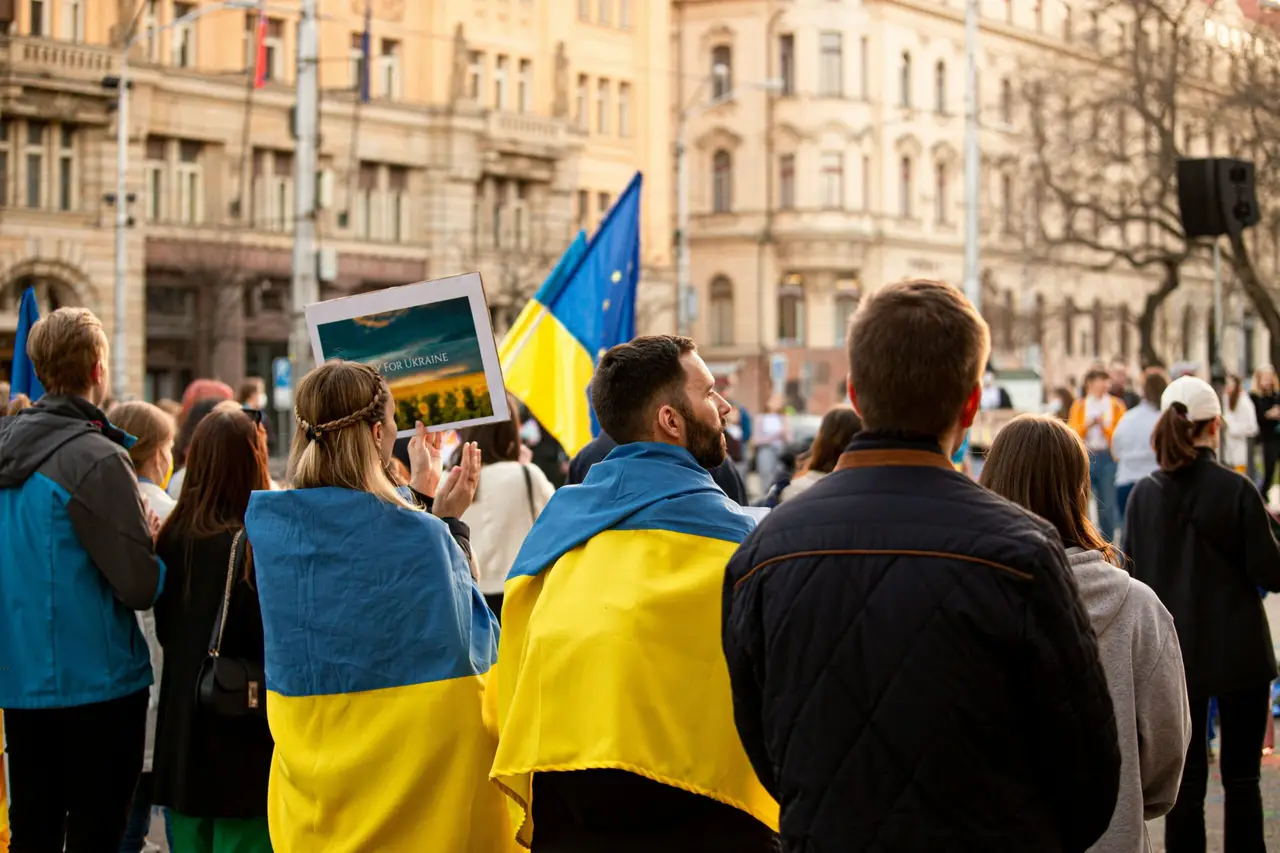
Over four years ago, in February 2022, Russia started its full-scale invasion of Ukraine, after the annexation of the Crimean peninsula in 2014. Since then, multiple scholarly and fact-finding sources have classified the Russia–Ukraine conflict as an international armed conflict (Hathaway et al., 2025; ICRC, 2025; UN Human Rights Council, 2026), and its international character was also recognised by the ECtHR (Ukraine and the Netherlands v Russia, 2025). As part of the Ukrainian government’s digitalisation priority, in 2020 the Ministry of Digital Transformation launched the Diia app (in Ukrainian Дія, meaning “Action”), giving citizens easier access to governmental services in a single platform. Later, in 2022, the app added a new functionality, which created the possibility for civilians to participate in military operations from their personal mobiles, by reporting the locations of Russian troops or sharing any other intelligence data regarding Russian military activities (Dvornichenko, 2023). In 2025, Diia was reported to be used by over 23 million Ukrainians, over half of the total population of the country (Digital State UA, 2025), transforming civilian connectivity into an instrument of national defence.
The defence-purposed tools relevant for this research are the e-Vorog and ePPO apps. The e-Vorog (“e-Enemy”) allows Ukrainian citizens to submit footage related to Russian strikes, records the geolocation coordinates of the user and transmits them directly to the Ukrainian government; after reporting, a message appears: “Each of your shots in this bot means one less enemy” (Bergengruen, 2022; Hathaway et al., 2025). The ePPO (“e-Air Defence”) allows its users to transmit live information on observed Russian aircraft, missiles or drones to the Ukrainian air-defence units (Hathaway et al., 2025; Ukrinform, 2022). Since both apps require identification through the governmental platform, they can be used only by Ukrainian nationals.
By integrating more and more civilians into military operations, mainly through open-source reporting (OSINT), this phenomenon has been described by scholars as “crowdsourced war” (Ford, 2024; Hathaway et al., 2025). In the occupied territories, civilians have been targeted, threatened or detained on suspicion or proof of helping the Ukrainian government, or simply for holding location data about Russian military operations on their phones (Kinetz, 2022; Vakulina, 2026). Here, the problem becomes complicated, and one could wonder: if citizens are being targeted even on the simple suspicion of collaborating with the army, how does that risk change when civilians are indeed reporting geolocation data using the Diia platform? And here is the shift towards the legal issue of this research. As Hathaway et al. (2025) argue, the legal concern raised by the app is the blurring of the line between civilian and combatant under IHL: a civilian who meets the criteria for direct participation in hostilities (DPH) by using the e-Vorog or ePPO apps risks becoming a lawful target for the Russian army. As developed in Section 4, the broader of the two approaches to DPH could, in the words of the same authors, “transform Ukraine’s digital infrastructure into a mechanism for converting millions of civilians into military targets” (Hathaway et al., 2025, p. 1619).
The right to life, central to this research, occupies a distinctive position at the intersection between IHL and international human rights law (IHRL). Under IHL, it is not absolute: combatants, along with the civilians who lose their protective status if they directly take part in the hostilities, may be lawfully targeted during an armed conflict (AP I, 1977, art. 43; Melzer, 2009). Under IHRL, and specifically the ECHR (applicable to Ukraine as a ratifying country), Article 2 is non-derogable under Article 15(2), except for deaths resulting from lawful acts of war (ECHR, 1950). This poses the question: can Ukraine reconcile its positive duty to protect its citizens’ lives with a policy that encourages a conduct (using the Diia platform to share the location of Russian troops) which, under IHL, may transform them into lawful targets? The two bodies of law apply concurrently, as the ICJ has repeatedly held that IHRL does not cease in times of armed conflict (Nuclear Weapons, 1996; The Wall, 2004; Armed Activities, 2005) that will be further developed in section 4.
For this paper, the central legal question is the following: To what extent is Ukraine’s policy of digitally mobilising its civilians on its territory, through the Diia platform, compatible with its positive obligation to protect the right to life under Article 2 ECHR, when read alongside Ukraine’s IHL obligations? The aim of this research is not whether the State is pushing its citizens closer to the enemy, but whether, as the enemy comes closer to the citizens through new technologies and forms of warfare, the State has continued to comply with its positive obligation to protect their right to life.
II. Ukraine’s jurisdiction over Diia users across its territory
A State’s positive obligations presuppose that it has jurisdiction over the persons to whom the treaty applies. While it is uncontested that the basis of jurisdiction rests on the principle of territoriality (Bankovic and Others v Belgium and Others, 2001; Ryngaert, 2015), a question remains: what happens when a State has lost effective control over a part of its territory through occupation by a third State? In the occupied territories in eastern and southern Ukraine, the State has lost effective control, but they still remain de jure Ukrainian territory. The extraterritorial “spatial” and “personal” models (Al-Skeini and Others v United Kingdom, 2011) would concern Russia and fall outside the scope of this research (Milanović & Papić, 2018).
The ECtHR was confronted with the loss of territorial control in the landmark case of Ilaşcu and Others v Moldova and Russia (2004). By way of background, this case concerned detention by the self-proclaimed “Moldavian Republic of Transdniestria” (MRT), de jure Moldovan territory but de facto controlled by a separatist regime. In its ruling, the Court split the jurisdictional analysis into two parts. It held that even though Moldova had lost effective control over the MRT region, jurisdiction under Article 1 ECHR was not lost; rather, the loss of effective control reduced the scope of Moldova’s obligations to limited positive obligations (Ilaşcu, 2004, paras 331, 333), while Russia, exercising effective control, bore full obligations (paras 314–316). Differently from the previous approach, this time the Court framed the loss of control over a territory not as a loss of jurisdiction but as a limitation of the obligations under the Convention. After Ilaşcu, the Court applied the same reasoning across a line of cases (Ivanţoc, 2011; Catan, 2012; Mozer, 2016; Sandu, 2018).
The doctrine of residual positive obligations has, however, generated scholarly debate (Besson, 2012; Milanović & Papić, 2018; Tzevelekos, 2014). In Sargsyan v Azerbaijan (2015), the Court also addressed the standard of the measures a State must take, holding that the State must take measures within its power (whether it is diplomatic, economic, judicial and/or compensatory) under a standard of best efforts and due diligence. The obligation is therefore one of means, not of result. Thus, the Court rules on the basis of the measures taken, not their effectiveness, and the mere existence of some measures does not automatically discharge the State’s duty, as the Court held in rejecting Azerbaijan’s mere participation in peace negotiations (Sargsyan, 2015, paras 237, 241–242).
Having set out this framework, the analysis returns to the central question. First, Russian effective control over the southern and eastern parts of Ukraine – the Donbas region (Donetsk and Luhansk), the previously annexed Crimea, and also Zaporizhzhia and Kherson – is taken as the factual basis here (UN Human Rights Council, 2026; UN General Assembly Res. ES-11/1, 2022; UN General Assembly Res. ES-11/4, 2022; Ukraine and the Netherlands v Russia, 2025). In those regions, Russian authorities have reportedly imposed a regime of detention and surveillance, physically inspecting residents’ phones to verify whether they pass information to the Ukrainian government (Kliszcz, 2025; Lokot, 2023). Second, following the same line of reasoning as in Ilaşcu, and given that Ukraine remains the de jure sovereign, it would still bear residual positive obligations towards its Diia users in the occupied territories, relying on genuine efforts within its power, assessed on whether the efforts were made and not on whether they were effective (Sargsyan, 2015). Conversely, in the non-occupied territories, Ukraine would bear the full positive obligation. Finally, in the most recent case, Ukraine and the Netherlands v Russia (2025), the Court rejected the “context of chaos” rationale from Georgia v Russia (II) (2021) and Shavlokhova v Georgia (2021), covering any jurisdictional gap that would have remained (Milanovic, 2025).
III. The positive obligation to protect the right to life
The starting point is the special place that Article 2 occupies within the Convention system. In McCann and Others v United Kingdom (1995), the first case in which the Court was called to examine this provision, it held that Article 2 “ranks as one of the most fundamental provisions in the Convention” (para 147), one which, in peacetime, admits of no derogation under Article 15. While non-derogable, the right to life is not absolute, as Article 2(2) contains an exhaustive list of situations in which the deprivation of life may be justified (ECHR, 1950). The obligations arising from Article 2 were divided by the ECtHR into a substantive and a procedural part; this research focuses only on the substantive positive obligation (L.C.B. v United Kingdom, 1998), which has two aspects: a duty to have a regulatory framework appropriate to the activity, and a duty to take preventive operational measures to protect individuals whose lives are at real and immediate risk (Osman v United Kingdom, 1998).
One notable case is Osman v United Kingdom (1998), considered a landmark on the positive obligations of States under Article 2 to protect the right to life from threats posed by third parties. The Court recognised that Article 2 implies a positive obligation to protect the right to life, but not in a way that would impose a disproportionate burden on the authorities (para 116). The Court divided its analysis into three elements which, cumulatively, form what is known as the Osman test: first, the existence of a real and immediate risk to life; second, whether the authorities knew or ought to have known of that risk; and third, whether they took reasonable measures within their powers to prevent it (paras 116, 119–120, 123). The doctrine has since been applied in the context of domestic violence, as in Kurt v Austria (2021), which complemented the test with an additional requirement of a risk assessment (Weinberger, 2021).
While the Osman doctrine addresses positive obligations in a peacetime context, the ECtHR extended the positive obligation to situations where the danger to life comes from natural hazards and dangerous activities, as in Öneryıldız v Turkey (2004) and Budayeva and Others v Russia (2008). In Öneryıldız, concerning a foreseeable methane explosion at a rubbish tip about which the inhabitants had not been informed, the Grand Chamber found a violation of Article 2 and held that there is an obligation to inform the public (paras 89–90, 108–110). In Budayeva, concerning a foreseeable mudslide, the Court reaffirmed this duty, especially in a life-threatening emergency (paras 131, 147). Applied to Ukraine’s case, three points can be made. First, the positive obligation survives armed conflict: in Ukraine and the Netherlands v Russia (2025), the Court applied the positive limb of Article 2 in a context of active hostilities, so that where the Convention applies and its provisions are read in harmony with IHL, Ukraine’s substantive positive obligation to protect the right to life of its Diia users survives the armed conflict. Second, applying the Osman test: a real and immediate risk exists, as civilians are targeted, illegally detained and threatened, and, under the broader interpretation of DPH, Diia users may be lawfully targeted for the entire time they have the app on their phone (Hathaway et al., 2025). As for knowledge, differently from Osman, where the State was a bystander, Ukraine is an active actor that designs, operates and promotes the app; moreover, the e-Vorog service instructs its users to delete their messages and photos after reporting, a recommendation which, as Hathaway et al. (2025) note, is “an implicit acknowledgement that there is risk involved” (p. 1570). Third, the affected party is no longer an identified individual, as required by the Osman test, but a mass of anonymous users; through the rationale from Öneryıldız and Budayeva, this would require Ukraine, rather than to protect each civilian, which would be impossible, instead to develop a framework through which it could anticipate and assess the risks, and then inform the public. This could take the form of a clear warning within the platform (following Kurt), a risk assessment identifying the categories of users most exposed to danger (such as those in the Russian-occupied territories), or a combination of these, in the form of an information campaign for the most vulnerable groups.
IV. Human rights obligations alongside humanitarian law obligations
The content of these obligations cannot, however, be determined by reading the Convention in isolation. The starting point is the rule of distinction in Article 48 AP I, complemented by Article 51, which gives the civilian population “general protection against dangers arising from military operations”, unless and for such time as they take part in the hostilities (AP I, 1977). According to the ICRC Interpretive Guidance, an act amounts to DPH when it cumulatively meets three elements: (i)a threshold of harm, (ii)direct causation, and (iii) a belligerent nexus. A civilian reporting the coordinates of a Russian aircraft or missile through ePPO would most likely satisfy all three, and the same reasoning extends, more contextually, to e-Vorog reports (Hathaway et al., 2025; Schmitt & Biggerstaff, 2022). Aligning with Hathaway et al. (2025), the decisive controversy is a temporal one, revolving around the words “for such time as”: under the narrow interpretation the Diia user may be lawfully targeted only while actually using the app, while under the broader interpretation for as long as the app remains installed.
However, IHL does not stop at defining when civilian protection is lost; it also imposes positive duties designed to keep civilians away from the dangers of hostilities. While Article 57 AP I addresses the attacker, and thus binds Russia, decisive for this research is Article 58, which addresses the defender, thus Ukraine itself: the parties shall, “to the maximum extent feasible”, remove the civilian population from the vicinity of military objectives and take “the other necessary precautions” against the dangers resulting from military operations (AP I, 1977). The ICRC Commentary clarifies that this concerns “measures which every Power must take in its own territory in favour of its nationals” (Sandoz et al., 1987, commentary on art. 58), and, as Sassòli and Quintin (2014) explain, these passive precautions remain legal norms owed to the population under the State’s control, derived from the IHRL obligation to protect the right to life. The bridge between IHL and IHRL is therefore being built from both of its sides. Article 58 was drafted on a spatial logic; the Diia scenario takes this logic the other way, as the danger arises not from where the civilians are located but from what the State invites them to do from their own homes. Nevertheless, its open-ended wording makes Article 58(c) the closest analogue, as a State that deliberately integrates its civilians into its targeting process creates a danger against which it must take feasible precautions.
Additionally, IHL contains another directly relevant rule: the rule of dissemination. Under the four Geneva Conventions and AP I, States undertake to disseminate these instruments as widely as possible and, in the wording of GC IV, to include their study in programmes of military and, “if possible, civil instruction, so that the principles thereof may become known to the entire population” (Geneva Convention IV, 1949, art. 144; AP I, 1977, art. 83; and, as custom, Henckaerts & Doswald-Beck, 2005, Rules 142-143). Already in 1971, Draper described the importance of these provisions as “manifest” (Draper, 1971, p. 205). For the Diia users, dissemination is not an abstract duty, but rather a channel through which they could learn that using the app may transform them into targets.
These IHL provisions must now be connected with the positive obligations developed in Section 3. Under the ECHR, this co-existence has a textual anchor: Article 15(2) admits a single exception to the non-derogable Article 2, for deaths resulting from lawful acts of war, which presupposes that the drafters contemplated the co-application of the right to life with the conduct of hostilities. The interpretive method is the principle of systemic integration, found in Article 31(3)(c) VCLT, under which a treaty shall be interpreted taking into account “any relevant rules of international law applicable in the relations between the parties” (International Law Commission, 2006). Milanović (2009) describes this as the “consistent” method of norm-conflict avoidance, in which the focus shifts to the interaction of the particular norms regulating a specific situation – here, one norm: the right to life of the Diia users.
The ECtHR shifted towards this interpretation gradually. In Hassan v United Kingdom (2014), the Court interpreted the grounds of detention under Article 5 in harmony with the internment powers of GC III and GC IV. In Georgia v Russia (II) (2021) and Shavlokhova (2021), however, it withdrew from the battlefield, holding that the “context of chaos” of active hostilities excluded jurisdiction; as Fortin (2022) observed, these findings injected instability into the European human rights system (pp. 350–351). Against this background, Ukraine and the Netherlands v Russia (2025) acquires its significance. The Court expressly refused to describe the relationship between the Convention and IHL as one of lex specialis and lex generalis, holding instead that the provisions of IHL “are used as an interpretative tool when determining the scope of human rights guarantees”, and that there is “no circumstance in which international humanitarian law will apply to the complete exclusion of the Convention’s human rights guarantees” (para 428). While accepting that a harmonious interpretation might not always be possible for Article 2 in the absence of a derogation (para 430), it attached weight, under the positive limb, to the failure to take measures capable of reducing the overall risk to life, such as early warnings (para 465; Milanovic, 2025). Here lies the legal development central to this section: duties that originate in IHL, such as the Article 58 precautions and the rule of dissemination, can thus acquire the character of firm human rights obligations under the Convention. This research aligns with the complementarist approach, now dominant (Hampson, 2008), while recognising that the relationship between IHL and IHRL cannot realistically achieve perfect coherence: it is better, as Fortin (2022) stated, to resist “the temptation to create artificial coherence” than to pretend that no tensions exist (p. 353).
V. Final findings and conclusions
What does this mean, concretely, for Ukraine’s policy of digital mobilisation? First, the factual record suggests that Ukraine encourages the participation without informing its citizens of the legal consequences. The e-Vorog bot replies to its users that each report means “one less enemy” (Bergengruen, 2022), and officials have urged even the residents of occupied Crimea to share the locations of the Bastion missile systems (New Voice of Ukraine, 2024), yet no warning or campaign of dissemination appears to accompany these encouragements. Second, read alongside Article 58(c) AP I and the rule of dissemination, the regulatory and operational duties of Ukraine would include, at a minimum, a clear in-app warning that the use of the reporting functions may constitute direct participation in hostilities and expose the user to lawful attack. Further measures would include IHL, and the DPH framework in particular, in campaigns of civil instruction (Article 144 GC IV; Article 83 AP I; customary Rule 143, Henckaerts & Doswald-Beck, 2005), and design choices reducing the exposure of users, such as discouraging repeated reporting from the same location, where, as concluded in Section 2, Ukraine’s protective reach is at its weakest.
Taken altogether, the answer to the main research question is the following. Ukraine’s obligations apply in full in the non-occupied territories and, following the Ilaşcu line, are reduced to limited positive obligations in the Russian-occupied territories, under a best-efforts standard, as an obligation of means, not of result. The Osman test can be adapted to the armed conflict, but Ukraine is not a bystander confronted with a third-party threat: it is the very actor that invites the risk-bearing conduct, and the affected party is no longer an identified individual, but a mass of unidentified users, which, following Osman, Budayeva and Öneryıldız, points to the key element of the risk assessment. Through systemic integration, the rule on dissemination and Article 58 AP I require Ukraine to take feasible precautions and to disseminate the law. Ukraine’s policy of digital mobilisation is therefore compatible with its positive obligation to protect the right to life to the extent that it focuses on precautions, by providing its civilians with an early and clear warning of the risk of being targeted under IHL when reporting through the Diia app, accompanied by campaigns of dissemination. Since Article 15(2) admits no derogation from Article 2 except precisely for deaths resulting from lawful acts of war, warning and dissemination become the decisive protective measures within Ukraine’s power. By informing the civilians about the risks of being targeted, the State would allow them to take an informed decision; even if these measures cannot remove the risk, they would ensure that the citizens who assume it do so knowing its true price. Lastly, from the very start, this research’s main aim was not to achieve unity between the two bodies of law, but to see how the different systems could work together. A perfect balance between IHL and IHRL can never be achieved, and the reading proposed here remains one solution, out of many, to a relationship that resists perfect coherence.
Reference list
Additional Protocol I to the Geneva Conventions of 12 August 1949, relating to the Protection of Victims of International Armed Conflicts, 1125 U.N.T.S. 3 (1977).
Al-Skeini and Others v United Kingdom, App. No. 55721/07, ECtHR [GC] (7 July 2011).
Armed Activities on the Territory of the Congo (Democratic Republic of the Congo v Uganda), Judgment, 2005 I.C.J. Rep. 168.
Bankovic and Others v Belgium and Others, App. No. 52207/99, ECtHR [GC] (12 December 2001).
Bergengruen, V. (2022, April 18). How Ukraine is crowdsourcing digital evidence of war crimes. Time. https://time.com/6166781/ukraine-crowdsourcing-war-crimes
Besson, S. (2012). The extraterritoriality of the European Convention on Human Rights: Why human rights depend on jurisdiction and what jurisdiction amounts to. Leiden Journal of International Law, 25(4), 857–884.
Budayeva and Others v Russia, App. Nos. 15339/02, 21166/02, 20058/02, 11673/02 and 15343/02, ECtHR (20 March 2008).
Catan and Others v Moldova and Russia, App. Nos. 43370/04 et al., ECtHR [GC] (19 October 2012).
Convention for the Protection of Human Rights and Fundamental Freedoms (European Convention on Human Rights), 213 U.N.T.S. 222 (1950).
Digital State UA. (2025, October 15). Diia reaches 23 million users: Ukraine’s digital government becomes the new normal. https://digitalstate.gov.ua/news/govtech/ponad-23-milyony-ukrayintsiv-uze-korystuiutsia-diyeiu-tsyfrova-derzava-stala-novoiu-normoiu
Draper, G. I. A. D. (1971). The relationship between the human rights regime and the law of armed conflicts. Israel Yearbook on Human Rights, 1, 191–207.
Dvornichenko, D. (2023, January 1). How the war makes Ukraine leap forward in digitalization. German Marshall Fund of the United States. https://www.gmfus.org/news/how-war-makes-ukraine-leap-forward-digitalization-0
Ford, M. (2024). From innovation to participation: Connectivity and the conduct of contemporary warfare. International Affairs, 100(4), 1531–1548.
Fortin, K. (2022). The relationship between international human rights law and international humanitarian law: Taking stock at the end of 2022? Netherlands Quarterly of Human Rights, 40(4), 343–361.
Geneva Convention (IV) Relative to the Protection of Civilian Persons in Time of War, 75 U.N.T.S. 287 (1949).
Georgia v Russia (II), App. No. 38263/08, ECtHR [GC] (21 January 2021).
Hampson, F. J. (2008). The relationship between international humanitarian law and human rights law from the perspective of a human rights treaty body. International Review of the Red Cross, 90(871), 549–572.
Hassan v United Kingdom, App. No. 29750/09, ECtHR [GC] (16 September 2014).
Hathaway, O. A., Pe’er, I., & Vera, C. (2025). Crowdsourced war. New York University Law Review, 100, 1561–1631.
Henckaerts, J.-M., & Doswald-Beck, L. (Eds.). (2005). Customary international humanitarian law, Volume I: Rules. Cambridge University Press.
Ilaşcu and Others v Moldova and Russia, App. No. 48787/99, ECtHR [GC] (8 July 2004).
International Committee of the Red Cross. (2009, June 2). Direct participation in hostilities: Questions & answers. https://www.icrc.org/en/doc/resources/documents/faq/direct-participation-ihl-faq-020609.htm
International Committee of the Red Cross. (2025, February 21). Russia–Ukraine international armed conflict: The value of neutrality for humanitarian work. https://www.icrc.org/en/article/russia-ukraine-international-armed-conflict-value-neutrality-humanitarian-work
International Law Commission. (2006). Fragmentation of international law: Difficulties arising from the diversification and expansion of international law (Finalised by M. Koskenniemi). UN Doc. A/CN.4/L.682.
Ivanţoc and Others v Moldova and Russia, App. No. 23687/05, ECtHR (15 November 2011).
Kinetz, E. (2022, December 21). “We will find you”: Russians hunt down Ukrainians on lists. FRONTLINE PBS. https://www.pbs.org/wgbh/frontline/article/russians-hunt-down-ukrainians-on-lists/
Kliszcz, E. (2025, November 21). Residents in occupied Ukraine pressured into using Moscow messenger app. TVP World. https://tvpworld.com/90132663/kherson-region-residents-reportedly-pressured-to-use-russian-max-app
Kurt v Austria, App. No. 62903/15, ECtHR [GC] (15 June 2021).
L.C.B. v United Kingdom, Judgment of 9 June 1998, Reports of Judgments and Decisions 1998-III.
Legal Consequences of the Construction of a Wall in the Occupied Palestinian Territory, Advisory Opinion, 2004 I.C.J. Rep. 136 [The Wall].
Legality of the Threat or Use of Nuclear Weapons, Advisory Opinion, 1996 I.C.J. Rep. 226 [Nuclear Weapons].
Lokot, T. (2023). Russia’s networked authoritarianism in Ukraine’s occupied territories during the full-scale invasion: Control and resilience. LSE Public Policy Review, 3(1), Article 7. https://doi.org/10.31389/lseppr.85
McCann and Others v United Kingdom, App. No. 18984/91, ECtHR [GC] (27 September 1995).
Melzer, N. (2009). Interpretive guidance on the notion of direct participation in hostilities under international humanitarian law. International Committee of the Red Cross. https://www.icrc.org/en/doc/assets/files/other/icrc-002-0990.pdf
Milanović, M. (2009). A norm conflict perspective on the relationship between international humanitarian law and human rights law. Journal of Conflict and Security Law, 14(3), 459–483.
Milanovic, M. (2025, July 10). The European Court’s merits judgment in Ukraine and the Netherlands v Russia: As good as it gets (almost). EJIL: Talk!. https://www.ejiltalk.org/the-european-courts-merits-judgment-in-ukraine-and-the-netherlands-v-russia-as-good-as-it-gets-almost/
Milanović, M., & Papić, T. (2018). The applicability of the ECHR in contested territories (SSRN Working Paper). https://ssrn.com/abstract=3207716
Ministry of Digital Transformation of Ukraine. (n.d.). Diia: State in a smartphone. https://expo.diia.gov.ua/
Mozer v the Republic of Moldova and Russia, App. No. 11138/10, ECtHR [GC] (23 February 2016).
New Voice of Ukraine. (2024, April 9). Digital minister urges residents of occupied Crimea to share information on Bastion systems. https://english.nv.ua/nation/ukraine-is-actively-searching-for-bastion-coastal-missile-systems-in-temporarily-occupied-crimea-50408556.html
New York Post. (2022, April 4). Ukrainian mayor found executed as images of mass grave are released. https://nypost.com/2022/04/04/ukrainian-mayor-found-executed-as-images-of-mass-grave-are-released/
Öneryıldız v Turkey, App. No. 48939/99, ECtHR [GC] (30 November 2004).
Osman v United Kingdom, App. No. 23452/94, ECtHR (28 October 1998).
Ryngaert, C. (2015). Jurisdiction in international law (2nd ed.). Oxford University Press.
Sandoz, Y., Swinarski, C., & Zimmermann, B. (Eds.). (1987). Commentary on the Additional Protocols of 8 June 1977 to the Geneva Conventions of 12 August 1949. ICRC / Martinus Nijhoff.
Sandu and Others v Moldova and Russia, App. Nos. 21034/05 et al., ECtHR (17 July 2018).
Sargsyan v Azerbaijan, App. No. 40167/06, ECtHR [GC] (16 June 2015).
Sassòli, M., & Quintin, A. (2014). Active and passive precautions in air and missile warfare. Israel Yearbook on Human Rights, 44, 69–124.
Schmitt, M. N., & Biggerstaff, W. C. (2022, November 2). Ukraine symposium — Are civilians reporting with cell phones directly participating in hostilities? Lieber Institute: Articles of War. https://lieber.westpoint.edu/civilians-reporting-cell-phones-direct-participation-hostilities/
Shavlokhova v Georgia, App. No. 45431/08, ECtHR (dec.) (5 October 2021).
Tzevelekos, V. P. (2014). Reconstructing the effective control criterion in extraterritorial human rights breaches: Direct attribution of wrongfulness, due diligence and concurrent responsibility. Michigan Journal of International Law, 36(1), 129–178.
UN General Assembly. (2022a). Aggression against Ukraine (Res. ES-11/1). UN Doc. A/RES/ES-11/1.
UN General Assembly. (2022b). Territorial integrity of Ukraine: Defending the principles of the Charter of the United Nations (Res. ES-11/4). UN Doc. A/RES/ES-11/4.
UN Human Rights Council. (2026). Report of the Independent International Commission of Inquiry on Ukraine (Advance unedited version, 9 March 2026, UN Doc. A/HRC/61/61).
Ukraine and the Netherlands v Russia, App. Nos. 8019/16, 43800/14, 28525/20 and 11055/22, ECtHR [GC] (9 July 2025).
Ukrinform. (2022, October 26). Ingenious mobile app helps down first Russian missile in Ukraine. https://www.ukrinform.net/rubric-ato/3601566-ingenious-mobileapp-helps-down-first-russian-missile-in-ukraine.html
Vakulina, S. (2026, February 24). Russian troops forced me to clean torture cells, Ukrainian former teen prisoner tells Euronews. Euronews. https://www.euronews.com/2026/02/24/russian-troops-forced-me-to-clean-torture-cells-ukrainian-former-teen-prisoner-tells-euron
Vienna Convention on the Law of Treaties, 1155 U.N.T.S. 331 (1969).
Weinberger, L. M. (2021, August 18). Kurt v Austria: A missed chance to tackle intersectional discrimination and gender-based stereotyping in domestic violence cases. Strasbourg Observers. https://strasbourgobservers.com/2021/08/18/kurt-v-austria-a-missed-chance-to-tackle-intersectional-discrimination-and-gender-based-stereotyping-in-domestic-violence-cases/