



1. Introduction
Envision buying a product from someone on the other side of the world. The payment is processed in seconds: no traditional banks, lower costs, and no delays. The transaction is complete, and you own the product. This is part of the promise of cryptoassets, digital assets that question conventional ideas about the banking system and financial regulation.
What does this scenario make you think? On the one hand, it evokes a sense of freedom and unlimited capability; on the other hand, it creates an absurd sense of awkwardness.
The banking system is structured centrally. Each country has national banks and financial institutions that are subject to national laws and regulations. Above them, central banks and other supervisory authorities contribute to the overall stability of the banking system, for instance, within the EU or the US.
But what happens when it comes to regulating a decentralised asset? Here lies a fundamental gap: transactions can cross national borders with relative ease. However, the legal frameworks governing them remain fragmented across jurisdictions.
Bitcoin is considered the world’s largest cryptoasset by market value. Its valuation is enormous, although its economic significance is even greater. It operates on a decentralised network; it defies jurisdiction; it conceals secrets while offering endless possibilities; it challenges the system. In the face of this challenge, one question arises: Is international cooperation effectively regulating this borderless asset and addressing its risks while preserving its opportunities for economic growth?
2. Two Sides of the Same Coin
2.1. Risks
Bitcoin and cryptoassets in general might sound scary, and this is not arbitrary! Bitcoin is an extremely risky asset.
Unlike fiat currencies, Bitcoin is characterized by extreme price volatility and sudden market fluctuations. It’s also not guaranteed by any central bank, which makes it a high-risk financial instrument. This is consistent with the nature of cryptoassets. Their market valuation relies heavily on supply-and-demand dynamics rather than economic yields and state guarantees (IMF & FSB, 2023). The potential for gains is accompanied by an equally significant risk of losses. As a result, investors lack traditional safety nets.
However, the issue becomes even more concerning from the states’ perspective. The anonymity and offshore exchanges these digital assets provide allow more direct violations of the law. Illicit actors and organized crime groups take advantage of the nature of these digital wallets to conduct peer-to-peer (P2P) transfers, bypassing traditional Anti-Money Laundering (AML) controls, to finance terrorist or criminal acts.
These exact P2P transactions also lead to severe tax evasion. Cryptocurrencies operate outside conventional banks and beyond jurisdiction, making it difficult for tax authorities to conduct effective audits. This situation can deprive governments of significant public revenue, undermine tax fairness, and erode overall trust in the system.
2.2. Benefits
Despite the concerns, we should not overlook that cryptocurrency is a significant technological and financial innovation, offering new possibilities for transactions and investments.
In fact, cryptoassets as payment instruments encourage cheaper and faster transactions. Traditional international payments involve many financial intermediaries, making the process time-consuming and potentially inefficient. At the same time, there are large segments of the population who lack access to conventional banking infrastructure, particularly in Emerging Markets and Developing Economies (EMDEs) (IMF & FSB, 2023). Digital asset transactions are borderless and limit reliance on traditional institutions, reducing transaction fees and enhancing financial inclusion.
When it comes to investment techniques, portfolio diversification is commonly used. By spreading investments across assets with different risk and return characteristics, investors try to reduce their overall risk. Cryptocurrency is an alternative asset, distinct from conventional financial instruments and therefore influenced by different market factors. Although it must be treated with caution given its high volatility, it can still emerge as a valuable asset in a portfolio if incorporated appropriately.
Alongside this, cryptoassets’ nature offers many growth opportunities for Small and Medium-sized Enterprises (SMEs). It establishes an easier way of raising capital and fundraising, encouraging new ideas to spread and participate in market competition. After all, a stable and rising economy needs an increasing number of new market entrants.
3. The International Regulatory Framework
In October 2008, the Bitcoin white paper was published; the network launched in January 2009. It wasn’t until 2013, when governments realized Bitcoin was not only established but also a source of significant economic risk, that they began regulating this new financial asset.
3.1 EU
In the EU, governments decided not to fight Bitcoin and cryptoassets, but to identify entry and exit points- the digital bridges where crypto meets traditional fiat money- and regulate them effectively. The Markets in Crypto-Assets (MiCA) Regulation creates one unified set of rules across all EU Member States. It was enacted as an EU Regulation (Regulation (EU) 2023/1114); therefore, it is entirely and directly applicable without requiring national transposition into domestic law. One of the most important Provisions is MiCA Title V, which establishes that crypto-asset service providers generally require authorisation under the Regulation. Licensed companies are legally termed CASPs (Crypto-Asset Service Providers). The companies are licensed by local regulators, and once licensed, they receive an EU Passport, allowing them to offer their services legally across all 27 EU Member States (Passport Effect) (Official Journal of the European Union, L 150, 1–174).
Title V of MiCA came into effect in December 2024. Around the same time, the Transfer of Funds Regulation (TFR) came into force as part of the EU AML framework (FATF, 2026, July), requiring all licensed companies to accompany every transaction between platforms with personal identification and tax information. For transfers exceeding €1,000 involving self-hosted addresses, service providers must take adequate measures to assess whether the address is owned or controlled by their customer. In this way, crypto transfers are largely traceable, as money is followed by data.
On taxation, although tax rates are strictly a national matter, the EU enforces transparency across specified transactions under the DAC8 Directive. When applicable, covered trades are made on a platform, it automatically captures parties’ identities and, most importantly, TINs. All trades are logged, and the public blockchain addresses private hardware wallets whenever funds are withdrawn. The first major automated data exchange between European tax authorities will be completed by September 2027. Notably, the EU’s DAC8 Directive is fully integrated with the International Organization for Economic Co-operation and Development’s (OECD’s) global Crypto-Asset Reporting Framework (CARF) standard, allowing European tax offices to seamlessly exchange crypto data with non-EU countries such as the UK and Japan (Organisation for Economic Co-operation and Development [OECD], 2024).
3.2. USA
The US has historically faced challenges from regulatory differences among federal agencies.
The Securities and Exchange Commission (SEC), in contrast to the Commodity Futures Trading Commission (CFTC), used to treat most altcoins as unregistered securities. However, this approach has evolved. In March 2026, the SEC, together with the CFTC, issued an interpretation clarifying how federal securities laws apply to different categories of cryptoassets (Securities and Exchange Commission & Commodity Futures Trading Commission, 2026). The interpretation distinguishes between digital commodities, digital collectibles, digital tools, stablecoins, and digital securities, while recognising that a cryptoasset which is not a security itself may still be involved in an investment contract subject to securities laws. Bitcoin, for example, is identified as a digital commodity under this interpretation. Furthermore, rather than a passport effect, crypto businesses in the US must obtain separate licenses based on their state.
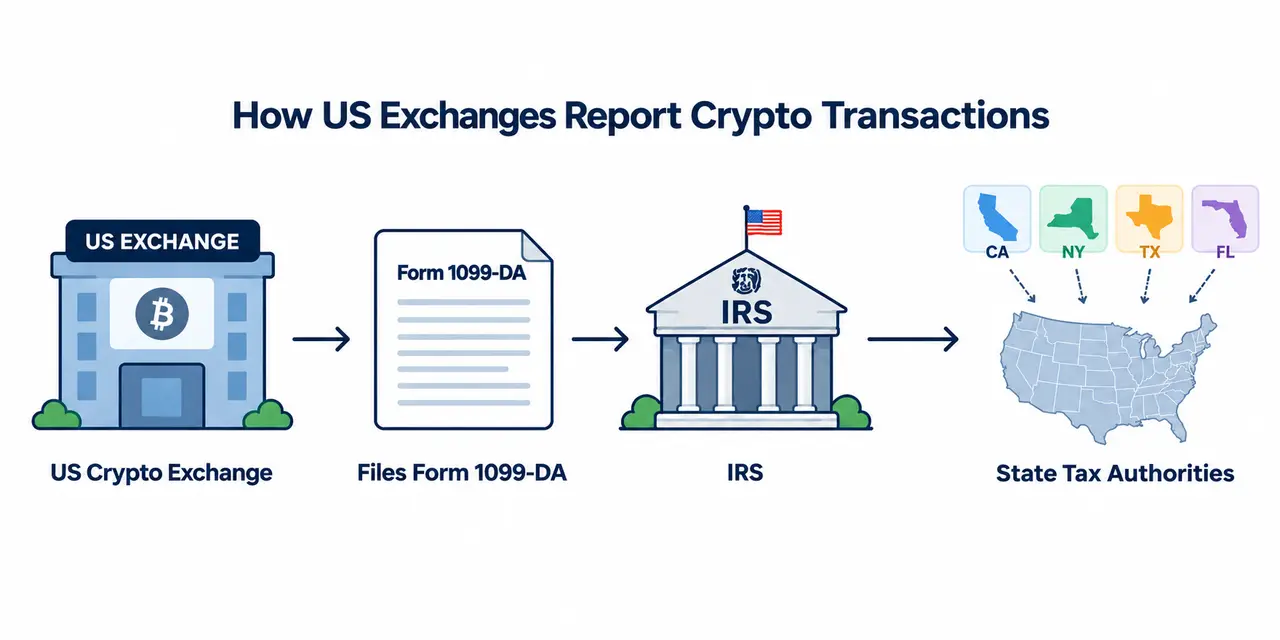
On taxation, the US Internal Revenue Service (IRS) is highly aggressive. The IRS treats crypto as property, meaning that every single swap is a taxable event that must be reported. Moreover, the US tax framework is primarily administered at the federal level by the IRS, although separate state tax obligations may also apply. Covered digital asset brokers report specified proceeds, and in some cases basis information, using Form 1099-DA (Internal Revenue Service, 2025). Although the US has committed to CARF and the Treasury is developing implementing regulations, it has not yet begun exchanging data under the framework.
4. The enforcement gap: Unregulated Blindspots
Over the years, governments worldwide have tried to understand cryptoassets’ specific characteristics to regulate them effectively, covering all possible aspects. However, the decentralized, cryptographic nature of cryptoassets preserves structural blind spots that remain a challenge for regulatory authorities, creating an enforcement gap (Boas & Barake, 2025; FATF, 2026, July).
Regulators still face difficulty addressing Peer-to-Peer transactions (Boas & Barake, 2025). These transactions are characterized by the complete absence of any centralized financial intermediary. When individuals transact directly from one offline hardware wallet to another (Ledger-to-Ledger transfer combined with physical cash exchange), the entire transaction is executed exclusively on the blockchain. This inevitably creates a legislative gap. Unless these specific assets are eventually deposited into a monitored centralized exchange, regulators have limited means based on blockchain analytics and other less reliable tools to enforce tax compliance, laying the groundwork for a parallel, unmonitored economy.
By the same logic, Decentralized Exchanges (DEXs) also create a major loophole (FATF, 2026, July). In contrast to the Centralized Exchanges (CEXs), DEXs are platforms operating entirely via automated smart contracts on the blockchain. They connect sellers directly to buyers without requesting any personal information or TINs, significantly complicating and impeding enforcement of tax-reporting rules. Users can swap millions of dollars in digital assets anonymously, avoiding state oversight and tracking nets.
Lastly, although the OECD’s CARF framework aims for universal transparency through automatic data-sharing agreements, it is not globally adopted. Offshore jurisdictions and uncooperative nations intentionally refuse to collect and share personal and financial data, creating non-CARF Havens for large corporate entities and investors, who can route their assets through these non-compliant parties, knowing their data will never be forwarded to domestic agencies.
5. Conclusion
All bring us back to the initial question: Is international cooperation effectively regulating this borderless asset and addressing its risks while preserving its opportunities for economic growth?
International cooperation has regulated the points where cryptoassets meet fiat currencies, enhancing transparency and significantly reducing tax evasion. Borderless, decentralized infrastructures still pose a major challenge for international regulatory frameworks. Consequently, illicit flows, software-driven hacks, and non-compliant tax havens still exist within the enforcement gap.
Paradoxically, this enforcement gap is precisely what preserves the possibility of technological and economic growth. Over-regulation inevitably suffocates technological creativity. Leaving open-source code untouched allows programmers to develop next-generation blockchain architecture and innovation. Eventually, the same thing that drives risk in cryptoassets also keeps the engine of financial technology moving forward.
References
Boas, H. F., & Barake, M. (2025). Enforcing taxes on cryptocurrencies (EU Tax Observatory Working Paper No. 29). EU Tax Observatory. https://www.taxobservatory.eu/publication/enforcing-taxes-on-cryptocurrencies/
European Commission. (2023). DAC8 – Taxation and Customs Union: Directive on administrative cooperation in the field of taxation. https://taxation-customs.ec.europa.eu/taxation/tax-transparency-cooperation/administrative-co-operation-and-mutual-assistance/directive-administrative-cooperation-dac/dac8\_en
European Union. (2023). Regulation (EU) 2023/1114 of the European Parliament and of the Council of 31 May 2023 on markets in crypto-assets (MiCA). Official Journal of the European Union, L 150, 1–174. https://eur-lex.europa.eu/legal-content/EN/TXT/?uri=CELEX%3A32023R1114
Financial Action Task Force. (2026, July). Targeted update on implementation of the FATF standards on virtual assets and virtual asset service providers (7th ed.). https://www.fatf-gafi.org/content/dam/fatf-gafi/reports/7th-targeted-update-on-implementation-fatf-standards-vas-vasps-2026.pdf.coredownload.pdf
Internal Revenue Service. (2025). Treasury, IRS issue proposed regulations to make it easier for digital asset brokers to provide 1099-DA statements electronically. U.S. Department of the Treasury. https://www.irs.gov/newsroom/treasury-irs-issue-proposed-regulations-to-make-it-easier-for-digital-asset-brokers-to-provide-1099-da-statements-electronically
International Monetary Fund & Financial Stability Board. (2023). IMF-FSB synthesis paper: Policies for crypto-assets. https://www.imf.org/-/media/files/research/imf-and-g20/2023/imf-fsb-synthesis-paper-policies-for-crypto-assets.pdf
Organization for Economic Co-operation and Development. (2024, October 2). Crypto-Asset Reporting Framework and amended Common Reporting Standard: OECD releases IT format for transmitting information and issues interpretative guidance. https://www.oecd.org/en/about/news/announcements/2024/10/crypto-asset-reporting-framework-and-amended-common-reporting-standard-oecd-releases-it-format-for-transmitting-information-and-issues-interpretative-guidance.html
Securities and Exchange Commission & Commodity Futures Trading Commission. (2026). Application of the federal securities laws to certain types of crypto assets and certain transactions involving crypto assets (Release Nos. 33-11412; 34-105020). https://www.sec.gov/rules/interp/2026/33-11412.pdf