


Eurosatory has long been recognised as one of the world’s foremost exhibitions dedicated to defence and security. Every two years, military officials, policymakers, industrial leaders, researchers and security professionals gather in Paris to present new technologies and discuss the challenges shaping the international security environment. While the exhibition floor remains an important showcase for military equipment and technological innovation, the 2026 conference programme offered insight into a broader transformation currently taking place within European defence.
Across discussions involving representatives of the European Commission, NATO, Ukrainian military personnel, defence manufacturers, financial experts and research organisations, spanning procurement, industrial production, space security, defence finance and battlefield innovation, a consistent narrative emerged: European defence is undergoing a conceptual evolution, where military capability is no longer understood solely through the quantity or sophistication of weapon systems. Increasing emphasis is instead placed on the industrial, technological, financial and organisational conditions that enable those capabilities to be developed, produced and sustained over time. Eurosatory 2026 thus illustrated not simply how Europe is preparing for future conflicts, but how it is redefining the very foundations of defence.
Defence beyond the armed forces
One of the most noticeable developments throughout the conference programme was the broadening of what constitutes defence.
Military power has traditionally been associated with armed forces and military platforms. At Eurosatory, however, discussions extended well beyond operational capabilities. Industrial policy, research and development, financial markets, logistics, satellite infrastructure, higher education and manufacturing were repeatedly presented as essential components of Europe’s security architecture.
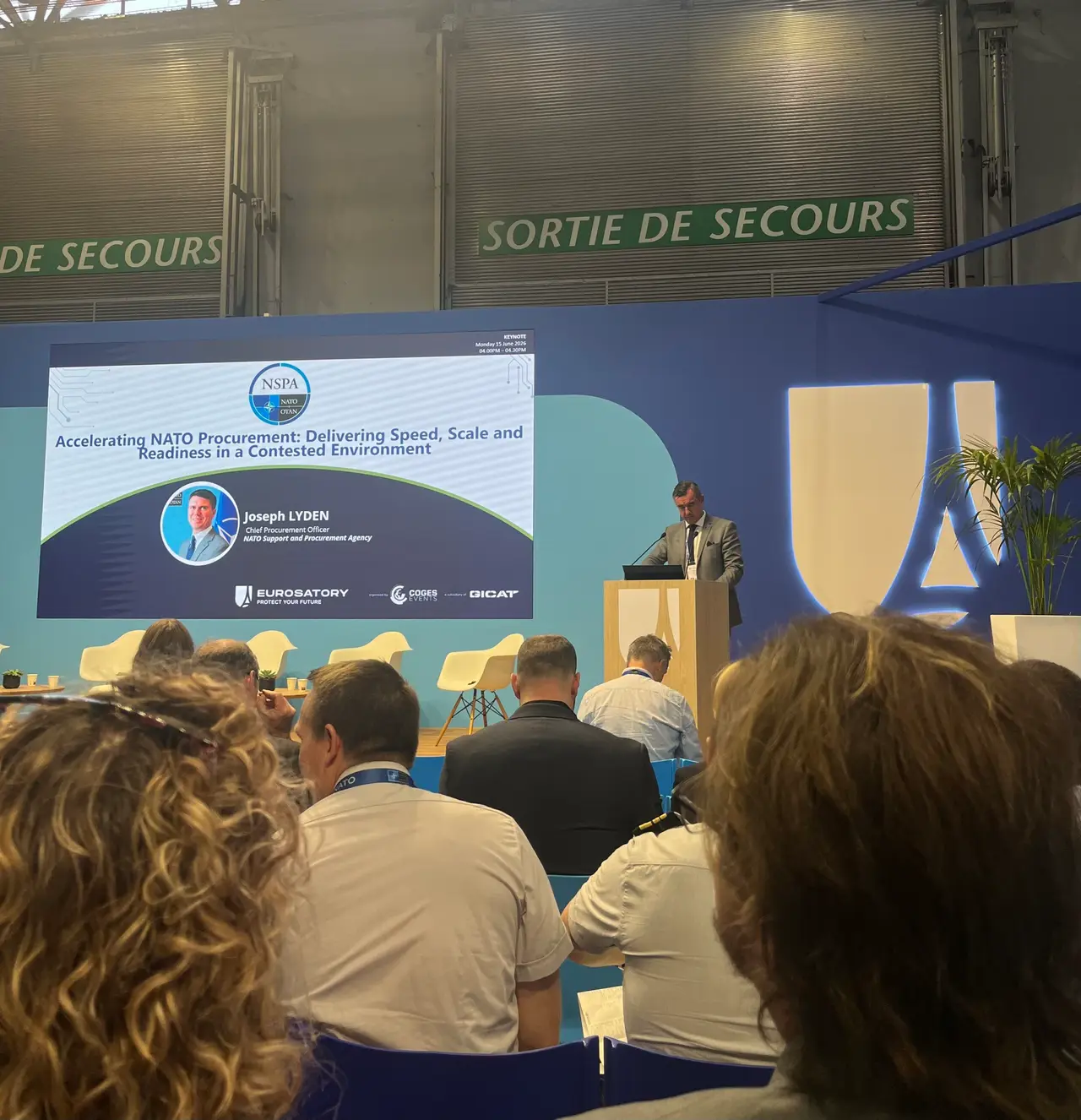
This broader perspective was evident across numerous conferences. Representatives of the European Commission emphasised that operational readiness cannot exist without industrial readiness. NATO’s Support and Procurement Agency described procurement as a strategic capability rather than an administrative process, highlighting its role in strengthening interoperability and ensuring long-term resilience. Discussions dedicated to defence finance explored how private investment and venture capital influence Europe’s capacity to develop innovative technologies, while sessions on space security demonstrated the growing importance of orbital infrastructure for military communications, navigation and situational awareness.
Taken together, these discussions reflected a common understanding. Defence increasingly depends upon a network of civilian and military actors whose contributions extend far beyond the battlefield itself. This broader understanding of contemporary security and the need for close coordination between different actors, ranging from defence institutions and civil authorities to emergency services, industry and wider society, was further reflected in sessions dedicated to crisis management and civil preparedness, many of which focused on the French experience. Rather than treating resilience solely as a military concern, these panels highlighted the importance of preparedness, information sharing and cross-sector cooperation, thereby demonstrating that strengthening defence capabilities is increasingly linked to strengthening the resilience of civilian institutions and society.
Industrial resilience as a strategic capability
A second theme concerned the relationship between industrial capacity and military effectiveness.
For many years, defence debates largely focused on technological superiority. While advanced capabilities remain essential, the conferences repeatedly emphasised that production capacity has become equally important. Modern conflicts place considerable pressure on industrial systems, requiring states not only to acquire sophisticated equipment but also to manufacture, maintain and replenish it at sufficient scale.
Several speakers argued that industrial resilience, including production lines, supply chains, maintenance infrastructure and access to critical materials, should therefore be regarded as determining factors in long-term military readiness and thus as a strategic capability in its own right.
This perspective was particularly visible in discussions surrounding European defence industrial policy. Rather than concentrating exclusively on the development of new technologies, policymakers increasingly stressed the importance of expanding manufacturing capacity, strengthening supply chains and creating predictable conditions that encourage long-term industrial investment. Similar arguments emerged during NATO presentations, which presented multinational procurement initiatives as mechanisms for reducing fragmentation while improving efficiency and interoperability.
The conferences therefore suggested that military strength is inseparable from industrial strength. The ability to sustain production during periods of prolonged crisis has become an essential element of deterrence.
The emphasis placed on industrial resilience was closely linked to another recurring theme throughout the conference programme: the influence of Ukraine on contemporary defence thinking. Rather than treating industrial policy and operational experience as separate discussions, many speakers explicitly connected them.
Ukraine as a source of innovation
Ukraine inevitably occupied a central position throughout Eurosatory 2026. Yet the conferences revealed a subtle but important shift in perspective.
Rather than presenting Ukraine exclusively as a country receiving military assistance, several speakers described it as an increasingly influential source of operational and technological innovation. Ukrainian battlefield experience has accelerated developments in drone warfare, intelligence gathering, force organisation and procurement practices at a pace rarely observed in peacetime.
Presentations delivered by Ukrainian representatives demonstrated how operational feedback has become an integral part of technological development. Equipment is continuously modified according to battlefield experience, reducing the time separating innovation, deployment and adaptation. This iterative approach has enabled both military organisations and private companies to respond rapidly to changing operational conditions.
Fire Point’s presentation illustrated this transformation from an industrial perspective. Established shortly after the beginning of Russia’s full-scale invasion, the company developed battlefield-tested drone and missile technologies while simultaneously creating much of its own manufacturing infrastructure. Rather than relying heavily on external suppliers, the company placed particular emphasis on technological sovereignty, vertical integration and rapid production.
Throughout the conference programme, Ukraine emerged not only as the central theatre of contemporary warfare but also as an increasingly influential reference point for future European defence planning and discussions concerning procurement, industrial organisation and technological innovation.
Speed and adaptability in contemporary warfare
Closely connected to these developments was the growing importance attributed to speed.
The conferences repeatedly highlighted the limitations of traditional defence acquisition models, which often require lengthy development cycles before equipment reaches operational units. In contrast, contemporary conflicts demand continuous adaptation. Military organisations must be capable of responding rapidly to technological developments introduced by their adversaries, particularly in domains such as autonomous systems, electronic warfare and precision strike capabilities.
Several speakers argued that future procurement models should prioritise iterative development rather than the pursuit of technically perfect solutions. Operational effectiveness increasingly depends upon the capacity to field capable systems quickly, gather user feedback and improve those systems throughout their service life.
This philosophy was visible not only in presentations delivered by Ukrainian representatives but also in discussions led by NATO and European institutions, both of which emphasised the need to simplify procurement procedures and strengthen cooperation between governments and industry.
Within this context, speed should not simply be understood as an operational advantage but as a strategic capability shaping innovation, industrial production and military preparedness alike.
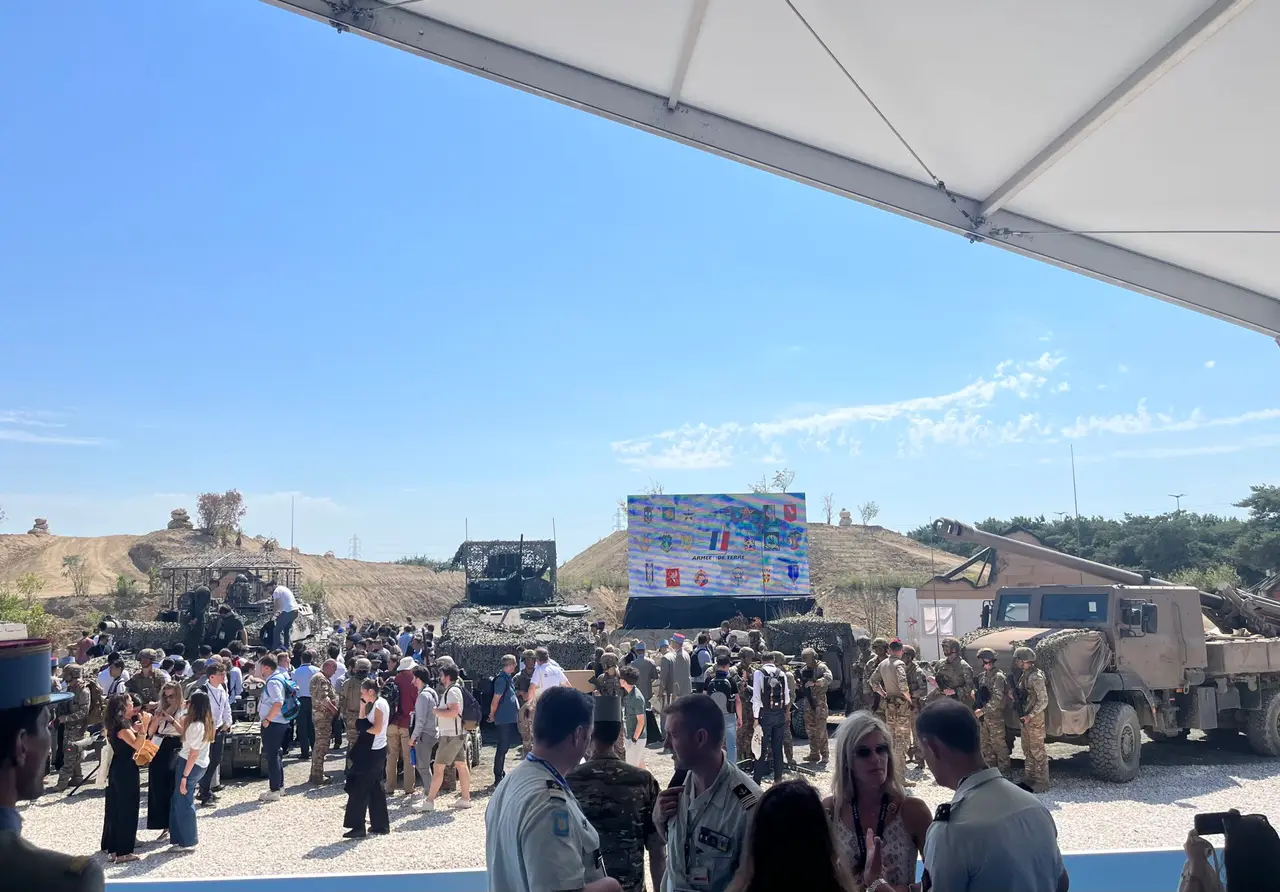
To support greater adaptability and interoperability, many exhibitors showcased modular platforms. The modular system architecture used in unmanned aerial systems (UAS/UAVs) and uncrewed ground vehicles (UGVs), whose prevalence has increased since the last edition of the conference, enables a more customisable end product. These consist of a basic platform that can be equipped with mission-specific modules (intelligence, surveillance and reconnaissance (ISR), logistics, casualty evacuation, counter-UAS operations, or armed missions), which also enhances interoperability with other platforms and systems operating in the same environment. At the same time, the modular design simplifies upgrades and reconfiguration throughout the platform’s lifecycle, allowing capabilities to evolve alongside operational requirements.
Limitations of technological innovation in extreme environments
The importance of aligning industrial capabilities with operational requirements became particularly apparent during conference panels dedicated to Arctic missions that reflected on the challenges of equipment, logistics, training and human performance that emerge in extreme weather environments. Reflecting the Arctic’s growing strategic relevance within the security environment, these discussions demonstrated how emerging operational theatres are shaping capability development and defence planning.
Missions in the Arctic require specialised equipment capable of functioning reliably under harsh environmental conditions while balancing survivability, mobility and firepower. Considering the extreme temperatures, technological innovations and standard equipment face performance limitations in comparison with normal conditions. Consequently, greater focus is placed on trade-offs between durability and performance of the systems, as well as on rising costs from lower production volumes and the adaptation required for these environments.
A step towards strengthening operational capabilities in Arctic conditions and validating concepts for cold-weather logistics and mobility was the French Armed Forces’ successful landing of an A400M Atlas heavy transport aircraft under extreme natural conditions at -25°C on a sea ice runway less than 1,400 meters long in northern Greenland (Kap Harald Moltke fjord) (Tunupex and Uppick 2026 exercises). Gaining practical insights provided valuable lessons on capability development, operational planning and force preparation, while highlighting the adaptations required for future Arctic deployments. This example also highlights the importance of close interaction between end users and industry.
Strategic autonomy as an integrated objective
Strategic autonomy remained one of the defining concepts throughout Eurosatory 2026. Importantly, however, the conferences demonstrated that the concept extends well beyond defence expenditure alone.
Financial specialists emphasised the need to mobilise private capital in support of Europe’s defence industrial base, arguing that fragmented financial markets continue to constrain the development of innovative companies. Meanwhile, discussions dedicated to space security highlighted Europe’s efforts to strengthen sovereign capabilities in satellite communications and space-based services. Industrial representatives similarly stressed the importance of securing critical technologies and reducing dependence on external suppliers for strategically important components.
These different perspectives converged around a shared objective. Strategic autonomy requires an integrated approach combining industrial capacity, technological expertise, financial investment, resilient supply chains and international cooperation. None of these dimensions can independently guarantee European security. Their effectiveness depends upon their ability to reinforce one another.
Rather than a policy limited to defence ministries, strategic autonomy increasingly encompasses the wider economic and technological foundations underpinning military capability.
Emerging technologies for future military operations
To broaden the discussion surrounding future technology in security and defence, discuss the role of start-ups as drivers of rapid defence innovation and promote collaborative R&D and strategic investment, the Eurosatory Lab provided a platform for over 60 global start-ups focusing on disruptive technologies like AI, hypersonics, genomics, new materials or the Internet of Things. Among the innovations on display was a bio-hybrid reconnaissance concept developed by Swarm Biotactics, which explores the use of sensor-equipped cockroaches for reconnaissance and mapping tasks in inaccessible environments. Current research focuses on land-based applications, with plans to expand into air and maritime domains. These ambitions, however, highlight both the opportunities and technological challenges associated with unconventional systems.
Conclusion
Although Eurosatory is primarily recognised as an exhibition of defence technologies, the 2026 conference programme suggested that Europe’s most important transformation may be intellectual rather than technological.
Across institutions representing different responsibilities and interests, a broad consensus emerged concerning the direction of European defence. Industrial resilience, technological sovereignty, financial mobilisation, rapid innovation and institutional cooperation were consistently presented as indispensable components of a broader strategic framework rather than isolated policy priorities.
The principal lesson emerging from Eurosatory 2026 is therefore not simply that Europe must strengthen its military capabilities. Rather, it must strengthen the ecosystem that generates those capabilities. Factories, research centres, financial institutions, universities, logistics networks and industrial partnerships increasingly shape Europe’s ability to respond to an evolving security environment. Military power remains fundamental, but it is now understood as the product of a much wider network of political, economic and technological relationships.
In this sense, Eurosatory 2026 offered more than a presentation of emerging defence technologies. It illustrated how European defence thinking is evolving to meet the strategic realities of the twenty-first century.