
Geopolitical competition between China and the United States has intensified over the Pacific’s maritime corridors and natural resources (Saeed et al., 2025). France’s four Pacific territories, French Polynesia, New Caledonia, Wallis and Futuna, and the uninhabited Clipperton Island, grant an exclusive economic zone (EEZ) of roughly 6.9 million square kilometres. This accounts for 63% of France’s global EEZ and makes it the second-largest in the world (Gori, 2023). Under the constitutional principle of an “indivisible” Republic (Constitution du 4 octobre 1958, 1958, art. 1), these territories remain legally part of France. This gives France rights to critical mineral resources and a military foothold in the Pacific, while the territories receive financial support, security, infrastructure and local autonomy (Deppert, 2025).
These territories underpin France’s leverage as a permanent UN Security Council member, G7 member and nuclear-armed state with a global foothold. France consolidates this presence through partnerships with key regional actors including the United States, Australia, Japan and New Zealand. However, current public debt of 119% is straining the national budget (Paponaud, 2026). Discontent rooted in historical injustices and systemic inequalities has also pushed New Caledonia, and to a lesser extent French Polynesia, toward independence.
Political sovereignty and constitutional cohesion
As a resident power, France’s active participation in Pacific institutions underpins its 2025 Indo-Pacific Strategy. Through its territories, France participates in the Pacific Islands Forum and the Pacific Community (Soyez, 2016). It supports the FRANZ disaster-response mechanism and contributes to the Pacific Humanitarian Warehousing Program (Ministry for Europe and Foreign Affairs [MEAE], 2025).
Yet persistent inequalities and stalled reparations for indigenous groups show that France prioritises territorial interests aligned with its own economic and political agenda. French policy treats these territories as vital geostrategic assets while relegating them to a marginalised socio-economic and cultural periphery.
Political Dynamics and Independence Movements in French Polynesia
French Polynesia has broad self-governing powers, while France retains foreign and monetary policy, defence, and law and order (Australian Government Department of Foreign Affairs and Trade [DFAT], 2021). Its relationship with France has historically been stable. However, marginal development and the unresolved legacy of nuclear testing between 1966 and 1996 (Fisher, 2013, Chapter 5) spurred slow steps toward independence, including its 2013 placement on the UN decolonisation list.
In 2023, Moetai Brotherson of the pro-independence Tāvini Huiraʻatira party was elected President, pledging a bilaterally negotiated path to independence. However, disagreements over seabed mining have since exposed divisions within the movement. Opposing factions argue mining could build the economic self-sufficiency needed for independence, while the administration opposes it on environmental grounds (Hurst, 2025). The administration continues to pursue greater autonomy through dialogue and negotiation rather than litigation (Mathieson, 2026).
Political Transition, Referendums, and Civil Unrest in New Caledonia
New Caledonia’s three independence referendums between 2018 and 2021 each returned a majority against independence; however, pro-independence votes continued to rise (Fisher, 2022). In January 2024, France proposed constitutional amendments extending voting rights to long-term residents. These undermined the 1998 Nouméa Accord’s electoral freeze and diluted Kanak representation. In May 2024, unrest in Nouméa over the reform caused significant casualties, the departure of 12,000 residents and €2 billion in damage (Costigan, 2026). The Commission nationale consultative des droits de l’homme (2026) has highlighted the erosion of rights among the Kanak population, whose poverty rate is 32.5% (Derel & Doherty, 2024). It also notes structural discrimination and declining confidence in the self-determination process.
In response, France has agreed in principle to establish a “State of New Caledonia” within the Republic. It would have an unprecedented dual New Caledonian-French nationality, expanded authority over international affairs, and the option to change the territory’s name, flag and anthem. Further powers will transfer to Nouméa. Currently, Paris retains defence, justice, security and currency, and their eventual devolution is left to a future local congress to determine (Milhiet & Pantz, 2025).
Marine resources and optionality in the French Pacific territories
Under the United Nations Convention on the Law of the Sea (UNCLOS), France’s Pacific EEZs give it rights over fisheries, marine resources and potential seabed minerals. In January 2023, France banned deep-sea mining and called for an international moratorium (Deep Sea Conservation Coalition [DSCC], 2025). However, France keeps the legal right to exploit seabed resources in both French Polynesia and New Caledonia if science, politics or prices change (DSCC, 2025). How each territory uses its resources, and how far it relies on French support, varies considerably.
French Polynesia: Marine Resources, Economy & French Subsidies
French Polynesia’s EEZ of 5.5 million square kilometres (Le Meur et al., 2018) accounts for most of France’s Pacific waters. In December 2022, the Tapura Huiraatira administration enacted a temporary ban on seabed mining in the territory’s waters (Fotheringham, 2025). Instead, the territory’s economy rests on tourism and black pearl exports (DFAT, 2021): tourism (14% of GDP, within a service sector of 85%), and black pearls (60% of exports). French transfers have traditionally made up around 30% of GDP (DFAT, 2021), making an economic transition post-independence challenging.
New Caledonia: Marine Resources, Economy & French Financial Aid
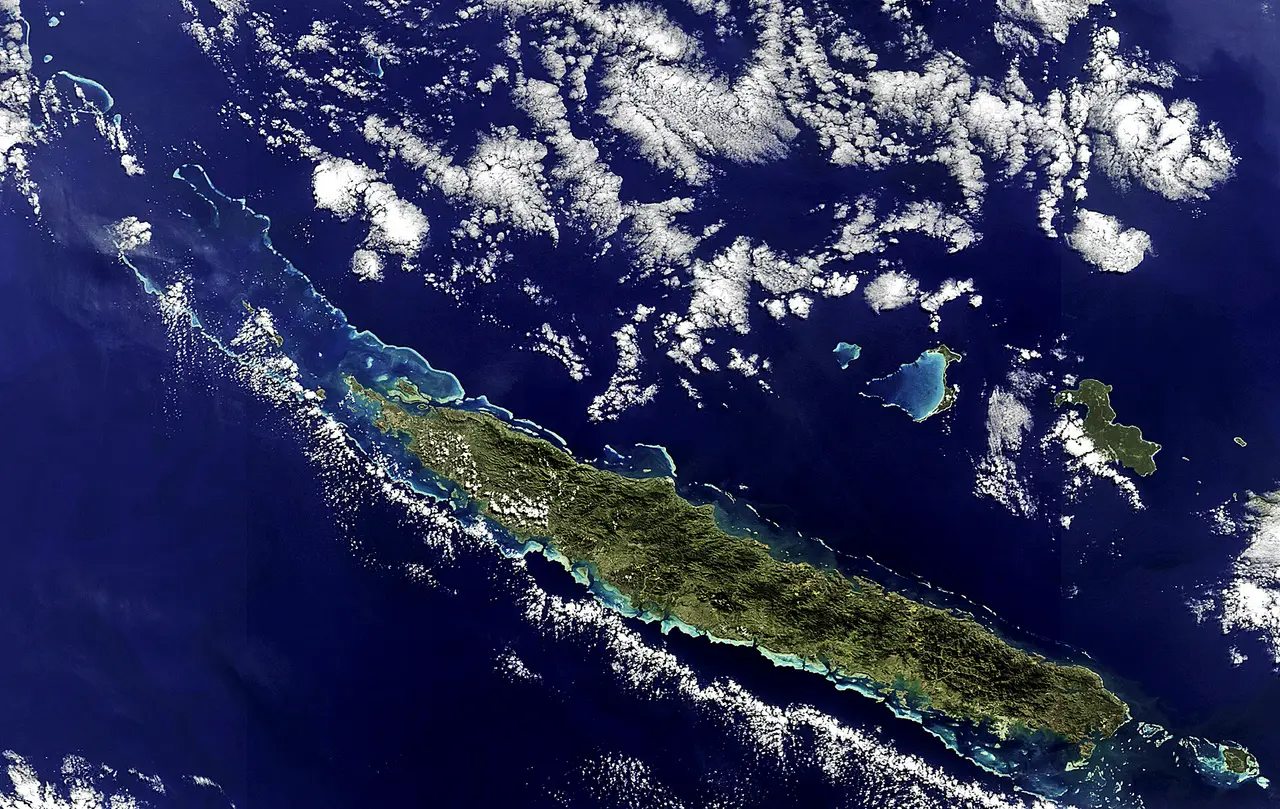
New Caledonia’s EEZ is smaller at 1.3 million square kilometres (Pelletier, 2024, p. 33). Its economic weight lies in nickel, of which it holds an estimated 10% of the world’s reserves (St-Jean et al., 2018). The sector accounts for 20% of GDP (Hache, 2024). However, global oversupply, cheaper Indonesian production, high labour costs and recent unrest have crippled the industry (New Zealand Ministry of Foreign Affairs and Trade [MFAT], 2026). Tourism and fishing remain marginal at 4% (Kania, 2025) and 1.6% (Ris et al., 2017) of GDP, respectively. That leaves the territory’s prosperity dependent on nickel and on French aid, which traditionally makes up 13% of GDP (Ris et al., 2017). Following the unrest, France has agreed to provide €2 billion over five years to revive the economy and restore public finances in exchange for structural reforms (Galvez, 2026). In the long term, nickel could gain value within European critical-mineral supply chains, supporting green-energy goals and reducing reliance on other producers (Koese et al., 2025).
New Caledonia as the keystone for security
France’s defence strategy rests on protecting a rules-based multilateral order and preserving “strategic balances” (MEAE, 2025). This means defending its sovereignty, nationals and EEZ, and contributing to regional security through cooperation with Australia, New Zealand and the United States. Bases in New Caledonia and French Polynesia support military and surveillance operations in the Pacific (MEAE, 2025). New Caledonia’s strategic location in the Coral Sea makes it the keystone of French and allied operations in the Pacific (Ledderucci, 2026). Losing it would forfeit both nickel reserves and critical military bases.
France once used remote French Polynesia for nuclear testing. It now values the territory for maritime surveillance amid increased foreign activity (Ledderucci, 2026). Under the 2024-2030 military programming law, France is allocating €13 billion to its overseas territories in the Indo-Pacific for security, infrastructure and climate resilience development (MEAE, 2025, p. 15).
Perspective actions and considerations
France’s amendments to the Nouméa Accord, stalled reforms and inaction on reparations and indigenous living standards have produced distrust in the territories. The results are severe civil unrest in New Caledonia and a pro-independence government in French Polynesia. Regaining confidence requires reforms that reduce disparities for indigenous peoples and acknowledgement of and reparations for victims of nuclear testing in French Polynesia. However, these initiatives face severe fiscal constraints, with French public debt at 119%, its highest level since the Second World War (Paponaud, 2026).
Yet as the Pacific grows in importance, so does the strategic value of the trade access, untapped marine resources and military bases these territories provide. To retain them and prevent further costly unrest, France must ratify the 2025 Bougival Accord and uphold its agreements for greater domestic autonomy and representation (Milhiet & Pantz, 2025). Although this challenges the principle of an “indivisible” Republic, France must reach a compromise that secures local consent while safeguarding its geopolitical rights, resources and influence in the Pacific.
References
Australian Government Department of Foreign Affairs and Trade. (2021). French Polynesia country brief. https://www.dfat.gov.au/geo/french-polynesia/french-polynesia-country-brief
Commission nationale consultative des droits de l’homme. (2026). Nouvelle-Calédonie et droits fondamentaux : Une analyse de la crise de 2024 [New Caledonia and fundamental rights: An analysis of the 2024 crisis] [Opinion]. https://www.cncdh.fr/publications/avis-nouvelle-caledonie-et-droits-fondamentaux-une-analyse-de-la-crise-de-2024
Constitution du 4 octobre 1958 [Constitution of 4 October 1958]. (1958). Légifrance. Retrieved October 16, 2026, from https://www.legifrance.gouv.fr/loda/id/JORFTEXT000000571356/
Costigan, A. (2026, September 8). Two years on from riots, New Caledonian president visits France amid debt crisis. ABC News. https://www.abc.net.au/news/2026-09-08/new-caledonian-president-visits-france-amid-debt-crisis/107101252
Deep Sea Conservation Coalition. (2025). Deep-sea mining: Growing support for a moratorium (Fact Sheet No. 3). /api/wp-media/2025/07/DSCC_FactSheet3_DSM_MORATORIUM_4pp_OCT_23.pdf-2.pdf
Deppert, G. (2025). France’s overseas territories and their use in maritime strategy (The Indo-Pacific Geopolitical Observatory, Note No. 13). Institut de relations internationales et stratégiques. https://www.iris-france.org/frances-overseas-territories-and-their-use-in-maritime-strategy/
Derel, M., & Doherty, B. (2024, May 24). “Not our president”: After Macron’s visit, New Caledonia’s Kanak demand their own future. The Guardian. https://www.theguardian.com/world/article/2024/may/24/new-caledonia-kanak-emmanuel-macron-visit-state-of-emergency-riots-unrest
Fisher, D. (2013). France in the South Pacific: Power and politics. ANU E Press. https://press.anu.edu.au/publications/france-south-pacific
Fisher, D. (2022, November 23). After three referendums, France still faces major challenges in New Caledonia. The Strategist. https://www.aspistrategist.org.au/after-three-referendums-france-still-faces-major-challenges-in-new-caledonia/
Fotheringham, C. (2025, September 18). French Polynesia calls for moratorium on deep sea mining. RNZ. https://www.rnz.co.nz/news/pacific/573385/french-polynesia-calls-for-moratorium-on-deep-sea-mining
Galvez, J. (2026, June 1). New Caledonia secures third tranche of French state-backed loan. Pacific Business Review. https://www.pacificbusinessreview.com/articles/2026/6/new-caledonia-secures-third-tranche-of-french-state-backed-loan
Gori, S. (2023, August 4). The Pacific frontier of France. Observer Research Foundation. https://www.orfonline.org/expert-speak/the-pacific-frontier-of-france
Hache, E. (2024, May 21). New Caledonia and the geopolitics of critical metals: Towards a disruption of the nickel market? [Interview]. Institut de relations internationales et stratégiques. https://www.iris-france.org/en/186392-new-caledonia-and-the-geopolitics-of-critical-metals-towards-a-disruption-of-the-nickel-market/
Hurst, D. (2025, April 1). ‘Playing gods with the cradle of life’: French Polynesia’s president issues warning over deep-sea mining. The Guardian. https://www.theguardian.com/world/2025/apr/01/french-polynesia-deep-sea-mining-pacific-warning-president-moetai-brotherson
Kania, K. (2025, January 11). NOvation and Indigenous struggle for land: Club Med’s failure in New Caledonia. Tourism Geographies. https://doi.org/10.1080/14616688.2024.2446356
Koese, M., Parzer, M., Sprecher, B., & Kleijn, R. (2025). Self-sufficiency of the European Union in critical raw materials for E-mobility. Resources, Conservation and Recycling, 212, Article 108009. https://doi.org/10.1016/j.resconrec.2024.108009
Ledderucci, C. (2026, July 14). Colonial military entanglements and the politics of sovereignty in Mā’ohi Nui/French Polynesia. Australian Journal of Political Science. https://doi.org/10.1080/10361146.2026.2657819
Le Meur, P.-Y., Arndt, N., Christmann, P., & Geronimi, V. (2018). Deep-sea mining prospects in French Polynesia: Governance and the politics of time. Marine Policy, 95, 380–387. https://doi.org/10.1016/j.marpol.2016.07.020
Mathieson, A. (2026, October 13). French Polynesia demands UN start independence process. National Indigenous Times. https://nit.com.au/13-10-2026/26919/french-polynesia-demands-the-un-start-the-independence-process-from-france
Milhiet, P., & Pantz, P.-C. (2025). New Caledonia: A historic agreement for a unique status (RSIS Commentary No. CO25163). S. Rajaratnam School of International Studies. https://rsis.edu.sg/rsis-publication/rsis/new-caledonia-a-historic-agreement-for-a-unique-status/
Ministry for Europe and Foreign Affairs. (2025). France’s Indo-Pacific strategy. https://www.diplomatie.gouv.fr/files/files/france_s_indo-pacific_strategy_2025_cle04bb17.pdf
New Zealand Ministry of Foreign Affairs and Trade. (2026, February 26). New Caledonia: Local economy and investment refocus. https://www.mfat.govt.nz/en/trade/mfat-market-reports/new-caledonia-local-economy-and-investment-refocus
Paponaud, E. (2026, September 29). France’s public debt soars to a record 119% of GDP. Euronews. https://www.euronews.com/2026/09/29/frances-public-debt-soars-to-a-record-119-of-gdp
Pelletier, D. (2024). Marine biodiversity in New Caledonia and contemporary conservation challenges. In M. Kowasch & S. P. J. Batterbury (Eds.), Geographies of New Caledonia-Kanaky (pp. 33–44). Springer. https://doi.org/10.1007/978-3-031-49140-5_4
Ris, C., Trannoy, A., & Wasmer, É. (2017). The New Caledonian economy beyond nickel (Les notes du conseil d’analyse économique No. 39). Conseil d’analyse économique. https://cae-eco.fr/static/pdf/cae-note039-en.pdf
Saeed, A., Khurshid, S., & Qureshi, S. (2025). The Sino-US strategic competition in the Indo-Pacific region: Implications for regional actors. Social Sciences Spectrum, 4(4), 151–162. https://doi.org/10.71085/sss.04.04.371
Soyez, P. (2016, September 28). French presence in the Pacific reinforced by the PIF. The Strategist. https://276bb299.ch.bluepackets.com.au/french-presence-pacific-reinforced-pif/
St-Jean, A., Barguil, Y., Dominique, Y., Le Bot, B., Ayotte, P., & Cordier, S. (2018). Nickel and associated metals in New Caledonia: Exposure levels and their determinants. Environment International, 118, 106–115. https://doi.org/10.1016/j.envint.2018.05.045