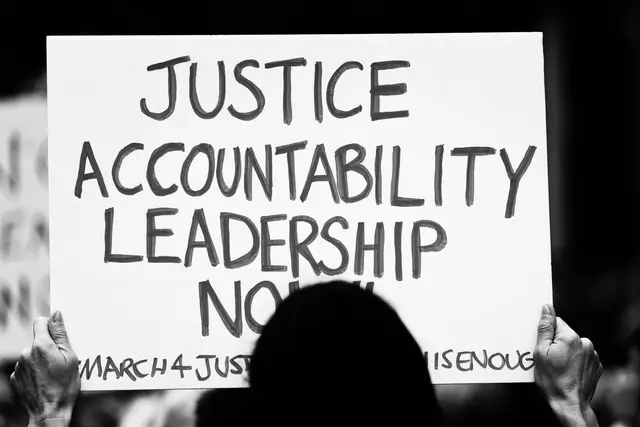


Brazil’s Indigenous peoples hold constitutionally protected rights to their traditionally occupied lands, yet these rights remain vulnerable to illegal occupation, delayed demarcation and competing claims to public land. One of the biggest issues faced by these groups currently is land grabbing, made possible by gaps in legislation, legal incentives for public land grabbing in some cases, and tardy or improper demarcation of indigenous lands. In this context, land grabbing refers to the theft and illegal takeover of public land by private individuals, often using fake documents and fraudulent land registries. The land regularisation system in Pará, originally intended to provide legal certainty to rural occupants, has often created incentives for occupation instead, as enforcement of indigenous land rights is weak and regularisation procedures create a possibility to obtain a legal title originating from an illegal land occupation. This is not only worrying from a human rights perspective, but also for the protection of the environment. It has been shown consistently across studies that nature thrives better under the stewardship of indigenous people (UNEP World Conservation Monitoring Centre, 2023).
Brazil’s legal framework for Indigenous land rights
The basis of Brazil’s legal framework regarding the protection of indigenous land rights is article 231 of the Constitution of 1988, which establishes the indigenous communities’ right to the land they ‘traditionally occupied’, along with the State’s duty to demarcate, protect and ensure the respect of the property of indigenous peoples. Furthermore, it gives them the exclusive right to use their lands, and outlaws their removal, with the exception of epidemics and natural catastrophes (Constituição da República Federativa do Brasil, 1988). Unfortunately, this article has also been used to establish the temporal mark argument, later codified in Law 14.701/2023, which required proof that the indigenous communities lived permanently on, and made use of, their ancestral lands on the date the Constitution was promulgated, thus ignoring a history of dispossession of indigenous communities, as well as the nomadic lifestyle of some. In Recurso Extraordinário 1.017.365/SC, the Brazilian Supreme Court decided in 2023 that the temporal mark argument was unconstitutional, however, there is a proposal for constitutional amendment called PEC 48/2023 waiting for the Brazilian Congress’ approval, which would incorporate the temporal mark directly in the Constitution. Moreover, the United Nations has emphasised that the temporal mark is contrary to Brazil’s International obligations, particularly article 8 of the UN Declaration on the Rights of Indigenous Peoples and article 14 of the ILO Convention No. 169, as emphasised by the Special Rapporteur on the Rights of Indigenous Peoples (OHCHR, 2025). Both the UN Declaration and the ILO Convention recognise indigenous peoples’ right to the recognition of their traditionally occupied lands. While the UN Declaration is not legally binding under international law, the ILO Convention No. 169 is binding for all countries that have ratified it, including Brazil. Thus, Brazil has an international, as well as a domestic, duty to respect and to recognise the territories of indigenous communities.
The Brazilian government has also enacted legislative measures aimed at protecting indigenous rights, including Law No. 5.371 which authorised the establishment of Funai (Fundação Nacional do Índio) in 1967, a governmental agency responsible for ensuring that the rights of indigenous communities are respected, including through the protection and demarcation of land. However, this is not without its challenges. Funai often fails to achieve the demarcation of indigenous lands with the required speediness. A clear example happened recently on the Ituna/Itatá land in Pará when over 200 people invaded the territory, and the authorities failed to put a stop to it for weeks (Gabay, 2026). Furthermore, State land agencies are not required to consult with Funai when providing titles to private landowners nor are they required to disclose information to the agency about areas that are already in the process of receiving a land title, and this makes it very difficult for Funai to identify the risk of improper land allocations (Brito and Almeida, 2026)
Legalised Land Grabbing in Pará
In the state of Pará and across the Brazilian Amazon, the illegal appropriation of public land, also known as land grabbing or grilagem in Brazilian Portuguese, is legalised through a combination of permissive state land laws and the manipulation of administrative registration rules. Currently, in order for the occupation of public lands to be recognised, landholders must demonstrate that the occupation started before July 8, 2014, for at least 1 year in case of land donation and 5 years for land sales, according to article 10 of Lei Estadual nº 8.878/2019. However, federal and state legislatures across the Amazon routinely extend cut-off dates or propose amenities, with the result that land grabbers operate under the expectation that recent or ongoing invasions will eventually be legalised by future legislative changes (Brito and Almeida, 2026). CAR, the Rural Environmental Registry, is an online self-declaration platform, where landholders manually upload georeferenced coordinates and claims about their land use without requiring proof of verification, ground inspections, or rigorous boundary checks. The platform itself does not confer land ownership, but a pending CAR entry is routinely used to prove land occupancy in order to somewhat legalise their illegal holdings, and it also complicates the enforcement of the identification and enforcement of unlawful occupations (Pacheco et al., 2026). This becomes particularly problematic given the extension of cut-off dates mentioned previously. Often, these claims are on protected areas. By 2023, 94% of the Ituna/Itatá indigenous land and 87 separate property claims inside the Kariipuna Indigenous Land were registered in CAR by illegal occupants who were trying to legitimise their holdings (Conselho Indigenista Missionário, 2024).
Some of the most frequent purposes of land grabbing are deforestation and the extraction of natural resources such as iron and gold, which is one of the reasons why State Decree 1.190/2020 suspends title issuance if a property was completely forested in July 2014, and later cleared without authorisation. Illegal deforestation cannot be used as evidence of productive land use, a requirement for land regularisation under the aforementioned Lei Estadual 8.878. For this purpose, article 19 of the State Decree also establishes the Technical Chamber for Identification, Allocation and Regularisation of State Public Lands. This chamber is supposed to decide on disputes relating to sustainable development of the State, including the allocation of illegally deforested land. However, as of 2025, no members had been appointed to be a part of this chamber. Despite this, Pará is one of only two states that has a restriction on titling illegally cleared forest areas. Furthermore, there is no legal ban against issuing land titles for recently deforested public lands, and both federal and state agencies have historically treated forest clearing as evidence of “effective occupation” required to secure a title (Brito and Almeida, 2026). This can create an incentive to clear forest areas in order to strengthen a claim to public land.
The land prices also do not act as a deterrent for land grabbers, as both federal and state government agencies sell land well below market rates. In 2021, Pará decreased its land value to only account for 1.2% of the average land market in Pará and 31% of the price set by the federal government (Brito and Almeida, 2026). Such a large gap creates a potential incentive for speculative occupation, as the financial cost of converting an unlawful occupation into lawful ownership is minimal.
Conclusion
Protecting the lands of indigenous people is essential for both human rights and environmental purposes, and Brazil has both national and international legal duty to do so. Both the federal laws and Pará’s state laws attempt to protect indigenous land rights from illegal occupation and extraction of resources. Yet, the gaps in legal protection, administrative and enforcement weaknesses can create opportunities for land grabbers to encroach on indigenous land and to harm the environment. Enforcement is often delayed or ineffective, thus the expected costs of illegal occupation may be substantially lower than the potential gains from obtaining secure land rights or extracting resources. The disproportionately low land prices also drive this phenomenon.
Illegal land invasions and violent attacks are still a part of life for many indigenous groups. The recent invasion of the Ituna/Itatá land in Pará shows the need for more robust protections, both legally and practically, for indigenous lands are needed urgently in Brazil.
Reference List
Bragato, F. F., & Kestenbaum, J. G. (2025). Recognizing and reclaiming Indigenous peoples’ constitutional land rights in Brazil. In Cambridge University Press eBooks (pp. 50–71). https://doi.org/10.1017/9781009521581.005
Brasil. (1967, 5 de dezembro). Lei nº 5.371, de 5 de dezembro de 1967: Autoriza a instituição da “Fundação Nacional do Índio” e dá outras providências. Câmara dos Deputados. https://www2.camara.leg.br/legin/fed/lei/1960-1969/lei-5371-5-dezembro-1967-359060-normaatualizada-pl.html
Brasil. (1988). Constituição da República Federativa do Brasil de 1988. https://www.planalto.gov.br/ccivil_03/constituicao/constituicao.htm
Brasil. (2023, 20 de outubro). Lei nº 14.701, de 20 de outubro de 2023: Regulamenta o art. 231 da Constituição Federal, para dispor sobre o reconhecimento, a demarcação, o uso e a gestão de terras indígenas; e altera as Leis nºs 11.460, de 21 de março de 2007, 4.132, de 10 de setembro de 1962, e 6.001, de 19 de dezembro de 1973. https://www.planalto.gov.br/ccivil_03/_ato2023-2026/2023/lei/l14701.htm
Brito, B., & Almeida, J. (2026). Legal incentives for public land grabbing via deforestation in the Brazilian Amazon. Land Use Policy, 164, 107968. https://doi.org/10.1016/j.landusepol.2026.107968
Conselho Indigenista Missionário. (2024). Report on violence against Indigenous peoples in Brazil: 2023 data. /api/wp-media/2024/07/relatorio-violencia-povos-indigenas-2023-cimi.pdf
Gabay, A. (2026, September 21). Ituna/Itatá invasion escalates as Indigenous Land faces fires and illegal clearing. Conservation News. https://news.mongabay.com/short-article/2026/09/ituna-itata-invasion-escalates-as-indigenous-land-faces-fires-and-illegal-clearing/
Governo do Estado do Pará. (2019, 8 de julho). Lei nº 8.878, de 8 de julho de 2019. /api/wp-media/2021/02/lei_no8.878-2019.pdf
Governo do Estado do Pará. (2020, 25 de novembro). Decreto nº 1.190, de 25 de novembro de 2020: Regulamenta a Lei Estadual nº 8.878, de 8 de julho de 2019, para dispor sobre a regularização fundiária das áreas rurais, e dá outras providências. /api/wp-media/2021/02/DECRETO-No-1.190-DE-25-DE-NOVEMBRO-DE-2020.pdf
International Labour Organization. (1989, 27 June). Indigenous and Tribal Peoples Convention, 1989 (No. 169). https://normlex.ilo.org/dyn/nrmlx_en/f?p=NORMLEXPUB:12100:0::NO::P12100_ILO_CODE:C169
Office of the United Nations High Commissioner for Human Rights. (2025, June). Brazil must abandon “marco temporal” doctrine once and for all, says UN expert. https://www.ohchr.org/en/press-releases/2025/06/brazil-must-abandon-marco-temporal-doctrine-once-and-all-says-un-expert
Pacheco, R., Kastner, N. V., & Penfield, A. (2026). Forms of land grabbing in the Amazon: From land deals to illegal land appropriation. Environmental Science & Policy, 181, 104409. https://doi.org/10.1016/j.envsci.2026.104409
Senado Federal. (2023, 21 de setembro). Proposta de Emenda à Constituição nº 48, de 2023 (PEC 48/2023): Altera o § 1º do art. 231 da Constituição Federal para definir marco temporal de demarcação das terras tradicionalmente ocupadas pelos povos indígenas. https://www25.senado.leg.br/web/atividade/materias/-/materia/160148
Supremo Tribunal Federal. (2023). Recurso Extraordinário 1.017.365/SC (Tema 1.031). https://portal.stf.jus.br/processos/detalhe.asp?incidente=5109720
United Nations. (2007, September 13). United Nations Declaration on the Rights of Indigenous Peoples. https://www.ohchr.org/en/indigenous-peoples/un-declaration-rights-indigenous-peoples
WCMC. (2023). Championing Indigenous Peoples’ stewardship of biodiversity. UNEP-WCMC. https://www.unep-wcmc.org/en/news/championing-indigenous-peoples-stewardship-of-biodiversity