
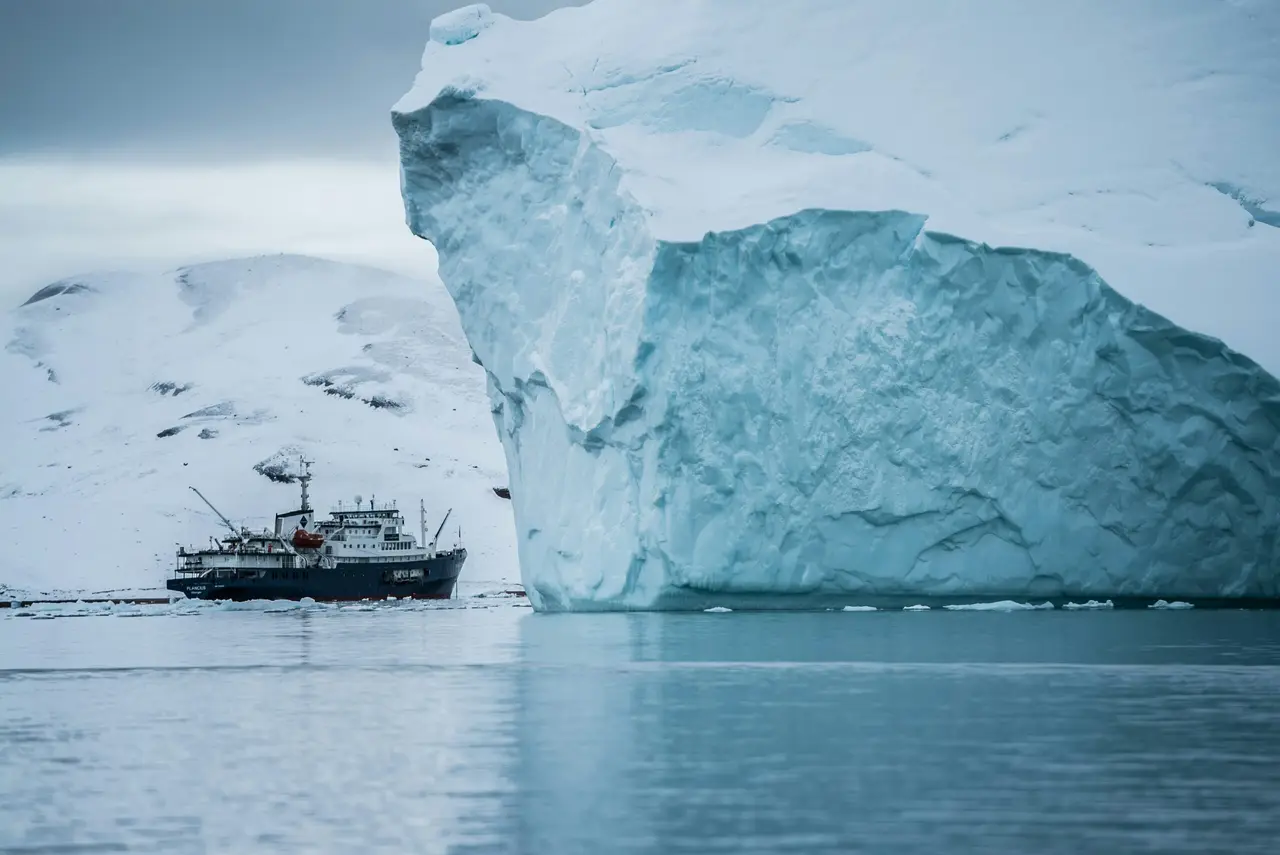


For most of recorded history, the Arctic has been little more than a frozen frontier, the preserve of indigenous communities, and the occasional Polar scientist. Yet climate change is rapidly rewriting this. As the ice retreats, something the world’s powers find irresistible is being revealed: vast natural resources, shorter trade routes, and a strategic geography that cannot be ignored. While the United States and Russia have long competed for primacy in the Far North, a new set of players is increasingly making its presence felt, arriving not from the Arctic littoral, but from thousands of kilometres further south (Yu, 2026). The Indo-Pacific, more readily associated with tropical archipelagos and the contested waters of the South China Sea, would seem an unlikely source of Arctic ambition. Yet among the flurry of white papers, icebreaker commissions, and investments of the past decade, three Indo-Pacific nations have emerged as the most consequential new entrants to the region: China, India, and Japan. While each arrives with different interests and goals, all three share one recognition that the Arctic cannot be ignored any longer.
China
Compared to other Indo-Pacific states, China has the most comprehensive Arctic policy and the deepest involvement in the region. Beijing joined the International Arctic Science Committee in 1996, established the Yellow River Station in Svalbard in 2004 and gained Arctic Council observer status in 2013. However, since its 2018 white paper, in which China designated itself a “near-Arctic state”, its ambitions have expanded well beyond scientific research into the commercial, military, and geopolitical realms (Devyatkin, 2025).
Retreating sea ice has made the Northern Sea Route (NSR) along Russia’s northern coast an increasingly viable alternative to traditional shipping corridors, promising to cut transit times between major Chinese and European ports by 10-15 days compared to the Suez Canal route (Koch & Mosly, 2026). China’s commercial activity in the Arctic reflects this opportunity, as its voyages through the NSR doubled from 7 in 2023 to 14 in 2025, with no signs of slowing (Humpert, 2026). This is part of China’s plan for the Polar Silk Road, the Arctic component of its Belt and Road Initiative, which aims to secure both commercial shipping lanes and access to the Arctic’s vast untapped natural resources, estimated to hold around 13% of the world’s undiscovered oil and 30% of its undiscovered natural gas (Nakano & Li, 2018; Paul, 2025).
Pursuing these ambitions requires a regional partner for China. Blocked from establishing Arctic bases elsewhere, China has developed its relationship with Russia, precisely as Western sanctions have driven Moscow into economic dependence on Beijing (Paul, 2025). China provides investment, as seen in the Yamal LNG project, where it secured approximately 195 billion cubic feet of liquid natural gas (LNG) annually, while Russia provides regional expertise, NSR access, and icebreaking capacity that China still relies upon for year-round operations (Nakano & Li, 2018; Raspotnik, 2025). Between 2022 and 2024, Russia and China have steadily ramped up joint military exercises in Arctic waters, with 6 exercises alone in 2022 and a series of large exercises in 2024, described by President Putin as “the largest in the past thirty years” (Sukhankin, 2024). In October 2025, the two nations formalised this Arctic relationship with a joint NSR development agreement targeting 50 million tonnes of annual Chinese cargo traffic by 2030 (Zhilin, 2025). As Russia and China’s relationship has deepened, China has expertly leveraged it to expand its influence in the Arctic.
China’s Arctic push is not simply commercial; it is a projection of great-power confidence and ambition. From the South China Sea to the Indian Ocean, Beijing has demonstrated a growing willingness to compete with Washington in every domain it identifies as strategic, and the Arctic, with its energy reserves, emerging trade corridors, and military geography, now sits firmly on that list. While in the South China Sea, China pursued “nationalisation”, asserting territorial sovereignty through the construction of artificial islands and rejecting international arbitration. In the Arctic, China is pursuing the opposite policy of “internationalisation”, lobbying aggressively for the region’s open and multilateral character precisely because it depends entirely on access rather than sovereignty (Paul, 2025). While the tactics are mirror images, the goal of increasing Chinese influence and presence in strategic regions through economic and political means is identical.
In the Arctic, China has spotted an opportunity to peacefully embed itself into a largely unregulated region which has not yet been dominated by a single power. A China that succeeds in entrenching itself in the Far North will have secured access to natural resources, a shorter economic corridor to Europe, and a strategic foothold in a region where American and NATO attention is already stretched thin. Through investment, political lobbying and strategic cooperation, a pattern we have seen in the South China Sea and the Belt and Road Initiative, Beijing is slowly but surely expanding its influence into a further region which could one day turn out to be vital to great power status. This quiet expansion of Arctic capabilities has not gone unnoticed by other Indo-Pacific powers, especially strategic rivals such as India, which seeks to emulate or limit Chinese influence in the region.
India
India, a country thousands of miles from the Arctic Circle, does not appear to be an obvious Arctic stakeholder at first glance. Nevertheless, like China, it has significantly ramped up its interest in the region, most notably with the publication of its 2022 Arctic policy, which outlines India’s Arctic involvement along scientific, economic and strategic lines. India’s Arctic activity was, for a long time, also limited. However, climate and geopolitical shifts in recent years have caused India to reevaluate its involvement. From monsoon research to resource extraction and great-power competition, the Arctic has become a significant arena for Indian policy as the nation seeks to establish itself as a global player.
India has been an observer to the Arctic Council since 2013. Additionally, it has run the Himadri research station in Svalbard since 2008, cementing its place as an Arctic participant (Government of India, 2022). Arctic research is especially important for India as the effects of climate change on the Arctic region massively impact the Indian subcontinent. In 2025, 41.6% of India’s workforce was employed in agriculture, a sector that generates nearly 20% of national output (Bhuvanesh, 2026). This vital sector is dependent on seasonal monsoon rains, and understanding how Arctic warming will affect rainfall, agriculture, and rising sea levels has therefore become a national priority, leading New Delhi to invest heavily in Arctic research (Bisen, 2022).
Furthermore, for an economy like India, which is heavily dependent on imported energy, the vast amounts of natural gas and oil in the Arctic present an opportunity to diversify and expand its energy supply and gain access to vital mineral resources. Consequently, India has been increasing Arctic investment and developing its relationship with Russia, just as China has done (Bisen, 2024). While India does not share as comprehensive a relationship with Russia as China, it is still a key partner in the region. Since 2021, India has invested along the NSR to capitalise on the expanding trade route and diversify its own commercial access points (Bisen, 2024). Furthermore, Indian companies have become interested in investing in several LNG projects in the Russian Arctic to solidify their relationship with Russia and to secure their energy supply (Sharma, 2025).
Apart from resource exploitation and monsoon research, a deeper driver of India’s Arctic policy is great-power competition (Suhag, 2022). As Beijing deepens its partnership with Russia and consolidates influence over NSR infrastructure, India faces a strategic threat. An Arctic controlled by a Sino-Russian axis would give China an alternative to the Strait of Malacca, neutralising India’s primary leverage point over China in any future conflict. Additionally, it would clash with India’s goal of strategic autonomy and open trade through the NSR. New Delhi’s response has been to deepen its own relationship with Moscow through frameworks like the Reciprocal Exchange of Logistics Support (RELOS) agreement, signed in December 2025. This grants India access to over 40 Russian naval and air bases stretching from Murmansk in the Arctic to Vladivostok in the Pacific (Sharma, 2022). Moscow has welcomed Indian investment and cooperation as it seeks to diversify its own relationships and avoid becoming overly dependent on China in the Arctic (Raspotnik, 2022). India, in keeping with its longstanding policy of non-alignment, is effectively using Russia as a buffer against Chinese dominance in the Arctic without overtly aligning with the USA.
The Arctic offers India many opportunities and challenges. Whether India can assert itself in the Arctic depends on several factors, such as economic performance and Russia’s willingness to continue partnering with a strategic rival of China. However, one thing is certain: the Arctic is no longer a distant frontier; it is the latest arena in which New Delhi’s influence and strategic autonomy will be tested against the might of Beijing.
Japan
Japan has been an active actor in the Arctic, despite being a non-Arctic nation. China and India’s ambitions have been centred on expansion and on preventing any other nation from controlling the Arctic region. On the other hand, Japan’s engagement has been rooted in scientific research and international cooperation (Enzmann, 2025). However, as climate change opens up new trade and commercial opportunities and geopolitical competition has intensified, Tokyo has been modifying its Arctic policies to include economic security, energy resilience and strategic concerns.
Japan’s interest in the polar regions emerged earlier than that of some of its neighbouring countries, such as South Korea and China, due to its geographic vulnerability and exposure to climate change as an island nation (Chater, 2016). In 1920, Japan signed the Svalbard Treaty, acquiring equal rights of access, residence, and commercial or scientific activity in the Svalbard archipelago. In 1990, it established a research station at Ny-Ålesund, and in 1991, it became the first non-Arctic Asian state to join the International Arctic Science Committee (Kimura, 2026). These first engagements were driven by scientific institutions and the private sector rather than the government.
In 2013, Japan secured Arctic Council observer status, alongside China and India, formalising the engagement in the region and the adoption of the Second Basic Plan Ocean Policy, framing it as a commercial opportunity via the Northern Sea Route. Japan framed its Arctic Policy around three main pillars: scientific research, international cooperation and sustainable use of Arctic resources (Cabinet Office, Government of Japan, 2013). Unlike China’s 2018 pivot toward “near Arctic state” ambition, Japan has maintained a consistent policy framework, using a mandatory five-year update plan to recalibrate the same three pillars in evolving geopolitical and environmental developments (Kimura, 2026).
This recalibrated approach is more evident in the third pillar, sustainable use. The 2023 Fourth Basic Plan, adopted after Russia’s invasion of Ukraine and the resulting suspension of cooperation with Moscow, reduced earlier ambitions to promote the Northern Sea Route as a commercial corridor (Pham, 2024). Even though it appears as a retreat from the Arctic, Japan continues to invest in its long-term presence in the region by constructing the Mirai II icebreaker, which will strengthen its independent Arctic research opportunities and capabilities (JAMSTEC, 2025).
Tokyo’s ambitions in the Arctic are centred on maintaining a stable, rule-based order that can guarantee open access, freedom of navigation and multilateral governance, unlike China and, to an extent, India (Kimura, 2026). Japan’s resource limitations have increased its dependence on maritime trade, making the Arctic an extension of broader economic and strategic security interests. The Northern Sea Route offers a diversification of trade routes, and it reduces the dependency on unstable maritime checkpoints. Moreover, it gives access to energy resources and critical materials that could strengthen Japan’s economic resources (Kaneko, 2021). At the same time, Japan acknowledges that the Arctic’s security environment has been challenged by growing strategic competition between Russia, China and Western states. Tokyo has still been pursuing a measured strategy centred on scientific leadership, international law, and cooperation, rather than responding with military expansion and more assertive geopolitical claims.
Conclusion
A common trajectory emerges across China, India, and Japan: each nation engaged with the Arctic region through a scientific approach and international cooperation, but as the region’s commercial potential became undeniable, interest shifted towards an economic and resource focus. Nonetheless, each state has pursued different strategies. Beijing has relied on investment and economic dependence to reinforce its leading position alongside Moscow. India is preserving its strategic autonomy and attempting to balance China’s growing influence through a partnership with Russia; however, the effectiveness of this strategy remains uncertain and will depend on India’s future economic growth and the long-term strength of its cooperation with Moscow. Japan, on the other hand, has maintained a consistent commitment to international law and a multilateral approach. What unites China, India and Japan is not the strategy used in the Arctic region, but the recognition that the Arctic is one of the last unclaimed and lightly governed regions. Hence, middle powers have seen an opportunity to establish a presence before a new governance structure is established. Beneath these economic interests lies a deeper geopolitical logic: the Arctic has become another arena for great and middle powers to compete in shaping the future international order.
References:
Bajpaee, C. and Toremark, L. (2024) India-Russia Relations. Chatham House. https://www.chathamhouse.org/2024/10/india-russia-relations.
Bisen, A. (2024) Arctic Geopolitics and Governance: An Indian Perspective. East-West Center. https://www.eastwestcenter.org/publications/arctic-geopolitics-and-governance-indian-perspective.
Bisen, A. (2022) India’s Arctic Policy: Building a Partnership for Sustainable Development. Manohar Parrikar Institute for Defence Studies and Analyses. https://idsa.in/system/files/issuebrief/ib-india-arctic-policy-abisen-170322.pdf
Bhuvanesh. (2026) What share of Indians still work in agriculture? This Indian life. https://thisindianlife.today/articles/what-share-of-indians-still-work-in-agriculture/
Cabinet Office, Government of Japan (2013) The Second Basic Plan on Ocean Policy, Cabinet Decision. https://www8.cao.go.jp/ocean/english/plan/pdf/plan02_gaiyou_e.pdf
Chater, A. (2016) What is Japan’s Arctic Interest?, The Polar Connection. https://polarconnection.org/japan-arctic-interest/
Devyatkin, P. (2025). The Arctic Institute’s 2025 China Series: An Introduction. The Arctic Institute – Center for Circumpolar Security Studies. https://www.thearcticinstitute.org/the-arctic-institute-2025-china-series-an-introduction/
Enzmann, J. (2025) Japan’s Engagement in the Arctic and Third Pole Regions, Sasakawa Peace Foundation. https://www.spf.org/en/spfnews/information/20250409.html
Government of India. (2022) India’s Arctic Policy: Building a Partnership for Sustainable Development. https://www.moes.gov.in/sites/default/files/2022-03/compressed-SINGLE-PAGE-ENGLISH.pdf.
Humpert, M. (2026). China Expands Arctic Container Shipping With Record 14 Voyages in 2025. gCaptain. https://gcaptain.com/china-expands-arctic-container-shipping-with-record-14-voyages-in-2025/
Japan Agency for Marine-Earth Science and Technology (JAMSTEC) (2025) Arctic Research Vessel “Mirai II.” https://www.jamstec.go.jp/parv/e/
Kaneko, N. (2021) Japan’s Arctic Policy and the Northern Sea Route: Conflict between “Energy Security” and “Freedom of Navigation”, Discuss Japan — Japan Foreign Policy Forum. https://www.japanpolicyforum.jp/pdf/2021/no65/DJweb_65_dip_01.pdf?210905
Kimura, H. (2026) Distinctive Characteristics of Japan’s Arctic Approach and Engagement with Arctic Governance, The Arctic Institute https://www.thearcticinstitute.org/distinctive-characteristics-japans-arctic-approach-engagement-arctic-governance/
Koch, C. & Mosly, A. (2026) The Northern Sea Route: A Viable Alternative? Gulf Research Centre (Grc.) https://www.grc.net/single-commentary/358
Nakano, J. & Li, W. (2018). China Launches the Polar Silk Road. Centre for Strategic & International Studies. https://www.csis.org/analysis/china-launches-polar-silk-road
Paul, M. (2025). China’s Arctic turn: reasons, developments, perspectives. SWP comment, (No. 8/2025). Stiftung Wissenschaft und Politik (SWP). https://doi.org/10.18449/2025C08%0A
Pham, K. (2024) Japan Steps Up Its Arctic Engagement, The Arctic Institut, https://www.thearcticinstitute.org/japan-steps-up-arctic-engagement/
Raspotnik, A. (2025). Sino-Russian Sub-Regional Cooperation in the Far East and Arctic: From “Border Economic Belt” to “Strategic Cooperation Engine” The Arctic Institute – Center for Circumpolar Security Studies. https://www.thearcticinstitute.org/sino-russian-sub-regional-cooperation-far-east-arctic-border-economic-belt-strategic-cooperation-engine/
Raspotnik, A. and Khorrami, N. (2022) Forced to Look East? Russia, China, India, and the Future of Arctic Governance. Georgetown Journal of International Affairs. https://gjia.georgetown.edu/global-governance/forced-to-look-east-russia-china-india-and-the-future-of-arctic-governance%ef%bf%bc/
Suhag, V. (2022) India’s Arctic Security Dimension: ‘Thought through’ or ‘a Remedial Process to Address an Insecurity’. The Arctic Institute – Center for Circumpolar Security Studies. https://www.thearcticinstitute.org/india-arctic-security-dimension-thought-through-remedial-process-address-insecurity/
Sukhankin, S. (2024). Sino-Russian Partnership in the Arctic and the Far East Reflect Joint Security Interests (Part One) – Jamestown. https://jamestown.org/sino-russian-partnership-in-the-arctic-and-the-far-east-reflect-joint-security-interests-part-one/
Yu, J. (2026). For Indo-Pacific states, the Arctic’s security importance is rising. The Strategist. https://www.aspistrategist.org.au/for-indo-pacific-states-the-arctics-security-importance-is-rising/
Zhilin, R. (2025). A Pragmatic Approach to Conceptual Divergences in Russia-China Relations: the Case of the Northern Sea Route. The Arctic Institute – Center for Circumpolar Security Studies. https://www.thearcticinstitute.org/pragmatic-approach-conceptual-divergences-russia-china-relations-case-northern-sea-route/