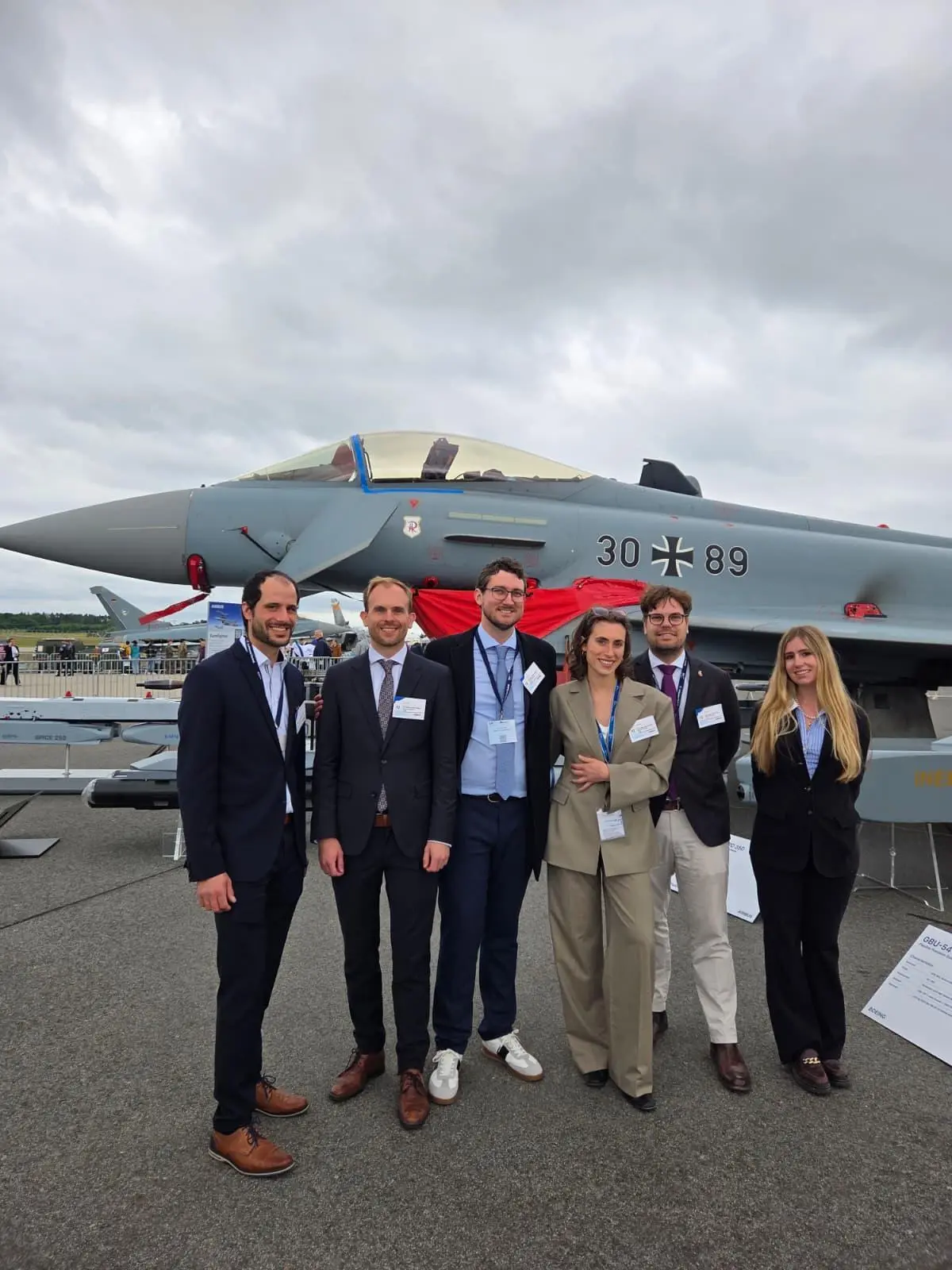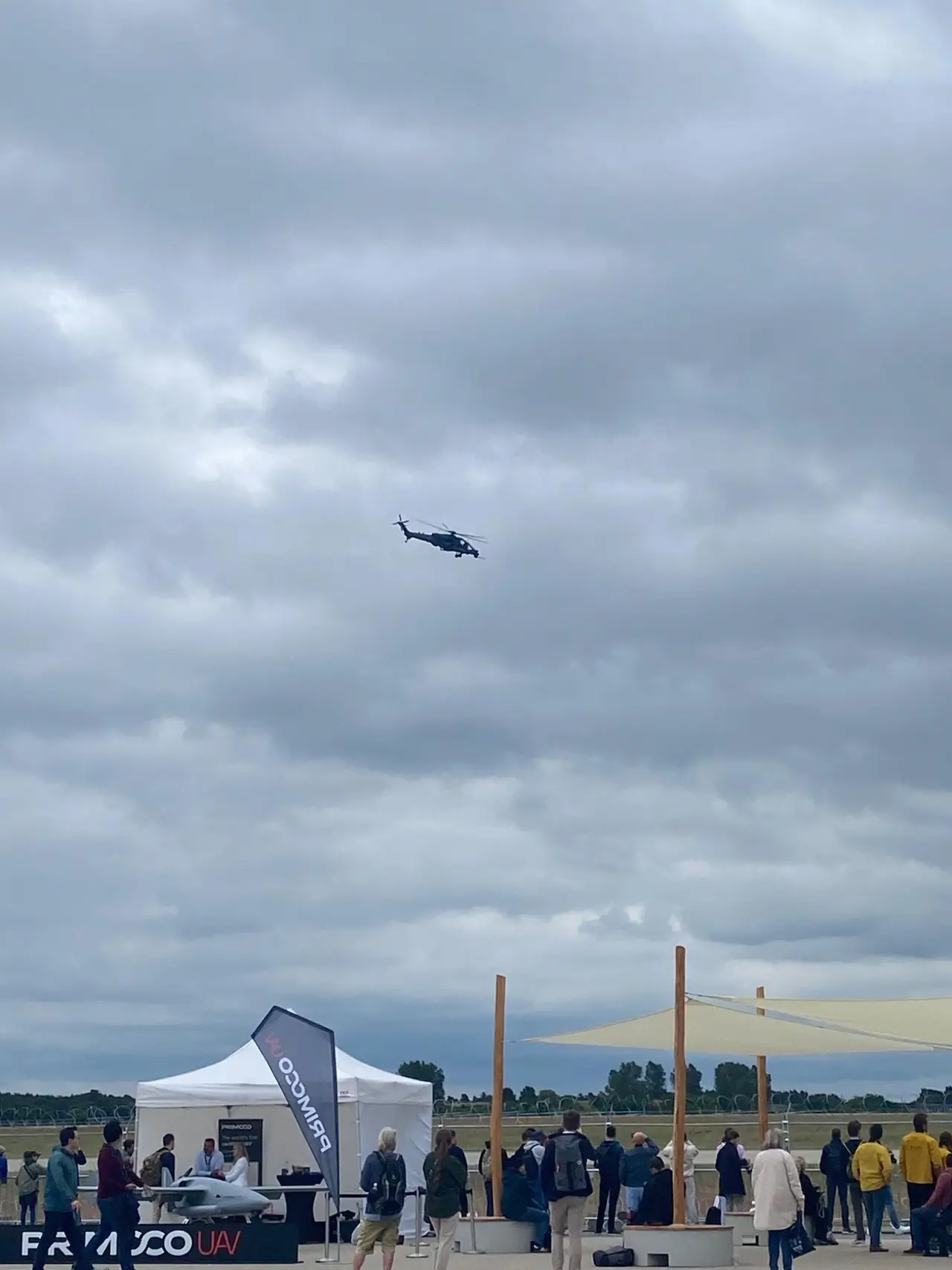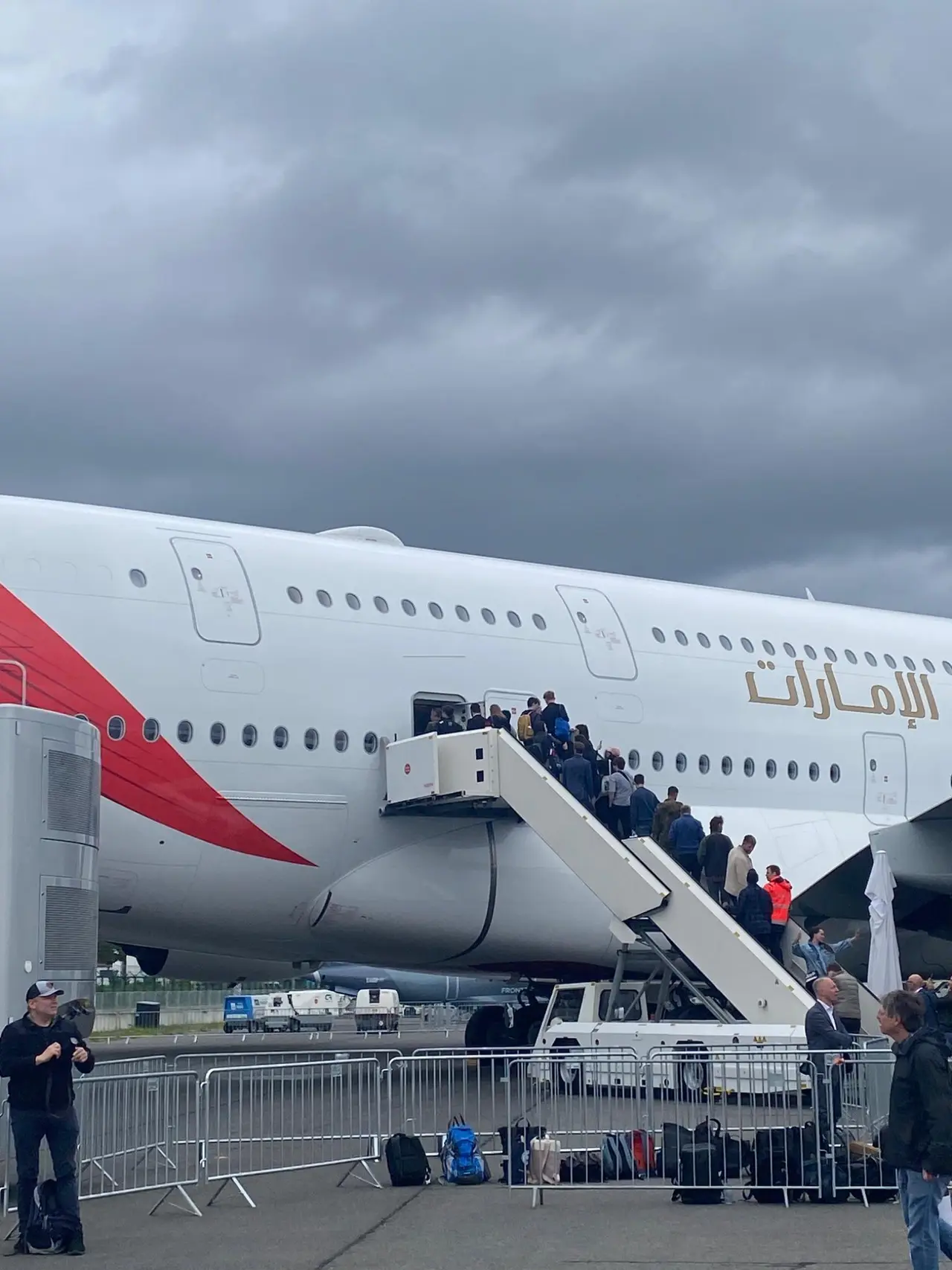



Admittedly, being interrupted mid-conversation multiple times by a roaring Eurofighter in flight (...) was quite a novelty.
ILA Conference Report: A Glimpse into the Future of Aerospace
Taking place from June 10 to 14 2026, the biennial International Aerospace Exhibition ILA (“Internationale Luft- und Raumfahrtausstellung” in German) did not disappoint, even after the Future Combat Air System (FCAS), a German-French-Spanish program to develop a “next-generation” airborne defence system, was cancelled. With its origins in 1909 as the first international aviation trade show, this modern-day ILA rather gave the impression of a festival, stretching across a vast area of exposition halls and airfields. Thousands of visitors walked in between the exhibitors that presented innovations in the fields of aviation, space, and defence, with airplanes, drones, helicopters, space technology and much more on display. The event was prominently opened by the Federal Chancellor Friedrich Merz with the declared goal of making Germany a strong hub for the aviation industry.
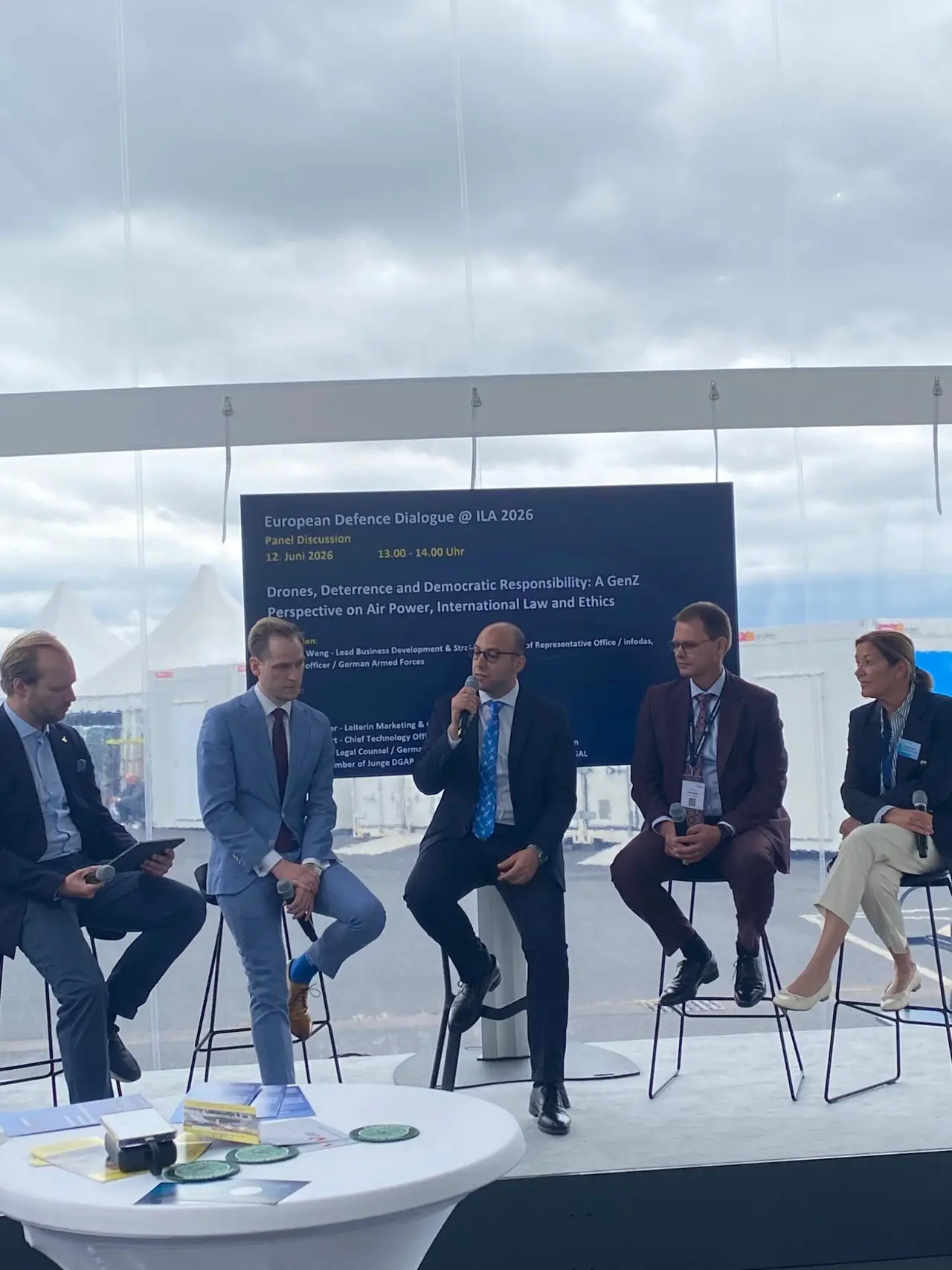
Drones and European defence cooperation dominated this year’s show, with European companies out in force to prove it. The EPIS Delegation had received access during a non-public day and as a highlight, attended one session of the Airbus Defence led European Defence Dialogue, a panel discussion on drones, deterrence and democratic responsibility and the implications of operation spiderweb. Crucial discussions covered the political, technical, and ethical challenges of autonomous and AI-supported systems. These also exposed how fragile international law currently is and how urgently it must adapt to new realities, both on the ground and in technological development.
Next to various expert panels and presentations that took place on stages across the entire venue, the prime focus for conference participants appeared to be threefold: networking, flight shows, and aircraft exhibits and tours. One would meet (former) colleagues and make new acquaintances. Admittedly, being interrupted mid-conversation multiple times by a roaring Eurofighter in flight and watching a Bundeswehr helicopter performing pirouettes to Vivaldi’s ‘Summer Storm’ was quite a novelty. The EPIS delegation joined a guided tour out on the airfield by Airbus of the Eurofighter and uncrewed collaborative combat aircraft (UCCA) systems. We learned that these systems would support crewed fighter jets on their future missions. The pilot can order the UCCA to take out for instance an opponent’s air defence in advance to limit the danger to the human in the cockpit. Also called a ‘collaborative combat aircraft’ (CCA) or ‘loyal wingman’, the UCCA is highly autonomous, armed and operates alongside fighter jets in the air to increase ‘combat mass’ and the crewed aircraft’s range of engagement.
Moreover, in the Space Pavillion, visitors could learn about lunar exploration, climate monitoring, navigation, telecommunications, European launch vehicles and much more, prominently from the European Space Agency (ESA) itself. Meanwhile, in the aviation area, exhibitors were presenting innovations on how to make traveling by air safer, quieter and more sustainable.
International collaborations, strategic partnerships, and industry deals were a central part of the ILA across all three domains, and various significant Memoranda of Understanding (MoU’s) were signed. Most prominently, German Defence Minister Boris Pistorius and his Montenegrin counterpart, Dragan Krapović, signed an agreement to facilitate government-to-government sales of defence equipment, and Federal Chancellor Friedrich Merz oversaw the signing of a strategic agreement between Lufthansa Group and Airbus to mark their 50-year partnership. Notably, Airbus and SkyFall formed a strategic partnership to advance European and Ukrainian defence innovation regarding unmanned aerial systems. This agreement stands out as it embodies the high interest in joint ventures with Ukrainian expertise. Beyond these, numerous deals in aviation, defence, and space were made for complementary technological cooperation.
A major takeaway from ILA Berlin 2026 was the urgent push across all three domains for independent technologies, industrial competitiveness, and defence readiness including high-end software-defined defence in Europe. Furthermore, there seemed to be a great interest in getting younger generations to join the discussion. However, the event prompted me to wonder whether business, politics, academia and civil society are being brought together sufficiently to discuss the implications of, for instance, the increasing use of autonomous systems. As with many other major industry events, I felt that this one, too, lacked a clear objective to bring these perspectives together, as technology is never developed in a vacuum.