

Security Policy & Defence
Strategic foresight, secure future
The Working Group Security Policy & Defence analyses evolving security threats, including cyber warfare, terrorism, and military strategy. It evaluates defence alliances, arms control agreements, and emerging technologies in warfare. Special focus is given to deterrence strategies and international defence cooperation. Monthly briefings provide academic insights into strengthening global security frameworks and addressing the challenges of modern warfare.

Bridging the Raw Materials Gap in EU Strategic Autonomy
As the European Union strives toward a ‘defence union’ and scaled-up military production under Readiness 2030, its ambitions face a critical bottleneck: severe supply chain vulnerabilities in Critical Raw Materials (CRMs). This brief examines how China’s dominance over key inputs like titanium, g…
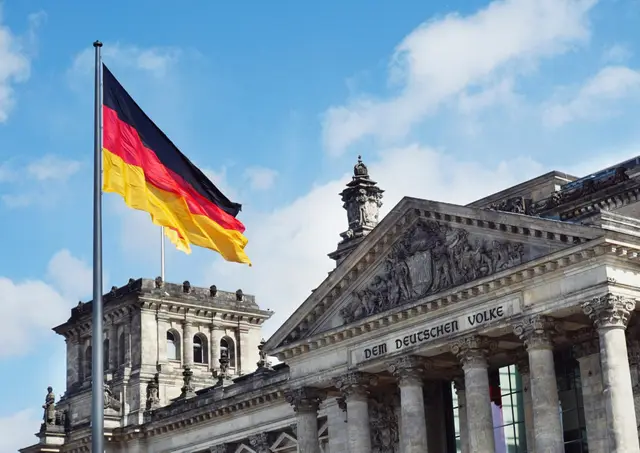
Musk, Trump, and Weidel: How US Influence Is Reshaping Germany’s Far Right
The alliance of Musk, Trump, and the AfD shifts foreign influence from covert tactics to open platform amplification. This public model uses algorithmic promotion to bypass old regulations, creating a new framework for leveraging foreign influence in upcoming European elections.

Safer Schools
While school shootings remain a significant concern for schools and policymakers, the increasing number of incidents highlights the need for effective prevention and mitigation measures. This article explores these mitigation measures from early detection to preparedness and emergency response.

Airbus Defence Summit 2026 Event Report
The first Airbus Defence Summit took place on 20 May 2026 in Manching, Germany. Discussions focused on European security and strategic autonomy, with speakers stressing industrial cooperation and dual-use technologies. A dedicated ED2 dialogue engaged Gen Z on deterrence as a shared responsibility.

Selling War: Russia’s Strategy of Deathonomics
In early January 2026, a video of Kenyan Francis Ndung’ Ndarua went viral on social media. In the video, Ndarua is seen with an anti-tank mine strapped to his chest. Russian soldiers had ordered him to storm the Ukrainian front line as a human “can-opener” under humiliation, with racist slurs (CN…

Eurosatory 2026
The report discusses the Eurosatory 2026 exhibition, where industry leaders showcased new technologies and discussed, alongside European defence officials, NATO and research institutions, how industrial resilience, financial mobilisation, rapid innovation, and Ukraine’s battlefield experience are…

European Defence and Security Summit Report
From procurement contracts that ‘insure’ production capacity to the Turkey question, three takeaways from the European Business Summit Defence and Security at the heart of the EU’s defence readiness dilemma: closing today’s gaps while building tomorrow’s autonomy.

Berlin Defense Tech Forum 2026
The Berlin Defense Tech Forum 2026 highlighted that successful defense innovation must be driven by battlefield needs. Ukrainian soldiers emphasized practicality, affordability, and rapid adaptation over technological complexity.

Competing for the Same Budget: EU and NATO Drone Policies
The EU’s DECODER and NATO’s Drone Edge initiatives show overlapping goals and reliance on the same national budgets. While NATO targets fast global delivery, the EU prioritizes long-term European industry sovereignty.

Recovery Under Fire
The Black Sea Security Forum highlighted that Ukraine’s survival, Black Sea security, and Europe’s future defense are closely linked through sustained political, economic, and military support.

Sky is the Limit? FCAS Stress-Tests EU Defence
The FCAS collapse highlights how leadership disputes, export rules, intellectual property, and differing national priorities can undermine European defense cooperation.

Hybrid Security Regimes in Practice
Hybrid security regimes are deliberate political strategies that expand state influence through flexible, state-aligned networks rather than relying solely on formal institutions.

The EU’s Support Against Russian Hybrid Threats
The EU has applied lessons from Moldova to help Armenia strengthen resilience against disinformation and hybrid threats ahead of its 2026 parliamentary elections.

TechNet International 2026
TechNet International 2026 highlighted the need for secure, data-centric defense, emphasizing lifecycle data protection and AI that supports—not replaces—human decision-making.

Why Europe Can’t Go It Alone on Chips: An Interview with Andreas
Andreas Schumacher is the head of corporate strategy and M&A at Infineon Technologies in Munich. In 2024, he worked as a visiting fellow at the Center for Strategic and International Studies. He has a PhD in Physics from the Karlsruhe Institute of Technology.

Escalation in the Dark
China’s nuclear expansion is increasing uncertainty around crisis decision-making, making deterrence less predictable and raising the risk of miscalculation, especially over Taiwan.

Lost in Space: Europe’s Satellite Dependency
Europe can strengthen its strategic autonomy by reducing reliance on foreign satellite systems through stronger governance, redundancy, and EU-led space capabilities.

The Baltic Shield
The Baltic states are strengthening NATO’s eastern flank with Ukraine-inspired defenses, preparing to deter both hybrid and conventional Russian threats from day one.

Priorisation matters : The Case for Grand Strategy
Marina Henke is Professor of International Relations at the Hertie School and Director of the Centre for International Security in Berlin. Her research covers grand strategy and nuclear security. She holds a PhD from Princeton and published Best Practices in Grand Strategy Design (2025).

ILA Conference Report
A major takeaway from ILA Berlin 2026 was the urgent push across all three domains for independent technologies, industrial competitiveness, and defence readiness including high-end software-defined defence in Europe.