

“We are partners (...), but we’re not friends”
Intelligence as a part of European grand strategy:
a feasible future on a larger scale?
Introduction
Intelligence agencies help policymakers implement the grand strategy they pursue (Rovner, 2021). They play an important role in monitoring international security, which in turn informs decision-making on military interventions, diplomatic moves, and related matters. For nation-states, it is often national intelligence agencies that are tasked with gathering information about foreign affairs, such as the CIA, MI6, or DGSE. Yet when discussing the European Union, it is important to note that no such overarching agency exists, which inherently prevents the EU from centrally collecting intelligence and makes it dependent on national agencies and their information-sharing practices. After the outbreak of the war in Ukraine, European leaders turned to security matters by enhancing the CFSP, CSDP, and EUMAM Ukraine. Those measures, as is often the case with key geopolitical decisions, remain at the final stage of decision-making and fall within a member state’s competence.
When it comes to intelligence, this final ‘yes’ also rests with the national government. Yet, as mentioned, intelligence plays an important role in informing grand strategy; thus, its development could further enhance the EU’s benchmark goals. For now, it’s a relatively underdeveloped branch of EU policymaking, given its fragmented governance and limited capacity. Last year, Ursula von der Leyen attempted to establish an EU-based intelligence collection operation, which faced significant scrutiny from national governments (Roussi, 2026). As Roussi (2026) points out, given the current geopolitical climate, the new EU security policy strategy reportedly proposes expanding the intelligence analysis division. Is this an achievable goal given the EU’s reality? If not, how can Intel’s capabilities be enhanced? This article will strive to answer those key questions.
Intelligence Structure of the EU
The EU does not have a centralised intelligence agency; it therefore relies on national security agencies and the intelligence they gather, which is processed by EU analytical agencies, often through the EEAS structures. The intelligence bodies at the EU’s disposal include the EU Intelligence and Situation Centre (EU INTCENT); its military counterpart, the EU Military Staff Intelligence Directorate, within the European Union Military Staff; and the European Union Satellite Centre – a separate EU agency specialised in geospatial intelligence (GEOINT), including satellite imagery and its analysis (Seyfried, 2017, p. 2). Civilian and military intelligence have been combined under a Single Intelligence Analysis Capacity (SIAC) since 2007 (Seyfried, 2017, p. 3).
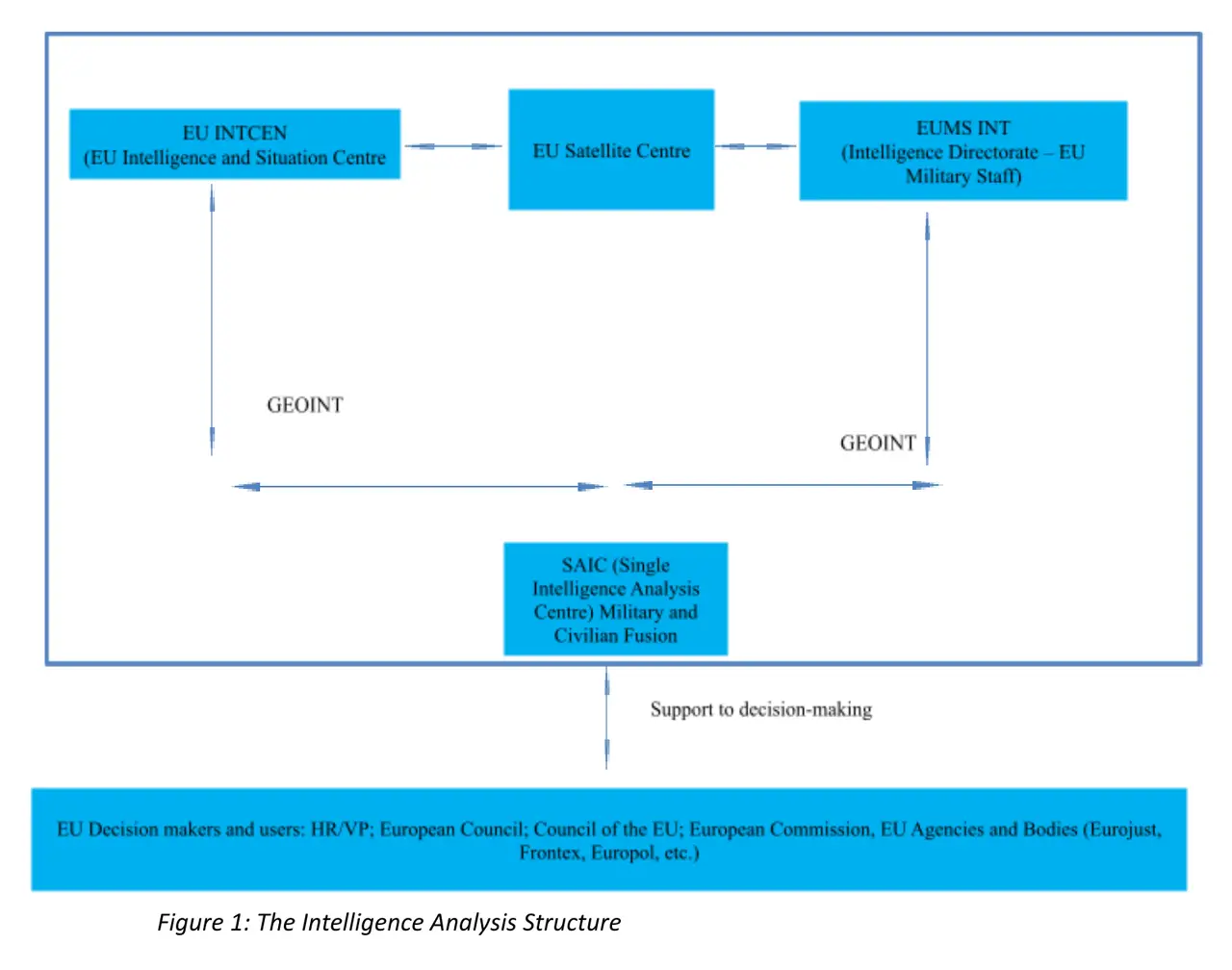
Figure 1: The Intelligence Analysis Structure
The mentioned agencies, however, are illustrative of the state of intelligence analysis at the EU level and will be analysed in more detail in the subsequent sections.
EU Intelligence and Situation Centre (INTCEN)
INTCEN’s responsibilities include analysing intelligence (INTEL) shared by the EU MS. The assessments it produces based on this INTEL are later passed to senior officials at the EEAS, the Commission and the Council (Roussi, 2026).
As Seyfried (2026) notes, INTCEN also serves as a communication centre across EU agencies and MS. However, because it lacks the capacity to gather information, it has often been described as “toothless” in its operations (Roussi, 2026), and its work also depends on the willingness of the EU MS to provide it with intelligence (Seyfried, 2017, p. 2).
EU Military Staff Intelligence Directorate (EUMS INT)
As mentioned, the EUMS INT is a military intelligence centre and a source of military expertise that provides strategic advice to the HR/VP, reports to the EU Military Committee, and conducts assessments and early warning for the Petersburg Criteria and the implementation of CSDP (Wikipedia, 2025). The Petersburg Tasks, adopted in 1992 at the Ministerial Council of the Western European Union (WEU), declare WEU’s readiness to make available military units “from the whole spectrum of the conventional armed forces” (Petersburg Tasks – EUR-Lex, n.d.) not only to WEU but also to NATO and the EU. This assistance covers humanitarian aid, prevention, crisis management, disarmament operations, military advice and assistance, and post-conflict stabilisation.
As Cattler (2025) highlights, the specificity of its work within the military domain often means that its analysis is conducted in isolation. Although INTCEN and EUMS INT operate in parallel, there is no fusion or integration, which hinders the potential enhancement of the EU’s intelligence capabilities.
EU Satellite Centre (SatCen)
Alongside those pillar organisations, SatCen operates in parallel with the CFSP and receives commissions from both INTCEN and EUMS INT for imagery production and analysis. It is therefore the only EU agency that generates original intelligence based on “commercially available satellite images” (Seyfried, 2017, p. 2), which also means using other imagery sources where available.
Located in Torrejón de Ardoz (Spain), it provides decision-makers with global situational awareness and early warnings of potential crises based on satellite and aerial imagery, enabling more informed decision-making (European Union Satellite Centre – SATCEN | European Union, 2025).
The intelligence SatCen produces is also used to track illegal trafficking and other crimes, forming part of the criminal intelligence that EUROPOL uses to combat and prevent international organised crime, cybercrime, and terrorism in MS (Europol, 2026).
Intelligence, Grand Strategy, and European Strategy – what are the weak points?
Having analysed the current situation of intelligence-focused bodies in the EU, one cannot help but notice inherent flaws in the EU’s institutional structure or approach to intelligence gathering. Most importantly, from a formal standpoint, the Treaty of Lisbon’s provisions on CSDP make no reference to intelligence cooperation (Seyfried, 2017, p. 2). As Seyfried puts it, “Member States are thus not explicitly forbidden to cooperate at the intelligence level, there is no European legal basis for the transfer of powers to a European level” (Seyfried, 2017, p. 2). However, as the example of von der Leyen’s initiative shows, the states seem apprehensive about this idea. Thus, the current institutional structure hinges on the potential development of the EU’s intelligence-gathering capacity, given its fragmentation.
Another important factor is the European intelligence-gathering culture. Intelligence practice in each country is closely related to national culture and largely follows it (Yelamos, 2022, p. 475). The EU MSs are mostly focused on maintaining their national intelligence agencies and want to build intelligence sharing on a voluntary basis. Regarding the upcoming EU Security “Grand Strategy” and the supposed changes in INTCEN, two senior intelligence officers highlighted a strong culture of “national intelligence agencies keeping valuable information to themselves and lingering distrust even among friendly EU MS” (Roussi, 2022), which complicates the potential reform. “We are partners (…), but we’re not friends” (Roussi, 2022) sums this up even better.
The 2025 “Euroeyes” suggestion – based on a value-sharing principle similar to “Five Eyes” – was seconded by German intelligence experts in the wake of the CIA’s decision to suspend its intelligence exchange in Ukraine (Lunday, 2025).
This concern about the potential withdrawal of help from the American intelligence service also speaks volumes about Europe’s long-standing reliance on US intelligence. Since the start of Trump’s second term, European intelligence agencies have voiced concerns about overreliance on US intelligence. The political appointments of intelligence agency directors further heightened these concerns. This instability, according to de Mitri, “left allies wondering whether they should become more self-sufficient” (de Mitri, 2026). However, replacing American intelligence sources is no mean feat, and, as mentioned, is largely hindered by a lack of coordination among European intelligence agencies, compared with their American counterparts. European states are already attempting to expand cooperation at the EU level, but the biggest obstacle appears to be budgetary constraints, since no actor, including the EU, has the same financial resources and in-house capabilities as the US (de Mitri, 2026).
Possible ways of the development of EU Intelligence
Given the current situation, the most plausible option is to advocate for the further expansion of intelligence sharing among MS. As de Mitri (2026) points out, this enhanced cooperation could be strengthened among MS that share stronger ties. Since creating an independent EU-based intelligence agency seems taboo, this could be the closest available solution.
What is more, this article would also like to second the proposal made by Seyfried (2017) regarding the creation of an “Intelligence Council”, which would serve as a forum for high-ranking intelligence officials from MS to share viewpoints and discuss pressing issues. This could be a possible enhancement of the EU’s intelligence capabilities, creating a stronger forum for information sharing while preserving authority over intelligence sharing and MS oversight.
With the EU’s new European Security Strategy coming up soon, discussions about extending EU intelligence capabilities should be further clarified. A joint initiative of the Commission and EEAS, expected to be released by the NATO Summit in July 2026, is said to outline key priorities and strategies in light of the changing security landscape. However, as Veron (2026) sees it, given the MS competence over security and defence, the EU initiatives “often follow, rather than shape national priorities” (Veron, 2026). Moreover, there is some scepticism about the EU’s tendency to develop new strategies without implementing existing ones, thereby creating a new layer that does not “streamline current frameworks” (Veron, 2026).
Conclusion – what lies ahead?
Given the current geopolitical landscape, the EU must look ahead and can no longer ignore the need to enhance its intelligence capabilities to support its leaders’ decision-making and to shape the European Grand Strategy, in which intelligence plays a crucial role.
As mentioned, this remains a significant challenge, since the EU is indeed not a federation and MS, in crucial decision-making, reserve the right to make the final yes-or-no decision. This suggests that enhanced cooperation is a plausible option to develop at the EU level and should be advocated for. Developing a centralised intelligence framework would elevate the EU’s role as a proactive global actor. However, such expansion has historically come at the expense of Member State sovereignty, as nations remain reluctant to cede control over their national security apparatus.
Bibliography
de Mitri. (2026, May 5). Euro-American intel sharing: Trump’s second term threat. ITSS Verona. https://www.itssverona.it/euro-american-intel-sharing-trumps-second-term-threat
European Union Satellite Centre. (2025, February 12). European Union Satellite Centre — SATCEN. European Union. https://european-union.europa.eu/institutions-law-budget/institutions-and-bodies/search-all-eu-institutions-and-bodies/european-union-satellite-centre-satcen_en
Europol. (2026, June 11). About Europol. Europol. https://www.europol.europa.eu/about-europol
European External Action Service. (n.d.). The European Union Military Staff (EUMS). EEAS. https://www.eeas.europa.eu/eums_en
Cattler (2025, November 27). The EU’s intelligence debate: Capability first, structures last. ICDS. https://icds.ee/en/the-eus-intelligence-debate-capability-first-structures-last/
Petersberg tasks. (n.d.). In EUR-Lex glossary. EUR-Lex. https://eur-lex.europa.eu/EN/legal-content/glossary/petersberg-tasks.html
Roussi, A. (2026, May 27). EU’s intelligence hub eyes bigger role in security overhaul. POLITICO. https://www.politico.eu/article/eus-intelligence-hub-eyes-bigger-role-in-security-overhaul/
Rovner, J. (2021). Intelligence and grand strategy. In T. Balzacq & R. R. Krebs (Eds.), The Oxford handbook of grand strategy (1st ed., pp. 406–421). Oxford University Press. https://doi.org/10.1093/oxfordhb/9780198840299.013.25
Veron, P. (2026, June 3). A new European security strategy: What for? ECDPM. https://ecdpm.org/work/new-european-security-strategy-what
Wikipedia contributors. (2025, July 17). European Union military staff. Wikipedia. https://en.wikipedia.org/wiki/European_Union_Military_Staff
Lunday, C. (2025, March 9). German lawmakers float ‘Euro Eyes’ spy network amid uncertainty on US intel. POLITICO. https://www.politico.eu/article/germany-russia-bundestag-lawmakers-float-euro-spy-network-us-intel/
Yelamos, C., Goodman, M. S., & Stout, M. (2022). Intelligence and culture: an introduction. Intelligence & National Security, 37(4), 475–481. https://doi.org/10.1080/02684527.2022.2065610