
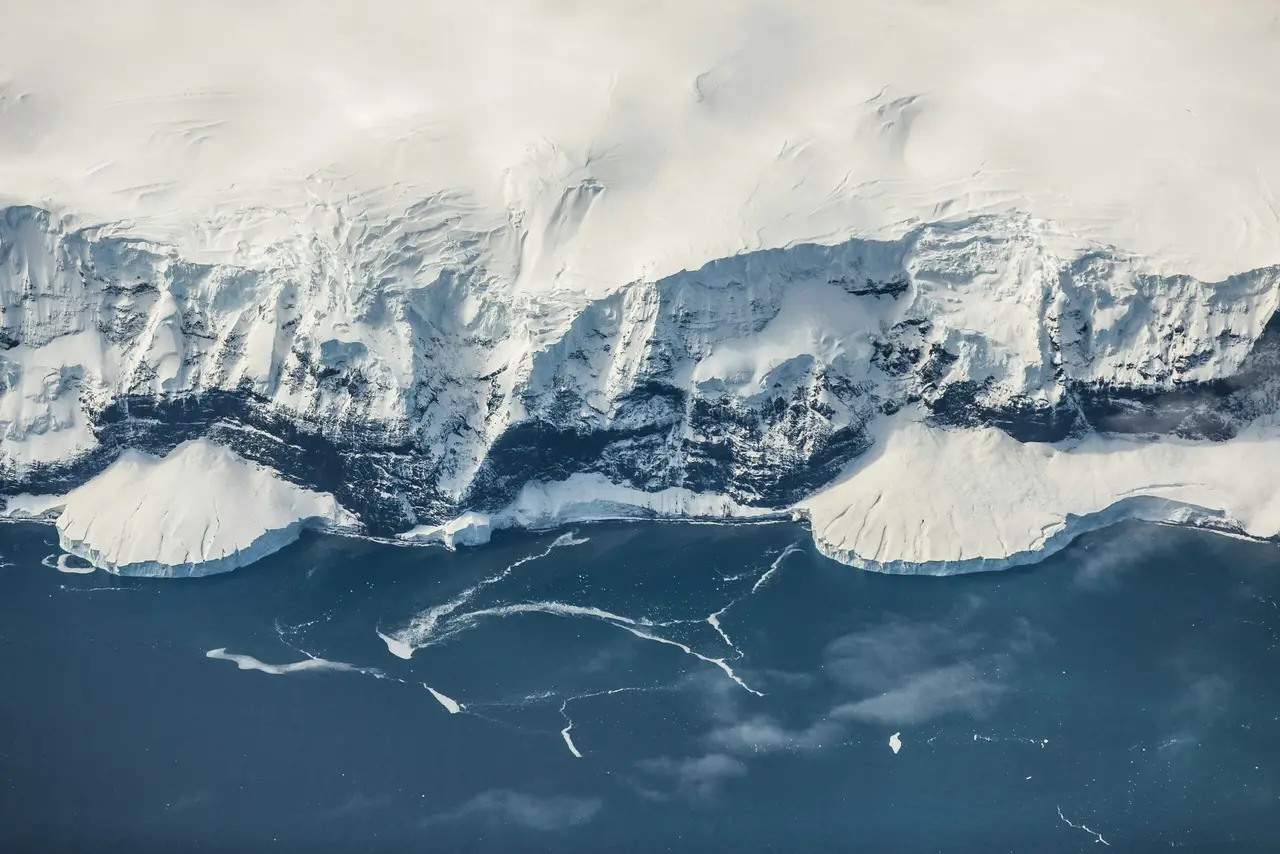

Svalbard, a group of islands in the Arctic under Norwegian sovereignty, has become central to debates about NATO’s security in the High North. Located far from mainland Norway, the archipelago occupies a strategically important position in the Arctic due to its distinctive legal framework and abundance of natural resources (Wither, 2018). The region that was once perceived as free from great-power competition is now increasingly exposed to emerging geopolitical tensions, drawing comparisons with the strategic rivalry that characterised the Cold War not that long ago (Rossi, 2025). While, understandably, much attention nowadays is directed towards NATO’s Eastern Flank, the Alliance shall not overlook the security issues emerging in the north and the fact that threats posed by Russia are just as serious over there as they are in Eastern Europe (van der Wal, 2025).
Thus, this paper aims to answer the following research question: How does Svalbard constitute a strategic challenge to NATO’s security on the Northern Flank? The question is particularly relevant in light of the dynamic security landscape in the Arctic, which has been transformed over the years by the growing competition in the North and Sweden and Finland’s accession to NATO. This brief argues that Svalbard constitutes a political and strategic vulnerability for NATO, arising from its geography, legal status and Russia’s presence. The key challenge is thus to strengthen deterrence without risking an unnecessary escalation over this sensitive topic.
To address the research question, the paper will be divided into three main sections. First, the historical context will be outlined, introducing the Svalbard Treaty and exploring its implications for Norwegian sovereignty and the archipelago’s political status. Secondly, the focus will be directed towards Russia and its long-term presence in the area, examining the challenges that it poses for NATO’s security on the Northern Flank. Last but not least, Svalbard will be assessed in the context of increasing geopolitical tensions in the Arctic, entailing a political dilemma for NATO between avoiding escalation and strengthening deterrence.
Sovereignty and the Legal Status of Svalbard
To understand the contemporary security challenges associated with Svalbard, it is necessary to briefly explore the history and origins of its distinctive political status. Although for much of its history, the place was perceived as an area of peaceful cooperation and low tension, its specific legal arrangements sparked considerable disagreements and were frequently contested (Baudu, 2023). Its political status was formally recognised by the Svalbard Treaty in 1920, which set out relevant provisions regarding its governance and sovereignty over the islands (Zimmerman, 2018).
While the Treaty grants Norway full sovereignty over the islands, it also imposes several restrictions on the ability to exercise this right (van der Wal, 2025). Article 9 stipulates that the archipelago cannot be used for warlike purposes and prohibits the establishment of fortifications and naval bases. At the same time, Articles 2 and 3 introduce the non-discrimination principle and grant all citizens of countries under the Treaty the same right to live in and benefit from Svalbard as the citizens of Norway. As a result, considerable ambiguity emerged as regards the scope of authority to regulate activities on the archipelago, which became a point of contention in the following decades, especially concerning the natural resources (Zimmerman, 2018). Therefore, the Treaty establishes a distinctive form of sovereignty that differs from conventional frameworks, as Norway’s jurisdiction over Svalbard is subject to specific obligations and must respect the privileges afforded to other states.
Somewhat unclear wording of the Treaty provisions led to a dispute over their interpretation during the Cold War, as the Soviet authorities maintained that any military activity on the archipelago was prohibited, whereas Norway argued that measures undertaken solely for defensive purposes were legal (Moe & Jørgensen, 2025). This is just one of many examples, but it demonstrates why Svalbard should not be treated simply as another part of Norwegian territory, but rather as a distinct legal environment with potential security implications for Norway and NATO overall.
Russia’s Presence on the Archipelago
Russia’s presence on Svalbard is by no means a recent phenomenon. Although its historical ties to the archipelago date back to the sixteenth century, its activities have been officially regulated by the Svalbard Treaty of 1920. It was regularly criticised by Soviet politicians openly expressing their dissatisfaction with how the issue of sovereignty was resolved, resulting in years of tension between the countries (Zimmerman, 2018). Yet, despite initial objections, the Soviet Union formally recognised Norway’s unconditional sovereignty in 1924 and became a party to the Treaty in 1935 (Moe & Jørgensen, 2025).
While the early period was characterised primarily by its economic undertakings, based mainly on coal mining, the fundamental Russian interests nowadays extend to tourism and research, while also becoming increasingly political (Moe & Jørgensen, 2025). Therefore, its presence on Svalbard is no longer a mere continuation of economic activities but rather an area of strategic importance for Russia. Despite relative stability and peace over the years, international relations have considerably deteriorated, with Moscow accusing Norway of attempting to militarise the archipelago, leading to a series of controversies and misunderstandings between the countries (Baudu, 2023). The Russian Ministry of Foreign Affairs was especially vocal, regularly charging Norway with “including this territory in the sphere of national military development” and conducting a “destructive policy” on the archipelago (Moe & Jørgensen, 2025, p.1).
It is generally assumed that Russia’s primary goal is security-related, ensuring that Svalbard will not be used for military purposes against its interests on the archipelago (Moe & Jørgensen, 2025). Indeed, some kind of „strategic uncertainty” in the Arctic, characterised by disruption while retaining plausible deniability, serves as a way of reminding NATO about Russian military capabilities and asserting its position in the High North (Stensrud & Østhagen, 2024, p.123). Therefore, it seems likely that Russia’s continued involvement in Svalbard is likely to pose some challenges in the long run. The next section will thus analyse the implications that this statement entails for the Alliance’s approach towards its Northern Flank.
Svalbard as NATO’s Political Dilemma
As has been discussed above, the archipelago’s geographical location as well as its complex legal status generate particular vulnerabilities that could possibly be exploited by Russia (Wither, 2018). While the Norwegian approach has for a long time been built upon the presumption that Russia seeks to retain the status quo in the High North, it seems that this view has been increasingly challenged by Russian narratives depicting Norway as violating its international obligations (van der Wal, 2025). The situation became even more complex in recent years, following the outspoken statements of Russian politicians alleging that Norway imposes illegitimate limitations on Russian activity on the archipelago and attempts to bring this territory closer to NATO’s military sphere (Moe & Jørgensen, 2025). What’s interesting and worth mentioning here is that Russian media narratives on Svalbard are unsettlingly similar to those about Ukraine preceding the war – Russia is portrayed as a victim of unjust politics and nostalgic references to the Soviet past are invoked (van der Wal, 2025). Nevertheless, these statements should be perceived as only Russian narratives rather than a truthful depiction of the actual Norwegian policy.
As a result, the question remains how the Alliance should proceed in case of the spread of misinformation or provocative operations performed by Russia. Currently, Norway approaches this challenge through a combination of deterrence and reassurance. While it recognises Svalbard’s protection under NATO’s Article 5, it also seeks to defend the archipelago without provoking Russia and risking a possible escalation (van der Wal, 2025). The issue is to determine what Norway and NATO’s options are for mitigating the threat when it comes to grey-zone tactics, to which Svalbard is especially vulnerable. The Arctic serves as one of Russia’s preferred areas to experiment with its hybrid capabilities, and the archipelago’s features entice it to test NATO’s internal unity (Baudu, 2023). As Svalbard is a crucial hub for critical satellite infrastructure, any attempt at sabotage may result in far-reaching implications for both civilian and military activities, as well as regional security and NATO’s ability to monitor the situation in the Arctic (van der Wal, 2025). This vulnerability is especially concerning in light of reports of Russian activity in the High North. In September 2026, it was revealed that NATO managed to thwart an alleged sabotage operation targeting the critical undersea infrastructure near Svalbard territories, reflecting challenges associated with strategically important communication infrastructure in the region (Camba, 2026). Thus, proactive preparation for grey-zone tactics in the High North should be among NATO’s priorities (Baudu, 2023).
At the same time, as has been briefly mentioned in the first section of this brief, the interpretation of the wording of Article 9 of the Svalbard Treaty constitutes a major point of contest, raising doubts about the potential scope of NATO’s engagement in the archipelago (Baudu, 2023). This issue remains pressing in light of the evidence suggesting that Russia has expanded its geographical scope of military exercises, which are now increasingly taking place in the immediate vicinity of the archipelago (van der Wal, 2025). Simultaneously, it must be assumed that any Norwegian attempt to introduce defensive measures might be perceived by Russia as posing a threat to its security and thus reinforce its narratives about Norway breaching the Treaty’s obligations. This situation can be described as „risk confusion”, in which both action and inaction appear to carry significant risks, either by entailing escalation or letting Russia gain greater control over the situation (Wither, 2018, p.36). Therefore, it seems that the most preferred approach for Norway and its allies is to strengthen deterrence against possible Russian actions on Svalbard before a broader crisis emerges (Wither, 2018). This would, in turn, require a coherent strategy consistent with the obligations of the Svalbard Treaty.
Nevertheless, it remains unlikely, at least for the time being, that Russia will initiate any direct military operation, as it could rapidly escalate into a conflict which Russia cannot win (Stensrud & Østhagen, 2024). However, although unlikely, the scenario remains realistic and raises questions about NATO’s capabilities to intervene in the case of provocation. Russia could potentially seek to take advantage of Svalbard’s geography and establish its forces on Bear Island, located between Norway and the archipelago, at the same time complicating NATO’s possibility of movement and expanding its influence in the region (Piechowicz, 2025). In case of conflict, such a move could easily extend Russia’s operational capabilities and lead to disruption of transatlantic movements (van der Wal, 2025). Therefore, in light of the hybrid threats, the Alliance’s approach should consist of being mindful of Russia’s stance towards Article 9 and legal restrictions as regards military activity, while deterring Moscow from initiating any operation but standing prepared in case it does (Baudu, 2023). Only by devising a coherent strategy and harmonising the Alliance’s stance on this disputed issue will NATO be able to work towards mitigating the existing uncertainty in the High North.
Conclusion
To conclude, this brief aimed to assess the strategic challenges that Svalbard poses for NATO on its Northern Flank. The geographical location, as well as its distinctive legal framework and Russian presence, place Svalbard in a sensitive geopolitical position, creating strategic vulnerabilities for the Alliance. As has been discussed, the most appropriate strategy to pursue seems to be deterrence without militarisation, which would strengthen NATO’s control while abiding by restrictive provisions as regards military activities on Svalbard.
Although the prospect of an open military conflict is unlikely, Russian statements and actions can be perceived to constitute an active threat in the Arctic. Indeed, Svalbard’s significance ultimately lies in the implications that a crisis there could bring about for Norway’s sovereignty, NATO’s internal cohesion and overall security in the North. Thus, in light of its strategic vulnerabilities, the archipelago should be perceived and treated as an essential component of NATO’s strategy on the Northern Flank.
Reference list:
Baudu, P. (2023). Minding the Archipelago: What Svalbard Means to NATO. Arctic Review on Law and Politics, 14, 76–82. https://www.jstor.org/stable/48722454
Camba, G. (2026, September 10). NATO allies successfully thwart Russian undersea cable sabotage operation. Euronews. https://www.euronews.com/2026/09/10/nato-allies-successfully-thwart-russian-undersea-cable-sabotage-operation
Moe, A., & Jørgensen, A.-K. (2025). Russia’s policy of presence in Svalbard. Polar Record, 61. https://doi.org/10.1017/s003224742500004x
Piechowicz, M. (2025). NATO and Russia’s actions in the Arctic as an example of symmetry in international security. Defense &Amp; Security Analysis, 41(2), 336-352. https://doi.org/10.1080/14751798.2025.2456309
Rossi, C. (2025). Return of the Grossraum and the Proper Security Crisis of Rising Arctic Tension. SSRN Electronic Journal. https://doi.org/10.2139/ssrn.5360298
Stensrud, C.J. & Østhagen, A. (2024). Hybrid Warfare at Sea? Russia, Svalbard and the Arctic. Scandinavian Journal of Military Studies, 7(1), 111-130. https://doi.org/10.31374/sjms.233
van der Wal, B. (2025, November 27). NATO’s polar pressure point: The Svalbard archipelago and the Russian challenge. The Arctic Institute. NATO’s Polar Pressure Point: The Svalbard Archipelago and the Russian Challenge | The Arctic Institute – Center for Circumpolar Security Studies
Wither, J. K. (2018). Svalbard. The RUSI Journal, 163(5), 28-37. https://doi.org/10.1080/03071847.2018.1552453
Zimmerman, M. (2018). High North and High Stakes: The Svalbard Archipelago Could be the Epicenter of Rising Tension in the Arctic. PRISM, 7(4), 106–123. https://www.jstor.org/stable/26542710