
To what extent has the existing international legal and institutional framework been capable of responding to large-scale human-rights violations arising from armed conflict, and what reforms could improve its preparedness for future conflicts?
Introduction
War has happened during many periods and across various countries, bringing tragedy and chaos wherever it arises. War is an ancient concept, yet war that happens in modern times raises new and interesting questions, both concerning daily life and how it could change, as well as from a legal angle.
The war in Ukraine has shown how contemporary armed conflict can challenge the institutions that were created to maintain peace and protect people from the consequences of war. It is therefore a fruitful topic to analyse from a legal perspective, particularly because it allows us to examine the United Nations system in action and to what extent existing international legal and institutional mechanisms have been capable of responding to large-scale human-rights violations.
The international system that was established after World War II was created to prevent and regulate conflicts, and it can now be analysed in light of new modern challenges. Ukraine provides a case study through which these mechanisms can be examined, especially when the institution primarily responsible for international peace and security is itself prevented from acting effectively. The Ukrainian case therefore raises two connected issues: first, whether a permanent member directly involved in an armed conflict should be able to use its veto to prevent collective action concerning that conflict; and second, whether the international system can be strengthened through alternative mechanisms when such a veto prevents the Security Council from acting.
The Security Council veto and Article 27(3)
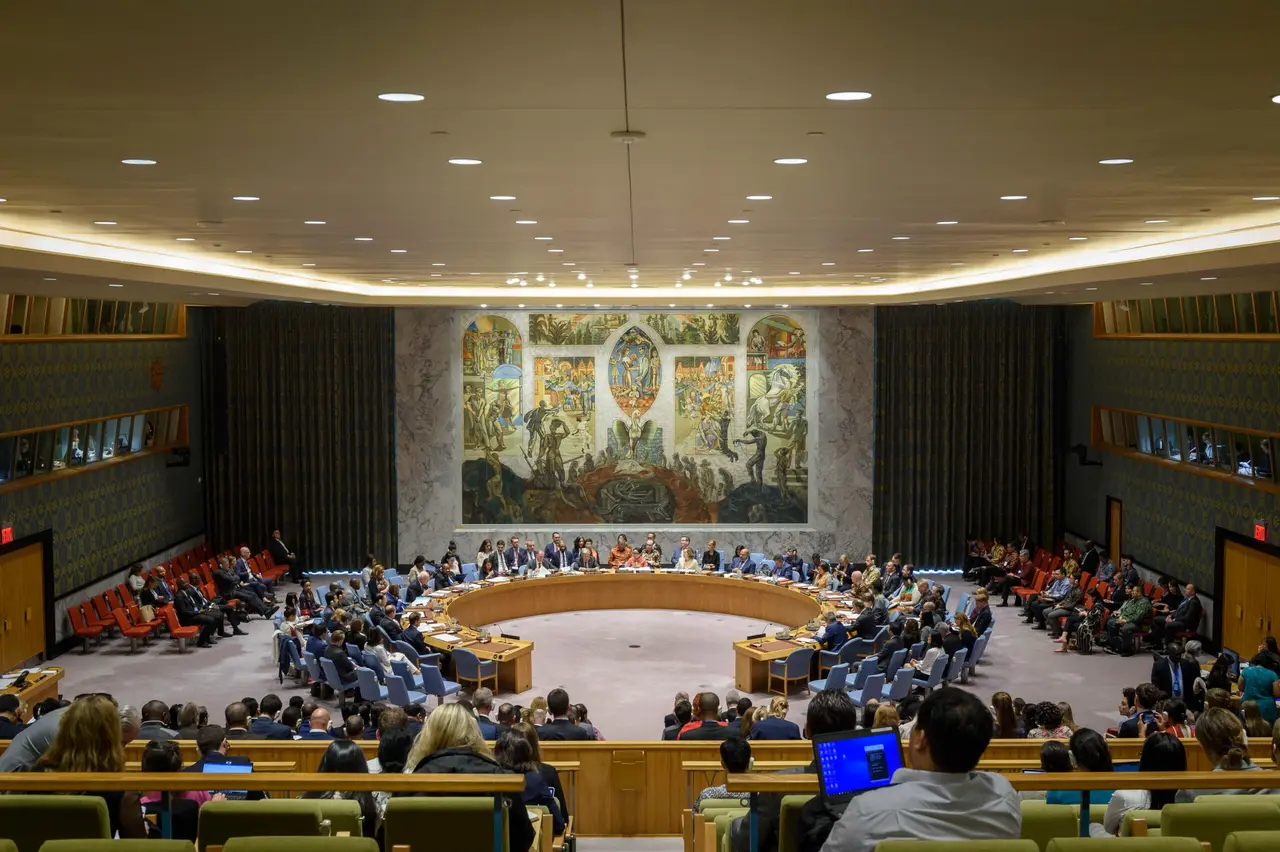
Russia has repeatedly vetoed draft Security Council resolutions concerning Ukraine while being directly involved in the armed conflict. This creates a particularly difficult legal and institutional situation because Russia is a permanent member of the Security Council and can therefore prevent the adoption of substantive resolutions.
On 25 February 2022, the Security Council considered a draft resolution concerning the Russian military offensive against Ukraine. The draft received eleven votes in favour but was vetoed by Russia. China, India and the United Arab Emirates abstained (United Nations Security Council, 2022a). On 30
September 2022, another draft resolution concerning Russia’s attempted annexation of occupied Ukrainian territories was also vetoed by Russia after receiving ten votes in favour (United Nations Security Council, 2022b).
Anne Peters has argued that such use of the veto can be legally problematic. Article 27(3) of the UN Charter provides that, in decisions under Chapter VI and Article 52(3), a party to a dispute shall abstain from voting. Peters argues that, in the specific situation where a permanent member uses its veto to
shield its own manifest and prima facie aggression from collective action, the Charter can reasonably be interpreted as prohibiting such a veto. She connects Article 27(3) with the principle of good faith and the prohibition of abuse of rights, arguing that the veto should in such circumstances be treated as an abstention (Peters, 2023).
This interpretation is important for the Ukrainian case because it questions whether the veto of a state directly involved in an armed conflict should always be treated as legally unrestricted. At the same time, this remains a legal argument rather than an uncontested interpretation of Article 27(3). Peters herself recognises that the practice of states has not generally followed the legal conclusion she proposes (Peters, 2023).
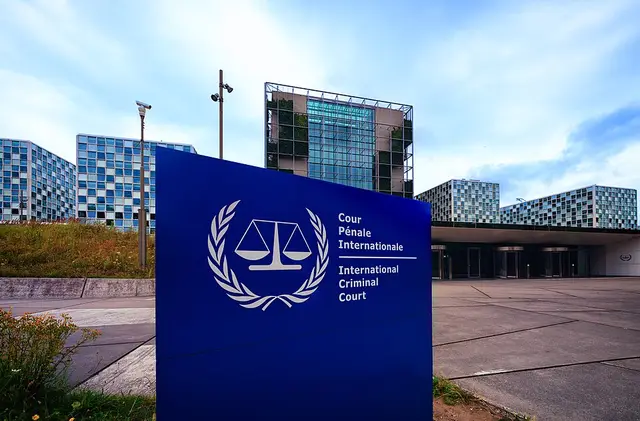
The issue is not only about political resolutions. It also affects international criminal accountability. In 2015, Russia vetoed a draft Security Council resolution that would have established an international criminal tribunal to prosecute those responsible for the downing of Malaysia Airlines flight MH17 over Ukraine. The draft received eleven votes in favour, three abstentions and one vote against from Russia, preventing the tribunal from being established through the Security Council (United Nations Security Council, 2015). This shows that Security Council paralysis can affect not only collective responses to an armed conflict, but also attempts to establish mechanisms for accountability for alleged international crimes.
A comparison with Libya
The situation in Libya in 2011 provides a useful comparison. The conflict began with protests against Muammar Qadhafi’s government, which responded with violent repression, and the uprising subsequently developed into an armed conflict between government forces and opposition forces. By March 2011, government forces were advancing towards Benghazi, where civilians were under serious threat. Against this background, the Security Council adopted Resolution 1973, authorising Member States to take all necessary measures to protect civilians and establishing a no-fly zone. The resolution was adopted by ten votes in favour, no votes against and five abstentions, including Russia and China (United Nations Security Council, 2011). Unlike in Ukraine, Russia was not directly involved in the Libyan conflict and chose to abstain rather than exercise its veto. As a result, the Security Council adopted measures aimed at protecting civilians.
Ukraine demonstrates a different institutional problem because Russia was directly involved in the conflict while simultaneously possessing permanent-member veto power. The comparison therefore shows how the Security Council’s ability to act can differ depending on whether a permanent member is directly involved in the situation and exercises its veto. This raises the question of whether veto power should remain unrestricted when the permanent member exercising that power is itself directly involved in the conflict under consideration.
What can be done when the Security Council is blocked?
The Ukrainian case does not mean that international institutions have no alternatives when the Security Council is paralysed. The General Assembly has developed mechanisms that can become more prominent in such circumstances. Resolution 76/262, adopted in 2022, provides for a formal General Assembly meeting within ten working days after a veto by a permanent member. This does not remove the veto or give the General Assembly the same powers as the Security Council, but it increases transparency and creates a wider forum in which the use of the veto can be examined (United Nations General Assembly, 2022; Security Council Report, 2026). Although this mechanism does not solve the underlying veto problem, it demonstrates that the international system can still be strengthened through greater transparency and accountability without immediately requiring an amendment to the UN Charter.
Conclusion
The war in Ukraine demonstrates that the existence of international legal rules does not automatically guarantee effective protection when the institutions responsible for applying them are unable to act. The Russian vetoes show the structural difficulty that arises when a permanent member of the Security Council is directly involved in the conflict under consideration. Article 27(3), particularly as interpreted by Anne Peters, provides a basis for questioning whether such vetoes should always be treated as unrestricted when a permanent member is directly involved in the conflict. The MH17 example shows that the consequences of this problem can extend into international criminal accountability, while the comparison with Libya demonstrates the difference that a permanent member’s decision not to use its veto can make. At the same time, the Ukrainian case shows that strengthening the system does not necessarily require an immediate amendment of the UN Charter: mechanisms such as Resolution 76/262 can increase transparency and accountability even when the veto itself remains in place.
If there is no international-law police, no highest unbiased authority to judge, who will help maintain order in the world if not the institutions carefully designed to do so? Especially after many horrible wars and the human-rights violations arising from them. Surely, wars of the past may seem like frightening concepts of another time; yet the mechanisms created in their aftermath may help prevent and regulate these old concepts when they arise in new forms.
References
Peters, A. (2023). The war in Ukraine and legal limitations on Russian vetoes. Journal on the Use of Force and International Law, 10(2), 162–172.
https://doi.org/10.1080/20531702.2023.2264085
Security Council Report. (2026, March 24). Living with the veto.
https://www.securitycouncilreport.org/atf/cf/%7B65BFCF9B-6D27-4E9C-8CD3-CF6E4FF96FF9%7D/Veto_report_2026_F.pdf
United Nations. (1945). Charter of the United Nations. https://www.un.org/en/about-us/un-charter/full-text
United Nations General Assembly. (2022, April 26). Standing mandate for a General Assembly debate when a veto is cast in the Security Council (A/RES/76/262). https://digitallibrary.un.org/record/3971417
United Nations Security Council. (2011, March 17). Security Council approves “no-fly zone” over Libya, authorizing “all necessary measures” to protect civilians, by vote of 10 in favour with 5 abstentions. https://press.un.org/en/2011/sc10200.doc.htm
United Nations Security Council. (2015, July 29). Security Council fails to adopt resolution on tribunal for Malaysia Airlines crash in Ukraine, amid calls for accountability, justice for victims. https://press.un.org/en/2015/sc11990.doc.htm
United Nations Security Council. (2022a, February 25). Security Council fails to adopt draft resolution on ending Ukraine crisis, as Russian Federation wields veto. https://press.un.org/en/2022/sc14808.doc.htm
United Nations Security Council. (2022b, September 30). Security Council fails to adopt resolution condemning Moscow’s referenda in Ukraine’s occupied territories, as permanent member employs veto. https://press.un.org/en/2022/sc15046.doc.htm