


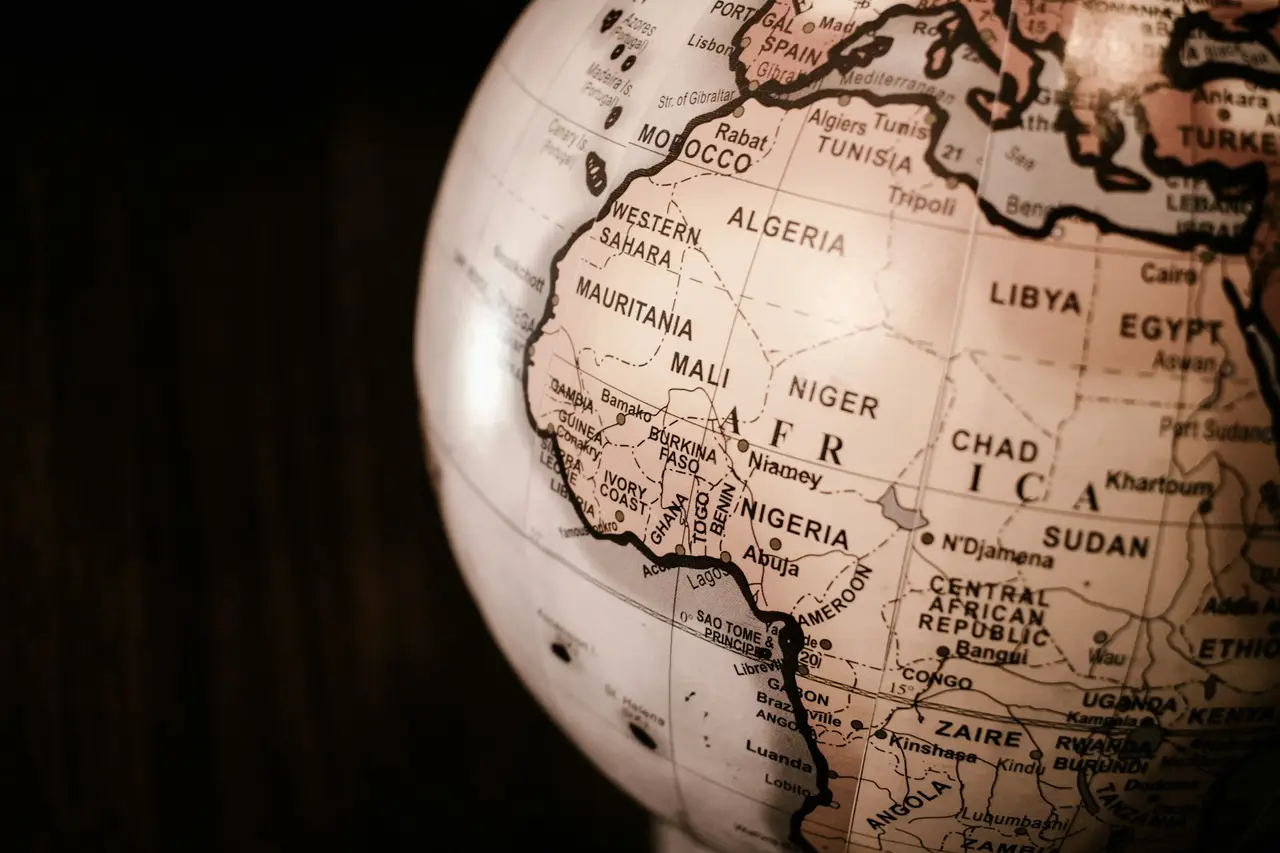
Is Africa finally becoming a geopolitical actor in its own right, or is multipolarity simply creating a new version of the old scramble?
A seat at the table
The expansion of BRICS+ (2025-2026) and the African Union’s new permanent seat at the G20 signal Africa’s new status. More institutional presence on the global stage means more geopolitical weight. With the BRICS+ expanding its membership to ten, Africa’s economic power has moved towards the center of global economic governance, rather than being marginalised, as it has been for centuries. BRICS+ now represents close to 40% of the global GDP in Purchasing Power Parity terms.
At the September 2026 New Delhi summit, after the expansion of the members to two African members (Egypt and Ethiopia), India’s prime minister assured the Western Countries that BRICS was intended to be a platform for the Global South to compete fairly and safely with the West, in order to ensure equitable multilateralism. African diplomats have largely backed it since it doesn’t box them into a simple “anti-West” stance.
Building actual leverage
Seats matter less than tools, and Africa knows this very well. In May 2026, during the African Investment and Trade Conference in Algiers, the Secretary-General Wamkele Mene stated that the African Continental Free Trade Area Agreement (AfCFTA) has moved from negotiation to implementation and practical delivery. With the legal instruments and institutional mechanisms now in place, the AU has taken a step further to accelerate the shift from paper commitments to measurable outcomes: the Heads of State Implementation Committee, inaugurated in February 2026 and chaired by Kenyan President Ruto.
The World Bank has estimated that full implementation of the AfCFTA could grow African intra-trade by almost 52% by 2035, a figure worth noting given how often Africa’s economic story gets told purely through raw exports.
The real impact will be seen in the mineral sector. Copper, cobalt, and other critical minerals have made Africa an indispensable player in the technology and energy transition. Governments are increasingly trying to use the AfCFTA’s rules of origin to link mining, processing, and manufacturing across borders. The aim is to create regional value chains instead of leaving the continent as a collection of extraction sites competing for the highest foreign bidder.
Playing rather than being played
South Africa is a prime example of this new dynamic: from hedging to bargaining. Pretoria has built a foreign policy around what it calls strategic autonomy. This means engaging deeply with BRICS while actively negotiating mineral access with Washington. In May 2026, the talks in Johannesburg saw South African officials sit down with the US delegation on rare-earth mineral supply chains, while the Minister of Mineral Resources was simultaneously willing to criticise publicly the terms other African states had accepted in their own deals with Washington. It is a government using competition between great powers to negotiate better terms for itself, openly and without asking permission from either side.
The honest limits
None of this should be overstated. BRICS+ has real internal tensions: Brazil has publicly pushed back against further enlargement, worried that the larger the bloc, the harder it will be to reach agreement. Members’ foreign policies do not always align, which creates friction, for instance over the Palestinian cause. If members disagree on major geopolitical issues, that limits how far the bloc can act as a unified force on Africa’s behalf.
Africa’s bargaining power in mineral governance remains constrained by fragmented national policies, limited processing capacity (or a lack of industrial infrastructure) and dependence on external capital. This implies that the Western and Gulf countries have leverage over African minerals, whatever the rules of origin say on paper. Therefore, multi-alignment is a strategy, not a guarantee, and it will work only as well as African institutions coordinate with one another.
The next move is Africa’s
The chessboard metaphor was never really about geography; it was about agency. A chessboard cannot decline a move or negotiate its own value. What 2026 shows is a continent doing exactly that: joining governance forums on its own terms, building a market designed to reduce dependence on any single external buyer, and playing rival powers off against one another for better terms.
Africa is not yet a single, unified strategic actor. But it is accumulating the instruments to write its own opening moves.