
Introduction
In coherence with the climate objectives set out by the Paris Agreement in 2015, the European Climate Law set a binding objective for the EU to achieve climate neutrality by 2050, with an intermediate target of reducing net greenhouse-gas emissions by at least 55% by 2030 compared to 1990 levels (European Parliament and Council of the European Union, 2021, Arts. 2-4). Achieving these objectives requires emissions reductions across all economic sectors, including electricity generation and energy-intensive industries (European Commission, n.d.). A key EU framework for this transition is the Renewable Energy Directive (EU) 2023/2413 (RED III), which sets a binding target of at least 42.5% renewable energy in gross final energy consumption by 2030, with an ambition to reach 45% (European Parliament & Council of the European Union, 2023, Art. 3). By accelerating renewable energy deployment, RED III supports the decarbonisation of electricity generation, which is essential to reducing emissions in energy-intensive industries as they transition towards low-carbon production.
Complementing the deployment of renewable energy set out in RED III from an industrial-policy perspective, the EU Commission proposed in March 2026 the Industrial Accelerator Act (IAA) to strengthen Europe’s industrial capacity and accelerate decarbonisation in strategic industrial sectors (European Commission, 2026). With Red III in force and the IAA under consideration by EU legislators, their interaction raises an important question: how can the expansion of renewable energy generation and the electricity infrastructure needed to support it keep pace with the additional industrial demand that the IAA may stimulate?
This article examines how Germany, as the EU’s largest economy and industrial energy consumer, can coordinate renewable energy deployment under RED III with the potential growth in industrial energy demand associated with the proposed IAA (European Union, n.d.; International Trade Administration, 2025).
RED III and the Industrial Accelerator Act
RED III’s most relevant provisions concern renewable energy planning and deployment. Article 15b (1) requires Member States to identify their domestic potential and territorial capacity for the installation of renewable energy plants and their related infrastructure, including grid and storage facilities necessary to meet the Union’s 2030 renewable energy target. Article 15c provides for the designation of renewable energy acceleration areas, subject to applicable environmental safeguards (European Parliament & Council of the European Union, 2023, Arts. 15b–15c). Together, these provisions provide a legal basis for examining whether renewable energy planning adequately accounts for future industrial demand and the infrastructure required to meet it.
The proposed Industrial Accelerator Act (IAA) seeks to strengthen the EU’s industrial capacity and accelerate decarbonisation in strategic sectors, including energy-intensive industries such as steel and cement production and the manufacturing of net-zero technologies (European Commission, 2026, pp. 2–4). To stimulate demand for low-carbon industrial products and strengthen European manufacturing, the proposal would introduce requirements concerning the use of low-carbon materials and, in certain cases, their Union origin. Under these requirements, specified public procurement procedures and public support schemes would have to meet minimum thresholds for low-carbon steel, concrete, mortar and aluminium. While the proposed requirements for steel focus on its low-carbon content, those for concrete, mortar and aluminium also include Union-origin criteria.
(European Commission, 2026, Arts. 10–12 and Annex II, Parts I–II). In addition, the proposal would introduce EU-origin requirements for certain net-zero technologies as well, including battery energy storage systems, solar photovoltaic technologies and heat pumps (European Commission, 2026, Art. 34(4), proposed Annex II, Parts I and III). The Commission presents these measures as a means of strengthening demand for European industrial products and accelerating industrial decarbonisation (European Commission, 2026, pp. 3–4).
However, expanding domestic manufacturing while decarbonising energy-intensive industries could drastically increase electricity demand. Using hydrogen to decarbonise steelmaking, for example, requires substantial amounts of electricity when the hydrogen is produced by electrolysis (Dulian & Erbach, 2025). Additionally, manufacturing more net-zero technologies domestically could further add to industrial energy demand. Therefore, as Europe increases its industrial capacity and transitions to low-carbon production, its grid capacity will likely have to accommodate an increasing amount of clean electricity demand and generation (European Commission, 2025; Anglmayer & Custură, 2026).
Germany’s Renewable Energy Expansion and Grid Constraints
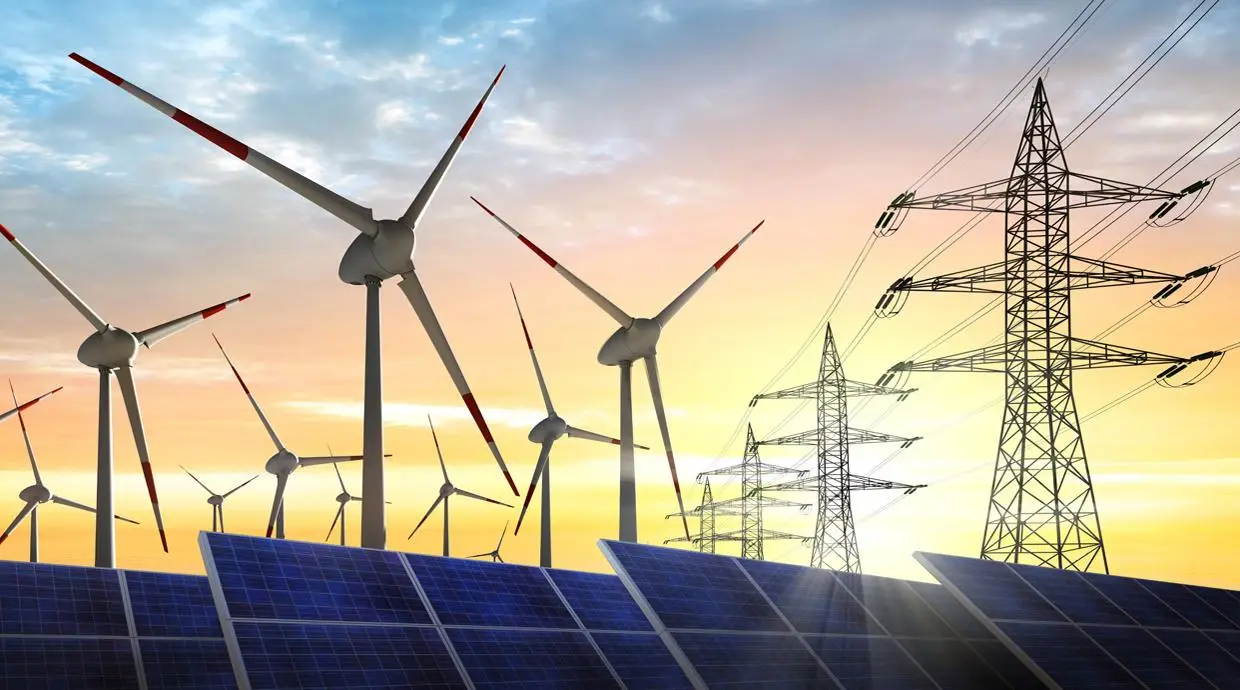
Germany illustrates why renewable energy deployment and electricity system planning need to advance together. Its installed renewable electricity capacity increased by almost 21 GW in 2025 to around 210 GW; an annual increase of 11%. Solar capacity reached 117 GW and onshore wind capacity 68.1 GW (Bundesnetzagentur, 2026). Renewables supplied 55.1% of gross electricity consumption in 2025, bringing Germany closer to its national target of at least 80% by 2030 (Umweltbundesamt, 2026).
However, gross electricity consumption should not be confused with gross final energy consumption, which also includes energy used for heating, transport and other purposes. Following the adoption of RED III, Germany updated its National Energy and Climate Plan to raise its 2030 gross renewable energy consumption target to 41%. In 2025, renewables accounted for 23.9% of Germany’s gross final energy consumption, remaining substantially below its 2030 target of 41%. The German Environment Agency states that a significant acceleration in renewable energy expansion across all sectors is needed to meet its national target (Umweltbundesamt, 2026). Germany has also begun implementing RED III’s provisions to accelerate renewable energy deployment and related infrastructure development. Measures adopted in 2025 introduce renewable energy acceleration areas and simplified permitting procedures, including measures concerning onshore wind, photovoltaic installations and heat pumps (Bundesministerium für Wirtschaft und Energie, 2025). However, faster permitting alone cannot ensure that renewable electricity can be transported reliably to industrial consumers, providing for the need to coordinate renewable deployment with grid expansion.
Despite recent progress in renewable electricity generation and ambitious national targets, Germany continues to face challenges in integrating additional renewable capacity into its electricity system due to an increasing lack of grid capacity. The total volume of grid congestion management measures remained almost unchanged at 30,319 GWh in 2025, compared with 30,318 GWh in 2024. The volume of redispatch measures in which the feed-in of generating installations was reduced amounted to 15,549 GWh in 2025, an increase of approximately 7% compared with 2024 (SMARD, 2026). These constraints are in part attributed to the continued expansion of renewable generation in regions with relatively low local demand, as well as lengthy planning and construction periods for new grid infrastructure (SMARD, 2026).
While it is important to mention that renewable energy curtailments amounted to only 3.5% of total renewable electricity generation in 2025, meaning that more than 96% was successfully fed into the grid and transported to final customers, redispatch measures nevertheless resulted in renewable generation reductions amounting to 9,379 GWh. This illustrates the continuous challenges of integrating renewable electricity into Germany’s grid (SMARD, 2026).
The proposed IAA could exacerbate this challenge by promoting investment for the domestic manufacturing of low-carbon products in Germany. As the largest energy consumer in the EU, with energy-intensive sectors such as steel and chemicals, Germany would then potentially be required to expand and decarbonise industrial production, i.e. produce and transport more clean electricity. In view of the constraints on its current grid infrastructure, Germany might therefore face even greater challenges to ensure a reliable and cost-efficient production and supply of clean electricity once the IAA enters into force.
Germany’s Policy Response: Aligning Renewable Deployment with Grid Capacity
Although the scale of any additional demand resulting from the proposed IAA remains uncertain, this possibility reinforces the need to coordinate industrial policy with renewable energy deployment, grid expansion and investment in flexibility, including storage. Without such coordination, new industrial demand could intensify existing regional grid constraints and complicate Germany’s efforts to achieve its climate and energy targets.
Germany is therefore pursuing two legislative initiatives to expand renewable electricity and better consider available grid capacity. The draft reform of the Renewable Energy Sources Act (Erneuerbare-Energien-Gesetz, EEG 2027) retains the target of meeting 80% of gross electricity consumption with renewable sources by 2030. It also proposes an additional 12 GW of onshore wind tenders for 2027–2032, supporting the expansion of wind power on land (Bundesministerium für Wirtschaft und Energie [BMWE], 2026a, section B). In addition, the draft aims to change the integration of renewable electricity into the power system by placing greater emphasis on combining photovoltaic installations with battery storages. The idea is to store surplus electricity when generation is high and demand is low, to then release it when demand increases or generation falls, preventing to further strain the grid (BMWE, 2026a, section B).
Furthermore, the Grid-Connection Package (Netzanschlusspaket) aims to better align renewable energy expansion with available grid capacity. Under the September 2026 bill, distribution system operators could designate certain network sections as bottleneck areas (Engpassgebiete) for up to six years, subject to specified congestion criteria. This designation would affect the conditions under which new renewable installations connect to the grid and the compensation available for certain volumes of curtailed electricity. New renewable installations could still connect under certain conditions, and more transparent capacity information, as well as digital connection portals, would speed up connection processes (Deutscher Bundestag, 2026, pp. 1–2, 8–11, 59).
Conclusion
The case of Germany illustrates that accelerating renewable energy deployment is not sufficient to ensure a reliable supply of clean electricity. Although renewable capacity continues to grow, grid congestion and delays in infrastructure expansion remain significant challenges. The proposed IAA could add to these pressures if it stimulates further industrial electrification and domestic manufacturing. Germany’s proposed reforms to the Renewable Energy Sources Act and grid-connection laws aim to address these challenges by expanding renewable generation, improving the integration of storage and aligning new installations more closely with available grid capacity.
In view of that, the ongoing negotiations in Brussels on the proposed Act should ensure that EU industrial ambitions do not undermine Germany’s ability to align renewable energy deployment with available grid capacity, rather than requiring grid infrastructure to expand reactively to new renewable installations.
References
Anglmayer, I., & Custură, A.-B. (2026, April). European energy grids package: Initial appraisal of a European Commission impact assessment. European Parliamentary Research Service, European Parliament. https://www.europarl.europa.eu/RegData/etudes/BRIE/2026/774752/EPRS_BRI%282026%29774752_EN.pdf
Bundesministerium für Wirtschaft und Energie. (2025, July 11). Bundesrat beschließt Gesetz zur Umsetzung der RED III und beschleunigt Genehmigungsverfahren für erneuerbare Energien. https://www.bundeswirtschaftsministerium.de/Redaktion/DE/Pressemitteilungen/2025/07/20250711-bundesrat-beschliesst-gesetz-umsetzung-red-iii-schnellere-genehmigungsverfahren-erneuerbare-energien.html
Bundesministerium für Wirtschaft und Energie. (2026a). Entwurf eines Gesetzes für einen planbaren, kosteneffizienten, netzverträglichen und marktorientierten Ausbau der erneuerbaren Energien im Stromsektor https://www.bundeswirtschaftsministerium.de/Redaktion/DE/Downloads/Gesetz/2026/20260729-gesetzentwurf-eeg-stromsektor.html
Bundesnetzagentur. (2026, January 8). Growth in renewable energy in 2025. https://www.bundesnetzagentur.de/SharedDocs/Pressemitteilungen/EN/2026/20260108_EEG.html
Deutscher Bundestag. (2026). Entwurf eines Gesetzes zur Synchronisierung des Anlagenzubaus mit dem Netzausbau und zur Verbesserung des Netzanschlussverfahrens (Drucksache 21/7866). https://dip.bundestag.de/drucksache/entwurf-eines-gesetzes-zur-%C3%A4nderung-des-energiewirtschaftsrechts-zur-synchronisierung-des/290560
Dulian, M., & Erbach, G. (2025, February 3). Renewable and low-carbon hydrogen: State of play and outlook. European Parliamentary Research Service, European Parliament. https://www.europarl.europa.eu/RegData/etudes/BRIE/2025/767227/EPRS_BRI%282025%29767227_EN.pdf
European Commission. (n.d.). 2050 long-term strategy. https://climate.ec.europa.eu/areas-action/climate-strategies-targets/2050-long-term-strategy_en
European Commission. (2025). Commission guidance on efficient and timely grid connections (2025/C 6703). Official Journal of the European Union. https://eur-lex.europa.eu/eli/C/2025/6703/oj/eng
European Commission. (2026). Proposal for a regulation of the European Parliament and of the Council establishing a framework of measures for the acceleration of industrial capacity and decarbonisation in strategic sectors and amending Regulations (EU) 2018/1724, (EU) 2024/1735 and (EU) 2024/3110 (COM(2026) 100 final). https://eur-lex.europa.eu/legal-content/EN/TXT/?uri=CELEX:52026PC0100
European Parliament and Council of the European Union. (2021). Regulation (EU) 2021/1119 of 30 June 2021 establishing the framework for achieving climate neutrality (European Climate Law). Official Journal of the European Union, L 243, 1–17. https://eur-lex.europa.eu/eli/reg/2021/1119/oj
European Parliament and Council of the European Union. (2023). Directive (EU) 2023/2413 of 18 October 2023 on the promotion of energy from renewable sources. Official Journal of the European Union. https://eur-lex.europa.eu/legal-content/EN/TXT/?uri=CELEX:32023L2413
European Union. (n.d.). Facts and figures on the European Union. https://european-union.europa.eu/principles-countries-history/facts-and-figures-european-union_en
International Trade Administration. (2025, August 1). Germany—Energy. U.S. Department of Commerce. https://www.trade.gov/country-commercial-guides/germany-energy
SMARD. (2026, March 30). Volume of measures stable in the year as a whole. https://www.smard.de/page/en/topic-article/5892/220534/volume-of-measures-stable-in-the-year-as-a-whole
Umweltbundesamt. (2026, May 15). Indicator: Share of renewables in gross electricity consumption. https://www.umweltbundesamt.de/en/indicator-share-of-renewables-in-gross-electricity