Over the past two decades, the importance of the Canadian Arctic has acquired increasing strategic significance for Ottawa. Climate change has accelerated the reduction of Arctic sea ice by more than 95% since the 1980s (Druckenmiller et al., 2025), creating greater opportunities for resource development and making the Northwest Passage accessible to maritime traffic for part of the year (Lajeunesse & Lackenbauer, 2019). As the Canadian Far North’s economic potential increases alongside its operational accessibility (Lincoln, 2026), its geo-strategic relevance grows accordingly within a turbulent geographic region such as North America. These developments have prompted Canada to place greater emphasis on protecting its northern regions from the security threats arising from these growing dynamics.
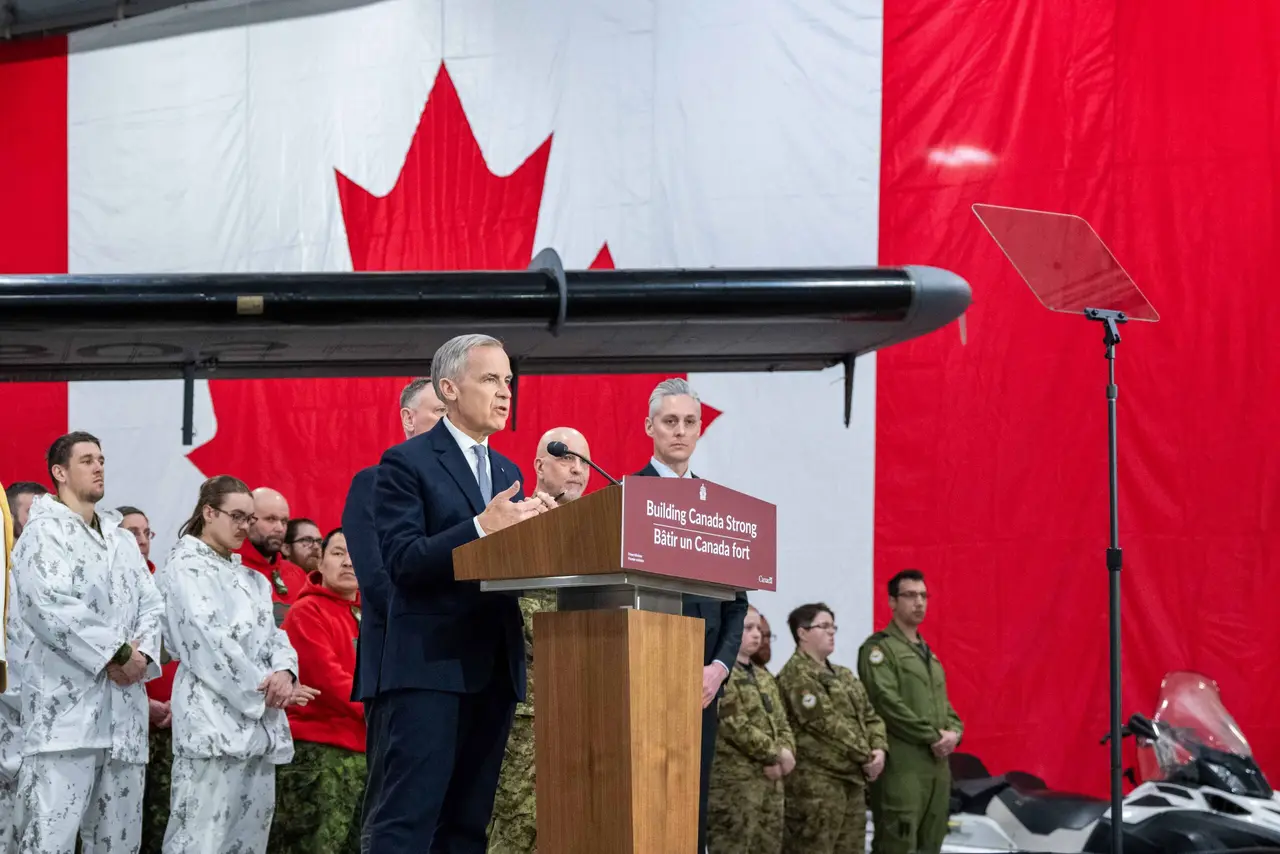
Traditionally, Canada adopted a relatively restrained approach to its Arctic regions’ security while downplaying the potential for threats and geopolitical confrontation. This pattern has increasingly given way to a more proactive stance towards addressing security threats and advancing the country’s security objectives. This new paradigm is particularly evident in Canada’s new Arctic Strategy, launched by Prime Minister Mark Carney in March, 2026. As part of this broader drive, Ottawa is placing greater effort in defending, building and transforming its Arctic territories, linking the country’s sovereignty to a stronger and safer North (Prime Minister of Canada, 2026a).
The Canadian Arctic: From Geography to Geopolitics
Although northern geography, sovereignty and identity are deeply interconnected in the Canadian narrative, a closer examination of the country’s Arctic presence seems necessary to better understand the rationale behind Ottawa’s new plan to strengthen its Far North’s territories. In fact, beyond any rhetoric, the latter still represents a peripheral part of the country, lagging behind the other provinces in terms of socio-economic development causing a seesaw of policies’ distribution. For this reason, one of the key priorities that Prime Minister Carney launched upon entering into office had to do with investing in the development of the Canadian Arctic through a solid strategy aimed at building “the true North, strong and free” (Office of the Prime Minister of Canada, 2026). If we would like to say it in other and simpler words, operationalising how the country is portrayed in the national anthem and, further down the line, in the collective imaginary of the Canadian people of all tribes and citizenship.
Mapping the Challenges and Opportunities of the Canadian Arctic
The Canadian Arctic is an extremely vast region consisting of three territories, namely Yukon, the Northwest Territories (NWT) and Nunavut, accounting for 25% of the entire Arctic and roughly 40% of Canada in terms of land area (Mearns, n.d.), more than enough to disrupt. Due to the harsh climate, limited access to services and higher cost of living, the Canadian Arctic territories are home to approximately 150,000 inhabitants, in a country with a population of around 40 million (Thompson-Jones, 2025, p. 75), causing further disruption in the needed homogeneous decision-making.
Despite their limited urbanisation, with fewer than 1% of the country’s population living in these territories (Mearns, n.d.), the Canadian Arctic is exceptionally rich in critical raw materials and other natural resources (Government of Canada, 2026). On the one hand, the Canadian Far North’s engagement in productive activities related to the extractive sector represents a strategic asset for Ottawa. However, if we would like to see it on the other side of the coin, there is a striking contrast between the Canadian economy as a whole and the comparatively limited wealth of Canada’s Arctic territories (Thompson-Jones, 2025, p.79). As a matter of fact, while Canada is ranked as the eight largest economy in the world, with a GDP of approximately US $2.3 trillion (World Bank Group, 2026), Yukon, the NWT and Nunavut are falling behind other territories and provinces in terms of economic growth.
What emerges is a complex socio-economic reality made of significant challenges facing the Canadian Arctic territories. Among them housing shortages, gaps in healthcare provision, labour shortages, difficulty of accessing groundwater as a result of the presence of permafrost, high rates of alcohol abuse, domestic violence and suicide, and limited access to education in Inuit languages (Thompson-Jones, 2025, p. 79). This scenario contributes to intensifying the population’s feeling of disengagement from the rest of Canada, not only from the viewpoint of inadequate infrastructure and connectivity. While the situation seems more favorable in Yukon, due to a more diversified economic base, stronger ties and connectivity with the rest of North America (Thompson-Jones, 2025, p. 81), it is evident that the overall contrast between the Canadian Arctic territories’ abundant resources, geopolitical relevance and economic stagnation highlights the need for greater investment and territorial integration from Ottawa.
Hence, this recognition lies at the foundation of Prime Minister M. Carney’s Arctic Strategy.
The Drivers and Strategic Priorities of Canada’s New Arctic Strategy
Announced by Prime Minister Mark Carney in Yellowknife on 12 March 2026, Canada’s new plan to “build and transform the North” (Office of the Prime Minister of Canada, 2026) was presented as an ambitious effort to strengthen the country’s sovereignty, security, prowess and economic development across its northern and Arctic territories. Back in June 2017, former Prime Minister Justin Trudeau’s government took a significant step by launching its “Strong, Secure, Engaged” doctrine, namely the first revision of Canada’s defense policy in the last decade (Lajeunesse & Lackenbauer, 2019), beginning to unravel the new position Canada wishes to have in its region. Among other priorities, the strategy also envisaged the need of strengthening the military presence in the country’s Arctic region, together with fostering closer cooperation with like-minded partners in the area. However, according to the scholars Lajeunesse and Lackenbauer (2019), at that juncture Ottawa was still downplaying the complex and competitive nature of the Arctic’s geopolitical dynamics.
In light of the country’s growing recognition of the necessity to deter new threats in its Far North, Carney’s approach acknowledges the importance of cooperation while simultaneously prioritising investments in defending Canada’s sovereignty. Further to this point, Ottawa’s new Arctic strategy is built around the imperative of unlocking the vast potential of the region as a driver of increased national strategic autonomy (Prime Minister of Canada, 2026a). Taking it from this angle, backed by more than $40 billion in investments, the plan seeks to move beyond what the government characterises as fragmented and insufficiently ambitious previous initiatives (Office of the Prime Minister of Canada, 2026), adopting a more integrated approach that combines defence investments with infrastructure development and community transformation, making the turn towards decisiveness and resilience. This rationale defines the backbone of the plan, which is structured around three main pillars: defending, building, and transforming the North.
The Three Pillars of Defend, Build and Transform the Canadian Arctic in Practice
The first component of the new Canadian Arctic strategy has to do with the need to defend the country’s Far North as a means of protecting Canada’s sovereignty across land, air and sea (Prime Minister of Canada, 2026a) with any given tool, at any given time. Bolstering the defense of the country’s northern territories finds practical expression in the objective of reinforcing the Canadian Armed Forces (CAF)’ year-round presence across the Arctic. In fact, the Prime Minister of Canada (2026a) called for rebuilding, rearming and reinvesting in the CAF through the establishment of four Northern Operational Support Hubs and Nodes in the region, together with the modernisation of existing military infrastructure focusing in the tactical needs of the region, and the whole country. Moreover, the commitment of investing $294 million in Arctic airports is aimed at deploying more rapid military support across the country’s North, regardless of how remote (Office of the Prime Minister of Canada, 2026) their transit might be. Hence, these measures are intended to strengthen Canada’s capacity to protect its territory, enhance the safety of its northern communities, deter emerging threats and assume greater responsibility for its Arctic security.
The second priority focuses on infrastructure as both a means of connecting remote communities and an instrument of strategic and economic development moving forward with covering their needs. Planned investments include roads, bridges, airports, telecommunications networks, energy infrastructure, and a deepwater port on the Arctic Ocean at Grays Bay in Nunavut (Office of the Prime Minister of Canada, 2026). On the one hand, this pillar aims at providing Indigenous and isolated communities with year-long access to critical services and supplies. An example is the project for the construction of the 800 km-long Mackenzie Valley Highway that will connect Yellowknife to Inuvik, opening up also new commercial opportunities along the way (Office of the Prime Minister of Canada, 2026). On the other end, projects such as the Arctic Economic and Security Corridor and the Taltson Hydro Expansion Project are also designed to further unlock the Far North’s economic potential “for the mining of copper, zinc, gold, and other critical minerals” (Prime Minister of Canada, 2026a). In fact, improving connectivity, expanding access to reliable electricity and facilitating the exploration and development of critical mineral resources is expected to create new opportunities for new trade deals and export (Prime Minister of Canada, 2026a) for these regions that will facilitate a new face for Canada as a whole.
Finally, the plan emphasises the priority of transforming the way Ottawa cooperates with the Canadian northern communities. Further to this point, the strategy seeks to ensure the involvement of Indigenous governments and businesses for enhancing local populations’ living standards, employment opportunities and connectivity (Prime Minister of Canada, 2026b) so that no one can be excluded. In this respect, the government presented the strategy not merely as a defence initiative, but as a broader nation-building project grounded in the values of partnership and sustainable development.
Overall, Carney’s ambitious plan for defending, building and transforming Canada’s Far North seeks to integrate military preparedness, infrastructure investment, resource development and community well-being within a single strategic framework. It reflects the government’s ambition to reinforce Canadian capacity to operate independently in its Arctic regions while harnessing their economic potential. Further to this point, this rationale echoes what Prime Minister Carney stressed from the stage of Davos, namely that Canada is no longer just relying on the strength of its values, but also on the values of its strength “building that strength at home” (World Economic Forum, 2026). Ultimately, these efforts are intended to reinforce the Canadian’s capacity to exercise autonomous control over its strategic assets, hence, reinforcing “true Canadian sovereignty,” that is “anchored in a strong and secure North” (Prime Minister of Canada, 2026a).
The New Canadian Arctic Strategy as an Exercise of Sovereignty to Counterbalance the USA
Against this backdrop, it is significant to critically assess Ottawa’s new Arctic strategy through the lenses of the relations between Canada and its increasingly assertive and unpredictable neighbor, namely the United States of America (USA).
Canada and the USA share one of the closest interstate relationships in the world (Thompson-Jones, 2025, p. 73), which is not only built on their longstanding diplomatic tradition and their extensive trade ties, but also on their 8,408 km border, 2.475 km of which separating Yukon and Alaska (International Boundary Commission, n.d.). The two blocks have a long history of security and defense cooperation in the Arctic, regulated through institutional frameworks as the North Atlantic Treaty Organisation (NATO) and North American Aerospace Defense Command (NORAD), the latter being a unique example of binational military command integrating Washington and Ottawa’s forces (Thompson-Jones, 2025, p. 85). However, this deep institutional cooperation is paired with deep disagreements over Arctic sovereignty and security priorities caused, as mentioned, to their border-ness. In fact, these differences are particularly evident in the historic dispute over the Northwest Passage, considered by Canada as part of its internal waters, and by the USA as an international strait open to navigation (Lajeunesse & Lackenbauer, 2019). Moreover, the two countries have different security priorities in the Arctic, the protection of Arctic security for Canada, and the contrast of external threats for the USA (Thompson-Jones, 2025, p. 83). These different approaches did not prevent the two blocks from cooperating under the 1988 Arctic Cooperation Agreement (Government of Canada and Government of the United States of America, 1988). Nevertheless, the Arctic is increasingly becoming a central point of contention since Donald Trump took office (Thompson-Jones, 2025, p. 75), as the President is demonstrating his interest in capitalising on the Canadian Far North’s potential for his new way of perceiving foreign policy.
Further to this point, the USA’s current administration seems to represent a growing risk for the stability of Canada’s Arctic for different reasons. By describing the possibility of a Canadian “Greenlandisation,” Wark (2026) theorises how one of them could be Washington’s attempt to frame the latter as a strategic yet undefended region in need for US protection, as one possible scenario. Furthermore, Trump’s USA could claim access to Canadian Arctic territory to build the “Golden Dome” missile defence system or through preferential agreements to get to the Canadian Arctic’s rich stocks of critical raw materials (Wark, 2026). Hence, Prime Minister Carney’s 2026 Arctic strategy, based on the imperative for Canada to take control of its own future without relying on other actors to defend its Far North’s security and economy (World Economic Forum, 2026), can be also regarded as a reaction to Trump’s strategic uncertainty and exploitative attitude.
Conclusion and Way Forward
Given the growing economic and geo-strategic relevance of the Arctic region, the new Strategy launched by Prime Minister Carney to secure, build and protect Canada’s Far North signals a new awareness within the country. The plan seeks to move beyond declarations by building a solid physical and technological infrastructure essential for consolidating a substantial Canadian presence in the Arctic (Lincoln, 2026). It also embodies a concrete attempt for Canada to reaffirm its sovereignty in a pivotal region vis-à-vis the geopolitical ambitions of the USA during Trump’s new-age foreign affairs.
Yet, enhancing the Strategy’s effectiveness would require a further step, which the country is now giving greater consideration, namely the importance of a closer cooperation with other Nordic states. From the stage of Davos, Carney called upon middle powers to stand united and, in a world of fortresses, either ones that are being build, or ones that they are getting challenged of how strong they were built, to leverage on their genuine cooperation (World Economic Forum, 2026) so they do not just fall through. For this purpose, it seems significant for Canada to assume greater responsibility in strengthening its relationship with other strategic actors such as Norway, Sweden, Denmark, Finland and Iceland, that face similar exposure to Arctic threats in terms of security and economic dependencies (Lincoln, 2026).
Even though they did not advance any plan to institutionalise their political cooperation (Lincoln, 2026), the summit held in Oslo in March 2026 between Canada and the other Nordic actors represents a first step for a more systematic coordination. Based on mutual values and shared interests of ensuring the Arctic’s security and stability, a stronger alignment could be a way to mitigate the USA’s ambitions while putting forward the forth front of the middle powers’ power. Therefore, Canada could lead this effort towards collective unity in the Arctic, ensuring that this emerging coalition of like-minded Nordic countries can proactively shape the geopolitical dynamics of one of the world’s most challenging yet strategic environments, rather than remain subject to the strategic decisions of others. Ultimately, Canada’s new Arctic strategy can boost the country’s leadership in making sure that the Nordic middle powers can sit together at the main table, rather than find themselves on the menu (World Economic Forum, 2026).
Bibliography
Druckenmiller, M., Thoman, R., & Moon, T. (2025, 23 December). Arctic Report Card 2025. National Oceanic and Atmospheric Administration. https://arctic.noaa.gov/report-card/report-card-2025/
Government of Canada. (2026, August 11). Canada’s Critical Minerals Strategy. https://www.canada.ca/en/campaign/critical-minerals-in-canada/canadas-critical-minerals-strategy.html
Government of Canada. (n.d.). National anthem of Canada. https://www.canada.ca/en/canadian-heritage/services/anthem-canada.html
Government of Canada and Government of the United States of America. (1988, January 11). Agreement between the Government of Canada and the Government of the United States of America on Arctic cooperation. https://treaties.un.org/doc/publication/unts/volume%201852/volume-1852-i-31529-english.pdf
Government of the Northwest Territories. (n.d.). Caitlin Cleveland: Northwest Territories critical minerals priorities and advanced projects update [News release]. https://www.gov.nt.ca/en/newsroom/caitlin-cleveland-northwest-territories-critical-minerals-priorities-and-advanced-projects
International Boundary Commission. (n.d.). The boundary and you: Interesting facts. https://www.internationalboundarycommission.org/en/the-boundary-and-you/interesting-facts.php
Lajeunesse, A., & Lackenbauer, P. W. (2019). Per il Canada l’Artico è un mare di opportunità. Limes, 2019(1), 187–194. https://www.limesonline.com/rivista/per-il-canada-l-artico-e-un-mare-di-opportunita-14632886/
Lincoln, D. (2026, April 23). Middle Power Deterrence: The Strategic Case for a Canada-Nordic Defence and Governance Alliance to Ensure a 21st Century Pax Arctica. The Arctic Institute. https://www.thearcticinstitute.org/middle-power-deterrence-strategic-case-canada-nordic-defence-and-governance-alliance-ensure-21st-century-pax-arctica/
Mearns, V. (n.d.). Canada and the Arctic region. Arctic Council. https://arctic-council.org/about/states/canada/
Office of the Prime Minister of Canada. (2026, March 12). Prime Minister Carney announces an ambitious new plan to defend, build, and transform the North [News release]. Government of Canada. https://www.pm.gc.ca/en/news/news-releases/2026/03/12/prime-minister-carney-announces-ambitious-new-plan-defend-build-and
Prime Minister of Canada. (2026a, March 17). Prime Minister Carney announces a new plan to defend, build, and transform the North [Video]. YouTube. https://www.youtube.com/watch?v=R9okWxj3AGI
Prime Minister of Canada. (2026b, June 30). PM Carney speaks at Inuit-Crown partnership meeting [Video]. YouTube. https://www.youtube.com/watch?v=McIdP37kIe4
Sarkisian, A. (2026, September 4). Arctic militarisation is a ‘direct threat’ to Russia, Kremlin says. CBC News. https://www.cbc.ca/news/canada/north/arctic-militarization-is-a-direct-threat-to-russia-kremlin-says-9.7333039
Thompson-Jones, M. (2025). America in the Arctic: Foreign Policy and Competition in the Melting North. Columbia University Press. http://www.jstor.org/stable/10.7312/thom19840
Wark, W. (2026, February 26). There’s One Thing We Must Do Before We Can Defend Canada’s Arctic from Donald Trump. Centre for International Governance Innovation. https://www.cigionline.org/articles/theres-one-thing-we-must-do-before-we-can-defend-canadas-arctic-from-donald-trump/
World Bank Group. (2026, July 15). GDP ranking. Gross domestic product ranking table. https://datacatalog.worldbank.org/search/dataset/0038130/gdp-ranking
World Economic Forum. (2026, January 20). Davos 2026: Special address by Mark Carney, Prime Minister of Canada. https://www.weforum.org/stories/forum-in-focus/davos-2026-special-address-by-mark-carney-prime-minister-of-canada