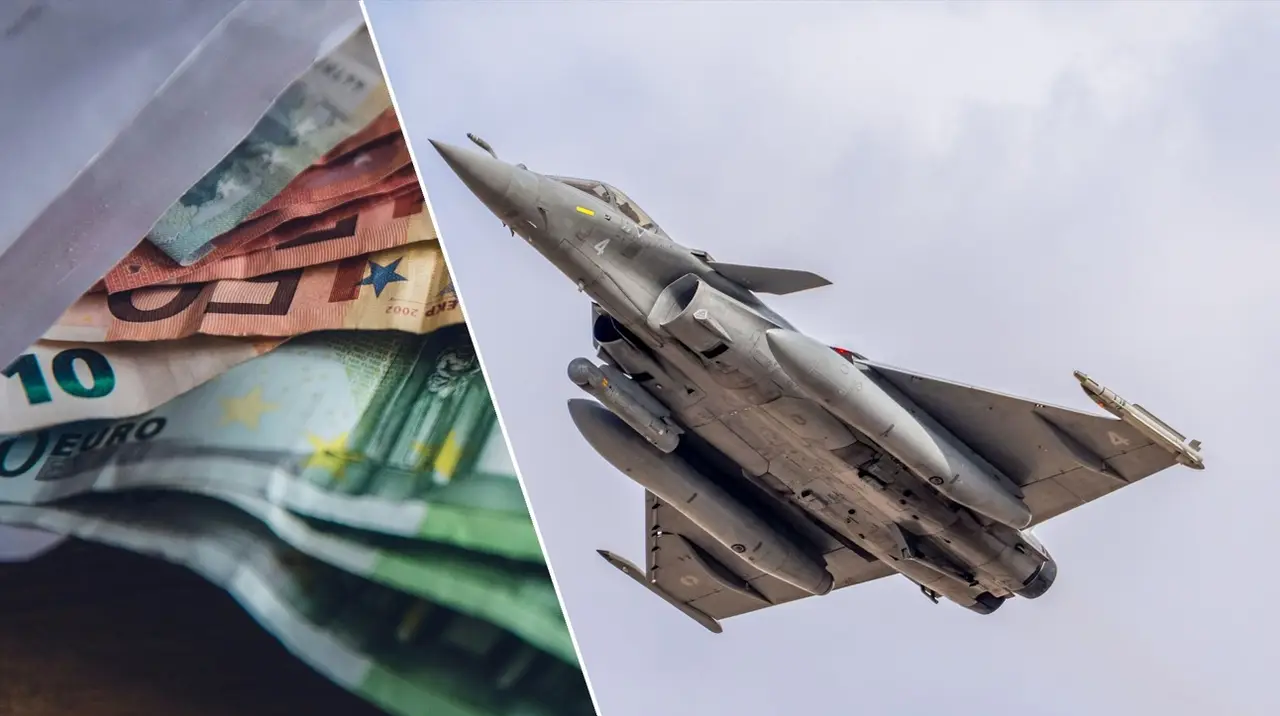
The French government confirmed, on 4 November 2026, that the public deficit is expected to reach 5.4% of GDP this year, against 5.1% in 2025. The day before, Le Monde reported that the French government had to offer rates of 4.94% to attract investors, higher than Greece’s 4.3% and Italy’s 4.5%. And, on 5 November, French unions have called for a nationwide strike and protests, demanding higher wages and increased investment in public services.
France is clearly going through a difficult economic period, but this has not prevented the country from expanding its financial commitments to defense, even as demands for greater public spending continue to grow.
Domestically, the government updated the Military Programming Law in August, allocating an additional €36 billion to defense between 2026 and 2030, bringing total programmed expenditure to €436 billion for the period from 2024 to 2030. And, internationally, France has also committed, within NATO, to increasing core defense spending to 3.5% of GDP by 2035.
But, as this happens, France’s fiscal room for maneuver is shrinking. Unlike 18 other EU member states, France is not among the countries authorized by the Council to activate the national escape clause, which would allow it to temporarily deviate from fiscal rules to increase defense spending. Consequently, the country must reconcile its rearmament ambitions with existing fiscal constraints and other national priorities.
Furthermore, with the 2027 presidential election approaching, a Le Monde editorial warned that parliamentary budget debates appeared to ignore the deterioration of public finances, as each political party seemed more concerned with defending its electoral priorities than maintaining budgetary balance. This, in turn, would fuel investor distrust, making it more expensive for France to finance its public debt.
So, in a country facing growing budgetary pressures and political tensions, it remains unclear whether France can maintain its defense commitments while balancing its economic and social priorities.