
Introduction
When the United States sanctioned Canadian judge Kimberly Prost in August 2025, her American Express card stopped working immediately. Hours later, Amazon Canada informed her that it had closed her account (The Canadian Press, 2026a). Washington’s stated grievance was her participation in a 2020 International Criminal Court (ICC) Appeals Chamber decision authorising an investigation into alleged crimes committed in Afghanistan, including by US personnel (U.S. Department of State, 2025).
On 9 October 2026, the measures were extended from individual judges to the Court itself (U.S. Department of State, 2026a). Canada was among the states that helped establish the Court. It also has the Foreign Extraterritorial Measures Act (FEMA), which provides mechanisms for preventing compliance with certain foreign sanctions in Canada. Yet Ottawa has so far expressed its support for the Court (Foreign, Commonwealth & Development Office, 2026) without issuing a blocking order.
That gap raises a question this article takes up: can Canada lawfully use FEMA to prevent US sanctions against the Court from taking effect in Canada? Should it do so, and what would it risk by acting? The answer is clearer on the law than on the politics. FEMA gives Ottawa the power, earlier blocking orders provide precedent, and Article 86 of the Rome Statute arguably provides the legal basis for doing so. Against that stand trade tensions with Washington and doubts from Prost herself about whether a formal order would help (The Canadian Press, 2026a).
The Sanctions and Canada’s Response
The October measures target the Court as an institution, unlike the earlier sanctions imposed on individual judges and prosecutors (U.S. Department of State, 2026a). Property the Court holds in US jurisdictions is blocked, and Americans may not deal with it unless a licence allows it (U.S. Department of State, 2026b).
Four general licences provide limited exemptions. General Licence 13 authorises transactions needed to maintain or wind down the Court’s operations, including payments by member states and staff salaries, until 7 April 2027 (Hong, 2026). The other licences cover telecommunications and enterprise software, pension payments, and certain transactions involving nine people detained by the Court (U.S. Department of State, 2026b). The Court’s operations are not halted immediately, but the exemptions are limited, and some are time-bound.
Secretary of State Marco Rubio said, “Either the ICC will end its threats, or we will end the ICC,” adding that he expects states that rely on the US military to “rein in” the Court (U.S. Department of State, 2026a). The State Department says the six-month exemption is meant to give member states time to address its concerns (U.S. Department of State, 2026b).
Canada has responded by signing a joint statement with Denmark, Germany, France, Italy, Japan, the Netherlands and the United Kingdom reaffirming “unwavering support” for the Court’s independence (Foreign, Commonwealth & Development Office, 2026). Lawyers’ Rights Watch Canada criticised the statement for calling only for dialogue (Lawyers’ Rights Watch Canada, 2026). Reporting on Prime Minister Mark Carney’s comments also indicated that Canada had not directly criticised the sanctions imposed on Prost, unlike France, while the New Democratic Party urged Ottawa to use FEMA (The Canadian Press, 2026b).
Prost is also litigating. On 24 June 2026, she and judges Solomy Bossa and Reine Alapini-Gansou filed a lawsuit in Manhattan, describing the sanctions as “tantamount to the financial death penalty” (Middle East Eye, 2026). They sued as individuals, not on behalf of the Court, and argued that the president exceeded his emergency powers (Reuters, 2026b). The lawsuit concerns the judges’ designations, not the October designation of the Court itself, and Ottawa has not publicly joined the proceedings.
The Legal Tool and Its Precedent
Under FEMA, the Attorney General, with the foreign minister’s agreement, can order people in Canada not to comply with a foreign measure affecting international trade or commerce that, in the Attorney General’s opinion, is likely to infringe Canadian sovereignty or harm significant Canadian trade interests. Such an order is made administratively and needs no new legislation (Foreign Extraterritorial Measures Act, 1985, s. 5).
In practice this could prevent Canadian companies and their officers from complying with the US sanctions. The Canadian Bar Association argues that such an order would protect the ability of ICC judges, including Prost, to access services in Canada even while the sanctions remain in force elsewhere (Canadian Bar Association, 2026). For a judge who lost access to a credit card and a retail account as a result of private firms’ decisions, that is the practical benefit. Two limits remain. An order would apply only in Canada (Foreign Extraterritorial Measures Act, 1985, s.5), and the decision as to whether the conditions are met rests with the government. The Association’s interpretation is an advocacy position, even if it comes from a mainstream professional body.
Canada has used FEMA at least twice. In 1992, revised in 1996, it blocked compliance with US sanctions on Cuba (Foreign Extraterritorial Measures (United States) Order, 1992). Under that order, compliance with the embargo can constitute a criminal offence for Canadian corporations, including subsidiaries of US firms (Bennett Jones, 2015). In January 2015, Canada also prohibited compliance with a Buy America requirement relating to an Alaska ferry terminal in Prince Rupert, enforceable directly because the project sits in Canada (Certain Foreign Extraterritorial Measures (United States) Order, 2014; Bennett Jones, 2015). These appear to be the only two instances in which FEMA has been used.
However, the record cuts both ways. Lawyers have noted that the Cuba regime shifts the legal risk of Canada’s diplomacy onto businesses and leaves firms caught between two legal systems (Norton Rose Fulbright, n.d.). Neither precedent involved a court or a judge.
The strongest argument for action lies in Article 86 of the Rome Statute, which requires member states to cooperate fully with the Court “in its investigation and prosecution of crimes” (Rome Statute of the International Criminal Court, 1998). The Canadian Bar Association, writing about the earlier sanctions on judges, argues that the US measures interfere with Canada’s ability to honour that obligation on its own territory (Canadian Bar Association, 2026). That wording, however, concerns investigation and prosecution; protecting judges’ access to private services goes beyond it, which is why the argument remains untested.
The Case Against Acting
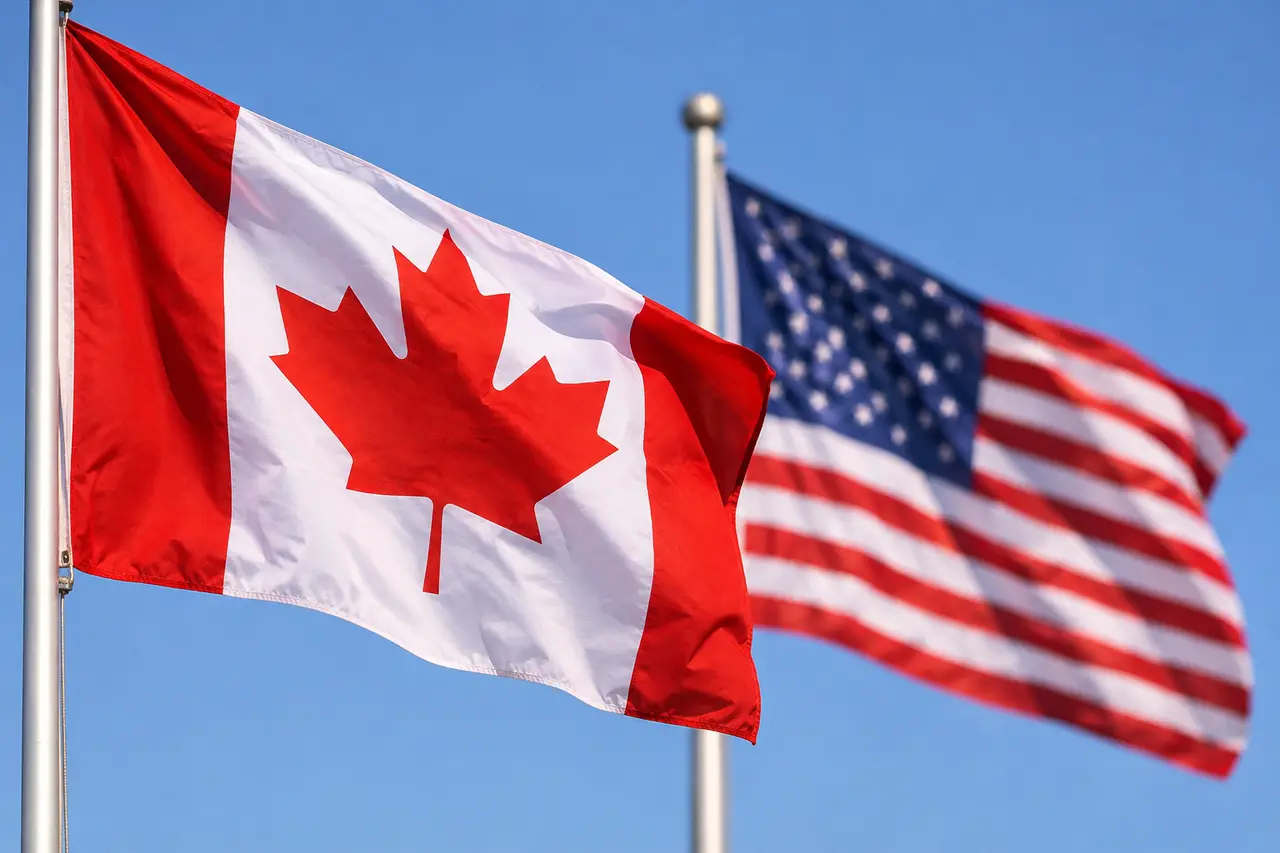
Timing is the strongest objection. In August 2026, trade talks collapsed, the United States imposed 50 percent tariffs on around US$20 billion worth of Canadian goods, and Canada announced dollar-for-dollar retaliation (Reuters, 2026a). Just over 72 percent of Canada’s goods exports went to the United States in 2025 (Global Affairs Canada, 2026). A formal order based on a finding that an American measure infringes Canadian sovereignty would risk a sharp escalation, and it would defy Washington’s stated expectation that its allies restrain the Court (U.S. Department of State, 2026a).
The second argument comes from Prost. She has suggested that a quiet approach might prove more effective than a blocking statute. She also says that banks in Canada, Britain and the Netherlands have kept her accounts open, although she continues to face unpredictable problems almost daily (The Canadian Press, 2026a).
Third, would an order actually work? Firms with large US business interests may consider the risk of American penalties greater than the consequences of violating a Canadian blocking order, as the Cuba record suggests (Norton Rose Fulbright, n.d.). However, nothing in the public record settles that.
Fourth, an order would protect only those within Canada (Foreign Extraterritorial Measures Act, 1985). It would not restore Prost’s access to American services. At best it would set a floor of protection.
These objections concern the cost of acting, not its legality. They also assume that inaction is free. It may not be. A government that declines to use a tool already available to it risks signalling to Washington that the sanctions can be pursued cheaply.
Conclusion
Canada can lawfully act, has precedent for acting, and arguably has a treaty obligation to act, although the Article 86 argument remains untested. The harder question is the cost. A broad order aimed at US sanctions generally would risk the retaliation Ottawa fears, while Prost herself doubts its value.
A narrower approach fits the precedent better. The 2015 Buy America order concerned a single project. An order of similar scope, limited to the Court and its staff in Canada, could protect people like Prost from private firms’ decisions without provoking a wider confrontation. Ottawa should consider adopting such an order before General Licence 13 expires on 7 April 2027 (Hong, 2026), when firms dealing with the Court must choose whether to follow American rules.
Two developments could change the pressure on Ottawa. Belgium’s foreign minister has called for the European Union to activate its blocking statute (Anadolu Agency, 2026), while the outcome of Prost’s case in New York (Reuters, 2026b) could ease the need for Canadian action. Either way, a statement of support is not a policy. Canada’s choice will show how far it will go to defend an institution it helped create.
References
Anadolu Agency. (2026, October 9). Belgium ‘strongly condemns’ new US sanctions against International Criminal Court. https://www.aa.com.tr/en/europe/belgium-strongly-condemns-new-us-sanctions-against-international-criminal-court/4083792
Bennett Jones. (2015, January 19). Canada invokes extraterritorial measures law against US Buy America. https://www.bennettjones.com/Insights/Blogs/2015/01/Canada-Invokes-Extraterritorial-Measures-Law-Against-US-Buy-America
Canadian Bar Association. (2026, March 28). Foreign Extraterritorial Measures Act in response to U.S. ICC sanctions. https://www.cba.org/Our-Impact/Submissions/Foreign-Extraterritorial-Measures-Act-in-Response-to-U-S-ICC-Sanctions/
Certain Foreign Extraterritorial Measures (United States) Order, 2014, SOR/2015-12. https://laws-lois.justice.gc.ca/eng/regulations/SOR-2015-12/FullText.html
Foreign, Commonwealth & Development Office. (2026, October 9). Joint statement on support for the International Criminal Court [Press release]. GOV.UK. https://www.gov.uk/government/news/joint-statement-on-support-for-the-international-criminal-court
Foreign Extraterritorial Measures Act, R.S.C. 1985, c. F-29. https://laws-lois.justice.gc.ca/eng/acts/f-29/page-1.html
Foreign Extraterritorial Measures (United States) Order, 1992, SOR/92-584. https://laws-lois.justice.gc.ca/eng/regulations/SOR-92-584/page-1.html
Global Affairs Canada. (2026). Highlights of Canada’s merchandise trade performance – 2025 update. https://international.canada.ca/en/global-affairs/corporate/reports/chief-economist/annual/2025
Hong, E. (2026, October 9). Trump escalates war on International Criminal Court with deep sanctions. Courthouse News Service. https://www.courthousenews.com/trump-escalates-war-on-international-criminal-court-with-deep-sanctions/
Lawyers’ Rights Watch Canada. (2026, October 14). Take urgent, concrete action to protect the International Criminal Court: Implement Canada’s blocking legislation against US sanctions imposed on the Court [Open letter]. /api/wp-media/2026/10/Canada.US_.Sanctions.ICC_.Letter.14Oct2026.Web_.pdf
Middle East Eye. (2026, June 26). Sanctioned ICC judges sue Trump in US over ‘attack on judicial independence’. https://www.middleeasteye.net/news/sanctioned-icc-judges-sue-trump-us-over-attack-judicial-independence
Norton Rose Fulbright. (n.d.). Between a rock and a hard place: Canadian companies face increased risks following US Cuba sanctions. https://www.nortonrosefulbright.com/en/knowledge/publications/60af4e56/between-a-rock-and-a-hard-place-canadian-companies-face-increased-risks-following
Reuters. (2026a, August 22). Canada to retaliate for US tariffs, worsening ties after talks fail. https://www.reuters.com/business/carney-says-new-canadian-tariffs-us-goods-will-come-into-effect-september-8-2026-08-22/
Reuters. (2026b, June 24). World court judges sue Trump administration over sanctions. https://www.reuters.com/legal/litigation/world-court-judges-sue-trump-administration-over-sanctions-2026-06-24/
Rome Statute of the International Criminal Court, July 17, 1998, 2187 U.N.T.S. 90. https://treaties.un.org/Pages/ViewDetails.aspx?src=TREATY&mtdsg_no=XVIII-10&chapter=18
The Canadian Press. (2026a, February 10). Canadian ICC judge says Trump’s sanctions won’t stop her from doing her job. CTV News. https://www.ctvnews.ca/canada/article/canadian-icc-judge-says-trumps-sanctions-wont-stop-her-from-doing-her-job/
The Canadian Press. (2026b, August 5). Carney says Canada backs ICC but stays mum on Trump-sanctioned Canadian judge. Penticton Herald. https://www.pentictonherald.ca/news/national_news/article_f3f3f6ccb-e512-51c4-85dc-eb27b08ad941.html
U.S. Department of State. (2025, August 20). Imposing further sanctions in response to the ICC’s ongoing threat to Americans and Israelis [Press release]. https://www.state.gov/releases/office-of-the-spokesman/2025/08/imposing-further-sanctions-in-response-to-the-iccs-ongoing-threat-to-americans-and-israelis/
U.S. Department of State. (2026a, October 9). Imposing sanctions on the International Criminal Court [Press statement by M. Rubio]. https://www.state.gov/releases/office-of-the-spokesman/2026/10/imposing-sanctions-on-the-international-criminal-court
U.S. Department of State. (2026b, October 9). Imposing sanctions on the International Criminal Court [Press release]. https://www.state.gov/releases/office-of-the-spokesman/2026/10/imposing-sanctions-on-the-international-criminal-court-2/