Public International Law & Global Governance26 November 20262 min read

Iran tells the UN Security Council that Bahrain must pay reparations for hosting US attacks

Tehran files a counterclaim to block a UN compensation regime

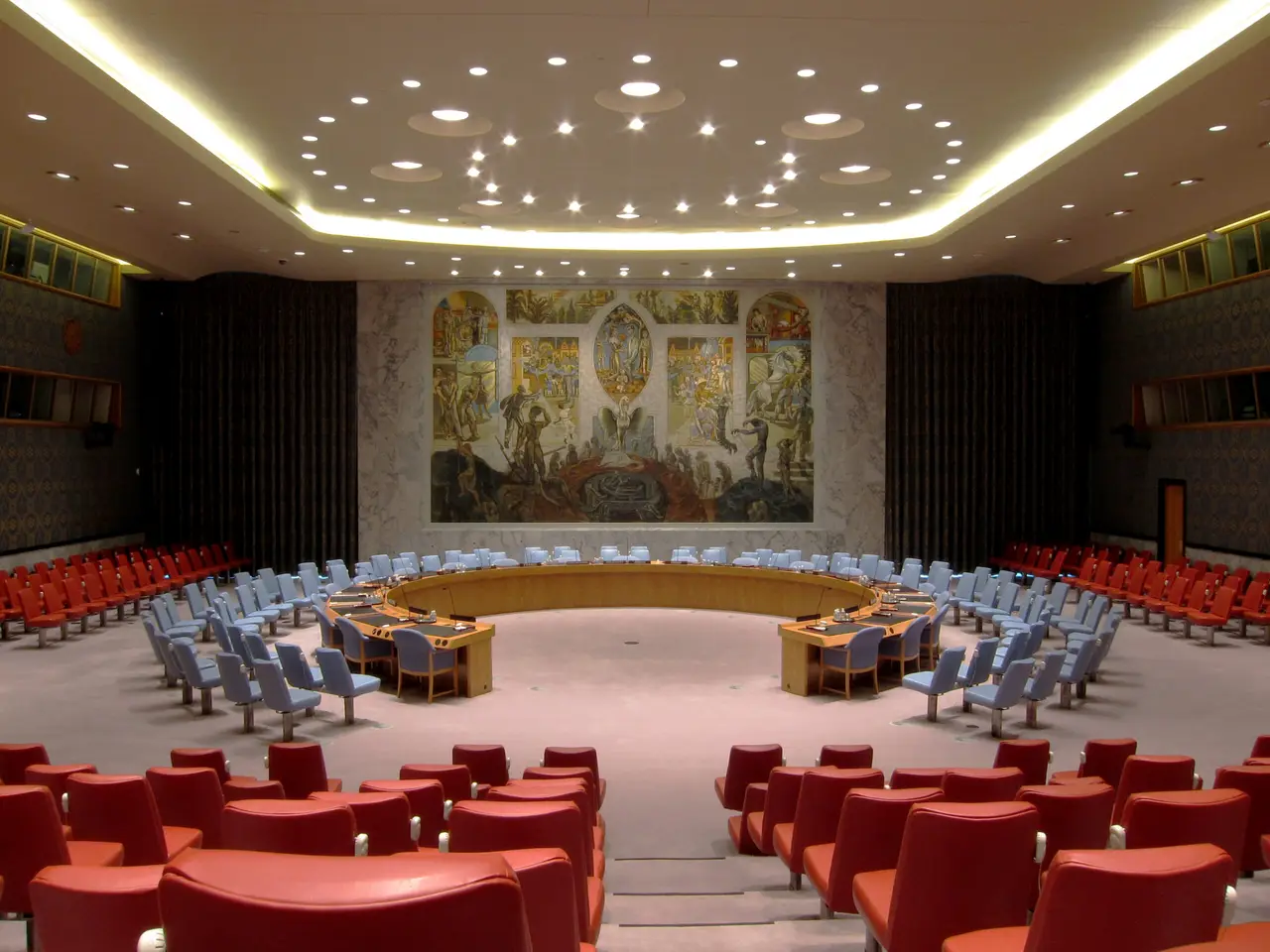
File:UN-Sicherheitsrat - UN Security Council - New York City - 2014 01 06.jpg
File:UN-Sicherheitsrat - UN Security Council - New York City - 2014 01 06.jpgPhoto: Neptuul, CC BY-SA 3.0
PDF in preparation
Follow EPIS on Google
Key Insights

By invoking the UN definition of aggression, under which a state lending its territory for an attack is itself an aggressor, Iran recasts its neighbours as co-belligerents.

Tehran files a counterclaim to block a UN compensation regime

In a 23 November letter to the UN Security Council, Iran’s ambassador Gholamhossein Darzi accused Bahrain of placing its territory, airspace and bases at the disposal of US forces, demanded full reparations, and called Iran’s recent strikes on US facilities in Bahrain and Kuwait self-defence. The letter answers Bahrain, a Council member, which on 22 November urged enforcement of UN Security Council Resolution 2817 and full compensation from Iran. The same day, an Iranian judiciary official said lawsuits had been filed against unnamed Gulf states for letting the US use their territory.


Bahrain-sponsored Resolution 2817 already condemns Iran’s strikes on its neighbours, and Gulf compensation demands evoke the UN Compensation Commission, which paid out $52.4bn, mostly to Kuwait, from Iraqi oil revenue after The 1991 Gulf War. Tehran’s priority is to prevent such a mechanism, and the letter acts as a preemptive counterclaim. By invoking the UN definition of aggression, under which a state lending its territory for an attack is itself an aggressor, Iran recasts its neighbours as co-belligerents. Any compensation regime then looks partisan, giving Russia and China grounds to block it.

Iran is also being selective in its targeting. In April, its reparations demands named Qatar alongside Bahrain. This most recent letter singles out Bahrain, which holds a UN Security Council seat, hosts the US Fifth Fleet and led the push for UN Resolution 2817. Qatar, whose delegation was in Tehran on 21 November, escapes that treatment. The distinction tells Gulf capitals what each path costs: a state that presses Iran for compensation at the UN will face an Iranian demand for compensation in return, while a state that mediates is left alone. Far from undermining Doha’s mediation, the letter gives other Gulf states an incentive to follow Qatar’s path rather than Bahrain’s.


Sophie Rieckmann Sophie is a Vienna-based MA International Affairs student at King’s College London. After early work in social impact startups, she moved into geopolitical risk and diplomacy. She writes about European and Middle Eastern politics and geopolitics, and MENA-EU relations, with a focus on peace and security issues. Her work also covers non-proliferation, arms control, nuclear doctrine, and emerging threats.

Cite this brief
Rieckmann, S. (2026). Iran tells the UN Security Council that Bahrain must pay reparations for hosting US attacks. EPIS Insight · Public International Law & Global Governance.
Drawing of a café terrace on a street in Cologne around 1900. A postman cycles past and papers fly from his bag, a waiter carries Kölsch glasses, and the cathedral's spires rise behind the houses.

EPIS PublicationsEvery Monday

New EPIS publications, in your inbox

One email a week with the new EPIS publications. You choose the topics on the next page.

FreeCancel at any timeYou confirm your address by email

© 2026 EPIS · Independent · Non-partisan · Funded by the EPIS FellowsLegal Notice · Privacy Policy · · Cancel contracts here · RSS

Privacy preference centre

When you visit a website, it may store or read information in your browser, mostly in the form of cookies. Choose below which categories we may use. Your choice is kept for 12 months, and you can change it here at any time. Privacy Policy

Manage consent preferences

Always active