Tehran borrows its adversaries’ legal language to threaten Gulf infrastructure
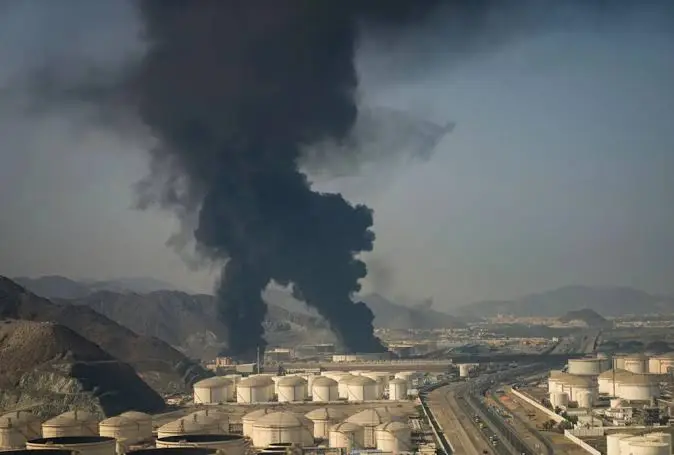
On 17 November, Iranian parliament speaker and lead negotiator Mohammad Bagher Ghalibaf warned that any dam, port, or power plant near a US or Israeli base is a legitimate target. Prompted by a New York Times report alleging that Iranian dams conceal underground missile sites, a claim the foreign ministry dismissed. It revives Ghalibaf’s March 2026 threat to “irreversibly destroy” regional energy infrastructure if Iran’s grid is hit. The message is aimed squarely at Gulf hosts as Washington weighs renewed strikes.
This is very likely intended as a deterrence posture: using the threat of reciprocity to raise the cost of further attacks. By labelling these sites “dual-use,” Tehran mimics the legal framing the US and Israel invoke to justify hitting Iranian infrastructure. The tactic, however, will likely backfire. Under international humanitarian law, proximity to a military base does not turn a civilian object into a lawful target. The site itself must contribute to military action and dams carry special protection. Ghalibaf’s standard also validates his adversaries’ targeting logic: if mere proximity suffices, the Iranian dams described by the NYT become fair targets, stripping Tehran of its strongest legal defence.
Ultimately, the threat is coercive lobbying aimed at pressuring Gulf capitals to restrain Washington, yet it will likely achieve the opposite. Treating host nations as co-belligerents deepens the rift caused by earlier strikes and erodes their reluctance to back US operations, while casting suspicion on Bahrain’s Shia majority and the UAE’s Iranian business community. Strategically, the move defeats Iran’s core goal of splitting Gulf states from Washington, likely inviting retaliatory strikes on Bushehr and Kharg Island, alienating Beijing– the top buyer of both Iranian and Gulf crude oil- and undermining Ghalibaf’s credibility at the negotiating table.