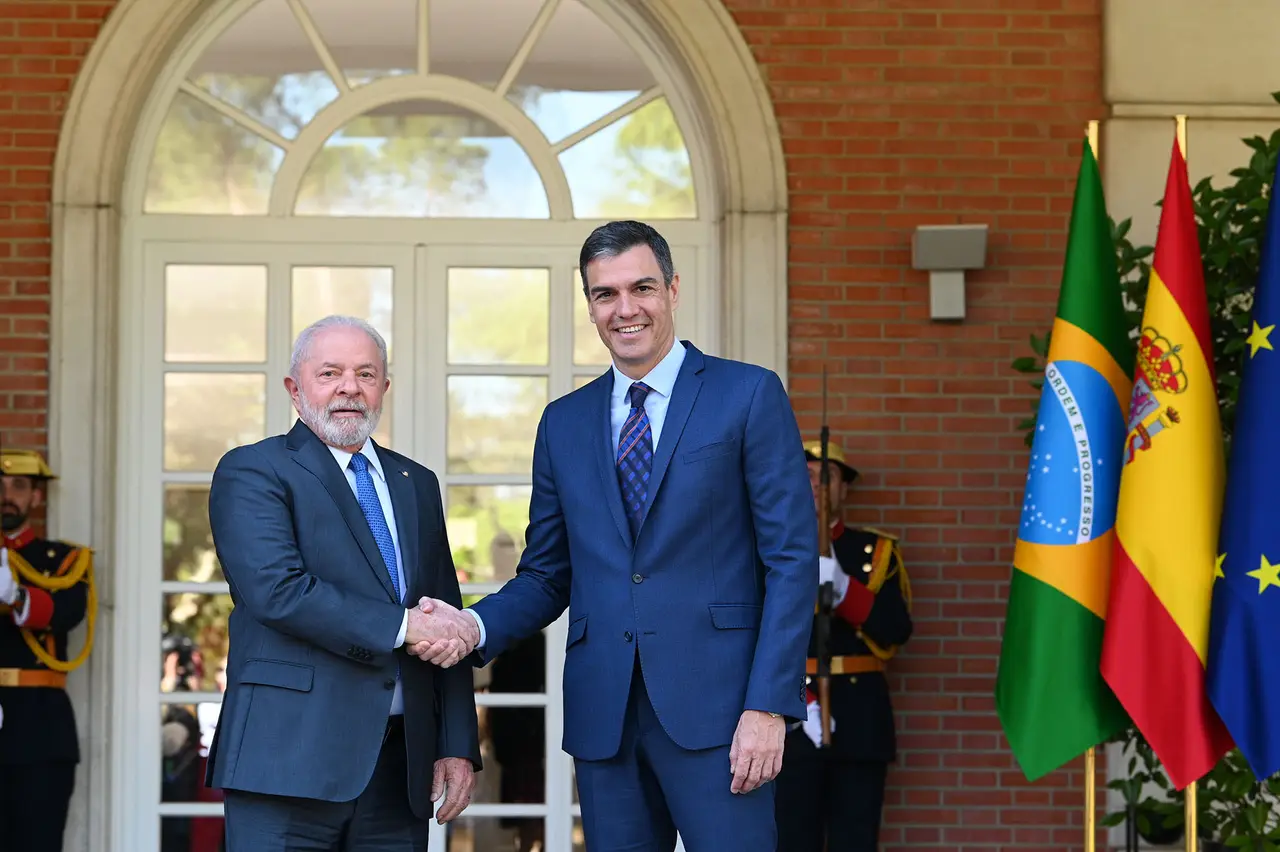
After completing his first trips to Turkey and the Philippines since his re-election, Brazilian President Lula went to Madrid yesterday, 16th November, to meet with Spain’s Prime Minister Sánchez. The two have publicly placed themselves as defenders of democracy against the rise of the extreme right. The gathering takes place right after Lula’s electoral victory, which signals the Brazilian electorate’s prioritisation of policies focusing on state-led economic development, wealth redistribution, labour protections, environmental conservation, and multipolar foreign policy.
The meeting also follows the signing of a memorandum of understanding between Brazil and Spain, committing both to collaborate on tax policies against wealth concentration, through the exchange of information and joint research on the issue.
During the visit, the two leaders shared common views on the UN Security Council’s functioning, championing a change of the permanent members’ veto power. Sánchez also showed his support for a Latin American candidate as next UN Secretary General, who will take Portuguese Guterres’s place as his mandate ends on 1st January 2027.
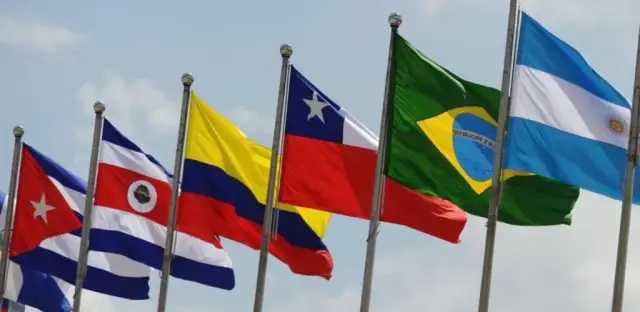
This encounter sends an important message to the international community, showcasing two key actors working together to bolster democratic institutions and a progressive governance model. However, it comes at a delicate moment as both Europe and Latin America navigate a rightward shift, evidenced by polling in Spain that points to an uphill battle for Pedro Sánchez’s party against a potential conservative-nationalist coalition of the People’s Party (PP) and Vox, as well as recent right-wing electoral gains across Latin America, including in Argentina, Bolivia, and Chile.
As multilateral institutions face growing strain, the Brazil–Spain partnership offers a clear blueprint for progressive cooperation across the Atlantic. Its long-term impact, however, remains closely tied to domestic electoral dynamics in Europe and shifting political coalitions across Latin America.