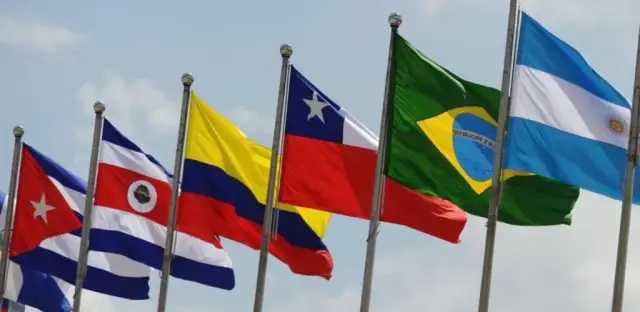
Since September 2025, the US military has killed over 200 people in strikes on suspected drug boats in the Caribbean and eastern Pacific (The Guardian, 2026). Relatives identified many of the deceased as local fishermen and labourers with no link to trafficking (ibid.). In March 2026, President Trump launched the “Shield of the Americas” and its operational arm, the Americas Counter Cartel Coalition (ACCC), to combat ‘narco-terrorism’ in Latin America and the Caribbean (LAC); nineteen LAC countries have since joined (U.S. Department of War, 2026).
At first glance, the Shield seems like a promising tool against organised drug crime. However, its terms don’t seem to guarantee a balanced exchange. This article argues that the alliance can be both a viable response to drug crime and a pretext for securing US influence in the hemisphere; whether it becomes so will depend on whether the exchange on which it rests is balanced. Balance will be evaluated through three criteria:
- equal voice for all members
- legal limits and accountability
- membership benefits that justify the cost
This article combines constructivist and rationalist lenses. Securitisation theory, conceptualised by the Copenhagen School (Buzan, Wæver and de Wilde), holds that when a leader presents an issue as an existential threat, they are implicitly asking for permission to act in consequence through exceptional measures that often break standard protocol (Buzan et al., 1998). The claim only succeeds if an audience accepts it; so what matters is who is persuaded and what the label allows. Securitisation operates through three steps: the threat claim, the subsequent emergency response that defies normal rules, and the resulting change of dynamics between actors (ibid.).
Morrow’s (1991) theory of asymmetric alliances completes this picture, explaining why weaker states accept dependence on a stronger one, and at what cost. He argues alliances trade autonomy for security, with security referring to a state’s ability to protect the status quo it values, and autonomy its freedom to pursue changes to that status quo (ibid.). In an “asymmetric” alliance, the ‘weaker’ partner often pays the price of security by adopting the ‘stronger’ partner’s agenda and positions, even if this narrows its own freedom of decision (Morrow, 1991).
Both theories are complementary: securitisation explains the persuasion that gives the coalition legitimacy, and Morrow clarifies the terms of the bargain. Together, they explain the ‘inflation-concession dynamic’ that underlies this new organisation: the more inflated the threat, the more valuable US protection becomes, the more partners are willing to concede.
Reasons for joining
The appeal lies in how the threat is framed, the first step of securitisation. The US designates narco-traffickers as “narco-terrorists”, “the ISIS and the al Qaeda of the Western Hemisphere” (Hegseth, 2026, cited in U.S. Department of War). This rhetorical move embeds the ‘War on drugs’ into the post-9/11 ‘War on Terror’ policy and treats defeating them as a “core and vital” interest, the 2025 National Security Strategy states (Ramos & Regueira, 2026, p. 15). The reclassification of fentanyl as a Weapon of Mass Destruction (WMD) (The White House, 2025) reinforced this framing of trafficking as an armed conflict, making more aggressive measures acceptable.
For countries facing the severe consequences of organised crime, a militarised approach makes for an attractive deal and public support backs it: in Latinobarómetro’s 2026 survey, 63% of Latin Americans agree that la mano dura (firm-handedness) does their country no harm. The US promises training, equipment and the mobilisation of partner nations’ militaries. Ecuador, for instance, received a $45 million assistance package to fund training, communications technology, intelligence hardware and naval patrol vessels (Ruiz Castellanos, 2026). Small states can offer access to their strategic geography in exchange for protection.
An unequal bargain
In return, Washington secures access to its partners’ sovereign territory and the ability to deploy forces there. The Dominican Republic opened its airfields, Trinidad and Tobago accepted a US radar installation, and Paraguay agreed to host American personnel (Ramos & Regueira, 2026).
Larger states, with histories of independent foreign policy, more security and thus more autonomy to lose, find this tradeoff less attractive, as Lula’s “nobody’s backyard” remark about Brazil illustrates (Al Jazeera, 2026). Mexico cooperates closely with the US outside the coalition through intelligence sharing but opposes any US military action on Mexican soil (Mexico News Daily, 2026).
The three tests of balance
Are the partners equally engaged in decisions and goal-setting?
No. The US makes nearly all decisions and controls priorities and missions: all 63 attacks on ships were ordered within the US, either by SOUTHCOM’s commander (30), Trump (19) or Hegseth (14) (WOLA, 2026). Member countries are confined to the role of locators of the cartel’s operatives “you just have to tell where they are”, while the US alone decides what to do (Messerly, 2026).
Are there strict legal limits on the use of force and accountability when missions go wrong?
No. The 63 strikes under Operation Southern Spear have no public legal framework agreed upon with partners, and the legal justification for them is itself contested. Drug trafficking is normally handled by law enforcement, and the military may only use lethal force against civilians who pose an imminent threat (Council on Foreign Relations, 2026). The administration instead invokes a different legal exception that the US is in an “armed conflict” with the cartels, a claim disputed by legal scholars (ibid.). Here, the first step of securitisation, the existential threat claim, has lowered legal barriers and expanded the tools available to the US for hard-power counter-narcotics efforts (Ramos & Regueira, 2026).
Systems of accountability are being eroded through the discrediting of international law. Hegseth urged coalition members to exit the International Criminal Court, accusing it of “robbing sovereignty” (U.S. Department of War, 2026). This coincides with the second and third instances of securitisation: emergency action and rule-breaking have become routine and relations between actors have changed (Buzan et al., 1998). Indeed, Amnesty International USA warns of the consequence of that: “extrajudicial killings are becoming normalised”; the absence of external checks on conduct means that the administration gets away with not providing evidence of successful strikes on ‘narco-terrorists’ (NPR, 2026).
Are the partners receiving benefits proportionate to the autonomy and risk they give up?
Mostly not. Partners bear the risks of cartel retaliation on their territory or strikes inadvertently killing nationals, while the US faces neither. For smaller states receiving training and equipment, the short-term trade may be worthwhile. Over the long term, however, concessions are costly: capacity-building breeds dependence as partners still rely on US intelligence, strike assets, financing and contractors to use what they receive, which leaves little room to challenge US tactics. This is the autonomy Morrow’s (1991) predicts weaker allies trade away.
A broader agenda: Threatened Sovereignty
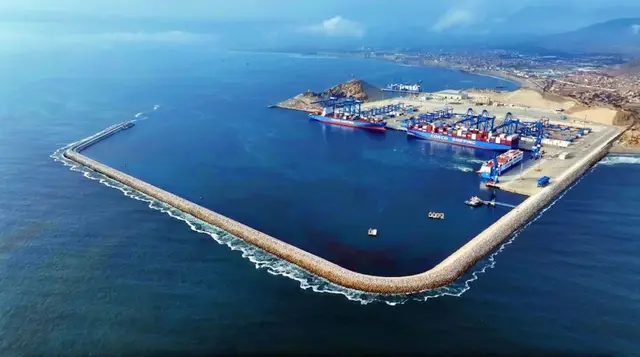
Beyond narcotics, the Shield appears to serve a broader US goal of keeping “malign foreign influences from outside the Western Hemisphere” at bay, namely China (The White House, 2026b). The US has voiced concerns about external powers’ growing involvement in strategically important military infrastructure, ports and maritime routes becoming a security risk, since controlling them means controlling global shipping and military mobility (Ramos & Regueira, 2026). To counter this, the US offers partners security deals that compete with China’s commercial ones. The US’s criticism of the Chinese-operated Chancay port in Peru led to a $1.5 billion sale to build facilities at the Callao naval base (Reuters, 2026). A similar pattern occurred with Panama deciding to leave the Belt and Road Initiative shortly after a visit from Secretary of State Rubio. This pressure presents members with a dilemma: US assistance or the freedom to choose their own economic partners and priorities.
The administration names this the ‘Trump Corollary to the Monroe Doctrine’, a renewal of the 19th-century foreign policy that sought to keep European powers out of the hemisphere. Hegseth pushes this sphere-of-influence logic further, describing “Greater North America”: “Every sovereign nation […] from Greenland to Ecuador and from Alaska to Guyana, […] is our immediate security perimeter” (ibid.) However, the Corollary, by treating any threat to the hemisphere as a threat to the US (The White House, 2026a), renders sovereignty and non-interference conditional on a state’s ability to contain criminal groups and align with US priorities.
Coalition success?
The administration speaks of “life-changing progress” (Hegseth, 2026 cited in U.S. Department of War) and that the strikes have stopped 97% of drugs entering the US by sea (The Guardian, 2026). Yet external research found the strikes had a “slight to non-existent” impact on drug supply (WOLA, 2026); unsurprising, considering that most fentanyl enters the US overland from Mexico through legal ports of entry on the Southwest border; the boats struck were at best carrying cocaine, not the drug used to justify the campaign (NPR, 2026). Analysts add that treating cartels like terrorist groups fails to address the finance, corruption, and institutional weakness that sustain such networks (Jenkins, 2026)
Conclusion and recommendations
When tested against all three criteria, the coalition seems unbalanced and leaning towards pretext. Although some participating governments will profit from US assistance, the asymmetry between the US and members will only further entrench the former’s influence. Unless that balance shifts, the Shields will keep protecting US influence and the governments that profit from its help, rather than addressing the roots of drug crime.
To rebalance the bargain and avoid regional fragmentation, LAC governments should:
- Strengthen regional multilateral institutions (CELAC, Mercosur and CARICOM) to maintain alternatives to US-led organisations and limit tension over differing relations with the US (Ramos & Regueira, 2026).
- Agree on the scope of foreign military operations, rules of engagement and set up routes for accountability. Independently, each country should also preserve civilian oversight and conduct non-military programmes alongside the Shield’s hard-power approach.
- Negotiate as a bloc to offset smaller states’ unequal bargaining power (Morrow, 1991), represent all members’ interests and set the coalition’s objectives accordingly.
References:
Al Jazeera. (2026, September 23). Trump rallies Latin American allies against drug cartels. https://www.aljazeera.com/news/2026/9/23/trump-rallies-shield-of-the-americas-coalition-against-drug-cartels
Buzan, B., Wæver, O., & De Wilde, J. (1998). Security: A new framework for analysis. Lynne Rienner Publishers. https://www.cambridge.org/core/journals/american-political-science-review/article/abs/security-a-new-framework-for-analysis-by-barry-buzan-ole-weaver-and-jaap-de-wilde-boulder-co-lynne-rienner-1998-239p-5500-cloth-1995-paper/D5DF2803C0162A75E70BF300BAE1B21F
Council on Foreign Relations. (2026, February 18). U.S. boat strikes kill eleven. https://www.cfr.org/articles/u-s-boat-strikes-kill-eleven
Jenkins, B. M. (2026, September). From Kandahar to Jalisco: Lessons learned from the global war on terrorism for U.S. efforts to degrade Latin America’s cartels. CTC Sentinel, 19(9). /api/wp-media/2026/09/CTC-SENTINEL-092026.pdf
Latinobarómetro Organisation. (2026, October 2). Latinobarómetro. https://www.latinobarometro.org
Messerly, M. (2026, March 7). Trump vows to use US military force against cartels across Latin America. Politico. https://www.politico.com/news/2026/03/07/trump-military-cartels-latin-america-iran-00818070
Mexico News Daily. (2026, March 9). Why isn’t Mexico part of Trump’s new ‘Shield of the Americas’? https://mexiconewsdaily.com/politics/mexico-not-part-shield-americas/
Morrow, J. D. (1991). Alliances and asymmetry: An alternative to the capability aggregation model of alliances. American Journal of Political Science, 35(4), 904–933. https://doi.org/10.2307/2111499
NPR. (2026, June 2). What to know about U.S. military strikes on alleged drug boats. https://www.npr.org/2026/06/02/g-s1-125314/us-military-strikes-on-alleged-drug-boats
Ramos, F. S., & Regueira, B. Q. (2026). The Trump Corollary and the strategic reconfiguration of Latin America and the Caribbean. Revista Tempo do Mundo, 40, 357–383. https://doi.org/10.38116/rtm40art12
Reuters. (2026, January 16). US approves possible sale of equipment, services to shift Peruvian naval base. https://www.reuters.com/world/americas/us-approves-possible-sale-equipment-services-shift-peruvian-naval-base-2026-01-16/
Rogero, T. (2026, September 21). US strikes on alleged drug boats may constitute ‘crimes against humanity’, UN expert says. The Guardian. https://www.theguardian.com/world/2026/sep/21/us-boat-strikes-crime-against-humanity
Ruiz Castellanos, A. (2026, September 10). U.S. pledges $45 million in security aid and naval vessels to Ecuador during Rubio visit. Latin Herald. https://www.latinherald.com/article/us-pledges-45-million-security-aid-ecuador-rubio-visit-2026
U.S. Department of War. (2026). Secretary of War Pete Hegseth delivers remarks at the Americas Counter Cartel Coalition. https://www.war.gov/News/Speeches/Speech/Article/4572686/secretary-of-war-pete-hegseth-delivers-remarks-at-the-americas-counter-cartel-c/
Washington Office on Latin America. (2026, July 24). Killing spree: Extrajudicial executions in the U.S. boat strikes campaign. https://www.wola.org/analysis/killing-spree-extrajudicial-executions-in-the-u-s-boat-strikes-campaign/
The White House. (2026, March 7). Commitment to countering cartel criminal activity. https://www.whitehouse.gov/presidential-actions/2026/03/commitment-to-countering-cartel-criminal-activity/