
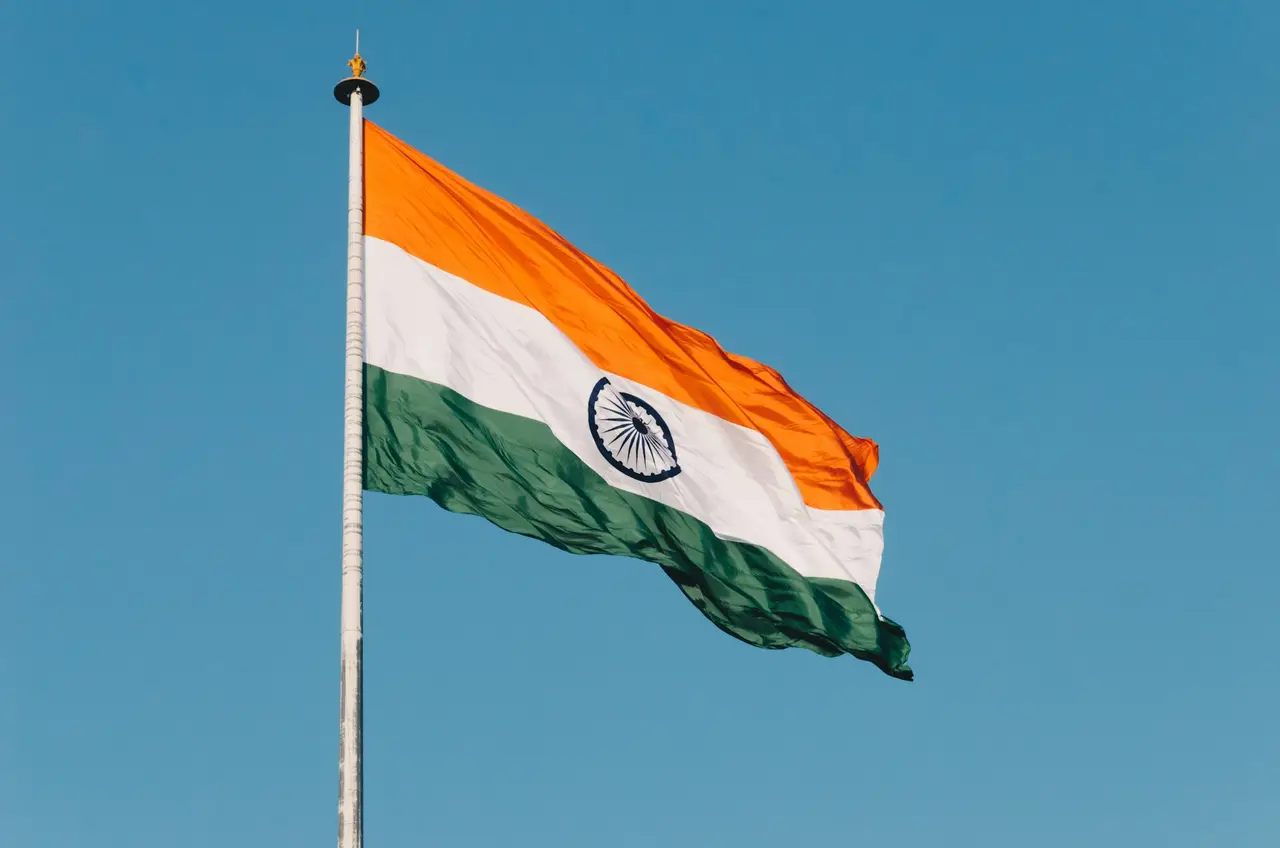
In 2025 and 2026, Prime Minister Modi undertook an increasing number of state visits, signifying the rising importance India is playing in the world (Basu, 2026). India’s recent state visits have increasingly involved Indo-Pacific powers such as Indonesia, Australia and Japan, accompanied by an unprecedented number of agreements on key topics (India’s World, 2026). As the Indo-Pacific has risen in strategic significance, this seems a natural continuation of India’s 2014 Act East Policy (Anand, 2026). However, amid increasing pressure from both China and the United States, this cooperation can also be seen as India offering an alternative partnership to Indo-Pacific middle powers cautious about becoming overly reliant on any single great power (The Economist, 2026). This brief examines why Indo-Pacific nations have increasingly looked to non-aligned and strategically autonomous India as a hedge, and what this means for the region.
The Great Power Trust Collapse
Since 1945, the United States has anchored Indo-Pacific security, diplomacy and economic growth. President Trump’s second term, however, has inverted that image. Punitive tariffs have battered export-dependent regional economies while Washington has begun interrogating the value of its own alliances (Guild, 2026). Even long-standing allies such as Japan, South Korea, Taiwan and the Philippines can no longer assume full support from the United States against Chinese assertiveness. Once-unshakeable partnerships have become transactional, with Washington demanding that allies shoulder more of the security burden while tolerating Chinese aggression in the region (Kurlantzick, 2026). Decisions such as stalling arms deliveries to Taiwan and scaling back joint military exercises with South Korea have compounded regional alarm, prompting many states to diversify their partnerships (Kurlantzick, 2026).
China offers no more reassuring alternative. Paramilitary manoeuvres near Taiwan, violent clashes with the Philippine Coast Guard, and ballistic missile testing in the South China Sea (D’Souza, 2026; Güzel & Sergeant, 2026) have deepened regional wariness of Chinese power and the direct risks it poses to state stability and sovereignty. Beijing has also shown a willingness to weaponise trade, punishing Japan and Australia over political disputes (Katada & Solís, 2026; McGregor, 2022). The ISEAS-Yusof Ishak Institute’s (2026) State of Southeast Asia Survey found that only 52% of respondents preferred China over the United States, reflecting eroded US credibility rather than confidence in Beijing. This mistrust of both great powers is driving Indo-Pacific states to seek diversification away from a duopolistic US-China choice.
Between a Rock and a Hard Place
Like its neighbours, India struggles to balance relations with China and the USA. Since independence, it has been defined by non-alignment, now described as multialignment, and the pursuit of strategic autonomy. India seeks bilateral relations with as many powers as possible without becoming reliant on any single country (Shidore, 2026). India emphasises managing relations with any nation in accordance with its own national requirements (Wala, 2026). This stance is rooted in the 1955 Bandung Conference, where India emerged as one of the primary architects of the non-aligned movement, in which developing countries, mostly former colonies, abstained from aligning with either the USA or the Soviet Union (Shidore, 2026).
While India has extensive relations with the USA and China, as seen in its membership of the Quad and BRICS, it has sought to expand its cooperation. Like other nations in the region, India’s relationship with America has struggled due to an additional 10% ad valorem duty on Indian exports, charged as a percentage of the goods’ value and imposed over forced-labour allegations (Surabhi, 2026). President Trump’s talk of a G2 pact between China and the USA, whereby the two powers would dominate regional affairs, has sidelined India (D’Souza, 2026). India’s decision to continue buying Russian oil has eroded trust, and its strategic autonomy has angered the current American regime, which expects full obedience from its allies (Bajpaee, 2026). This cooling is evident in the American decision to drop the word “Indo” from the name of its Indo-Pacific command, signalling a pivot away from past military cooperation (Agarwal, 2026). Trust fell further over America’s handling of the 2025 Pakistan-India conflict, in which New Delhi felt Washington had negotiated with Islamabad behind its back (Bhardwaj, 2025; Ganguly, 2025). No longer able to trust America as a stable partner, India has pursued a vigorous campaign of diplomacy to insulate itself militarily and economically.
Tense relations between China and India are far more deeply rooted than those with the USA. Beyond the regional wariness of Chinese power, India faces China’s territorial claims on Indian land, such as Arunachal Pradesh, and its open support for Pakistan, making China a direct threat to Indian sovereignty (Jones, 2025). With Chinese influence consolidating across Pakistan, Southeast Asia and the Indian Ocean, India feels encircled in its own backyard (Hashmi, 2026). Unable to compete with Beijing in economic might or military hardware, and with the USA now unreliable, India is forging deeper relations with regional powers eager to escape the pressure of USA-China competition.
A Breath of Fresh Air
To capitalise on the region’s insecurities, New Delhi has built relations and agreements with Japan, Indonesia and Australia, all eager to hedge against both China and the USA. Prime Minister Modi hosted Japan’s Prime Minister Takaichi Sanae on July 2nd 2026. This meeting produced 16 outcomes, ranging from semiconductors, critical minerals, clean energy and AI to crude oil stockpiling (D’Souza, 2026). It also announced the UNICORN radio antenna programme, the two countries’ first joint defence development programme, with bilateral trade having reached $27.5 billion in 2025–26. A further key outcome was the agreement to strengthen both countries’ Free and Open Indo-Pacific posture (Ministry of External Affairs, 2026a).
Days later, Modi flew to Jakarta to meet Indonesian President Prabowo Subianto. The meeting yielded 14 agreements and several key announcements (PMINDIA, 2026). These focused on strengthening supply chains in critical minerals, rare earths and steel (D’Souza, 2026). They also covered shared maritime infrastructure and deeper defence industry cooperation, signalled by a historic BrahMos supersonic cruise missile deal and an Astra air-to-air missile pact between India’s Bharat Dynamics and Indonesia’s Republikorp, worth an estimated $630 million (Ministry of External Affairs, 2026b; Saha, 2026).
The penultimate stop on Modi’s tour and the site of the most promising development was Australia, a staunch US ally spooked by Trump’s erratic rhetoric and China’s assertiveness. Historically, Canberra’s relations with New Delhi were strained by Australian opposition to nuclear proliferation in South Asia and human rights issues in Indian-administered Kashmir (The Economist, 2026). This meeting, however, marked a clear shift. The most indicative of the improvement in relations is Australia’s agreement to supply India with uranium for nuclear energy (The Economist, 2026). This, along with a shared commitment to a Free and Open Indo-Pacific, marks a distinct increase in trust at a time when Australia faces rising political and economic pressure (Press Information Bureau, 2026).
The Horizon Ahead
Even amid rising diplomatic influence, India is unlikely to dislodge the predominant regional powers, which it cannot yet rival economically, militarily or politically. Persistent border tensions, reliance on energy imports and mounting social discontent further constrain New Delhi. The rapid rise of the “Cockroach Janta Party”, a youth protest movement over high youth unemployment and institutional failure, shows this discontent (Khan, 2025; Mueller, 2026). India’s capacity to project influence abroad is therefore neither unlimited nor guaranteed (D’Souza, 2026). Nevertheless, India has never claimed to replace the two great powers, and an openly pro-India bloc is unrealistic. Instead, India uses strategic autonomy and a history of multilateralism to offer regional powers a way to diversify partnerships, preventing a duopoly that would inhibit its goal of becoming a global player. Diplomatic expansion is thus as important to India as it is to Japan, Indonesia or Australia.
What can be expected from India’s Indo-Pacific policy? India seeks to expand its influence within the current order, but it is too weak to challenge it. Expect bilateral, issue-based cooperation to deepen with existing partners and spread to new countries, as Prime Minister Modi’s visits to Central Asia show (Kumar Gupta, 2026). Influence will likely flow through bilateral relations rather than institutions, because India’s appeal lies in its lack of political baggage. The result is a quiet but consequential reshaping of the Indo-Pacific’s architecture. Do not expect a new pole or a total realignment toward New Delhi. Instead, India is emerging as an intermediary that regional states can lean on amid the dominance of the USA and China. Whether these developments become durable multilateral structures or remain parallel bilateral hedges will become clearer as India uses its 2026 BRICS chairmanship, manages domestic challenges and matures its Indo-Pacific ties. Only then will we know whether New Delhi can turn strategic opportunism into lasting regional influence.
References
Agarwal, P. (2026, July 3). The Indo-Pacific without the Indo: Strategic consequences for India. Manohar Parrikar Institute for Defence Studies and Analyses. https://idsa.in/publisher/comments/the-indo-pacific-without-the-indo-strategic-consequences-for-india
Anand, B. V. (2026, August 12). India’s Act East/Look East policy: Imperatives of connectivity, security and border management. Vivekananda International Foundation. https://www.vifindia.org/article/2026/august/12/India-s-Act-East-Look-East-Policy
Bajpaee, C. (2026). Despite reset in India–US relations, New Delhi retains commitment to strategic hedging. Chatham House. https://www.chathamhouse.org/2026/02/despite-reset-india-us-relations-new-delhi-retains-commitment-strategic-hedging
Basu, U. (2026). PM Modi’s foreign visits since 2021 cost at least Rs 557 crore, full list here. The Indian Express. https://indianexpress.com/article/india/pm-narendra-modi-foreign-visits-cost-rs-557-crore-mea-reply-10821425/
Bhardwaj, S. (2025, May 30). The United States’ role in the recent India-Pakistan crisis (ISAS Brief No. 1243). Institute of South Asian Studies. https://www.isas.nus.edu.sg/papers/the-united-states-role-in-the-recent-india-pakistan-crisis/
D’Souza, S. M. (2026). India’s Indo-Pacific strategy is a search for options, not substitutes. The Diplomat. https://thediplomat.com/2026/07/indias-indo-pacific-strategy-is-a-search-for-options-not-substitutes/
The Economist. (2026, July 16). An unreliable America is drawing Asia’s middle powers closer. The Economist. https://www.economist.com/asia/2026/07/16/an-unreliable-america-is-drawing-asias-middle-powers-closer
Ganguly, S. (2025). Are India-US relations at a crossroads? The Diplomat. https://thediplomat.com/2025/07/are-india-us-relations-at-a-crossroads/
Guild, J. (2026). Donald Trump’s tariff re-do in Southeast Asia. The Diplomat. https://thediplomat.com/2026/08/donald-trumps-tariff-re-do-in-southeast-asia/
Güzel, D., & Sergeant, G. (2026). Challenging China’s maritime militia (Primer No. 2026/11). Council on Geostrategy. https://www.geostrategy.org.uk/all-research/challenging-chinas-maritime-militia/
Hashmi, S. (2026). India-China competition in the Indian Ocean: Stability is not a reset. Asia Times. https://asiatimes.com/2026/08/india-china-competition-in-the-indian-ocean-stability-is-not-a-reset/
India’s World. (2026). Modi’s Indo-Pacific tour: The deals that matter. https://indiasworld.in/modis-indo-pacific-tour-the-deals-that-matter/
ISEAS-Yusof Ishak Institute. (2026). The state of Southeast Asia: 2026 survey report. https://www.iseas.edu.sg/frontpage-featured/the-state-of-southeast-asia-2026-survey-report/
Jones, V. (2025). China’s dispute with India over Arunachal Pradesh. The Interpreter. Lowy Institute. https://www.lowyinstitute.org/the-interpreter/china-s-dispute-india-over-arunachal-pradesh
Katada, S. N., & Solís, M. (2026, March 11). China’s economic coercion strengthens Takaichi’s hand. East Asia Forum. https://eastasiaforum.org/2026/03/11/chinas-economic-coercion-strengthens-takaichis-hand/
Khan, L. A. (2025, September 18). The obstacles to India’s superpower ambition. CounterPunch. https://www.counterpunch.org/2025/09/18/the-obstacles-to-indias-superpower-ambition/
Kumar Gupta, P. (2026, August 20). Why PM Modi’s upcoming visit to Central Asia is significant. Vivekananda International Foundation. https://www.vifindia.org/article/2026/august/20/Why-PM-Modi-s-Upcoming-Visit-to-Central-Asia-is-Significant
Kurlantzick, J. (2026, August 19). Trump’s South Korea move fuels growing fears of U.S. retreat from Asia. Council on Foreign Relations. https://www.cfr.org/articles/trumps-south-korea-move-fuels-growing-fears-of-u-s-retreat-from-asia
McGregor, R. (2022). Chinese coercion, Australian resilience. Lowy Institute. https://www.lowyinstitute.org/publications/chinese-coercion-australian-resilience
Ministry of External Affairs. (2026a). 16th India-Japan Annual Summit joint statement. Government of India. https://www.mea.gov.in/press-releases?dtl/41391
Ministry of External Affairs. (2026b). India-Indonesia joint statement on the state visit by Prime Minister of India to Indonesia. Government of India. https://www.mea.gov.in/press-releases?dtl/41413
Mueller, G. (2026, August 20). India’s Cockroach Janta Party protests: Will it produce long-term change? International Institute for Strategic Studies. https://www.iiss.org/online-analysis/online-analysis/2026/08/indias-cockroach-janta-party-protests-will-it-produce-long-term-change/
PMINDIA. (2026). List of outcomes: PM’s visit to Indonesia. https://www.pmindia.gov.in/en/news_updates/list-of-outcomes-pms-visit-to-indonesia/
Press Information Bureau. (2026, July 9). Prime Minister meets with the Prime Minister of Australia at the 3rd India-Australia Annual Summit. Government of India. https://www.pib.gov.in/PressReleasePage.aspx?PRID=2282736®=48&lang=1
Saha, R. (2026). India and Indonesia put in place a blueprint for a durable strategic partnership. The Diplomat. https://thediplomat.com/2026/07/india-indonesia-put-in-place-a-blueprint-for-a-durable-strategic-partnership/
Shidore, S. (2026). India’s multialignment and democratization of the international order. Council on Foreign Relations. https://www.cfr.org/articles/indias-multialignment-and-democratization-of-the-international-order
Surabhi. (2026, August 10). Exporters await clarity on US bill threatening tariffs of up to 100% over Russian crude purchases. Business Today. https://www.businesstoday.in/latest/economy/story/exporters-await-clarity-on-us-bill-threatening-tariffs-of-up-to-100-over-russian-crude-purchases-548383-2026-08-10
Wala, P. A. (2026, February 25). India’s strategic autonomy in a transactional world. Swiss Institute for Global Affairs. https://www.globalaffairs.ch/2026/02/25/india-s-strategic-autonomy-in-a-transactional-world/