
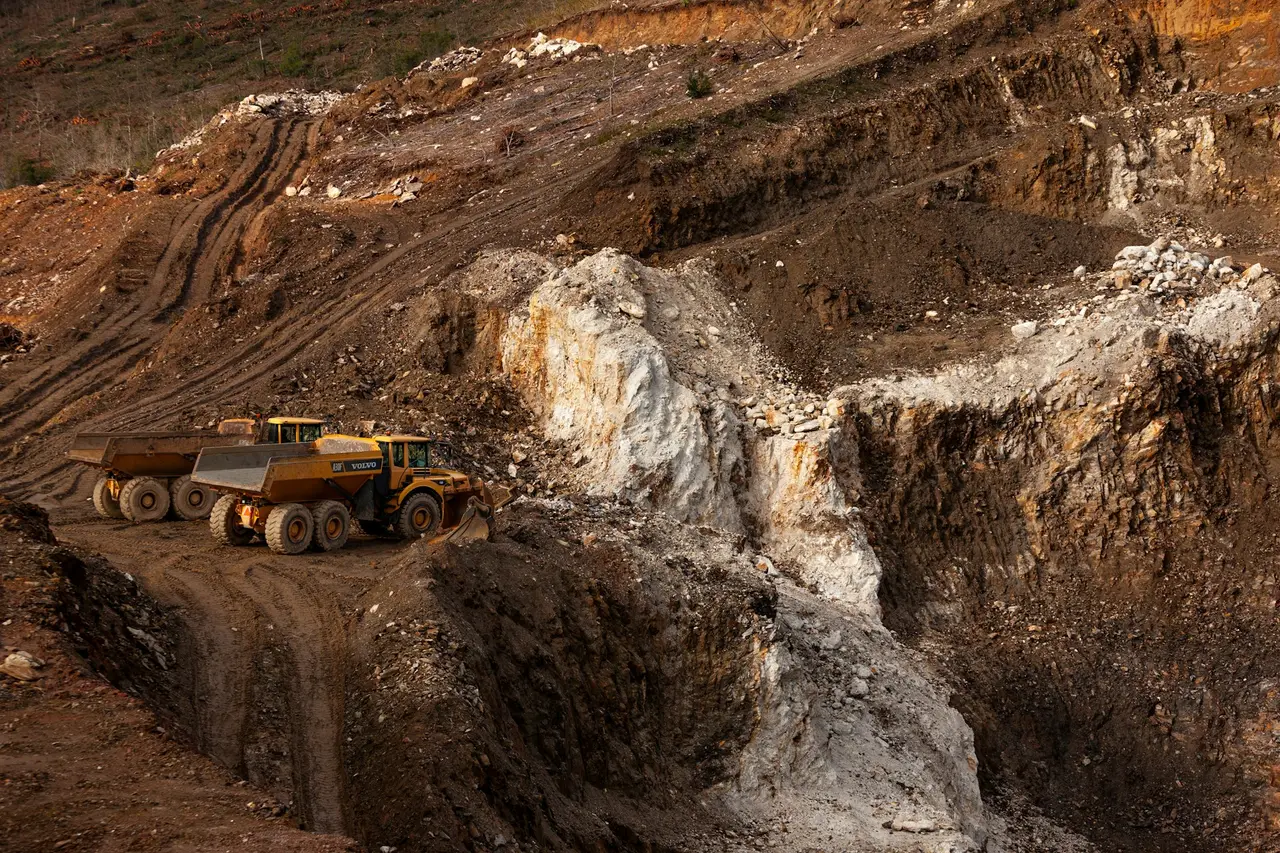


On 4 April 2025, China implemented export controls on certain rare-earth elements (REEs). This highlighted two things: First, controlling the supply of REEs, and more broadly of critical raw materials (CRM), is a matter of power. Second, the European Union currently depends on these materials. The demand for CRMs is indeed expected to grow in the very near future, and it appears essential for the EU to secure its own supply. This is the logic behind the Critical Material Act (CMA), adopted in 2024 but still incomplete, as Mario Draghi highlighted in his 2024 report. What is interesting here is not only his analysis of the limits of the CMA, but also his propositions, among which stands the idea of a Single Market for waste and recycling in Europe. CRMs are indeed eternally recyclable, and could cover 40% of European needs if properly deployed, but the cost of recycling is too high to be economically viable for now. The question is thus how a single market could help alleviate this problem and partly secure the European supply of CRMs. The hypothesis, detailed by Draghi and explored in this article, is that a Single Market for waste and recycling would enable the EU to optimise its resource efficiency, and that this efficiency would constitute a powerful asset for the EU in the scramble for CRMs.
1. A European Economic Dependency: Critical Raw Materials
The European Union likes to present itself as an independent economic power, but in reality, it depends on other countries for numerous things. Raw materials, energy and technology come from outside the EU, and with no easy alternatives. In the past few years, this dependency has become more visible, mainly because of tensions with China. China is by far the EU’s largest trading partner for imports of critical raw materials, and it also controls most of the world’s supply in this domain, which is crucial to the economy. This section focuses on how this dependency developed, why critical raw materials are a problem, and how China has used this leverage.
1.1 A Growing Trade Imbalance
One of the clearest signs of the EU’s dependency is the trade deficit with China. According to Eurostat (2026), the EU exported about 200 billion euros’ worth of goods to China in 2025, while it imported goods valued at almost 560 billion euros. This means a yearly deficit of roughly 360 billion euros, the largest trade deficit the EU has with another country. What makes this even more telling is how the gap grew over time. Since 2015, EU exports to China have increased by about 37 per cent, while imports from China have increased by almost 90 per cent (Eurostat, 2026). This shows that Europe is buying far more from China than it is selling to China, and that this gap keeps widening.
European companies rely on Chinese products in almost every part of the economy, from electronics and machinery to chemicals and vehicles (Eurostat, 2026). A trade deficit is not inherently problematic in itself; sustained deficits can coexist, or even support, a country’s economic strength, as the long-running US trade deficit illustrates. What makes the EU’s case more significant is not the deficit itself, but the underlying dependence it reflects, especially in critical raw materials, where China’s dominant position translates into strategic leverage rather than merely a commercial imbalance. This widening gap has several explanations: a more efficient Chinese industry and lower prices. According to a European Central Bank study, this redirection had already been underway since 2021, driven by weak domestic demand in China following a housing market downturn, rather than solely by the US-China tariff war (ECB, 2025).
1.2 Dependency on Critical Raw Materials
The trade deficit is only part of the story. A much bigger problem is the EU’s dependency on critical raw materials, such as rare earth elements, lithium and cobalt. These materials are needed for solar panels, batteries, wind turbines, and even military defence systems, making them essential for both the energy transition and defence. The issue is that China controls most of the global supply chain for these materials, roughly 60 per cent of the world’s raw materials production, and about 90 per cent of refining capacity is in Chinese hands (Euronews, 2026b). Specifically for rare earth magnets, the EU depends on China for around 98 per cent of its supply (Euronews, 2026b).
According to a European Commission official, the competition over raw materials is not really about who can dig up the minerals anymore; it’s about who controls the processing, standards, and industrial capacity around them (Euronews, 2026b). This shows that simply finding new mines outside of China would not solve the problem on its own. Europe would still need refining plants, technology and investment to actually turn the raw minerals into usable materials, and building that up takes years.
1.3 Export Restrictions as Wake-Up Call
China’s willingness to use its dominant position became clear when it introduced two rounds of export restrictions on rare earth minerals. The first round, in April 2025, was a direct reaction to new US American tariffs, but the second round in October no longer targeted the US alone; it started affecting the EU as well. From that point on, European companies needed special licenses to import products containing Chinese rare earth materials, and these licenses became much harder to obtain than before (European Parliament, 2025). The effect was immediate: several European manufacturers reported that production had to slow down because the necessary materials stopped arriving.
The Dutch chip company Nexperia is a good example of how fast things can escalate. In September 2025, the Dutch government took control of Nexperia, which is Dutch-based but owned by a Chinese company, because it feared the technology would be shared with China (Euronews, 2025). China reacted immediately by blocking exports of Nexperia’s finished chips, causing immediate shortages (Euronews, 2025). This dispute was resolved in November 2025, when the Dutch minister suspended the intervention and had so-called ‘constructive talks’ with Chinese authorities (CNBC, 2025). This case shows that even a decision taken by a single member state, without any EU-level coordination, can disrupt the entire European Industry once China decides to respond.
1.4 Europe’s Leverage
Europe is not entirely without bargaining power of its own. The EU holds a strong position in several strategically important sectors, space technology and pharmaceuticals, areas where China itself depends on European expertise and equipment (Euronews, 2026b). However, this leverage is far more limited than China’s grip on raw materials, described above (Euronews, 2026b). This imbalance means that Europe would find itself in a weaker bargaining position.
The Nexperia case showed how deep this vulnerability is, but also revealed something less visible: Chinese rare earths are not limited to direct imports. According to the European Parliament (2025), more than 80 per cent of large EU companies are no more than three suppliers away from Chinese sources of raw materials. This ‘hidden dependency’ shows that even companies with no direct trade relationship with China remain exposed to disruptions.
2. A solution? The Single Market for waste and recycling
Among potential solutions to secure the EU’s supply of CRMs, recycling holds particular promise, but realising that potential depends on addressing its economic viability, which is today undermined by high costs. A circular single market, extending Europe’s historic model of integration to this new problem, could be the mechanism through which that viability can be built.
2.1. Making recycling economically viable
Each EU member state applies different rules, so a product that is recoverable in one country may be considered waste in another, raising costs, even though CRMs are, in principle, almost infinitely recyclable (Printemps de l’économie, 2026).
The crux of the matter is: CRMs are dispersed across millions of end-of-life products, in volumes too small and quality too uncertain for any national market to support efficient recovery. Of 5.2 million tonnes of CRMs placed on the EU27+4 market in 2022, only 2.1 million reached waste streams and 1.4 million were recovered (FutuRaM, 2026). Yet a full circular scenario could see secondary sources substitute for up to 56% of EU primary demand by 2050 (Iattoni et al., 2026). A single market would aggregate shared member state demand into a large enough signal, the logic behind Draghi’s call to steer the secondary market, enforce existing regulation against circumvention, and coordinate EU waste export controls (Draghi, 2024, p. 63-4).
2.2. Tilting Strategic Choice Toward Circular Use Over Extraction
A single market would also help resolve the dilemma between sovereignty and environmental protection central to Europe’s raw-materials predicament (Correia & Falck 2025). At its core lies a market failure. Extraction costs (pollution, biodiversity loss, water shortage, health damage) fall on local populations rather than being priced into the material.
A single market lets the EU internalise this externality (Draghi, 2024, p. 54) by extending emissions pricing to incineration and landfill, paired with minimum recycled-content rules so cheaper virgin imports cannot crowd out domestic production. A harmonised standard is also a stronger regulatory export than any state could project on its own. Enrico Letta, former Italian prime minister, argues the EU can apply circular design standards to imports too, making an internal rule a reference point abroad (Letta, 2024, p. 43-4).
2.3. Creating Incentives for Innovation in CRM Supply and Consumption
A single market’s demand signal also drives innovation in how CRMs are recovered and consumed, allowing the EU to compete in the long term rather than swap one dependency for another, a point Draghi omits: he neglects materials productivity and efficient materials use as a competitiveness lever (Grabbe, 2024). Gains are front-loaded in design: up to 80% of a product’s environmental impact is set in the design phase (Commission, 2020), and circular principles in steel, construction, and vehicles could cut annual EU industrial emissions by 34% by 2050 (Grabbe, 2024).
A fragmented market under-rewards needed Research & Development (R&D). However, predictable off-take and recycled content obligations mean that incentives shift upstream into the design stage. Initiatives like Orano’s magnet recycling exist (Printemps de l’économie, 2026) but remain individually led rather than EU-coordinated. Seventeen CRMs, including lithium, cobalt, neodymium, and dysprosium, could achieve recovery rates above 80% within a generation with the right choices (FutuRaM, 2026). Circular technology also spills into innovation, and exportable EU ecodesign positions EU firms as first movers, given clearer research direction.
3. Limits and Perspectives
The single market is a long-term solution, but not fast enough for immediate need (Draghi, 2024, p. 54, citing IEA, 2020). Recycling only returns material embedded in products sold years or decades earlier, so it cannot keep pace with demand rising faster than the installed stock retires. The EU forecasts rare-earth demand rising sixfold and lithium demand twelvefold by 2030, relative to a 2020 baseline, and, if we follow FutuRaM’s business-as-usual scenario, recycled materials will cover only a third of demand by 2050. The benefits will therefore take too long to materialise over the coming decade, and the greater risk is that these gains will be overshadowed by short-term thinking, pressure for less regulation, and demands for lower prices right now (Letta, 2024).
The EU thus needs short-term bridges toward a horizon in which a mature market eventually accounts for a substantial share of consumption. Since recovery will take over later, extraction can be framed as a limited, temporary solution rather than a permanent measure. Yet extraction carries its own social-acceptability cost, determined by permitting and local opposition, so it is, in the short term, a necessary but not sufficient option for securing the EU’s long-term supply of CRMs.
Diversifying supply from single producers, above all China, is complementary but nearly exhausted, since over 90% of EU imports already enter tariff-free, and diversification only spreads dependence rather than removing it (Leichthammer, 2025), precisely what distinguishes recycling as the one supply stream the EU governs internally. The issue is even more severe with climate change. Reduced land and water availability will likely raise virgin material costs, rewarding early investors in resource efficiency.
Thus, the idea of a Critical Raw Materials Club (which is also proposed by Draghi in his report) (Findeisen, 2023), pairing resource-hungry and resource-rich states, would not be “a silver bullet”. Diversification cannot meet EU needs unless circularity also cuts consumption. A single market supplies that demand-side complement. It strengthens the EU’s hand in the Club by offering a working model and standards, not just demanding them, to satisfy. Thus, it makes the EU not only more sovereign in CRMs but a rule-setter that partners have reason to align with.
The greatest difficulty will be securing agreement from all 27 member states. Much work remains.
References
CNBC. (2025, November 19). Nexperia: Dutch government suspends intervention at Chinese chipmaker. https://www.cnbc.com/2025/11/19/nexperia-dutch-government-suspends-intervention-at-chinese-chipmaker.html
Correia, V., & Falck, W. E. (2025). Europe’s critical raw materials: Balancing strategic needs with environmental protection. Intereconomics, 60(5), 297–302. https://doi.org/10.2478/ie-2025-0057
Draghi, M. (2024). The future of European competitiveness. Part B: In-depth analysis and recommendations. European Commission.
ECB. (2025). China’s growing trade surplus: why exports are surging as imports stall.
https://www.ecb.europa.eu/press/economic-bulletin/focus/2025/html/ecb.ebbox202507_01~83b0e7edd4.en.html
Euronews. (2025, November 19). Dutch government suspends takeover of Chinese-owned Nexperia. https://www.euronews.com/business/2025/11/19/dutch-government-suspends-takeover-chinese-owned-nexperia
Euronews. (2026a, April 15). Is the European Union reliant on trade with China? https://www.euronews.com/my-europe/2026/04/15/is-the-european-union-reliant-on-trade-with-china
Euronews. (2026b, May 20). “Global race for critical raw materials is about power,” EU Commission says. https://www.euronews.com/my-europe/2026/05/20/global-race-for-critical-raw-materials-is-about-power-eu-commission-says
European Commission. (2020, March 11). A new circular economy action plan for a cleaner and more competitive Europe (COM(2020) 98 final). https://eur-lex.europa.eu/legal-content/EN/TXT/?uri=CELEX:52020DC0098
European Parliament. (2025, November 24). China’s rare-earth export restrictions. EPRS Think Tank. https://epthinktank.eu/2025/11/24/chinas-rare-earth-export-restrictions/
Eurostat. (2026, April 10). Trade in goods with China in 2025. European Commission. https://ec.europa.eu/eurostat/web/products-eurostat-news/w/ddn-20260410-2
Findeisen, F. (2023, October 31). The club approach: Towards successful EU critical raw materials diplomacy. Jacques Delors Centre. https://www.delorscentre.eu/en/publications/critical-raw-materials-club
FutuRaM. (2026, May 27). By 2050 Europe’s waste could supply over half of critical material demand. https://futuram.eu/half-of-critical-material-demand-from-europe-waste/
Grabbe, H. (2024, September 16). A circular single market for sustainable competitiveness. Bruegel. https://www.bruegel.org/first-glance/circular-single-market-sustainable-competitiveness
Iattoni, G., Yamamoto, T., Horne, J., Charytanowicz, M., Remmen, K., Kippert, K., Wagner, A., de Vries, H., Jayasinghe, B., Urvois, M., Monfort, D., Philippe, A., Heuss-Aßbichler, S., Jimenez, M., Rosmaninho, E., Seabra, S., Dorri, I., Herreras, L., Avila, M., … Balde, K. (2026). FutuRaM project final report. https://doi.org/10.5281/ZENODO.19470905
Leichthammer, A. (2025, December 19). The EU’s critical raw materials predicament: ReSourceEU to the rescue? Jacques Delors Centre. https://www.delorscentre.eu/en/publications/detail/publication/the-eus-critical-raw-materials-predicament
Letta, E. (2024). Speed, security, solidarity. European Commission.
Printemps de l’économie. (2026, March 25). #10 Terres rares et métaux critiques : L’Europe peut-elle s’affranchir des nouvelles dépendances? [Video]. YouTube. https://www.youtube.com/watch?v=VLHF-KqUEA8