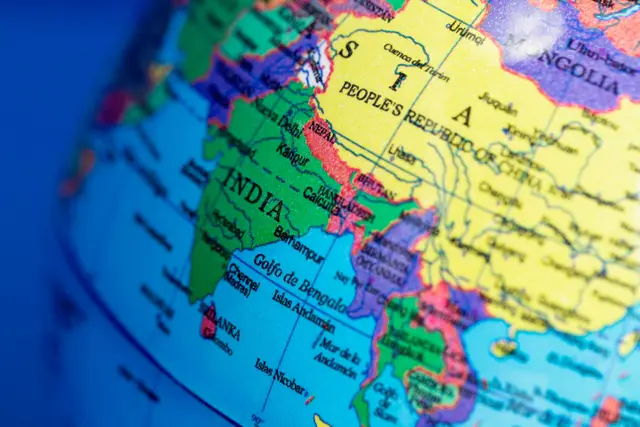

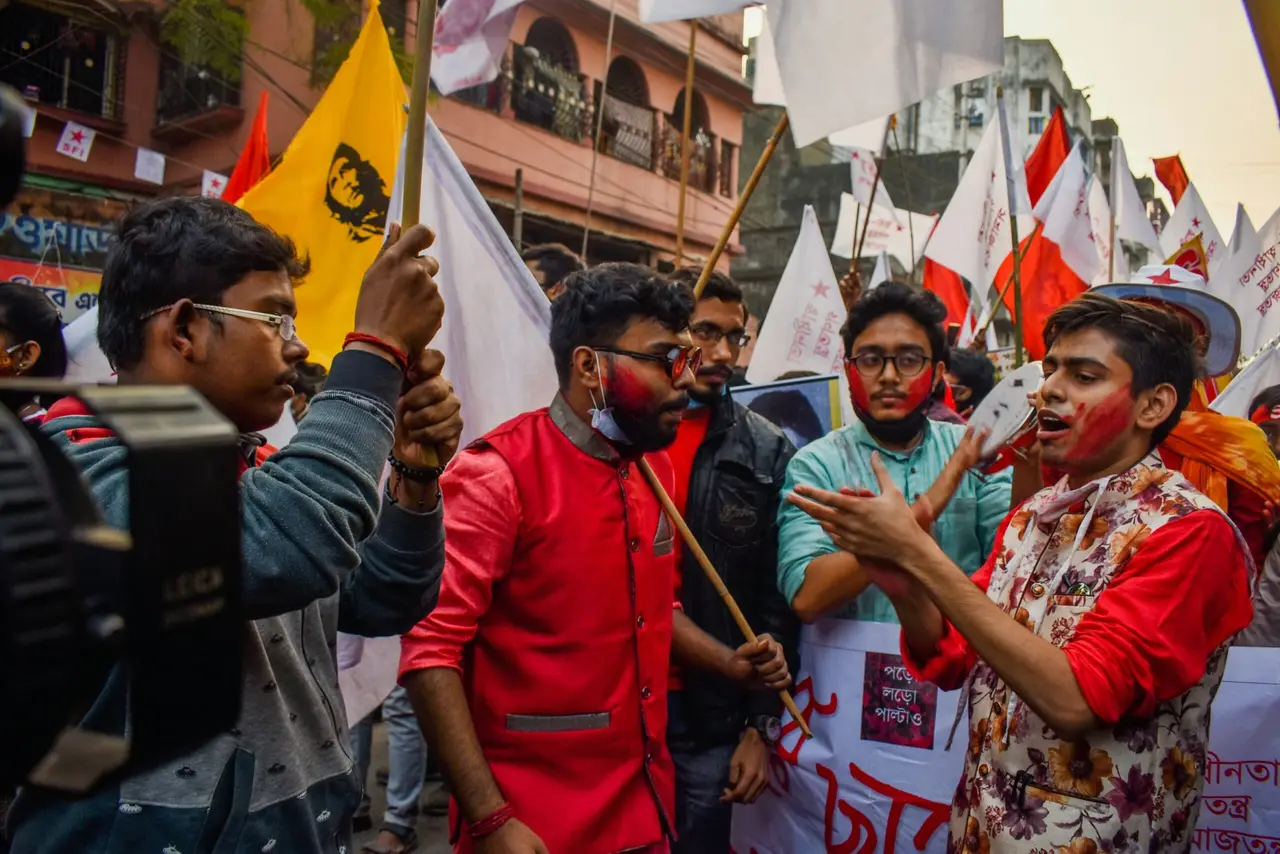

South Asia has been roiled by Gen Z activism, with mass demonstrations erupting across the region in an expression of disillusionment with running political systems, widening inequalities, elite privilege, and authoritarian governance. Since 2024, this renewed wave of uprisings has garnered significant visibility, challenging political arrangements that no longer serve the interests of the aggrieved masses. Most recently, the tide of resistance in India’s raucous democracy has become a hot-button issue as the youth have taken a jibe at the incumbent Bharatiya Janata Party (BJP). Rattling Prime Minister Narendra Modi’s government, the rage of India’s youth came to a crescendo when the Chief Justice of India’s Supreme Court, Surya Kant, made a comment likening unemployed youth to “cockroaches”, which prompted a Boston University student, Abhijeet Dipke, to form a parody party by the name of “Cockroach Janata Party (CJP)” (Ali, 2026). The movement took the nation by storm, transcending digital activism and rocking the state against the backdrop of graduate unemployment, exam paper leaks, and administrative laxity (Mukherjee, 2026).
Tensions have been simmering in the region long before reaching a fever pitch. In 2024, the revolution that toppled Bangladesh’s long-time ruler, Prime Minister Sheikh Hasina, stemmed from the Supreme Court’s reinstatement of a quota system that reserved 30% of public-sector employment opportunities for descendants of freedom fighters of the 1971 independence war, leading to widespread condemnation by Bangladeshi students for institutional discrimination (Islam & Faisal, 2026). Gen Z in Nepal also remained disgruntled by several political undercurrents the country has been plagued by, including entrenched elite capture, patronage politics, and nepotism that have served the interests of the ruling party while restricting access to public resources and social mobility for the masses (Prakash, 2026). The breaking point, however, was reached upon the imposition of a social media ban, which drove the youth to the streets and led to the removal of Prime Minister Sharma Oli from office. Similar recurring patterns were observed in Southeast Asian countries, such as Indonesia, where the government’s move to grant housing allowances to parliamentarians exacerbated the pre-existing resentment harboured against institutional overreach by the military and the concentration of power in the hands of business oligarchs (Livingstone, 2025).
While the variants of these youth movements achieved different political transitions, ranging from high-level dismissals to regime changes, a common thread defining their identities was digital activism within the social media ecosystem that transformed the political trajectories of their states of origin. These nationwide protests soon morphed into a contagion as a subtle manifestation, if not a substitute, of the demonstration effect. As collective dissatisfaction with deteriorating political conditions in home countries unified the youth, their grievances transcended borders, resulting in the proliferation of protests across the region. Social media amplified this mobilisation as a digital space where political rhetoric and the lexicon of political messaging converged, galvanising the youth not only to share the ideas surrounding their demonstrations but also to adopt a collective revolutionary identity to achieve desired outcomes.
The Logic of Social Media Mobilisation Under Constructivism and Networked Society
With the demonstrations in Bangladesh, Nepal, and India now serving as an evidential base for social media’s role in cultivating mass mobilisations, it becomes imperative to explicate this phenomenon with the application of relevant theoretical foundations, which, in this scenario, lie at the intersection of constructivism and Castells’s concept of networked society. Constructivism establishes the theoretical premise that ideational factors in the form of intersubjective shared beliefs shape actors’ identities and interests based on collective understanding, which in part demonstrates how identities are the products of social construction by human agency (Jung, 2019). With the advent of social media, this process of collective identity formation is now also cultivated within the media ecology, where socially constructed meanings and symbols are subject to fluid interactions (Karataş, 2021).
Collective identity is further negotiated through shared meaning-making, the activation of relationships among participating actors, and emotional investments that nurture solidarity (Halvorsen, 1997). The formation of collective political identities entails a similar process: they emerge from socio-political processes, as they are produced, learned, and practised through active participation in political cultures and movements that are essentially built on shared practices and experiences, thereby creating “collective subjectivity” (Schubert & Schwiertz, 2021). In the digital landscape, the connectivity afforded by social media platforms is integral to the formation of collective identities. Arguably, one of the fundamental ways this pattern manifests is through the emergence and circulation of hashtags across a spectrum of internet communities (Khazraee & Novak, 2018).
Hashtags emerge as linguistic signifiers of identity labelling, with the capacity to become shared symbols that allow individuals supporting the causes associated with those hashtags to connect with each other in ideological terms. Additionally, the shared meaning associated with the political events they represent has led to hashtags being viewed as “social movement coordinators” (Barron & Bollen, 2022). Taking this into cognisance, the hashtags circulating across digital spaces in the context of South Asia hold empirical relevance. They were emotionally charged with a fervour for change, and the resonance of these digitally communicated messages prompted greater unity for political causes. The popularity of these catchphrases underlay a broader resistance against the endemic corruption, elite disconnect, and socio-economic vulnerabilities. The hashtag #nepobabies gained virality in Nepal on similar grounds. An Instagram post from Saugat Thapa, the son of a provincial minister, was subjected to public scrutiny and was heavily denounced for a flamboyant display of a luxurious lifestyle as Nepal plunged into economic woes with its GDP per capita under $1,500, making it South Asia’s second-poorest country (Parajuli et al., 2025).
In a similar vein, Manuel Castells’s theory of the Networked Society explains the role of digitally mediated spaces in enabling the spread of information, collective meaning-making, and micromobilisation. In Bangladesh, the derivation of the protests’ symbolic identity was the culmination of a shared generational narrative that originated on Facebook. In defiance of the government’s mourning program announced for the victims of the quota reform movement, which urged citizens to wear black badges in honour of the sacrifices, the Bangladeshi youth adopted an innovative strategy as a political counter. They appropriated the colour red as a historic marker of resistance against their government. This was a move that surfaced as a political exemplification of anti-state sentiments and was concatenated through patterns of social media engagement. The digital campaign of “Red Profile Protests”, within the umbrella of “Red July” mobilisation, thus evinced this disenfranchisement, with an array of social media users changing their profile pictures to red, and the majority manning the barricades against political coercion by embracing images displaying red cloth tied around their eyes or faces (M. A. Islam et al., 2025; Daily Sun, 2025; Mahmud, 2024).
Castells (2004) further contends that these new information technologies, on account of their speed, adaptability, flexibility, and most importantly, the ability to build cohesive networks through grassroots-level engagement (bottom-up approach), surpass traditional “vertical hierarchies”, the conspicuous effects of which manifest in collective action. With reference to India’s protests, for instance, the CJP did not rely on conventional and hierarchical forms of political engagement, such as student unions or bodies, and rather resorted to harnessing the power of social media, as evidenced by the party’s Instagram account amassing over 20 million followers, eclipsing the BJP’s following (Cockroach Janta Party, n.d.; BJP – Bharatiya Janata Party, n.d.). With networks in traditional societies having been subordinated to vertical organisations structured around institutional hierarchies and delivering information via a one-directional (top-down) approach, the internet has become a tool for decentralising political communication. This decentralisation creates a substitute political environment, conducive to horizontal networks of communication to circumvent institutional gatekeeping, enabling mass self-communication to facilitate social movements, build their autonomy, and challenge the dominant elite by transmitting political messages, and thereby generating counter-power (Castells, 2004; Castells, 2007). In a similar manner, South Asian youth have railed against legacy news media in their respective countries owing to their political predispositions and deference to governments, which together have precluded balanced news coverage, with real-life grievances of the public being drowned out by pro-establishment narratives.
As a consequence, in a climate of censorship, internet shutdowns, and state repression, citizen journalism became an outlet for the public to document their grievances within the digital media architecture via personal testimonies, audiovisual content, and on-ground reporting. In Bangladesh, advocacy groups such as Witness and Activate Rights launched the Bangladesh Protest Archive (BPA) to preserve and investigate the footage collections of police brutality recorded by citizens and youth activists as an archive base for the movement, spurring various community-led groups into action, whereby July Revolutionary Alliance, Red July, Tales of July, and several other units also documented the use of excessive force, which served as archive hubs (Abdullah & WITNESS, 2025). In India, public outcry against godimedia (lapdog media) was provoked by the repudiation of political dissent by mainstream news anchors, which compelled youth to turn to content creators, citizen journalists, and YouTubers as their sources of information, while physically assaulting and raising vociferous objections against reporters affiliated with mainstream media (Jain, 2026; Rebelo, 2026). The Nepalese youth also harnessed social media to channel their dissent. Upon the imposition of a social media ban to suppress political dissent, they demonstrated their tech-savvy behaviour to evade detection with a deft use of algorithmic engines, private networks, and AI technologies, including ChatGPT, Grok, and Deepseek, to generate content that facilitated the dissemination of their political messages across social media platforms such as TikTok and Discord (Wong, 2025; Mulmi, 2025; Rauniyar, 2025).
Protest Diffusion and Demonstration Effect
Cross-national diffusion of protests is not necessarily contingent upon domestic institutional milieus, geographic proximity of demonstrations or the socio-political structures within states, as a successful demonstration effect can come into effect when political upheavals act as an information signal for the youth to recognise the political opportunity for mass mobilisation in localised contexts (Bamert et al., 2015). Social media proximity, as an information infrastructure, can provide impetus for the cross-national diffusion of offline protests through contemporaneous online network exposure to protest activity in other countries (Kwon & Hemsley, 2017). In Bangladesh and Nepal, social media outreach buttressed protest mobilisations among digitally connected youth (Fong, 2025), with India the latest manifestation of this trend.
The cross-border transmission of collective action frames and protest repertoires is facilitated by cultural resonance, with adaptations of methods and ideas depending on local contexts (Gerbaudo, 2013). Beyond anecdotal evidence of ideational solidarity reflected, for example, in Nepalese youth’s emphasis on modelling its actions on Bangladeshi and Indonesian demonstrations (Bennhold, 2025; Lodhi, 2025), this narrative coherence was externalised through symbolic media. Similarly, the protestors in the Philippines and Nepal have taken inspiration from Indonesian demonstrators by adopting a cartoon skull logo, emblematic of resistance, in their flags, social media profiles and videos. The diffusion of protest symbols and support for anti-corruption movements across Indonesia, the Philippines, and others has also been strengthened by the use of the #SEAblings hashtag (representing Southeast Asian or peripheral areas) (Wong, 2025).
Looking Ahead
Social media mobilisation has facilitated the reconfiguration of the logic and mechanisms of political action on the basis of information sharing and decentralised networked communication. In the absence of an organisational structure with clearly articulated goals, however, these short-lived digitally mobilised movements are undermining concrete institutional gains achievable through collective action (Jäger, 2026). From this vantage point, nevertheless, the regional developments represent a watershed moment for political communication in digital spaces, with respect to their deliberative character and mobilisational potential. This also warrants acknowledging their pitfalls that materialise as misinformation, the difficulty of translating inchoate visions into action, and, most importantly, the widening digital divide that marginalises the voices of those without access to social media.
References
Abdullah, S. & WITNESS. (2025, August 18). Filming the Uprising: Revisiting how
Bangladeshi youth used the right to record to overthrow an authoritarian regime. WITNESS Blog.
https://blog.witness.org/2025/08/bangladesh-student-uprising-2024-protest-videos/
Ali, A. (2026, August 3). Revolt of the Cockroaches: How India’s Gen Z humbled Modi. TIME. https://time.com/article/2026/08/01/cockroaches-protests-gen-z-india-delhi-narendra
modi-prime-minister/
Bamert, J., Gilardi, F., & Wasserfallen, F. (2015). Learning and the diffusion of regime
contention in the Arab Spring. Research & Politics, 2(3).
https://doi.org/10.1177/2053168015593306
Barron, A. T. J., & Bollen, J. (2022). Quantifying collective identity online from self-defining
hashtags. Scientific Reports, 12(1), 15044.
https://doi.org/10.1038/s41598-022-19181-w
Bennhold, K. (2025, October 19). The Contagious Gen Z Uprisings. The New York Times.
https://www.nytimes.com/2025/10/19/world/gen-z-revolutions-protests-louvre-heist-g
aza.html
BJP – Bharatiya Janata Party. (n.d.). @bjp4india. Instagram.
https://www.instagram.com/bjp4india/?hl=en
Castells, M. (2004). The Network Society: A Cross-Cultural Perspective. Edward Elgar
Publishing Limited.
Cockroach Janta Party. (n.d.). @cockroachjantaparty. Instagram.
https://www.instagram.com/cockroachjantaparty/?hl=en
Daily Sun. (2025, October 19). Turning Facebook red: How the red profile picture became a
symbol of defiance in Bangladesh’s July uprising. Daily Sun.
https://www.daily-sun.com/post/812687
Fong, C. (2025, November 20). How global Gen Z protests have shocked and transformed
governments. Council on Foreign Relations.
https://www.cfr.org/articles/how-global-gen-z-protests-have-shocked-and-transformed-governments
Gerbaudo, P. (2013). Protest diffusion and cultural resonance in the 2011 protest wave. The
International Spectator, 48(4), 86–101.
https://doi.org/10.1080/03932729.2013.847689
Halvorsen, R. (1997). Book reviews : Alberto Melucci: Challenging Codes. Collective Action
in the Information Age. Cambridge: University Press, 1996. Acta Sociologica, 40(4),
413–416. https://doi.org/10.1177/000169939704000406
Islam, M. A., Nur, S., Mahmud, I., Rakiv, M., Noor, R. N., & Moniruzzaman, M. (2025). Gen
Z’s digital uprising in Bangladesh: The role of social media in the fall of a political
despot. Social Sciences & Humanities Open, 12.
https://www.sciencedirect.com/science/article/pii/S2590291125009118
Islam, M. S., & Faisal, M. M. (2026). The July Revolution: Fatalities and narratives in
Bangladesh’s 2024 anti-discrimination movement. International Journal of Discrimination
and the Law, 26(3), 573–594.
https://doi.org/10.1177/13582291261424344
Jäger, A. (2026). Hyperpolitics: Extreme Politicization without Political Consequences.
Verso Books.
Jain, T. (2026, August 26). How a summer of protests upended India’s media. Columbia
Journalism Review.
https://www.cjr.org/analysis/how-a-summer-of-protests-upended-indias-media-delhi
medical-exam-retest-youtubers-influencers-replace-modi-allies-legacy-tv-bharatiya-c
ockroach-janata-party-cjp.php
Jung, H. (2019). The evolution of social constructivism in Political Science: Past to present.
SAGE Open, 9(1). https://doi.org/10.1177/2158244019832703
Karataş, D. (2021). The uses of Twitter in the construction and maintenance of Occupy
Gezi’s collective identity. Information Communication & Society, 26(7), 1401–1417.
https://doi.org/10.1080/1369118x.2021.2011946
Khazraee, E., & Novak, A. N. (2018). Digitally Mediated Protest: Social Media affordances
for Identity construction.
https://doi.org/10.1177/2056305118765740
Social Media + Society, 4(1).
Kwon, K. H., & Hemsley, J. (2017). Cross-national proximity in online social network and
protest diffusion: An event history analysis of Arab spring. In Proceedings of the 50th
Hawaii International Conference on System Sciences.
https://asu.elsevierpure.com/en/publications/cross-national-proximity-in-online-social-network-and-protest-dif/
Livingstone, H. (2025, September 2). Indonesia protests explained: why did they start and
how has the government responded? The Guardian.
https://www.theguardian.com/world/2025/sep/02/indonesia-protests-explained-start-h
ow-has-the-government-responded
Lodhi, M. (2025, October 27). The Gen Z revolt. DAWN.
https://www.dawn.com/news/1951527
Mahmud, F. (2024, July 30). Bangladesh observes national mourning in memory of protest
violence victims. Anadolu.
https://www.aa.com.tr/en/asia-pacific/bangladesh-observes-national-mourning-in-me
mory-of-protest-violence-victims/3289194
Mukherjee, S. (2026, August 12). How Gen Z and India’s Cockroach Janata Party are
successfully challenging Narendra Modi. The Conversation.
https://doi.org/10.64628/aam.vkmahw79x
Mulmi, A. (2025, September 24). From Streets to Discord: How Nepal’s Gen Z toppled a
government. Carnegie Endowment for International Peace.
https://carnegieendowment.org/research/2025/09/nepal-gen-z-topple-government
Parajuli, R., Pariyar, K., & Ng, K. (2025, September 16). Nepal Gen-Z protests: Politicians
get rich while we suffer – so I helped bring down the government in 48 hours. BBC.
https://www.bbc.com/news/articles/cvg9n760gddo
Prakash, N. (2026, March 3). Nepal’s general election will test the political power of Gen Z.
Chatham House.
https://www.chathamhouse.org/2026/03/nepals-general-election-will-test-political-po
wer-gen-z
Rauniyar, T. (2025, November 4). The inside story of how Gen Z toppled Nepal’s leader and
chose a new one on Discord. WIRED.
https://www.wired.com/story/nepal-discord-gen-z-protests-vote-prime-minister-electi
on/