Security Policy & Defence13 November 20261 min read

The Hydrological Bottleneck: Can France Safeguard its Strategic Autonomy?

Climate pressures and rising public debt narrow France’s room for manoeuvre.

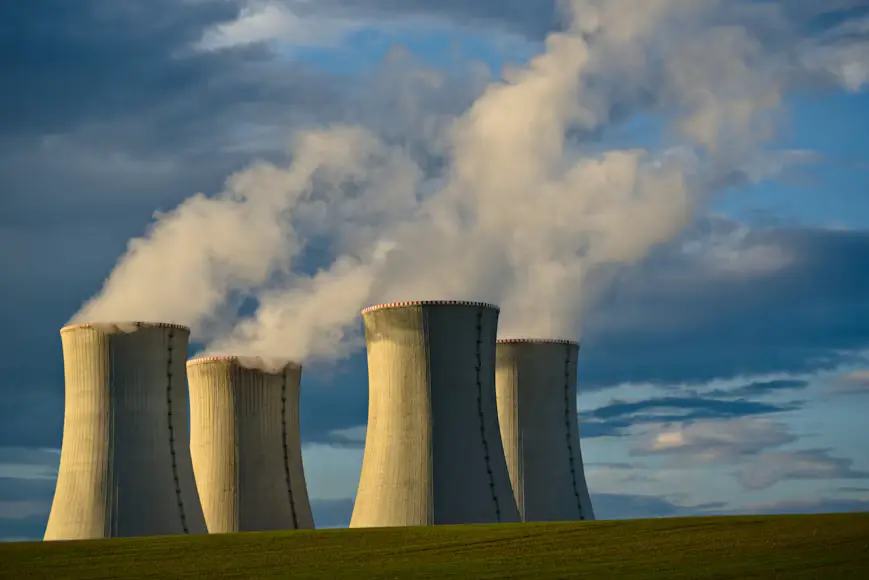
Steam rises from cooling towers of the Electricite
Steam rises from cooling towers of the ElectriciteSteam rises from cooling towers of the french Electricite
Key Insights

The issue is not France’s ability to build nuclear reactors, but whether its rivers can support them as climate change worsens.

With public debt hitting record levels, the fiscal space required for major infrastructure projects remains severely constrained.

From Environmental Pressure to Structural Constraints

France’s reliance on nuclear energy is facing a major environmental limit, narrowing the government’s room for manoeuvre. As climate disruptions grow, the challenge is no longer just about grid output, but about the state’s ability to guarantee long-term energy security.

This situation reveals the tension between France’s energy plans and its physical dependence on domestic river systems. This summer, severe droughts and rising water temperatures have forced Électricité de France (EDF) to repeatedly cut power generation to protect river ecosystems. By mid-October 2026, these environmental limits led to an unprecedented 13.05 TWh loss in nuclear output.

Fixing this problem requires major, long-term financial investments. However, while EDF wants to speed up its €8.7 billion ‘ADAPT’ programme to build cooling towers for the reactors, the country’s economic context offers very little flexibility. With public debt expected to hit a record 119.3% of GDP this year, the fiscal space needed for these infrastructure projects remains tightly constrained. The climate crisis did not cause France’s financial difficulties, but it complicates the structural reforms needed to stabilise the country.

Question of interference continues

Can the state successfully balance its carbon-neutral objectives with the shifting physical limits of its environment? If natural boundaries begin to dictate industrial and energy output, how can public institutions ensure long-term energy security without undermining fiscal targets?

Zineb El mounjali Zineb el mounjali holds a B.A in Economics and Global Markets and a Master’s degree in Finance and Digital Innovation. Her core research interests span migration studies, diplomacy, and global security. With a background in financial compliance, with an interest in analyzing shifts in power dynamics, and political instability, with a specific focus on how these factors reshape institutional stability and global security.

Cite this brief
mounjali, Z. E. (2026). The Hydrological Bottleneck: Can France Safeguard its Strategic Autonomy?. EPIS Insight · Security Policy & Defence.

EPIS PublicationsEvery Monday

New EPIS publications, in your inbox

One email a week with the new EPIS publications. You choose the topics on the next page.

FreeCancel at any timeYou confirm your address by email

© 2026 EPIS · Independent · Non-partisan · Funded by the EPIS FellowsLegal Notice · Privacy Policy · · RSS

Privacy preference centre

When you visit a website, it may store or read information in your browser, mostly in the form of cookies. Choose below which categories we may use. Your choice is kept for 12 months, and you can change it here at any time. Privacy Policy

Manage consent preferences

Always active