

Reading Argentina’s Racial Politics Through Postcolonial Theory
“Argentina has historically been one of, if not the most racist, countries in the world” (The Daily Beast, 2026).
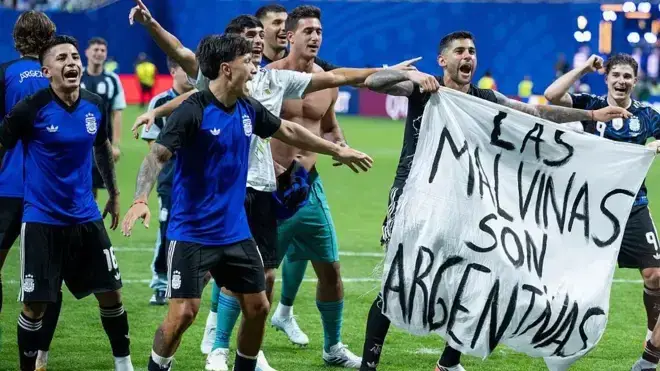
So declared actor Samuel L. Jackson on Instagram in July 2026, after Argentina’s World Cup final loss to Spain, urging Black fans not to support the national team. His comment joined a much larger chorus. During the tournament, Argentine players unfurled a banner reading “The Falklands are Argentine” after defeating England in the semifinal, defying an explicit FIFA ban that Milei’s own government had endorsed (International Viewpoint, 2026). Days later, streamer iShowSpeed was targeted by Argentina supporters during multiple matches, including one fan who told him in Spanish to “go cry to the zoo” and others who directed monkey gestures at him on a live broadcast (The Source, 2026). FIFA identified more than 89,000 abusive social media posts over the course of the tournament, roughly 11% involving racial abuse, and opened a formal investigation (Human Rights Research, 2026). Argentine society was, in the words of one commentator, reduced to “a caricature of a white, xenophobic and supremacist society” (International Viewpoint, 2026).
At the same time, and largely outside the international spotlight, the Argentine state has been dismantling the institutions built to address exactly the kind of discrimination the World Cup made visible. In August 2024, President Javier Milei’s government dissolved the National Institute Against Discrimination, Xenophobia and Racism (INADI) by presidential decree, transferring its resources to the Ministry of Justice (Buenos Aires Herald, 2024). Moreover, it has revoked the Indigenous Territorial Emergency Law and dissolved the National Registry of Indigenous Communities, stripping legal protections from Mapuche and other Indigenous communities in Patagonia (Genocide Watch, 2025).
Therefore, this briefing asks to what extent informal racism in Argentine public life and formal state retrenchment on anti-discrimination protections are connected phenomena, rather than separate ones. The argument is that they are not two separate stories but two registers of the same underlying logic: a coloniality of power inherited from the blanqueamiento project and the Conquista del Desierto, in which whiteness functions as the tacit criterion for full national belonging, whether that exclusion is enforced by a crowd or by a decree. To make this case, the briefing first sets out the postcolonial framework and its roots in Argentina’s racial history, then examines the social register of this exclusion, then its institutional register, before closing with a critical reading of what each reveals about the other.
Postcolonial Theory and the Myth of White Argentina
Postcolonial theory examines how patterns of power established under European colonialism persist after formal colonial rule ends, shaping who is treated as a full member of the nation and who is not. Central here is Aníbal Quijano’s concept of the “coloniality of power”: colonialism did not only impose military and economic control but constructed race itself as an organizing principle, sorting societies into hierarchies of modern and backward, European and non-European, that outlived independence and were absorbed into the institutions of the new states (Quijano, 2000). A second concept is “blanqueamiento”, or “whitening”: state policy explicitly designed to increase a country’s European-descended population, typically through immigration incentives, on the premise that whiteness itself signified progress. A third is the “empty land” framing, the colonial-era practice of designating territory as unoccupied to justify seizing it, regardless of the populations living there.
Nineteenth-century Argentine nation-building drew on all three. Political theorist Juan Bautista Alberdi argued that “to govern is to populate,” meaning specifically to populate with European immigrants who could displace what elites viewed as an inferior racial stock (Alberdi, 1852). Between 1878 and 1885, the state’s Conquista del Desierto military campaign killed or displaced thousands of Indigenous people across Patagonia and the Pampas under the explicit framing that this was “empty” or “desert” land awaiting settlement, erasing the Mapuche, Tehuelche and other indigenous communities who had lived there for generations. Afro-Argentines were written out of the national story more quietly, through disease mortality, wartime conscription and a deliberate narrative of racial mixing that reclassified mixed-race Argentines as white. So, a substantial colonial-era Black population became statistically invisible within a few generations (Al Jazeera, 2026).
The result was a national self-image, still widely held today, of Argentina as Latin America’s “white” country, a myth the current government’s institutional rollbacks actively reactivate rather than invent.
The Social Register: Racism as Everyday Practice
The postcolonial hierarchy sketched above did not stay confined to nineteenth-century policy; it settled into everyday cultural practice. Internal migrants from Argentina’s northern provinces, often of mixed Indigenous and mestizo descent, have long been derided with the slur “cabecita negra” (literally “little black head”). This is a term that maps regional origin onto racial hierarchy and marks the bearer as less than fully Argentine regardless of citizenship. Migrants from Bolivia and Paraguay face a similar dynamic: a University of Buenos Aires survey found that immigrants from other Latin American countries reported the highest rates of discrimination of any group in the country, ahead of discrimination based on intellect or sex (LGBTQ Nation, 2024).
Football culture has made this pattern globally visible. Argentine supporters have a documented history of directing monkey gestures at Brazilian players, a practice traceable to a 1920s newspaper cartoon depicting the Brazilian team as monkeys and still recurring today (The Mirror US, 2026). In 2024, Argentine players including Enzo Fernández were filmed singing a chant with racist and homophobic lyrics about French players, prompting a formal FIFA investigation (Malay Mail, 2024). The 2026 World Cup repeated the pattern on a larger scale, with the abuse directed at iShowSpeed and reports of Argentine supporters clashing with Egyptian and Cape Verdean fans (Al Jazeera, 2026).
What unites the accent-based mockery of internal migrants, the xenophobia directed at Bolivian and Paraguayan neighbors, and the racial abuse aimed at Black athletes and streamers is not any single grievance but a shared, unspoken test: does this person conform to the image of Argentina the nineteenth-century state constructed for itself. Those who do not, whether by accent, nationality, or skin color, are marked as outsiders to the nation regardless of their actual citizenship or residence. Sociologist Ivan Schuliaquer has cautioned against generalizing football-specific incidents to the whole of Argentine society and history (Al Jazeera, 2026), a fair methodological point. But the pattern’s consistency across contexts, decades, and targets suggests something more structural than isolated bad behavior: a socially reproduced hierarchy that long predates any individual chant.
The Institutional Register: The State Reasserts the Hierarchy
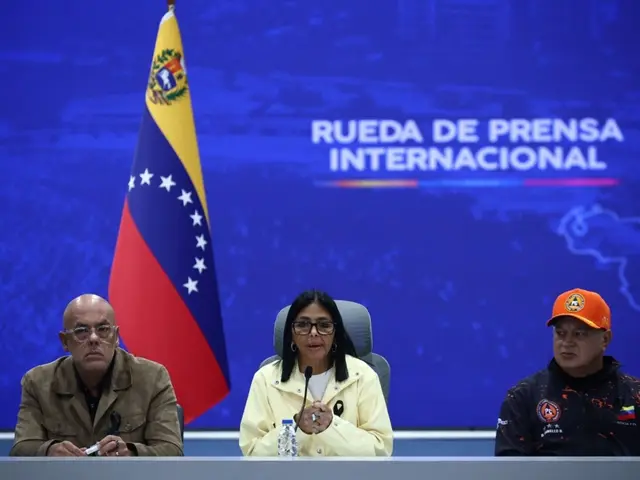
If the social register operates through crowds and casual speech, the institutional register operates through decree. In February 2024, presidential spokesperson Manuel Adorni announced the government’s intention to close INADI, describing it as an institute that “serves absolutely no purpose” (LGBTQ Nation, 2024). Created in 1995, INADI had fielded roughly 2,500 discrimination complaints a year, most concerning the workplace, disability, sexual orientation, and gender (France24, 2024). Milei himself had previously accused the institute of “ideological persecution” for enforcing standards around discriminatory language (France24, 2024). Congress could not be bypassed to eliminate INADI directly until the passage of the Ley Bases reform package gave Milei delegated powers to do so. InAugust 2024, he used that authority to dissolve INADI by Decree 696/2024, transferring its remaining resources to the Ministry of Justice (Buenos Aires Herald, 2024).
The rollback of Indigenous protections has followed a parallel path. The government revoked the Indigenous Territorial Emergency Law, which had recognized the pre-existence of Argentina’s Indigenous peoples and protected them from eviction from traditionally occupied land, closed the Community Strengthening Program that provided Indigenous communities legal advice, and dissolved the National Registry of Indigenous Communities that had determined Indigenous legal personhood (Genocide Watch, 2025). In Patagonia, this legal vacuum has coincided with intensified raids and evictions: the Lof Quemquemtrew community was evicted entirely in March 2025 amid contested mining and land interests, and Mapuche activist Moira Millán wrote that under Milei’s government, “racist, gendered, ageist, and other forms of hatred have become state policy” (Latin America Reports, 2025).
In both cases the government’s stated justification is ideologically neutral: fiscal discipline, state reduction, elimination of institutions that “serve no purpose.” But the effect is the selective withdrawal of legal protection specifically from the populations that nineteenth-century nation-building had already marked as obstacles to a whiter, more “productive” Argentina. The vehicle has changed from military campaign to budget line, but the target has not.
Conclusion: Two Registers, One Logic
Read separately, a viral clip of football fans abusing a streamer and a presidential decree dissolving an anti-discrimination institute look like unrelated stories, one cultural and transient, the other bureaucratic and durable. Read through a postcolonial lens, they are the same claim made in two registers. The crowd enforces, informally and without state sanction, exactly the boundary of belonging that the “Conquista del Desierto” and “blanqueamiento”·once enforced by rifle and immigration policy: whiteness, or proximity to it, as the tacit condition of full Argentine identity. The state, through INADI’s closure and the rollback of Indigenous land protections, has simply stopped building institutions to counteract that boundary and, in the Indigenous case, has actively cleared the legal ground for its economic exploitation.
This matters because international attention, exemplified by the Jackson quote that opened this briefing, tends to treat Argentine racism as a football scandal: episodic, embarrassing, addressed by an apology or a fine. That framing, however clickable, misses what a Mapuche activist wrote to her provincial governor: that the underlying hatred is not a lapse but a policy (Latin America Reports, 2025). A crowd chanting slurs at a streamer and a government dissolving an Indigenous communities registry are not equivalent acts, one is speech and the other is law, but they draw on the same nineteenth-century inheritance. Hence, treating them as unrelated allows each to obscure the other: the football scandal generates outrage that rarely reaches the institutional story, while the institutional story, less visually dramatic, rarely generates outrage at all. A genuinely postcolonial reading of contemporary Argentina has to hold both registers in view at once, because neither fully explains itself without the other.
References
Al Jazeera. (2026, July 21). Argentina deny World Cup villains’ role after Samuel Jackson-led slants. https://www.aljazeera.com/sports/2026/7/21/argentina-grapple-with-world-cup-villainy-amid-samuel-l-jackson-led-slant
Buenos Aires Herald. (2024, August 6). Milei dissolves institute fighting discrimination in first use of legislative powers. https://buenosairesherald.com/politics/milei-dissolves-institute-fighting-discrimination-in-first-use-of-legislative-powers
France24. (2024, February 22). Argentine government shuts anti-discrimination agency. https://www.france24.com/en/live-news/20240222-argentine-government-shuts-anti-discrimination-agency
Genocide Watch. (2025, June 15). In Milei’s Argentina, Indigenous rights are rolled back. https://www.genocidewatch.com/single-post/in-milei-s-argentina-indigenous-rights-are-rolled-back
Human Rights Research. (2026, July 13). Racism and discrimination raise human rights concerns at the 2026 FIFA World Cup. https://www.humanrightsresearch.org/post/racism-and-discrimination-raise-human-rights-concerns-at-the-2026-fifa-world-cup
International Viewpoint. (2026, August). How social media invented the ‘world’s most racist country’. https://internationalviewpoint.org/How-social-media-invented-the-world-s-most-racist-country
Latin America Reports. (2025, July 21). In Argentina, Indigenous Mapuche women face aggravated persecution under Milei’s rule. https://latinamericareports.com/in-argentina-indigenous-mapuche-women-face-aggravated-persecution-under-mileis-rule/11828/
LGBTQ Nation. (2024, August 11). Argentina shuts down anti-discrimination agency months after rightwing president elected. https://www.lgbtqnation.com/2024/08/argentina-shuts-down-anti-discrimination-agency-months-after-rightwing-president-elected/
Malay Mail. (2024, July 17). Chelsea’s Fofana labels chant about French footballers by club teammate Fernandez, Argentina squad, as “uninhibited racism”. https://www.malaymail.com/news/sports/2024/07/17/chelseas-fofana-labels-chant-about-french-footballers-by-club-teammate-fernandez-argentina-squad-as-uninhibited-racism/143977
Quijano, A. (2000). Coloniality of power, eurocentrism, and Latin America. Nepantla: Views from South, 1(3), 533–580.
The Daily Beast. (2026, July). Samuel L. Jackson calls out ‘racist’ country after World Cup final. https://www.thedailybeast.com/obsessed/samuel-l-jackson-calls-out-racist-country-after-world-cup-final/
The Mirror US. (2026, July). Samuel L Jackson slams ‘racist’ Argentina after World Cup final with telling post. https://www.themirror.com/entertainment/celebrity-news/samuel-l-jackson-argentina-final-1946025
The Source. (2026, July 18). Argentina’s World Cup run hit with racism allegations amid FIFA investigation. https://thesource.com/2026/07/17/argentinas-world-cup-run-hit-with-racism-allegations-amid-fifa-investigation/