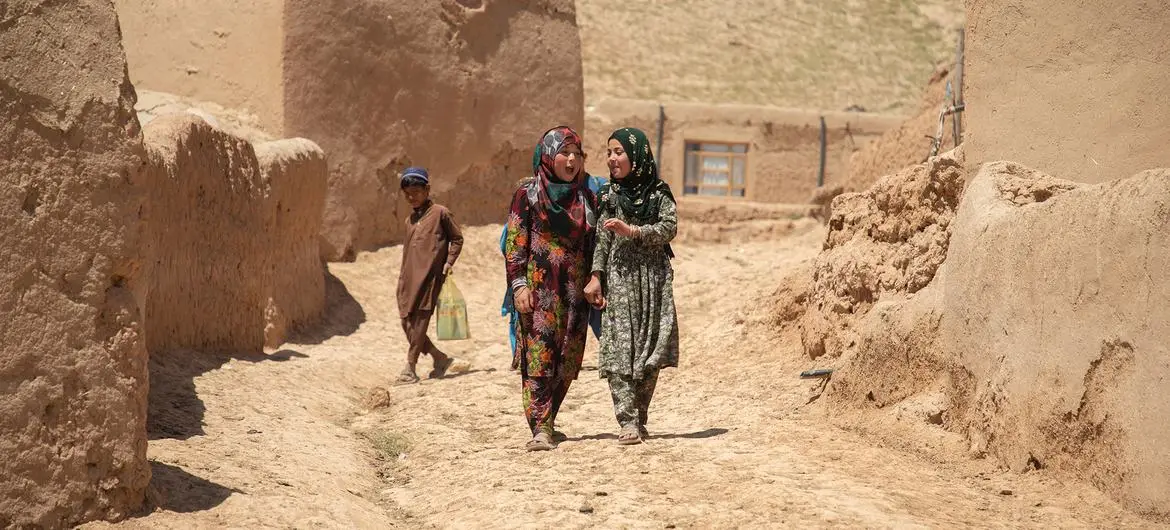
Afghanistan is a country that, due to its geographically strategic position, has been at the center of several political and social changes. In 2021, after twenty years of international forces being present in the country, the Taliban swiftly returned in control and reinstated a fundamentalist Islamic government. In such a framework, higher education has played a central role in the policies adopted by the second Taliban Rule, to the detriment of academic freedom in the country. The victims of violations of such a fundamental right are mostly women, subjects to systemic bans from education, and scholars of the higher education system.
1. Academic Freedom: history and definition
The origins of academic freedom are often debated as some scholars date the birth of the concept in the High Middle Ages, while others believe that the pivotal moment is to be associated with the Authentica Habita issued in 1158 by Emperor Frederick Barbarossa to give recognition and protection to scholars (Metzger, 1973). Subsequently, the way in which academic freedom was exercised differed from one university to another: the Parisian model was organized around the role of the professors, opposite was the situation in Bologna where the power was vested upon student universitas (Karran, 2009). Both these models flowed into the University of Berlin reforms of Wilhelm von Humboldt, who reformulated them as Lehrfreiheit (freedom to teach) and Lernfreiheit (freedom to learn), thus leading to the modern conception of academic freedom when combined with the freedom of science. Further developments, such as the Declaration of the Principles of Academic Freedom and Academic Tenure have broadened the notion as to encompass institutional autonomy and freedom of extramural utterance. While it is considered a well-founded concept, academic freedom is not usually protected by national and international instruments as itself. Instead, it rests upon the elements of which it is constituted and other connected rights.
As enshrined in CESCR General Comment No. 13, paragraph 38, (Article 13 ICESCR) the right to education can be properly enjoyed in presence of academic freedom. Additionally, the latter relies on Article 15(3) ICESCR, hence freedom of research and freedom of expression, provided by Article 19 of the ICCPR, to which Afghanistan has been a party since 1983, and recognized by the Universal Declration on Human Rights.
Afghanistan has historically been subject to several political changes which have brought about different approaches to academic freedom. Yet, in one way or another, the higher education system has always played a rather relevant role. This can be observed in the Constitution of Universities of Afghanistan (1968) which recognizes higher education as a tool to promote national development in Article 1(2). The focus increased after 2001 while Afghanistan was subject to international oversight: higher education started to be seen as instrumental for the reconstruction of the nation, hence the drafting of the National Higher Education Strategic Plan I (NHESP I) (Couch, 2018) followed by the Afghan National Development Strategy and NHESP II.
A more direct protection of academic freedom in Afghanistan was enshrined in Articles 43 to 47 of the 2004 Constitution, despite the protection being limited due to the heavy centralization since curricula are decided by the state on the basis of the Islamic rule. Yet, further protections could be found such as the freedom from state interference in relation to expression (Article 34 Constitution of Afghanistan), resembling Article 19 of the ICCPR. Of note is that the Taliban suspended this constitutional framework when they came to power.
While formally Afghanistan recognizes a right to the constitutive elements of academic freedom, ever since the return of the Taliban Rule, the violations thereto have significantly increased leading to the attribution of a score of 0.08 in the Report by Scholars At Risk (2025). These violations have mostly concerned the favoring of Islamic values and Taliban agenda to the detriment of institutional autonomy, academic expression and cultural freedom. (Rezai, 2022)
2. Gender-based violations in Afghanistan
Women have been amongst those most affected by the recurring violations. In December 2022, the de facto government issued a ban from higher education and in 2023 the number of female university students reached zero. Additionally, women were prevented from continuing teaching and precluded any position of leadership (UNICEF and UNESCO, 2025). Prior to the ban women could attend classes in segregated universities and they were already subject to several limitations concerning the dress code, their movement on campus or the choice of curriculum (Orfan & Shams, 2025). In the last years, as the Taliban Rule became entrenched, these violations have increased.
While initially women were given the possibility to continue their medical studies, in 2024 the ban was extended and they could no longer access medical education. This not only infringes upon the right to academic freedom, it also constitutes a danger for the health of female Afghans, whose access to treatment by male doctors is severely restricted by Taliban policies and gender-segregation requirements. Additionally the lack of midwives has resulted in high maternal and infant mortality rates (Efe, 2025).
A statement of the Director General of UNESCO in 2025 highlighted that Afghanistan is the only state in the world where both secondary and higher education are prohibited for female students (Afghanistan: Four Years on, 2.2 Million Girls Still Banned From School, 2025). As of 2026, the number of female students barred from going beyond primary school has now reached 2.4 million violating their fundamental right to learn (Bidell, 2025). Furthermore, women are being erased from journalism as well, thus violating their freedom of expression protected by the Constitution and the ICCPR. Thus, the orders and policies issued by the Taliban Regime constitute a violation of international obligations included in several treaties to which Afghanistan is partyL: the ICCPR, the ICESCR, CEDAW, CRC and the UNESCO Convention. As a matter of fact, while the Taliban do not enjoy an universal de jure recogniction, on the basis of the doctrine of state continuity the State of Afghanistan remains bound to its international commitments. (Mälksoo, 2022).
3. Afghan Scholars
The increase of academic freedom violation is, as explained, linked to the Taliban takeover. As a feasible solution, many scholars have decided to flee the country, resulting in a so-called brain drain in the Afghan Universities (Momand & Saeed, 2025).
However, some scholars have decided to attempt to continue their academic activity and to fight from within the limitations of their academic freedom.
In a report presented before the 46th Session of the United Nations Human Rights Council, Scholars At Risk have highlighted that between January 2019 and October 2023, there have been fifty-three instances of attacks on higher education and violation of academic freedom. Firstly, nineteen violent attacks infringe upon the right to life and campus safety, freedom of expression and the right to protest. Several victims had spoken against the rules of the Taliban Regime such as the banning of women from higher education and were thus punished.
Secondly, in three instances scholars and staff members lost their position because of their failure to align their activity with the values of the Regime.
Thirdly, ten academics were imprisoned, often violating further fundamental rights such as that of due process and fair trial. This is emblematic, as it allows us to understand how academic freedom violations often lead to the violation of other rights (Scholar at Risk, 2023) enshrined in international instruments and national rules.
Fourthly, eight were violations concerning gender-based violations of academic freedom.
An example of the way in which scholars are treated may be that of Professor Fazullah Jalal of Kabul University, who was arrested January 8th 2022 following his intervention in a national TV Program, where he openly criticized the Regime. The arrest was allegedly carried out unlawfully, failing to provide information to the family of the accused and reasoning for the arrest itself. Yet, the biggest implications still concern academic freedom and more specifically freedom of expression. Government spokesman Zabihullah Mujahid, underlined that Jalal’s televised statement had aimed at instigating people against the government which could have a higher impact given the capacity of lecturer. (Aljazeera, 2022). Hence, the reason why his freedom of expression was violated to begin with concerned the role of Jalal in the society as professor and thus concerned extramural utterance.
In the current regime ruling over Afghanistan, academic freedom, which is recognized and protected both nationally and internationally through several fundamental rights, is recurrently violated. This attitude has been employed by the Taliban in the attempt to control the curricula and impose traditional values within the higher education system either by denying access to women, to refine their weaker position in society, or by dictating what scholars say as instrument to strengthen the foundations of the regime itself.
References
Al Jazeera. (2022, January 11). Taliban releases prominent Afghan professor from custody: Family. https://www.aljazeera.com/news/2022/1/11/taliban-releases-afghan-professor-faizullah-jalal
Bidell, S. H. (2025, September 17). Afghanistan: Ban on secondary education for girls marks four long years. UN News. https://news.un.org/en/interview/2025/09/1165865
Couch, D., (2018). The policy reassembly of Afghanistan’s higher education system. Globalisation, Societies and Education. https://www.researchgate.net/publication/327943115_The_policy_reassembly_of_Afghanistan’s_higher_education_system
Efe, A. (2025, January 3). Afghan women in the lurch following Taliban’s ban on nursing, midwifery courses. EFE Noticias. https://efe.com/en/other-news/2025-01-02/afghan-women-in-the-lurch-following-talibans-ban-on-nursing-midwifery-courses/
Islamic Republic of Afghanistan. (2004). Constitution of Afghanistan.
Karran, T. (2009). Academic freedom: in justification of a universal ideal. Studies in Higher Education, 34(3), 263–283. https://doi.org/10.1080/03075070802597036
Mälksoo, L. (2021). Controversial claims for restoration of legal rights in the Baltic case. In Illegal annexation and state continuity (pp. 174–217). Brill Nijhoff. https://doi.org/10.1163/9789004464896_007
Metzger, W. (1973). Academic tenure in America: A historical essay. In W. R. Keast & J. W. Macy (Eds.), Faculty tenure: A report and recommendations (pp. 93–159). Jossey-Bass.
Momand, A., & Saeed, A. (2025). Brain Drain in Afghanistan’s Public Universities: Examining the Experiences of Migrated Faculty Members. Social Science Review Archives, 3(4), 1211–1220. https://doi.org/10.70670/sra.v3i4.1215
Orfan, S. N., & Shams, A. W. (2025, May 06). “Why I was born a woman”: Female students’ challenges in Afghanistan higher education under the Taliban rule. Higher Education. https://doi.org/10.1007/s10734-025-01454-8
Rezai, H. (2022, November 24). The Taliban Rule and the Radicalisation of Education in Afghanistan. GC Human Rights Preparedness, https://gchumanrights.org/preparedness/article-on/the-taliban-rule-and-the-radicalisation-of-education-in-afghanistan.html
Scholars at Risk. (2022, January 8). Kabul University. (https://www.scholarsatrisk.org/report/2022-01-08-kabul-university/
Scholars At Risk (2023). Submission to the Fourth Cycle of the Universal Periodic Review of Afghanistan , 46th Session of the United Nations Human Rights Council /api/wp-media/2023/10/Scholars-at-Risk-UPR-Submission-for-Afghanistan.pdf
Scholars at Risk (2025, February 18). Academic freedom and its protection under international law https://www.scholarsatrisk.org/resources/academic-freedom-and-its-protection-under-international-law/
UNESCO. (2025, October 12) Afghanistan’s Education System Facing Deepening Crisis for Both Girls and Boys, Warn UNICEF and UNESCO. https://www.unesco.org/en/articles/afghanistans-education-system-facing-deepening-crisis-both-girls-and-boys-warn-unicef-and-unesco
UNESCO. (2025). Afghanistan: Four years on, 2.2 million girls still banned from school. https://www.unesco.org/en/articles/afghanistan-four-years-22-million-girls-still-banned-school
UNESCO. (2025, April 3) Banned from education: A review of the right to education in Afghanistan. https://www.unesco.org/en/articles/banned-education-review-right-education-afghanistan
United Nations General Assembly. (1948). Universal declaration of human rights (Resolution 217 A (III)). https://www.un.org/en/about-us/universal-declaration-of-human-rights
United Nations. (1966).International Covenant on Civil and Political Rights. https://www.ohchr.org/en/instruments-mechanisms/instruments/international-covenant-civil-and-political-rights
United Nations. (1966). International Covenant on Economic, Social and Cultural Rights. https://www.ohchr.org/en/instruments-mechanisms/instruments/international-covenant-economic-social-and-cultural-rights
United Nations. (1979). Convention on the Elimination of All Forms of Discrimination Against Women. https://www.ohchr.org/en/instruments-mechanisms/instruments/convention-elimination-all-forms-discrimination-against-women
United Nations. (1989) Convention on the Rights of the Child. https://www.ohchr.org/en/instruments-mechanisms/instruments/convention-rights-child
United Nations Human Rights Council. (2023). Situation of human rights in Afghanistan and technical assistance achievements: Report of the Special Rapporteur (A/HRC/52/84). https://docs.un.org/en/a/hrc/52/84