

Ankara demands a world of international criminal accountability. It might consider joining the court that supplies it.
Türkiye has a curious relationship with the International Criminal Court. It calls for international crimes to be punished, styles itself a defender of international law, and reminds its neighbours of both. There is only one complication. It has never joined.
The contradiction has become difficult to ignore over Gaza, where Ankara has invoked the Court’s authority while remaining outside the institution.
Perhaps it is time.
The Court is not enjoying an easy adolescence. It stands accused of being ineffective, selective, and politicised all before breakfast. The attacks have become more concrete. The United States has sanctioned its officials and launched a campaign to “systematically disable” its ability to operate. Even so, 125 states remain parties to the Rome Statute, and Hungary, which moved to quit in 2025, thought better of it before its exit took effect. Türkiye stays outside, looking in.
Twenty years ago, staying outside the Court could still pass for neutrality. Today, it means standing near the demolition crew.
Geography has changed the arithmetic
Türkiye’s neighbourhood is not suffering from a surplus of peace. Ukraine, Syria, Iraq, Iran, the Caucasus and the Israeli-Palestinian conflict have all pushed international criminal law from the seminar room into working foreign policy.
A country that wants to be a hinge between East and West gains little from watching the Court from the pavement. Membership brings a vote in the Assembly of States Parties, where judges and the Prosecutor are elected and the budget is fixed. Ankara has reasons to criticise the ICC. It would have more influence over it from inside.
Joining is not outsourcing Turkish justice
The strongest objection is sovereignty. Would membership expose Turkish soldiers, officials or leaders to politically motivated trials in The Hague?
It would create exposure, of course; anyone who says otherwise is selling you the Bosphorus Bridge. But Article 17 of the Statute gives national courts the primary role. The ICC becomes relevant when a state is unwilling or unable genuinely to investigate or prosecute. A Turkish investigation conducted genuinely does not get displaced by prosecutors in The Hague.
The concern is cross-border operations in Syria and Iraq. Here the political situation has changed. The PKK has declared an end to its armed struggle, and in August Parliament enacted a framework for its disarmament and reintegration. The crime of aggression also has the Statute’s most restrictive jurisdictional regime, including special limits and an opt-out for States Parties. Accession is not retroactive either. Signing the Statute tomorrow would not reopen past Turkish operations for prosecution.
Staying outside is not a shield
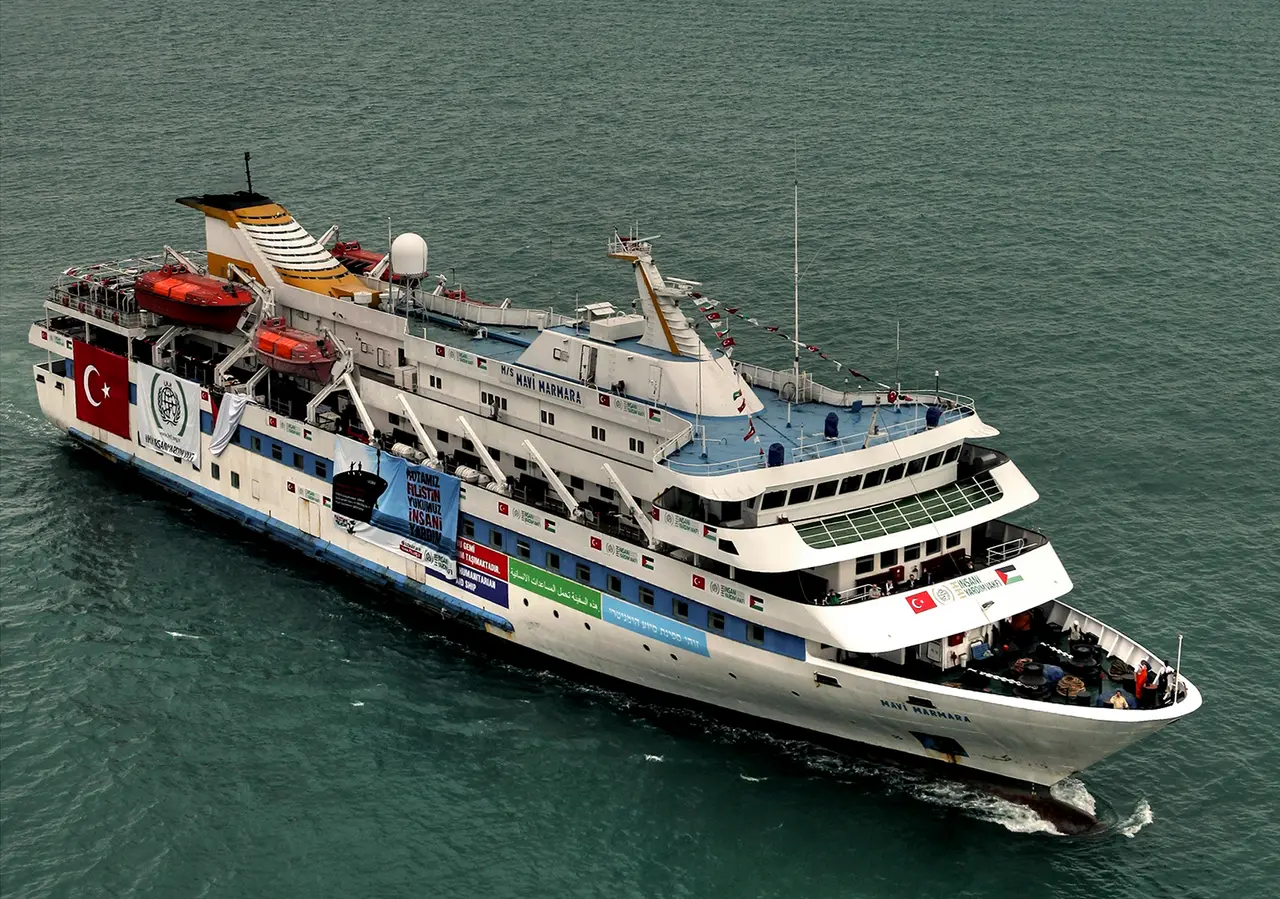
Türkiye has discovered that the Rome Statute does not come with an invisibility setting for non-members. After the 2010 Mavi Marmara raid, Comoros, where the vessel was registered, referred the situation to the ICC. The Prosecutor found a reasonable basis to believe war crimes had been committed aboard the ship, but declined to open an investigation because the potential cases were not sufficiently grave. Years of litigation followed.
Cyprus raises a similar point. The Republic of Cyprus has been a State Party since 2002, which means the Court’s territorial jurisdiction could in principle and without prejudice, extend to Rome Statute crimes committed in the north, including crimes committed by nationals of a non-party state. Yet no situation concerning Cyprus has been opened. The “effective control” case law holding Ankara responsible for the north comes instead from the European Court of Human Rights, particularly Loizidou and Cyprus v. Turkey.
Türkiye’s absence from the ICC does not alter Cyprus’s membership. And 1974 is not waiting in a drawer in The Hague. The Court cannot exercise jurisdiction over conduct predating 2002, while accession itself operates prospectively. Staying outside therefore offers less protection than the debate in Ankara sometimes assumes.
Washington wants it gone
Washington has sanctioned ICC officials and, in July, launched a campaign to “systematically disable” the Court’s ability to operate. Five states have now formally notified withdrawals: Burkina Faso, Mali, Niger, Venezuela and Chad.
The list is worth noticing. Mali is under ICC investigation. Venezuela is the subject of one too. Burkina Faso and Niger are governed by military regimes, while Chad said Washington had pressed it to reconsider its membership.
Türkiye has managed serious disagreements with Washington over Israel without wrecking the relationship. In 2024 it intervened at the International Court of Justice in South Africa’s genocide case against Israel. It later joined Trump’s Board of Peace while continuing to criticise Israel sharply. Netanyahu complained to Trump about Erdoğan, yet Trump continued praising the Turkish president and moved towards lifting sanctions on Ankara.
An ICC dispute with Washington would be uncomfortable. It would hardly be the first disagreement the relationship has had to absorb.
Which side is Türkiye on?
The argument over the ICC is no longer only about whether the Court works well. Plenty of governments have legitimate criticisms of its record. The more immediate question is whether there will still be an institution left to reform after governments hostile to its jurisdiction have finished with it.
Türkiye has placed itself on the side of international accountability over Gaza. In November 2024 Erdoğan publicly backed the ICC arrest warrants for Benjamin Netanyahu and Yoav Gallant, saying their implementation mattered for confidence in the international system.
That leaves Ankara in an awkward position. You cannot demand a world of accountability and exempt yourself from the body that supplies it. Rules bind their author as well as their targets, or they bind no one.
Membership would bring scrutiny and political headaches. There could be decisions Ankara disliked. But an international court that binds only governments comfortable with being bound is not much of an international court.
For years, Türkiye has asked what it might lose by joining the ICC. Given what is happening to the Court now, it should also ask what it loses by remaining outside.