


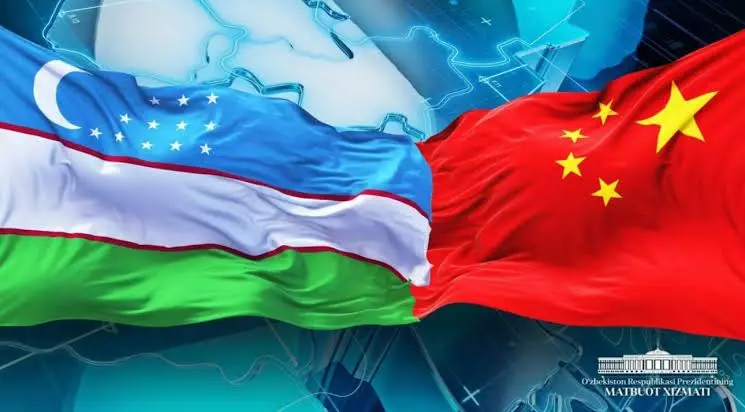

On August 28, Uzbekistan displayed the first J-10CE fighter jets acquired from China, indicating the modernisation attempts under President Shavkat Mirziyoyev. The turn to Beijing marks an important precedent, as Tashkent aims to reduce its dependence on Soviet/Russian military hardware and remain able to navigate regional uncertainties.
The acquisition comes as the Central Asian nation strives to improve its military capacities due to the challenges stemming from the wars in Ukraine and the Middle East. According to data from GlobalFirePower, Uzbekistan has the largest armed forces in the region, being slightly ahead of Kazakhstan. It has active personnel of 120,000 and an additional 20,000 enrolled in paramilitary formations. However, other sources dispute the numbers and mention there are only 48,000 troops, while domestic media emphasise the existence of a National Guard, a paramilitary formation exceeding 30,000 personnel. While the ground forces and air defences consist mainly of Soviet equipment such as T-62 tanks, BTR-80 APCs and BM-21 MLRS, recent procurements underline a shift towards diversification, with Tashkent purchasing Turkish Ejder Yalcin MRAPs, Chinese FM-90 and KS-1C missile systems. Its domestic production is also improving: Arslon APCs and Aksum armoured vehicles entered service after 2024.
A principal component of deterrence is the country’s air force, which numbers 15,000 troops and 202 aircraft. A recent assessment mentioned 38 MiG-29s, 25 Su-27s and 13 Su-25 combat aircraft, along with 101 helicopters, 13 transport and 6 training planes. Acquisition of UAVs has become another priority, with Tashkent buying Chinese Wing Loong and Turkish Bayraktar TB2 drones in 2023. The purchase of J-10CE jets is important for two primary reasons: Beijing establishes its position as a military supplier of Central Asian states, a region dominated by Moscow, and Chinese jets have proven their operational capabilities in the brief war between Pakistan and India in 2025, being able to defend border areas against New Delhi’s Rafale and MiG-29 aircraft.
The ongoing modernisation programme in the military aligns with Uzbekistan’s broader foreign policy ambitions. With the death of long-time ruler Islam Karimov in 2016, Tashkent was left with his policy of ‘defensive self-reliance’: remaining distanced from aligning with a great power and isolated from regional integration initiatives. President Mirziyoyev has reversed this position and sought to diversify the country’s orientation by forging relations with neighbouring Kazakhstan, maintaining the special partnership with Russia and resolving border disputes with Kyrgyzstan and Tajikistan. New priorities in foreign policy include upholding multilateralism, attracting foreign investments and joining international organisations to participate in peacebuilding and mediation efforts.
Increased cooperation with China is another important development in recent years. Beijing gradually became the largest trading partner of Tashkent, following the signing of a bilateral strategic partnership in 2012 and additional agreements in 2013 and 2017. Trade focusses on consumer goods and raw materials, with China exporting automobiles, machinery and home appliances and Uzbekistan exporting petroleum gas, copper and cotton. However, Russia’s war in Ukraine and Moscow’s prioritisation of military production for use by its domestic armed forces has forced Tashkent to turn to Beijing for defence procurements. The last deal with the Kremlin was signed in 2018 for the acquisition of Mi-35M helicopters, while other Central Asian states such as Kyrgyzstan and Tajikistan have turned to Belarus, Iran and Turkey for new deals. Furthermore, Uzbekistan’s moves have not gone unnoticed by Kazakhstan, which looks for increased security guarantees following the decline of Moscow’s arms sales.
In conclusion, Uzbekistan’s purchase of Chinese J-10CE fighter jets aligns with its broader foreign policy orientations. In a region located between several conflicts, Tashkent aims to find new security guarantees by reducing dependencies on a particular actor and its attempts are consistent with regional security initiatives.