

Climate Policy & Environment
Environmental diplomacy, climate finance, energy transition policy, and the geopolitics of resource scarcity.

Projectifying the CAP: Performance-Based Environmental Governance
This paper examines the CAP’s New Delivery Model through the lens of projectification, highlighting how performance-based governance and decentralised flexibility may constrain long-term environmental transformation.
Turning EU Priorities Into Regional Action
The 2026 Macro-regional and Sea Basin Strategies Days highlighted how EU cooperation frameworks can strengthen territorial collaboration, resilience, and the implementation of shared EU priorities across regions.
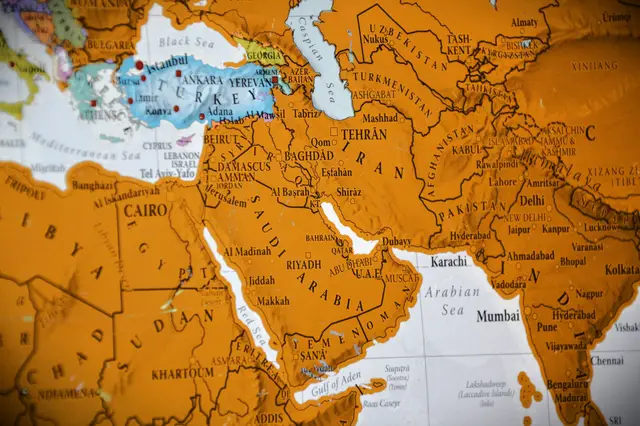
The South Caucasus: Europe’s Energy Security amid Middle East Crisis
Amid a severe global energy crisis triggered by the closure of the Strait of Hormuz, the South Caucasus has emerged as a vital non-Russian, non-Gulf energy corridor for Europe. This brief examines how Azerbaijan, Georgia, and Armenia are driving regional connectivity, natural gas expansion, and g…

The COVID ‘Anthropause’ and Planetary Health: Lessons for the Future
the COVID-19 ‘anthropause’ provides valuable research on how economic activity is still coupled with Green House Gases (GHGs). The anthropause provides insights as to what happens to the environment when economic activity suddenly comes to a halt, which teaches us how, going forward, environment…
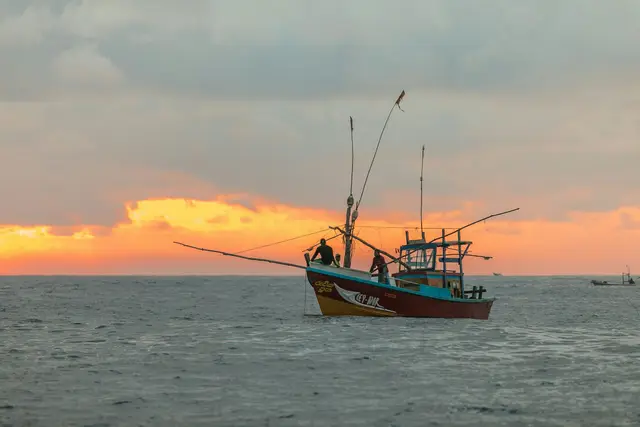
Fish Wars: Climate and Fisheries Conflict in the South China Sea
Warming oceans and declining fish stocks are intensifying competition in the South China Sea. As climate change collides with territorial disputes and illegal fishing, fisheries are becoming an increasingly important source of maritime tension.
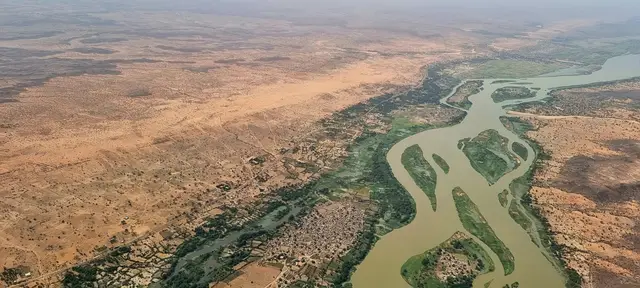
Climate Change as a Threat Multiplier in the Sahel
Does the EU’s Sahel strategy tackle root causes, or does its conditionality-based governance model overlook how climate stress and weak legitimacy mutually reinforce conflict, as shown by the withdrawal of the Alliance of Sahel States from the Economic Community of West African States?
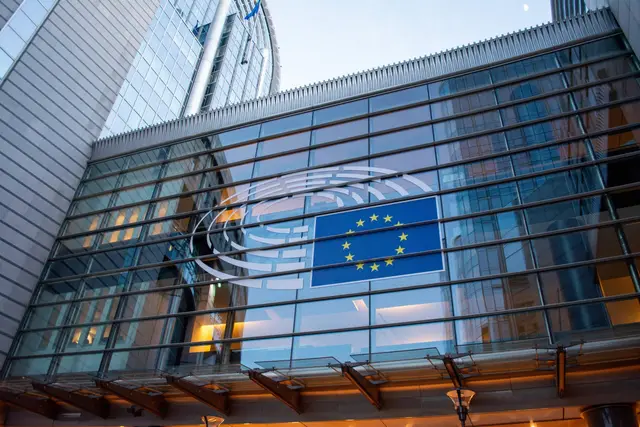
Drifting Apart: The EU Green Deal in the Age of Rearmament
The European Green Deal, once the EU’s flagship climate initiative, now faces gradual erosion. Surging defense spending via ReArm Europe is redirecting funds, delaying targets, and diluting climate priorities amid new security demands.

Pastures Under Pressure
Drawing on Ostrom’s theory, this paper argues that participatory, commons-based governance in Kyrgyzstan enables pastoral communities to manage shared pastures sustainably, driving climate adaptation and preventing climate-induced conflict.

Smart grids, same dumb trust?
The strategic importance of energy is clear – power is required for critical sectors such as transportation, manufacturing, agriculture, and healthcare. Even a temporary failure in the energy system can have devastating outcomes. Take the Texas power crisis as an example: infrastructure lacked wi…

Resilient Roots: EU Tech Grants for Farmers
How can the EU accelerate climate tool adoption for smallholders in Africa and SE Asia without increasing financial risk? Loan-based models create debt burdens during crop failures; thus, a grant-based instrument within the NDICI-Global Europe framework is essential to fund both technology and lo…

Western Balkans: EU, Environment & Accession
The Western Balkan EU accession candidates (Albania, North Macedonia, Montenegro, Serbia, Bosnia and Herzegovina) together with Kosovo, as a potential candidate, face significant challenges in meeting the EU’s environmental and climate requirements. Compared with previous enlargement rounds (see …

Hydro-Hegemony: Türkiye’s Leverage over Syria Iraq
How does Türkiye’s Southeastern Anatolia Project (GAP) transform upstream water control into geoeconomic leverage over Syria and Iraq? This article argues that expanded hydropower and irrigation infrastructure convert hydrological dominance into domestic economic gains, producing asymmetric inter…

DRC: Rich land, hungry people.
Food insecurity in Eastern DRC is structurally driven by conflict, displacement, and livelihood collapse, not scarce land. Climate change, hazardous pesticides, gender barriers, and neglected crop species compound the crisis. Humanitarian aid often reinforces dependency rather than building resil…
European Integration and EU External Action
Main question: How does legal fragmentation across EU external action frameworks—security, human rights, economic policy, and digital governance—affect its capacity to act as a unified global actor? Argument: Structural fragmentation and intergovernmental dominance create legal uncertainty, weake…

Fuel Crisis: Car dependence & Environmental Impact
Argument: How Australia’s car-dependent urban policy model and heavy reliance on imports for fuel expose Australian cities and the national economy to significant risks from global disruptions. This dependence is highlighted by the supply shocks in the Strait of Hormuz, significantly disrupting g…

Accountability Gaps in Indonesia’s Palm Oil
How do governance failures and land conflicts in Indonesia’s palm oil sector contribute to broader climate security risks? Weak legal frameworks and export-driven growth enable corporate control and elite rent-seeking. As a result, land conflicts, labour exploitation, and environmental degradatio…

Justice Beyond the Courtroom in Africa
In what ways does transnational litigation function as both a challenge to and a reproduction of corporate impunity in the strategies of environmental justice movements in Africa? African movements use courts to hold transnational corporations accountable, but legal action can both contest and re…

Critical political ecology (CPE)
– The concept of critical political ecology highlights the link between the moral and practical concerns of the environmental movement and contemporary theories about the state, democracy, and justice. – Liberal democratic states are constrained in their ability to implement their green transitio…

Policy Incompatibility in the European Union
Do the monetary costs expected to be saved by businesses through simplification initiatives outweigh the possibly detrimental costs for environmental regulation? The shifting of the Commission’s priorities is reflected in the policy overlap of the omnibus package on sustainability and the compreh…

Bolivia’s Environmental Policy Since Evo Morales
Is it possible for Bolivia to promote an environmental-forward political agenda while reproducing the structures of a neoliberal-capitalisit world system? Bolivia’s reliance on neo-extractivism to fund social programs reproduced dependency, highlighting contradictions between indigenous worldview…