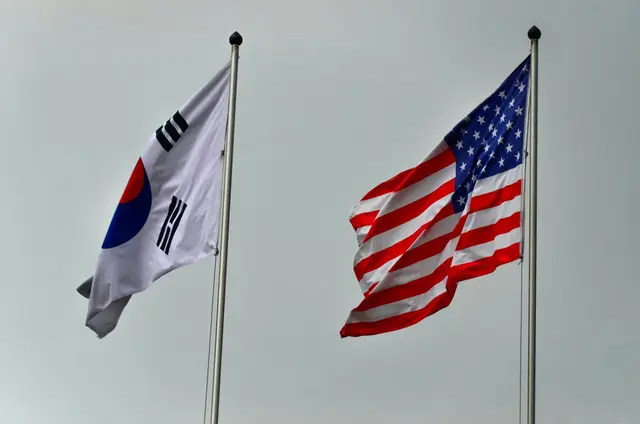




On 5 June 2026, South Korea and Serbia concluded negotiations on a Comprehensive Economic Partnership Agreement (CEPA) in Belgrade. It is Korea’s first trade agreement with a Balkan state. The agreement would eliminate tariffs on 90.2% of product lines, covering 96% of import value. That includes duties of up to 25% on semiconductors and immediate duty-free access for auto parts. Since Serbia is not a member of the World Trade Organization, and thus not a party to WTO’s Information Technology Agreement, it remains free to levy such duties, giving Korean semiconductors a better price competitiveness in the Serbian market. For Korean manufacturers already invested in Serbia, and for those considering it to be a low-cost gateway to European markets, the deal promises some meaningful gains.
However, the CEPA sits on a legal foundation that Serbia itself intends to give up. Serbia has been an EU candidate since 2012. Under Article 3(1)(e) of the Treaty on the Functioning of the European Union (TFEU), the common commercial policy is an exclusive competence of the Union, which leaves new members of the Union no room to maintain their own tariff arrangements with third countries. Article 351 TFEU also requires member states to eliminate incompatibilities between their EU obligations and their prior agreements concluded with third countries before accession. Upon accession, Serbia would therefore have to withdraw from the CEPA, and the Korea-EU Free Trade Agreement, provisionally applied since July 2011 and fully in force since December 2015, would start governing the trade between Korea and Serbia instead.
Serbia’s accession is not imminent. In July 2026, eight member states blocked the opening of a further negotiating cluster, citing rule-of-law concerns and Serbia’s non-alignment with the EU’s sanctions on Russia. But the delay here is the opportunity. The CEPA has yet to be signed, and the text is still under legal review. This brief argues that Korea should use that window to add an accession clause, providing for a transitioning period, protection of existing investments, and an orderly switch to the Korea-EU FTA framework, before the agreement gets finalised.
Why the Bilateral CEPA Cannot Survive Serbia’s Accession
This does not mean the CEPA would cease to exist the moment Serbia joins the European Union. Article 351 TFEU provides that the rights and obligations arising from agreements concluded by acceding states with third countries before accession “shall not be affected by the provisions of the Treaties”. The same article, however, imposes a strict duty. To the extent such agreements are not compatible with the Treaties, the member state concerned “shall take all appropriate steps to eliminate the incompatibilities established”. The Court of Justice of the European Union (CJEU) has read this duty stringently. In 2009, it ruled that Austria and Sweden had breached this duty, then contained in Article 307 of the EC Treaty, by failing to adjust their pre-accession investment treaties with third countries, even though the specific EU measures with which those treaties might conflict had not yet been formally adopted.
Nor can general public international law resolve the question. One might assume that the 1978 Vienna Convention on Succession of States in respect of Treaties deals with what happens to Serbia’s bilateral agreements upon joining a supranational bloc. However, it does not. The Convention defines a succession of states strictly as “the replacement of one State by another in the responsibility for the international relations of territory,” as occurred during the dissolution of Yugoslavia. EU accession, by contrast, involves no such replacement of statehood. Serbia would remain a sovereign state with its own international legal personality, transferring specific sovereign competences—most notably over trade policy—to the Union by treaty. The fate of the CEPA is therefore exclusively a matter of EU law and the specific terms of Serbia’s accession treaty, rather than the general international law of state succession.
In practice, those accession terms are straightforward and non-negotiable from Brussels’ perspective. Croatia’s Act of Accession provided explicitly that “Croatia shall withdraw from any free trade agreements with third countries, including the Central European Free Trade Agreement as amended”. Serbia’s eventual accession instrument can be expected to contain a virtually identical clause. The CEPA’s lifespan is therefore inevitably tied to Serbia’s accession date. How it ends, however, is not fixed by EU law, and that is precisely where Korean negotiators still have vital room to act.
What Serbia Has Already Committed To in Brussels
Serbia does not need to be persuaded that its bilateral trade agreements will end upon joining the EU. It has already officially acknowledged and accepted this reality. During the screening process of its EU accession negotiations on external relations (Chapter 30), Serbia explicitly stated that it “would denounce its free trade agreements upon accession to the EU.” The European Commission’s evaluation conclusion was even blunter: “Serbia needs to denounce all its free trade agreements on the last day before accession”. The same Commission report treated bilateral investment treaties (BITs) differently. They are not to be summarily dismissed, but rather brought into strict conformity with EU law by the formal date of accession.
These two distinct commitments matter for the Korea-Serbia economic relationship in fundamentally different ways. The first commitment means that the CEPA agreement Korea is about to sign has a known, definitive end point one set not by Korea nor Serbia, but dictated by the political timeframe of Serbia’s EU integration. Conversely, the second commitment introduces a nuanced legal process for the 2023 Bilateral Investment Treaty. Rather than terminating automatically, the BIT will undergo a comprehensive regulatory review by the European Commission under Regulation (EU) No 1219/2012. This requires Seoul and Belgrade to systematically identify and amend potential incompatibilities—such as unrestricted capital transfer provisions or broad investor-state dispute settlement mechanisms—ensuring the investment framework survives accession without leaving Korean investors exposed to sudden legal voids or forced renegotiations during Serbia’s regulatory transition.Lessons from Croatia’s Case: Disruption, Adaptation, and Regulatory Shifts.
Croatia’s accession to the EU on 1 July 2013 shows what this transition looks like in practice. The operational impact on its trade with non-EU neighbors was immediate and real, though it ultimately proved temporary. Following accession and the simultaneous withdrawal from CEPA-like arrangements, Croatia’s exports to Bosnia and Herzegovina fell by 4.5%, while its exports to Serbia dropped by 8.8%. By 2014, exports to Bosnia and Herzegovina had returned to their pre-accession baseline, and exports to Serbia rebounded to 22% above pre-accession levels. The short-term transition costs were heavily concentrated in sensitive sectors such as agriculture and processed food, where the sudden imposition of EU external border tariffs and stringent sanitary and phytosanitary (SPS) checks led neighboring former Yugoslav governments to threaten retaliatory trade countermeasures. The transition was manageable primarily because it was anticipated years in advance, with its exact legal parameters codified in Croatia’s Act of Accession.
The EU also adapted its own existing preferential trade agreements with third countries to cover the territory of its new member state, a procedure described as standard administrative practice following every enlargement round. The operational timing, however, varied considerably across different partner countries. The adaptation protocol extending the EU’s Stabilization and Association Agreement (SAA) with Bosnia and Herzegovina was not signed until December 2016 and applied only from February 2017—more than three and a half years after Croatia had formally joined the Union.
Korea’s own experience with Croatia’s accession was far smoother. An additional protocol extending the EU-Korea FTA to Croatia was applied provisionally from 1 July 2013, the very day of Croatia’s accession. However, that transition was seamless for a structural reason that will not hold true for Serbia: Korea had no existing bilateral free trade agreement with Croatia to unwind. Serbia’s accession will be fundamentally different. Korea would be giving up an existing bilateral agreement tailored specifically to Serbian market conditions, featuring customized preferences and potentially specific investment commitments that the broader EU-Korea FTA may not replicate. Nothing in EU practice guarantees that these localized bilateral advantages would be automatically carried over. The overarching lesson from Croatia is clear: while the EU meticulously plans its internal side of an enlargement, third countries must proactively plan theirs.
Analysing the Structural Differences Between CEPA and the EU-Korea FTA
A critical policy question for Korean officials is whether the eventual switch from the bilateral CEPA to the EU-Korea FTA represents a net loss of legal protections or trade preferences. A rigorous comparative analysis of the two legal frameworks reveals nuanced differences across tariffs, rules of origin, digital trade, and state aid monitoring.
| Issue Area | Korea-Serbia Bilateral CEPA | EU-Korea Free Trade Agreement |
| Semiconductor Tariffs | Eliminates up to 25% duties | Duty-free via WTO ITA alignment |
| Auto Parts Tariffs | Immediate duty-free access | Phase-out completed (Duty-free) |
| Overall Tariff Elimination | 90.2% lines / 96% import value | 98.7% of total trade value |
| Rules of Origin | Customized bilateral processing | Standardized EU pan-Euro-Med rules |
| Investment Protection | Governed by 2023 BIT (ISDS) | Split competence / Limited ISDS |
| Dispute Settlement | Direct bilateral state-to-state | Specialized EU-Korea Committee |
- Tariff Coverage and Margin of Preference: On paper, the CEPA’s tariff gains appear to be the primary asset at risk. In practical commercial terms, however, tariffs are the least vulnerable dimension of the long-term trade relationship. Upon accession, Serbia will automatically join the EU Customs Union and apply the EU-Korea FTA, which has already eliminated duties on 98.7% of trade value, including the semiconductors and automotive components prominent in the CEPA. The key nuance lies where the CEPA’s value stems from a relative margin of preference over third-country competitors rather than the absolute tariff reduction itself. In Serbia’s current non-WTO state, Korean semiconductor exporters enjoy an exclusive competitive edge over non-preferential suppliers. On EU accession, Serbia will adopt the EU’s Common External Tariff, under which semiconductors enter duty-free from all signatories of the WTO Information Technology Agreement (ITA). Korean chips will remain duty-free, but so will those from main regional competitors. The preference is not lost, but its relative exclusivity is eroded.
- Rules of Origin and Supply Chain Logistics: The CEPA contains rules of origin tailored to existing supply chains between Korean component manufacturers and Serbian assembly operations. The EU-Korea FTA, by contrast, imposes standardized rules of origin tied to the pan-Euro-Mediterranean cumulation system. Korean manufacturers in Serbia using components imported directly from non-EU East Asian production hubs may find that products currently qualifying for origin under the CEPA face compliance friction under the EU-Korea framework unless supply lines are re-certified.
- Digital Trade, Services, and Regulatory Coherence: While the CEPA incorporates modern digital trade provisions suited to flexible cross-border data flows, EU accession will subject Serbia to the EU’s strict regulatory regime, including the General Data Protection Regulation (GDPR) and restrictive rules on cross-border data transfers. Korean tech and service providers operating in Serbia will transition from a lighter bilateral regulatory arrangement to the highly regulated EU single market framework.
What Korea Stands to Lose: The High Vulnerability of Investments
While goods trade faces manageable structural adjustments, the far more severe exposure for Korea lies in investment. Korea and Serbia signed a bilateral investment treaty (BIT) in September 2023, which entered into force on 6 June 2026. This BIT guarantees that Korean investors are treated no less favorably than domestic Serbian firms or investors from third states, provides guaranteed compensation in cases of expropriation, and grants investors direct access to Investor-State Dispute Settlement (ISDS) via international arbitration.
Because the BIT is an independent legal instrument from the CEPA, it does not automatically terminate when Serbia joins the EU. Under Regulation (EU) No 1219/2012, pre-existing bilateral investment treaties concluded by acceding member states with third countries may remain in force, subject to explicit notification to and review by the European Commission.
However, formal survival under EU law is not synonymous with operational security:
- The Incompatibility Trap: As established in the Commission v. Austria and Commission v. Sweden rulings, any investment treaty clause guaranteeing the unconditional, free transfer of capital without explicitly permitting EU-mandated capital controls or sanctions creates a direct legal incompatibility with EU treaties. If the Korea-Serbia BIT contains such absolute transfer guarantees, Serbia will be under a strict legal obligation under Article 351 TFEU to renegotiate or modify the agreement prior to accession.
- The Post-Achmea Legal Landscape: Following the CJEU’s landmark Achmea and Komstroy jurisprudence, the EU has maintained an aggressive stance against ISDS mechanisms that impinge upon the autonomy of EU law. While intra-EU BITs have been systematically dismantled, extra-EU BITs maintained by member states face intense scrutiny. During the Commission review under Regulation 1219/2012, Brussels routinely demands the removal or restriction of ISDS provisions that could allow arbitral tribunals to review EU regulatory measures.
- Narrowed Investor Protections: If left unaddressed until the final stages of accession, Korean investors in Serbia could see their BIT protections forcibly narrowed or restructured at the exact moment Serbia’s domestic regulatory environment undergoes its most turbulent transformation to comply with the EU acquis communautaire.
The Timing Void: The Threat of an Interim Enforcement Gap
The final strategic risk centers on timing. Croatia’s case demonstrated that while the EU can extend its international agreements to a new member state from the first day of accession, operational adaptation protocols can lag by several years. If Serbia denounces the CEPA on the eve of accession as required by the European Commission, but the formal extension protocol for the EU-Korea FTA experiences administrative or political delays in ratification among EU member states, an interim enforcement gap would emerge. During this gap, Korean businesses in Serbia would lose the preferential tariff rates and legal guarantees of the CEPA without possessing enforceable rights under the EU-Korea FTA, leaving exporters exposed to Serbia’s standard non-preferential tariffs.
Policy Recommendations: Planning the Exit Before the Entry
Korea cannot prevent the CEPA from terminating once Serbia accedes to the European Union. What Korean negotiators can still shape—while the CEPA text remains under active legal review prior to formal signing—is how that exit occurs. Implementing three proactive clauses into the agreement will safeguard Korean commercial and investment interests at minimal political cost today.
- Incorporate an Explicit Sunset and Transition Accession Clause in the CEPA: The final text of the CEPA should include a specialized article governing EU accession. This clause should explicitly stipulate that:
- The CEPA shall terminate automatically on the exact date Serbia formally accedes to the European Union.
- From the date of termination, bilateral trade between Korea and Serbia shall be seamlessly governed by the EU-Korea Free Trade Agreement.
- A transitional grandfathering mechanism shall apply to goods in transit or existing long-term supply contracts executed under CEPA rules for a specified period (e.g., 180 days post-accession).
- Sanitize the Bilateral Investment Treaty to Ensure EU Compatibility: Korea and Serbia should immediately draft a supplementary protocol to their September 2023 Bilateral Investment Treaty. This protocol should introduce targeted exception clauses allowing Serbia to adopt temporary capital flow restrictions or economic sanctions when strictly mandated by EU law or Council decisions.By proactively eliminating potential conflicts with EU law now, Korea removes the legal trigger that forced the CJEU to mandate treaty renegotiations in the Austrian and Swedish cases. Consequently, when the European Commission reviews the Korea-Serbia BIT under Regulation (EU) No 1219/2012 prior to Serbia’s accession, the treaty will pass regulatory scrutiny smoothly. This ensures Korean investors preserve their core expropriation protections and ISDS access rather than being forced into a hurried renegotiation during Serbia’s legal integration.
- Establish Early Trilateral Coordination for Day-One FTA Continuity: Seoul should utilize its diplomatic and trade channels with Brussels to secure a binding commitment regarding the extension of the EU-Korea FTA. Drawing on the positive precedent of Croatia’s 2013 accession, Korea should negotiate a formal understanding with the European Commission that the additional protocol extending the EU-Korea FTA to Serbia will be drafted in parallel with Serbia’s EU Accession Treaty.Crucially, this understanding must ensure that the extension protocol is applied provisionally from the exact date of Serbia’s entry into the EU. Securing this commitment eliminates the risk of an operational gap where the CEPA has been denounced but the EU framework is not yet enforceable, guaranteeing continuous preferential treatment for Korean enterprises.
Conclusion and Strategic Vision
Serbia’s eventual accession to the European Union may remain years away and faces complex political hurdles. However, the legal text of the Korea-Serbia CEPA is being finalized right now, presenting a unique, cost-effective window for strategic legal drafting. Modifications that can be seamlessly introduced into the text today will become extraordinarily difficult to negotiate once Serbia enters the high-stakes final phase of EU accession. By carefully planning the CEPA’s exit before Serbia’s entry, South Korea can fully capture the economic advantages of its first Balkan trade agreement while ensuring its exporters and investors remain completely protected when the regional rules change.
Ultimately, proactive treaty design is what transforms short-term bilateral trade opportunities into enduring global economic strategies. By anticipating the structural legal requirements of European integration early, South Korean policymakers can establish a resilient institutional bridge that protects Korean corporate assets, preserves market share, and exemplifies forward-looking trade diplomacy in an increasingly complex multilateral landscape.
References
[1] https://english.motir.go.kr/eng/article/EATCLdfa319ada/2644/view?pageIndex=1&bbsCdN=2
[2] https://mbiz.heraldcorp.com/article/10776965
[3] https://www.chosun.com/english/world-en/2026/07/21/VLMLRO3XQRFKLG54IQSL26TPPQ/
[4] https://eur-lex.europa.eu/legal-content/EN/TXT/HTML/?uri=CELEX:12016E003
[5] https://eur-lex.europa.eu/legal-content/EN/TXT/HTML/?uri=CELEX:12016E351
[6] https://trade.ec.europa.eu/access-to-markets/en/content/eu-south-korea-free-trade-agreement
[8] https://eur-lex.europa.eu/legal-content/EN/ALL/?uri=CELEX:62006CJ0205
[9] https://eur-lex.europa.eu/legal-content/EN/ALL/?uri=CELEX:62006CJ0249
[10]https://legal.un.org/ilc/texts/instruments/english/conventions/3_2_1978.pdf
[11] https://eur-lex.europa.eu/legal-content/EN/TXT/PDF/?uri=CELEX:12012J/ACT
[15] https://oeil.europarl.europa.eu/oeil/en/document-summary?id=1344383
[16] https://www.korea.kr/briefing/pressReleaseView.do?newsId=156765423
[17] https://eur-lex.europa.eu/legal-content/EN/TXT/?uri=CELEX:32012R1219