

International Law & Treaties
Rules that hold the world together
The Working Group International Law & Treaties examines the legal frameworks governing interactions between states and international organisations. It analyses the development and enforcement of multilateral treaties, covering human rights, maritime boundaries, and environmental protocols. Monthly briefings provide academic research on strengthening international legal order and treaty compliance.

Frozen Funds as an EU Enforcement Mechanism: Hungary as Test Case
Is EU rule-of-law enforcement a genuine legal mechanism or a political sanction with legal justification added afterwards? Using Hungary after the 2026 change of government, this brief compares Article 7 TEU, financial conditionality and Article 258 TFEU proceedings. It argues that the legal fram…
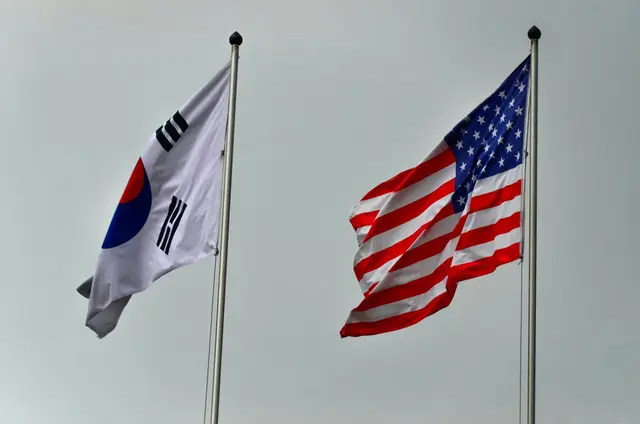
The Strategic Folly of Seoul’s Nuclear Hedging Strategy
Amid growing domestic debate and high public support for nuclear armament, this brief examines why an independent nuclear weapons program is a dangerous miscalculation for South Korea. It analyzes how the U.S.–ROK Nuclear Consultative Group provides robust extended deterrence, while demonstrating…

Justification of Taxes Towards Jurisdictions and Individuals
If jurisdiction is confined to the horizontal dimension, the individual cannot invoke its absence; the question then shifts to the vertical relationship and to the substantive theory of the state.

The Vienna Convention on the Law of Treaties
The Vienna Convention on the Law of Treaties provides the legal framework for creating, interpreting, amending, and ending treaties, forming the foundation of modern treaty law.

Article 42(7) TEU and the EU’s Defence Future
Thematic Working Group Briefs – 2026 Article 42(7) TEU and the EU’s Defence Future More than fifteen years after the Lisbon reforms entered into force, Article 42(7) of the Treaty on European Union (TEU), frequently termed the mutual defence clause, has remained as one of the least addressed poli…
Investment Arbitration’s New Architecture
Investment Arbitration’s New Architecture How UNCITRAL and ICSID reforms are reshaping investor–State dispute settlement The reform of investor–State dispute settlement (ISDS) is in a structural phase. Since 2017, the United Nations Commission on International Trade Law (UNCITRAL) Working Group I…
From Sovereignty to Sustainability
From Sovereignty to Sustainability: Natural Resources and Investment Protection in International Economic Law Natural resources represent a cornerstone of international economic relations. This relevance relies, on the one hand, on the fact that states depend on them as drivers of development and…
Strategic non-nuclear weapons and the NPT
Strategic non-nuclear weapons and the NPT: Revisiting the binary distinction of Article IX(3) The emergence of strategic non-nuclear weapons (SNNW) has blurred the line between conventional and nuclear warfare, necessitating a re-evaluation of how states are classified in global arms control regi…
Legal Coalitions in a Multipolar World
Legal Coalitions in a Multipolar World How the EU can defend, repair and extend rules in a contested global order by Maximilian Schlenker By early 2026, the European Union had begun to speak in a new tone. Ursula von der Leyen told EU ambassadors that Europe needed to revisit its doctrine, instit…
Outer Space Treaty: An Old But Visionary Document
EPIS Basics: Outer Space Treaty: An Old But Visionary DocumentWords: 480 Introduction: The 1967 Outer Space Treaty (OST), drafted during the Cold War, remains the backbone of international space law. It is the first treaty of “general applicability” governing human activity beyond Earth. Although…
“The Arbitral Shield in the Moon Rush”
The Arbitral Shield in the Moon Rush: Resolving “Safety Zone” and Expropriation Disputes under the Artemis Accords Ioana Marin – RG Arctic & Space EPIS Think Tank Research Paper Series 10th June 2026 Abstract As the commercialisation of outer space accelerates, the lunar economy has transitioned …

Solving Mixity by Sidelining Consent
Question: Has the EU solved ‘mixity’ at the cost of democracy? Argument: The ‘split-and-apply’ doctrine, refined after Wallonia’s 2016 near-veto of CETA and now deployed on EU-Mercosur, lawfully detaches exclusive-competence trade from national ratification — yet removes the forum that once chann…

Reform without inclusion?
– Main question: can BiH strengthen rule of law and fundamental rights while preserving a constitutionally exclusionary system? – Main argument: the post-Dayton framework institutionalised ethnopolitical division, while veto mechanisms and sectarian incentives obstruct reform. – Conclusion: democ…
Strategic Association Treaty (SAT)
Main question: How can the EU enhance its strategic autonomy and competitiveness without causing internal deadlock through full membership expansion? Argument: The EU should adopt the Strategic Association Treaty (SAT), a pragmatic, hybrid framework enabling sector-specific integration with key e…

Sanctions on Cuba: Is it collective Punishment?
Are the sanctions a form of collective punishment? Can IHL paradigms be transferred to IHRL during ‘peacetime’? This essay argues how sanctions and their extraterritoriality violate leading tenets of International Human Rights Law. It goes through three fundamental rights sectors in Cuba showing …

EU Accession Process and the Barrier of Corruption
Ukraine’s accession highlights the question of whether alignment with EU law actually leads to real improvement in enforcement in practice. Even though Ukraine shows significant reform progress, systemic corruption exposes a gap between formal compliance and implementation. Bulgaria urges the EU …

War in the Dark: Russia’s Winter Attacks on Ukraine’s Energy Grid
1. Do Russian strikes on Ukrainian energy infrastructure violate international humanitarian law? 2. The attacks systematically targeted civilian infrastructure during extreme winter conditions, causing disproportionate civilian harm with no identifiable military necessity, in breach of the Geneva…
Sovereignty vs. Security
Can the EU establish a sovereign defense force despite rigid legal hurdles and the reluctance of member states to cede national control? Since formal treaty reform is politically blocked by the requirement for unanimity, the only viable path forward is incremental integration through the Rapid De…

Ukraine and the Limits of International Justice
Main question: Can international law truly hold Russia accountable for aggression in Ukraine? Argument: Ukraine has pushed accountability forward through the ICJ, ICC, the Register of Damage, and a Special Tribunal, but each mechanism faces limits of jurisdiction, immunity, and enforcement. Concl…

Compliance Is Political
How do advisory opinions matter politically if they are formally non-binding, and who is their real audience in contemporary disputes? The article argues that advisory opinions shape behavior by shifting the costs of non-compliance onto allies, donors, and international institutions rather than c…