
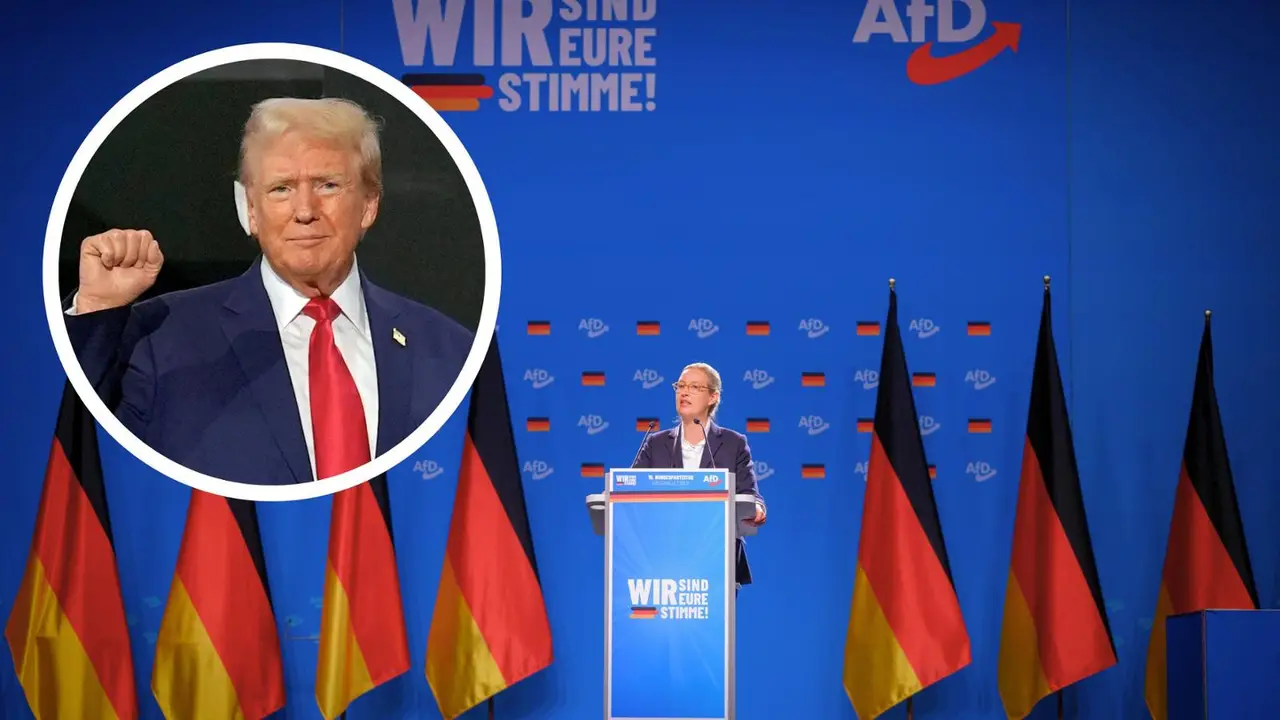
Donald Trump’s second presidency promised a prosperous and peaceful America. Many European parties, including the German AfD (Alternative für Deutschland / Alternative for Germany), have been inspired by his rhetoric and promised policies. The far-right party openly endorsed Trump’s presidential campaign and idea of “America First” as pivotal for Germany. However, it continues to see itself confronted with a harsh reality: Donald Trump did not end the Ukraine war in under 24 hours. He illegally intervened in Venezuela and Iran, the latter causing global economic harm. His tariff policy has not been advantageous to German industry. Trump’s shift from peace-oriented rhetoric to military intervention challenges the AfD’s relationship with the US administration. In this context, the AfD’s foreign policy profile increasingly becomes a subject of interest to the German and European public. The deeper tension lies in the contradiction between transnational populist solidarity and the nationalist principle that governments should prioritize their own citizens above foreign interests.
Existing research has highlighted ideological convergences between the AfD and Trump as part of a broader transnational populist movement. However, less attention has been paid to how these relationships evolve when populist leaders pursue national interests that conflict with those of their foreign allies.
This article contributes to this debate by asking: To what extent has the AfD’s discourse towards the United States changed throughout the 2024 U.S. presidential campaign and since Donald Trump’s second presidency?
It will be argued that Trump’s broken promises caused internal divides within the AfD, which had to justify its stark previous support for Trump, and challenged the party’s idea of a unified transatlantic far-right front.
Regarding methodology, a qualitative discourse analysis of AfD press statements, parliamentary interventions, media appearances, and interviews, comparing these positions with major policy decisions of Trump’s second administration. These include a) tariffs, b) Ukraine, and c) the Middle East. Trump’s immigration policy has been excluded. Although the topic remains central to right-wing populism, the article focuses on international relations.
The article is divided into four sections. First, it examines ideological convergences between the AfD and Trump before the election. Second, it analyses how Trump’s policies confirmed or contradicted the AfD party program. Third, it compares fulfilled and disappointed expectations. Fourth, it draws on broader implications within the rise of transatlantic far-right populist narratives.
I. Trump and the AfD: Ideological Convergence Before the Election
Before the 2024 U.S. election, the AfD and the MAGA movement showed strong ideological convergence. (Jonge & Frankenberger, 2025). The AfD saw in Trump’s campaign a blueprint for its own political success (“Germany’s AfD Seeks Closer Ties,” n.d.).
The AfD Program
The AfD’s core demands are based on ethno-nationalist conservatism, Euroscepticism, and anti-globalism (Jonge & Frankenberger, 2025). The party fights for a hard-line immigration policy, calling for closed borders and large-scale “remigration” (deportation) of immigrants. The AfD further advocates for a citizenship law based primarily on descent (“bloodline”) rather than place of birth. It focuses on preserving the traditional, white nuclear family and combating “leftist, woke gender theory” at universities and schools. Regarding its foreign policy, the AfD’s foreign policy realignment revolves around strict opposition to arms deliveries to Ukraine, calls for an immediate end to sanctions against Russia, and an isolationist “Germany first” stance (Jonge & Frankenberger, 2025; Donovan, 2026).
Trump’s Program
By comparison, Donald Trump’s campaign largely reflected the same populist and isolationist philosophy as the AfD. It pledges to carry out the “largest deportation operation in American history” by removing undocumented immigrants from the United States. Furthermore, it focuses on a strict “America First” tariff policy aimed at protecting domestic industry and weakening global trade agreements (“Germany’s Far Right Loosens Its Embrace,” 2026). Trump promised to further combat what he described as “woke censorship” in the media and major technology companies. Trump prominently promised to end the war in Ukraine within 24 hours.
Areas of Perceived Alignment
This reveals several areas of alignment. Before the election, both sides identified fundamental ideological similarities that formed the basis of their alliance (“Germany’s AfD Seeks Closer Ties,” n.d.; Balfour et al., 2025). They shared a common stance on immigration, revolving around the “Great Replacement” narrative. Both the AfD and leading MAGA figures, including J.D. Vance, argued that the liberal immigration policies of established parties were deliberately undermining traditional Western culture.
Freedom of speech was another central issue. For the AfD, it became one of the most important points of cooperation with the MAGA movement. Delegations such as Beatrix von Storch’s met with MAGA representatives in Washington to discuss what they described as censorship in Germany. At the same time, Donald Trump and Elon Musk criticized European digital regulations, which the AfD interpreted as confirmation of its own claims about restrictions on free expression.
Both movements also relied heavily on anti-establishment rhetoric, presenting themselves as the voice of ordinary people standing against a corrupt, globalist elite made up of political leaders and mainstream media.
Why Trump, not Harris?
The AfD’s decision to firmly support Donald Trump rather than Kamala Harris during the election campaign was driven by both ideological convictions and strategic calculations (“Unpopular Trump Spurned,” 2026; “Warum Sich die AfD jetzt öffentlich auf Trump konzentriert,” 2025).
One of the most pragmatic reasons was the expectation that a Trump administration could serve as an international ally at a time when the AfD faced increasing legal and political pressure in Germany, including debates over whether the party should be banned (Pfeffer & Kilian, n.d.). The party hoped that prominent Republicans would criticize German authorities and help legitimize the AfD internationally. This expectation was partly fulfilled, as leading MAGA figures such as J.D. Vance and Marco Rubio later condemned Germany’s treatment of the AfD as an attack on democratic principles.
Kamala Harris, by contrast, represented everything the AfD opposed. As the likely continuation of the Biden administration, she was associated with close cooperation between the United States and Germany’s governing coalition. From the AfD’s perspective, Harris symbolized progressive social policies, liberal immigration, ambitious climate action, and multilateral international cooperation.
The AfD Discourse during the 2024 Presidential Campaign
During the 2024 U.S. presidential campaign, the AfD portrayed Donald Trump as a symbol of a global conservative shift. Rather than focusing solely on American politics, the party used Trump’s campaign to reinforce its own political agenda and to present itself as part of an emerging international movement challenging the liberal political establishment.
Alice Weidel, for instance, described Trump’s victory as a historic defeat of the liberal establishment, arguing that ordinary working people—not what she called “woke Washington”—had prevailed. She also suggested that Trump’s success demonstrated that political movements declared “finished” could return stronger, drawing an implicit comparison to debates about banning the AfD.
Constructing a Set of Expectations
The AfD associated a Trump victory with several important political expectations.
Its most significant hope was that Trump would quickly end the war in Ukraine by reducing U.S. military support and encouraging negotiations, which aligned with the AfD’s own foreign policy position and ties to Russia. The party also expected that an isolationist U.S. administration would weaken Germany’s federal government internationally by criticizing its migration and climate policies, thereby strengthening the AfD’s domestic position.
Although Trump’s proposed tariffs threatened Germany’s export-oriented economy, the AfD argued that any resulting economic pressure would expose the weakness of Germany’s established parties and reinforce its own “Germany First” message.
Constructing Trump as an Ally
Because Trump rarely acknowledged the AfD directly, the party invested considerable effort in presenting itself as his natural political partner. Trump was moreover framed as a “peace president” who alone could prevent wider international conflict, allowing the AfD to present itself as Germany’s true peace party.
The party also highlighted indirect connections with Trump’s political network. Participation in events such as the Conservative Political Action Conference (CPAC), meetings with Trump campaign advisers, and contacts with figures including Elon Musk were presented on social media. This shows that the AfD had access to influential circles surrounding the future U.S. administration.
Ultimately, during the 2024 campaign, Trump functioned less as a political figure to be critically evaluated than as a symbolic projection for the AfD. The party presented him as proof that nationalist and conservative politics were gaining global momentum and used his campaign to strengthen its own legitimacy, mobilize supporters, and suggest that political change in Germany was part of a broader international trend.
II. Trump’s Second Presidency and Emerging Contradiction
Donald Trump’s return to the White House in January 2025 has confronted the AfD with a dilemma that was less apparent during the 2024 campaign (Pfeffer & Kilian, n.d.). While Trump’s electoral victory initially appeared to strengthen the AfD’s international legitimacy and ideological position, the practical consequences of his second presidency have revealed significant tensions between the two political agendas. Three policy areas in particular illustrate this growing gap: trade, European security, and the Middle East.
Trade Policy: Protectionism versus Germany’s Export Economy
Trump’s second administration has pursued an aggressively protectionist trade agenda, introducing broad import tariffs alongside sector-specific duties on products such as German automobiles, steel, and aluminium (“Trump’s Zollpolitik,” 2025; “The Foreign Policy-First President?,” 2026). The objective has been to strengthen American manufacturing while forcing trading partners into new bilateral agreements.
Within the AfD, these measures exposed significant internal divisions (Pfeffer, n.d.). Party co-chair Tino Chrupalla defended Trump’s approach, arguing that the U.S. president was simply fulfilling his election promises by protecting domestic industry. He suggested that Germany should adopt similar protectionist measures and become less dependent on international markets.
Alice Weidel, however, publicly distanced herself from this position. She criticized Trump’s tariffs as economically excessive and warned that Germany, whose economy depends heavily on exports, would suffer disproportionately (“Wirtschaft—AfD-Chefin Weidel,” 2025; “Trumps Zollpolitik,” 2025). Rather than embracing the tariffs, she argued that they should be prevented through negotiations with Washington.
This disagreement reflects a deeper contradiction. Although the AfD’s election manifesto promises lower taxes, deregulation, and stronger support for Germany’s middle class (“Wahlprogramm der AfD 2025,” n.d.; Vieweger & Hans-Joachim, n.d.), Trump’s trade policy directly threatens the export-oriented industries on which much of that economic model depends. In this case, admiration for Trump’s “America First” agenda clashes with the AfD’s own promise to deliver economic prosperity in Germany.
More fundamentally, this conflict demonstrates the limitations of nationalist solidarity in international economic relations. Although Trump and the AfD share a political vocabulary centred on national sovereignty, economic independence, and the protection of domestic interests, their economic objectives are not necessarily compatible. Trump’s commitment to prioritizing American manufacturers inevitably creates disadvantages for foreign competitors, including German businesses. Consequently, a policy that appears ideologically attractive from a nationalist perspective may become economically damaging when implemented by another country.
This tension is particularly important because the AfD draws political support from voters dissatisfied with Germany’s economic development, industrial decline, and rising living costs. If American tariffs weaken German manufacturers, threaten employment, or increase economic uncertainty, the AfD risks supporting policies that contradict the economic interests of parts of its own electorate. The disagreement between Weidel and Chrupalla therefore reflects more than a difference in economic strategy: it reveals the difficulty of reconciling ideological identification with Trump and the practical responsibility of defending German economic interests.
European Security: National Sovereignty Meets Strategic Reality
Trump has also transformed American security policy by making U.S. military commitments increasingly conditional on higher European defence spending while pressing for a rapid settlement of the war in Ukraine and expanding U.S. arms exports to Europe (Hellemeier, 2024).
Many AfD politicians welcomed the prospect of reduced American influence, arguing that Europe should become more independent and pursue a more pragmatic relationship with Russia. Yet the party leadership simultaneously criticized Washington’s demand that Germany substantially increase defence spending.
Here, another contradiction becomes apparent. The AfD advocates fiscal discipline, lower public spending, and the preservation of Germany’s constitutional debt brake while also supporting a stronger national military. If the United States were to reduce its security commitments, however, Germany would likely need to invest significantly more in defence. Financing such an expansion would be difficult without abandoning the very budgetary principles the AfD promotes. Moreover, Trump’s preference for European countries purchasing American weapons sits uneasily with the AfD’s emphasis on national technological sovereignty (Hellemeier, 2024).
The underlying problem is that national sovereignty does not automatically translate into strategic independence.For decades, Germany has relied heavily on American military capabilities, intelligence cooperation, and the broader security guarantees provided through NATO. Reducing this dependence would require substantial investments in military infrastructure, defence production, personnel, and technological capabilities. Such a transformation would involve considerable financial costs and could not be achieved simply through a political commitment to sovereignty.
This creates a dilemma for the AfD. On the one hand, Trump’s demands appear to reinforce its criticism of Germany’s dependence on the United States and its argument that national interests should take priority in foreign policy. On the other hand, implementing a genuinely independent German security strategy would require precisely the kind of sustained public expenditure that conflicts with the party’s fiscal priorities.
An additional contradiction concerns the AfD’s relationship with European cooperation. If American security guarantees become less reliable, European states may have stronger incentives to coordinate defence procurement, military planning, and strategic capabilities. However, the AfD’s Euroscepticism and opposition to deeper European political integration complicate its ability to support such collective solutions. The party therefore faces a choice between maintaining national autonomy and accepting the practical necessity of international security cooperation.
Furthermore, Trump’s transactional approach to NATO challenges the AfD’s broader assumption that ideological proximity produces political partnership. Although Trump and the AfD share criticism of established political institutions and emphasize national sovereignty, the American administration ultimately evaluates European allies according to American strategic and economic interests. This demonstrates that ideological alignment does not eliminate conflicts between national priorities.
Middle East Policy: The Sharpest Break with Trump
Following U.S.-Israeli military strikes against Iran in 2026, Trump adopted an increasingly confrontational regional strategy centred on maximum economic pressure against Tehran and strong support for Israeli military operations.
Unlike during the election campaign, the AfD reacted with unusually open criticism. Tino Chrupalla condemned the strikes as violations of international law and warned that Trump risked becoming a “war president” rather than the peace candidate many of his supporters had expected. Internal disagreements also became visible when Markus Frohnmaier praised the precision of the American attacks, prompting Chrupalla to reject such statements publicly and emphasize the civilian consequences of military action.
The AfD presents itself as an advocate of diplomacy, non-intervention, and migration control, whereas escalating conflict in the Middle East risks producing precisely the security, migration, and economic pressures the AfD claims it wants to avoid (Vieweger & Hans-Joachim, n.d.). As a result, the AfD has increasingly been forced to balance ideological loyalty to Trump against the practical consequences of his policies for Germany.
The significance of this disagreement extends beyond the immediate military confrontation. It challenges the political image of Trump that contributed to his appeal among parts of the European populist right. During the 2024 election campaign, Trump frequently presented himself as a leader capable of ending international conflicts through negotiation and political pressure. For the AfD, this image was particularly attractive because it corresponded with the party’s criticism of Western military involvement and its preference for diplomatic settlements, especially regarding the war in Ukraine.
American military intervention in Iran therefore creates a credibility problem. If Trump pursues military escalation rather than diplomatic restraint, the AfD can no longer present his foreign policy as consistently compatible with its own emphasis on peace and non-intervention. Chrupalla’s criticism can consequently be understood as an attempt to preserve the AfD’s political identity independently of Trump’s decisions.
Similarly, instability in the Middle East can disrupt international energy markets, increase transportation costs, and contribute to economic uncertainty. These consequences would be particularly problematic for Germany’s industrial economy, which remains sensitive to energy prices and international supply chains. The AfD’s criticism of Trump’s interventionism can thus be interpreted not only as an ideological disagreement but also as an attempt to defend its domestic economic and migration-policy priorities.
III. Synthesis: From Endorsement to Dissonance — A Comparative Perspective
Fulfilled Expectations
Some of the AfD’s expectations were realized, particularly in the political and cultural sphere. Trump and leading MAGA figures publicly criticized German authorities over their treatment of the AfD, providing the party with valuable international support during debates about its legal status. Likewise, Trump’s continued campaign against progressive policies reinforced the AfD’s domestic narrative that opposition to “woke” politics was gaining international momentum. The party also continued to benefit from the changing digital environment on platforms such as X, where right-wing voices achieved greater visibility.
Disappointed Expectations
The greatest disappointments emerged in foreign and economic policy. Rather than acting as the “peace president” many AfD politicians had anticipated, Trump expanded military involvement in the Middle East, prompting unusually sharp criticism from the party leadership. His promise to end the war in Ukraine quickly also failed to produce the outcome the AfD had expected, while his trade tariffs placed additional pressure on Germany’s export-oriented economy (“Trumps Zollpolitik,” 2025). As a result, key elements of Trump’s “America First” agenda conflicted directly with the AfD’s own economic priorities.
Adapting the Narrative
To manage these contradictions, the AfD adjusted its public messaging (“Unpopular Trump Spurned,” 2026). Instead of portraying Trump as an unquestioned political role model, party leaders increasingly emphasized the underlying principle of national self-interest. Their argument shifted from supporting Trump to claiming that he was simply doing for the United States what the AfD wanted German governments to do for Germany.
At the same time, the party became more willing to distance itself from specific policies, particularly U.S. military interventions, allowing it to preserve its image as a party advocating diplomacy and restraint. Internal differences also became more visible: while some members maintained close ties to the MAGA movement, others used Trump’s controversial foreign policy to strengthen the party’s more sovereignty-focused and anti-American rhetoric.
IV. Conclusion
The AfD’s changing relationship with Trump illustrates the tension between ideological solidarity and national interest. During the 2024 campaign, Trump represented proof of an emerging international conservative movement. In office, however, his policies frequently conflicted with Germany’s economic and strategic interests. Rather than abandoning Trump altogether, the AfD redefined him—not as an infallible ally, but as an example of uncompromising national self-interest, arguing that Germany should pursue a similarly “Germany First” approach. In light of its increasing electoral potential and ambition to be politically responsible, the AfD now has to carefully review its positions—will it remain ideologically attached to Trump’s leadership or truly put German interests first? Recent electoral success in Saxony-Anhalt shows that the AfD will continue to define its own political role.
References
Balfour, R., Lehne, S., & Ventura, E. (2025). The European radical right in the age of Trump 2.0. Carnegie Endowment for International Peace. https://carnegieendowment.org/europe/research/2025/09/the-european-radical-right-in-the-age-of-trump-20
de Jonge, L., & Frankenberger, R. (2025, February 21). What is the AfD? Germany’s far-right party, explained. The Conversation. https://doi.org/10.64628/AB.3xu4ryfw3
Deutschlandfunk. (2025, April 11). Wirtschaft—AfD-Chefin Weidel bezeichnet Trumps Zollpolitik als „viel zu aggressiv”. Die Nachrichten. https://www.deutschlandfunk.de/afd-chefin-weidel-bezeichnet-trumps-zollpolitik-als-viel-zu-aggressiv-100.html
Donovan, H. (2026, March 9). Why the AfD has fallen out of love with Trump. The Spectator. https://spectator.com/article/why-the-afd-has-fallen-out-of-love-with-trump/
Germany’s AfD seeks closer ties to Trump and MAGA movement. (n.d.). DW. Retrieved July 10, 2026, from https://www.dw.com/en/afd-alternative-for-germany-beatrix-von-storch-donald-trump-markus-frohnmaier-jan-wenzel-schmidt/a-74254801
Germany’s far right loosens its embrace of Trump. (2026, January 16). Politico. https://www.politico.eu/article/germany-donald-trump-afd-greenland-nicolas-maduro-national-rally/
Hellemeier, L. F. (2024, November 26). The implications of a second Trump presidency for Europe’s defense-industrial efforts. War on the Rocks. https://warontherocks.com/the-implications-of-a-second-trump-presidency-for-europes-defense-industrial-efforts/
Pfeffer, K., & Kilian, J. (n.d.). AfD zwischen Friedensrhetorik und Trump-Nähe. Tagesschau. Retrieved July 10, 2026, from https://www.tagesschau.de/inland/innenpolitik/afd-maga-usa-bundestag-100.html
Pfeffer, K. (n.d.). So bringen Trumps Zölle die AfD in ein Dilemma. Tagesschau. Retrieved July 10, 2026, from https://www.tagesschau.de/inland/innenpolitik/trump-usa-zoelle-afd-100.html
The foreign policy-first president? US external action under Trump 2.0 — in data. (2026, February 4). European Union Institute for Security Studies. https://www.iss.europa.eu/publications/analysis/foreign-policy-first-president-us-external-action-under-trump-20-data
Trumps Zollpolitik: Weidel will US-Regierung umstimmen. (2025, May 31). ZDFheute. https://www.zdfheute.de/politik/deutschland/zollpolitik-usa-eu-weidel-trump-verhandlungen-100.html
Unpopular Trump spurned by AfD leaders before key German elections. (2026, March 26). Politico. https://www.politico.eu/article/afd-leaders-want-to-keep-distance-from-unpopular-trump-before-key-eastern-elections/
Vieweger, J., & Hans-Joachim, P. (n.d.). Bundestagswahl 2025: Wie die Parteien die Wirtschaft beleben wollen. Tagesschau. Retrieved July 10, 2026, from https://www.tagesschau.de/inland/bundestagswahl/programmvergleich/wahlprogramme-wirtschaft-100.html
Wahlprogramm der AfD 2025. (n.d.). Retrieved July 10, 2026, from https://www.bundestagswahl-bw.de/wahlprogramm-afd
Warum sich die AfD jetzt öffentlich auf Trump konzentriert. (2025, November 7). ZDFheute. https://www.zdfheute.de/politik/deutschland/afd-trump-usa-republikaner-verhaeltnis-100.html