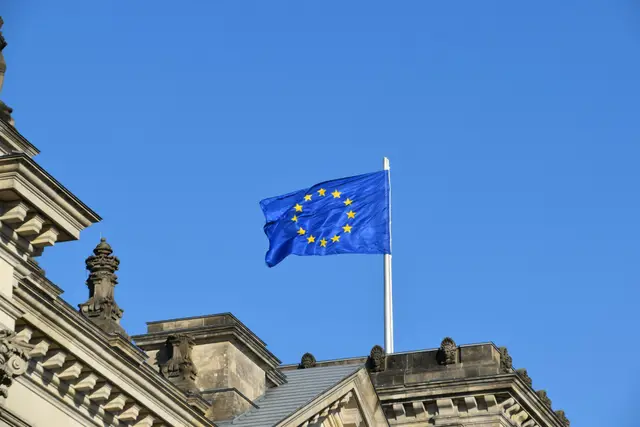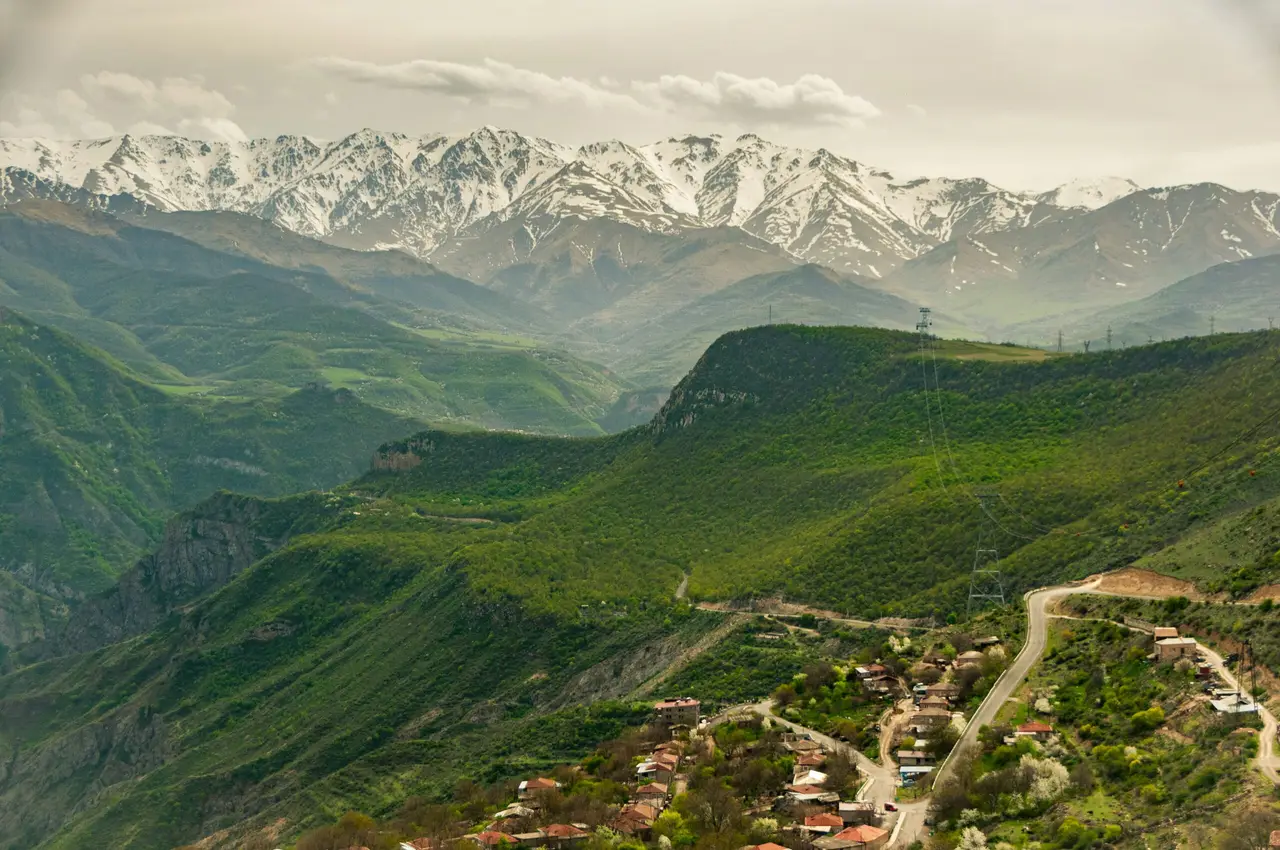

Every step Armenia takes closer to Brussels and Washington is met with immediate, high-stakes economic and political retaliation from its traditional security patron, Russia.
Armenia faces the challenge of navigating a dire geopolitical landscape, balancing competing regional pressures while addressing internal divisions. Its security, economic resilience, and democratic trajectory all hinge on engaging with the EU without provoking destabilising responses from Russia, Iran, or Azerbaijan.
While Armenia has maintained ties with the European Union since joining the European Neighbourhood Policy in 2004 and the Eastern Partnership in 2009, its vulnerability as a landlocked state has limited its foreign policy options. It faces closed borders to the west and east with stronger adversaries, Turkey and Azerbaijan, a controversial regional power to the south (Iran), and a friendly but weak neighbour to the north (Georgia). Its main security provider, Russia, shares no border, further limiting its room for manoeuvre (Gerrits, 2020, p. 93, para. 2-3). Since Russia launched its full-scale invasion of Ukraine in February 2022, Moscow has been focused elsewhere and has even strengthened economic ties with Azerbaijan and Turkey (Pilibossian & Nersisyan, 2024, para. 2).
In turn, Armenia is taking on more of its border security and building alternative partnerships, such as freezing its Collective Security Treaty Organization (CSTO) membership and inviting an EU border-monitoring mission (de Waal, 2024, para. 2).
This paper asks: How do internal demands and external geopolitical pressures dictate Armenia’s ability to shift its strategic alliances from Russia to the West? It explores how the interests of key domestic and international stakeholders shape Armenia’s relations, particularly as the Armenian-Azerbaijani peace process shifts from Russian-led structures towards Western mediation.
1. Overview of Armenia-EU relations
Relations with the European Union are positively evaluated but (still) seem underdeveloped (Gerrits, 2020, p.94). The EU and Armenia cooperate closely under the EU-Armenia Comprehensive and Enhanced Partnership Agreement (CEPA), in force since 1 March 2021. Armenia is committed to a reform agenda rooted in democracy, transparency, and the rule of law, focusing on combating corruption, judicial accountability, and equal economic, employment, and social opportunities (European Union External Action Service, 2021, para. 1–2).
The 2018 Velvet Revolution opened new avenues for implementing CEPA more effectively and enhancing EU-Armenia relations. However, it also raised expectations of EU support that the Union may not be prepared to meet (Shirinyan, 2020, section 4; para. 5).
Beyond the EU’s normative appeal (democracy, human rights, and the rule of law), Armenia particularly values the Union’s financial support and technical expertise (Gerrits, 2020, p. 94). Gerrits argues that the EU remains a limited actor in shaping Armenia’s policy agendas, though the EU representative in Yerevan emphasised that Armenia’s membership in the Eurasian Economic Union (EAEU) should not be an obstacle to closer cooperation.
Despite these friction points, Europe’s role as a primary strategic partner was cemented at the EU-Armenia summit in Yerevan on 4–5 May 2026, where European Council President António Costa and Commission President Ursula von der Leyen met Prime Minister Nikol Pashinyan. Costa called the summit a clear signal of the EU’s commitment to deepening relations with Armenia. The leaders issued a joint declaration and exchanged signed documents, including the EU-Armenia connectivity partnership, six non-binding letters of intent, a working arrangement between Armenia and Frontex, and the visa report.
Overall, the EU holds significant influence in Armenia, through financial assistance and the prospect of European integration. It also promotes human rights, the rule of law, and the reform agenda, though criticism has grown, particularly over security and the EU’s balancing act with Azerbaijan as an alternative energy partner (Valiyev, 2024, para. 1).
However, this momentum towards Western integration triggered a coercive response from Moscow. On 27 May 2026, weeks ahead of Armenia’s 7 June parliamentary elections, the Russian Foreign Ministry threatened to suspend or terminate agreements providing Armenia with duty-free supplies of natural gas, petroleum products, and rough diamonds if it pursued EU membership. This exploits Armenia’s energy vulnerability: it relied on Russia for 82% of its gas imports over the past year. Moscow framed the move as a response to Armenia entering an “anti-Russian orbit”. A day earlier, U.S. Secretary of State Rubio had signed a new strategic partnership agreement in Yerevan, and President Donald Trump publicly gave his “COMPLETE and TOTAL” endorsement to Pashinyan (Osborn et al., 2026).
This escalation underscores the security dilemma at the heart of Armenia’s multi-vector strategy: every step closer to Brussels and Washington is met with economic retaliation from its traditional patron.
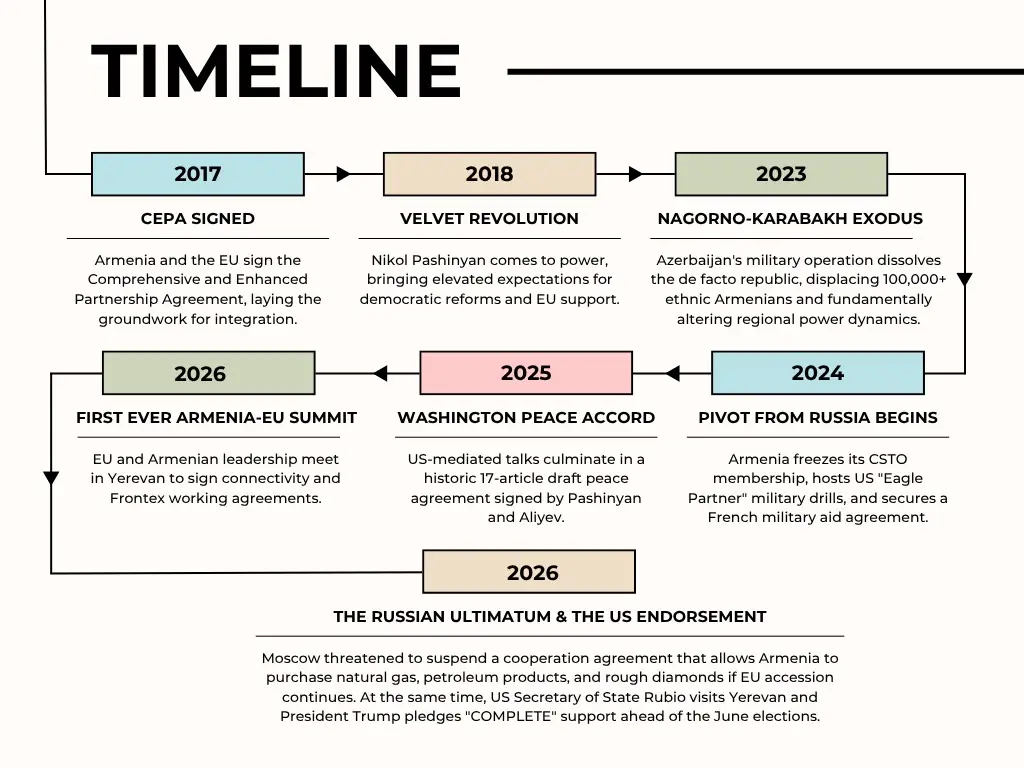
Figure 1. Timeline of Armenia’s Multi-Vector Policy Shift
2. Stakeholder Identification and Position Mapping
2.1 European Institutions
EU institutions wield significant influence over Armenia through trade, aid, and diplomacy, making the EU the country’s largest cooperation partner. The signing of CEPA in 2017 marked a key step in strengthening bilateral relations (Press team of the EU Delegation to Armenia, 2021, section 2, para. 1). According to Shirinyan, this “one-of-a-kind” agreement may reflect “a lesson learnt” from the Eastern Partnership’s failure in 2015, which prompted a revision of the European Neighbourhood Policy (Shirinyan, 2020, section 4; para. 5). It serves as an important basis for deepening ties and reaffirms Armenia’s European orientation. As the EAEU functions more as a symbolic political alliance — a Russian geopolitical project with “a security rationale” — there may be space for Armenia to pursue closer EU integration (Shirinyan, 2020, section 1; para.2).
In March 2024, the European Parliament adopted resolution 2024/2580(RSP), calling for closer EU-Armenia ties and a peace agreement with Azerbaijan, and confirming that Armenia meets the basic requirements to apply for membership under Article 49 of the Treaty on European Union (European Parliament, 2024a; 2024b). In April, Commission President von der Leyen announced a €270 million package to strengthen economic resilience (EU Neighbours East, 2024, para. 1).
2.2 EU Member States
Major EU member states, notably France, engage with Armenia bilaterally, though secondary to EU institutional frameworks. France, home to a large Armenian diaspora, signed a military aid agreement with Yerevan in 2024 following Armenia’s defeat in the 2020 Nagorno-Karabakh war (Le Figaro, 2024, para.1). Before 2020, however, France had also sold arms to Azerbaijan, officially characterised as non-offensive (Naudet, 2020, para.1). Germany is also involved in peacebuilding: Chancellor Olaf Scholz and the former European Council president joined negotiations between Armenia and Azerbaijan (Castillo, 2024, para. 8).
These states support Armenia’s Western engagement with moderate to strong influence. Their support remains cautious, however, given their energy-driven need for pragmatic relations with Azerbaijan (Russell, 2020, p.18).
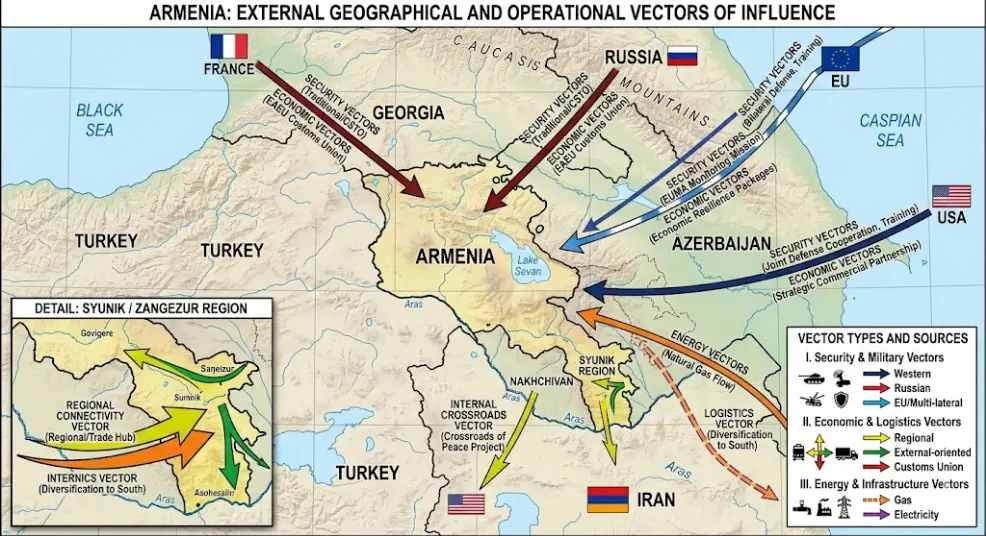
Figure 2. External Geographical and operational vectors of influence
2.3 Armenian National Government
The Armenian government, led by Prime Minister Nikol Pashinyan, is the central actor in foreign policy (Constitution of Armenia, 1995, Article 85). Since coming to power after the 2018 Velvet Revolution, the government has pursued a multi-vector foreign policy, described by Nazaretyan as pragmatic, diversified and peaceful (2024, section 2, para. 8). Pashinyan, who had voted against Armenia’s accession to the EAEU and later campaigned to leave it, changed his position after taking office (Gerrits, 2020, p. 92), reframing such affiliations as pragmatic necessities rather than ideological commitments. Professor Andreas Theophanous characterises Armenia’s approach as shaped by historical grievances, particularly the Armenian Genocide, yet increasingly guided by pragmatic national interest (Mamyan, 2025, para.13).
Pashinyan now advocates a “balanced and balancing” foreign policy, as he declared at Davos (Government of Armenia, 2025). Armenia maintains cooperative ties with Russia while adopting a “domestic” European orientation, an approach Gerrits (2020, p. 93) likens to Finland’s Cold War strategy. Examples include continued participation in the EAEU and Russian military bases in Gyumri (Helsinki Citizens’ Assembly-Vanadzor, 2025, para.1), alongside overtures towards the EU and the United States at a high-level Brussels summit (Council of the European Union, 2024).
Despite changes in tone, Armenia’s foreign policy orientation has not changed radically. As Gerrits (2020, p. 92) notes, interviews with Armenian political actors and experts reveal a durable consensus: while opinions diverge on tactics, there is general agreement on what Armenia must “refrain from doing”. This consensus underpins the multi-vector doctrine, which aims to fulfil the socioeconomic promises of 2018. However, the government’s ability to maintain this policy relies on the backing of the Armenian public.
2.4 Civil Society
Recent polling confirms that Armenian society is increasingly leaning towards the West, with strong public trust in the EU and the United Nations and deep dissatisfaction with the CSTO (EU neighbours east, 2024, p. 2, Figure 1). A late-2023 IRI survey (International Republican Institute, 2023) found 66% of Armenians rated ties with Russia as “bad” (p. 49, Figure 2) and 87% supportive of the EU (p.47, Figure 3). Public priorities include national security and peace, but pro-European Armenians see democracy and EU integration as routes to stability. Thus, public opinion exerts strong indirect influence, broadly aligning with the government’s Western-leaning course. The main cleavages concern peace negotiations: nationalist segments, as mass rallies led by a cleric have shown, are furious at perceived territorial concessions (RFE/RL’s Armenian Service, 2024, para. 1). On balance, however, society favours more engagement with Europe.
2.5 Russia
Russia has long been Armenia’s patron, exerting substantial influence over its foreign and security policies, though this is increasingly contested. Moscow maintains a significant military footprint, with two bases and a peacekeeping contingent, and remains Armenia’s primary energy supplier, largest trade partner, and key source of remittances (Castillo, 2024, para.9; Russia’s Pivot to Asia, 2025, para. 7). This integration extends beyond formal trade to informal networks of Russian and Armenian oligarchs, which further entrench Moscow’s leverage (Dermoyan, 2025, para.8). Gazprom controls large portions of Armenia’s gas and electricity infrastructure, and Gazprom Armenia holds exclusive market rights until 2043 (Vardanyan, 2021, para. 3; Nazaretyan, 2023, section 7; para. 1).
However, Armenia’s leadership has distanced itself from Moscow: in 2024, Pashinyan froze CSTO membership and later announced Armenia would quit the pact (TASS, 2025). Russia reacted negatively: its foreign ministry labelled Armenia’s EU accession bill an “unfriendly act” (Tatikyan, 2025, section 9, para. 4) and warned that leaving Russian-led structures undermines Yerevan’s security (TASS, 2025). Russia’s agenda now largely diverges from the government’s.
Gerrits (2020) notes that a ruling party spokesperson expressed optimism that the government would make Armenia’s foreign policy more transparent and balanced. With greater popular legitimacy than its predecessor (Nazaretyan, 2024), the government is expected to negotiate a stronger position vis-à-vis Russia. Although the partnership is widely viewed as asymmetrical, many see no viable alternative: despite its decline, Russia remains Armenia’s primary security guarantor.
Gerrits also suggests that the absence of geopolitical themes during the Velvet Revolution, and the minimal involvement of the EU and the US, likely explain Russia’s tolerant stance towards the fall of a pro-Russian government — a key factor in the revolution’s success.
2.6 United States
Alongside its European partners, the United States has emerged as a lead architect of the Western mediation track, stepping into the diplomatic void left by Russia. The U.S. State Department hosted multiple rounds of negotiations, leading to the August 2025 draft peace agreement initialled in Washington (Ohanjanyan, 2025, para. 1). The U.S. has also signalled support for Armenia’s sovereignty through joint military exercises such as “Eagle Partner”, which contrast with Armenia’s reliance on the CSTO (U.S. Army Europe and Africa, 2024). Through USAID funding for democratic resilience and digital infrastructure, Washington provides the counterweight Yerevan needs to pivot away from Moscow (U.S. Embassy in Armenia, 2024).
2.7 Azerbaijan
Azerbaijan’s military posture and diplomatic manoeuvres, especially regarding Nagorno-Karabakh and border demarcation, force Yerevan to adapt and reposition itself. Since Azerbaijan’s 2023 military operation dissolved the Nagorno-Karabakh Republic and prompted the exodus of over 100,000 ethnic Armenians, the power imbalance between the two states has grown sharply (Al Jazeera, 2023, para. 2).
A landmark development has been the two countries’ joint drafting of a peace agreement (The Guardian, 2025, para. 1). This culminated on 8 August 2025, when Pashinyan and Aliyev met at the White House to initial the peace agreement. Mediated by the United States and backed by the EU, it establishes a framework for mutual recognition of sovereignty and the renunciation of territorial claims. Yerevan has made notable concessions, such as recognising Azerbaijani sovereignty over Nagorno-Karabakh and offering to unblock regional transport links, including the route linking mainland Azerbaijan to Nakhchivan, though disputes remain over jurisdiction and border monitoring (Ohanyan, 2023, para. 1). Pashinyan’s government sees peace as the key to Armenia’s security and economic growth, a strategy supported by the EU Mission in Armenia (EUMA) under the CSDP (Council of the European Union, 2023).
Azerbaijan is a paradox for Armenia: though a hostile neighbour, successful normalisation could permanently stabilise the South Caucasus and open trade routes to Europe via Georgia or Turkey (Aktas, 2025, para. 4). This would cement the multi-vector strategy, but only if Armenia secures binding guarantees for its sovereignty, an area where Baku’s record is unconvincing. Despite the August 2025 breakthrough, Azerbaijan has delayed formal signature by demanding that Armenia amend its constitution by referendum to remove implicit territorial references.
Azerbaijan’s influence is thus strong, but its alignment with Armenia’s strategy is tenuous: formalising the peace deal could enable Armenia’s regional and European ambitions, but Baku’s assertiveness and conditioning of final agreements on internal Armenian politics could still undermine Yerevan’s balancing policy.
Conclusions
Armenia’s trajectory is not a routine realignment but an existential balancing act. Driven by its civil society’s democratic aspirations and the multi-vector doctrine of the Pashinyan administration, Yerevan is dismantling its dependence on a distracted and increasingly adversarial Russia. However, Armenia’s European integration cannot be achieved in a vacuum.
The success of this pivot hinges on the peace process with Azerbaijan. Baku is both the primary threat to Armenia’s security and the gateway to its European ambitions. If the August 2025 draft can be formalised into binding sovereignty guarantees, it will stabilise the South Caucasus and cement Armenia’s Western trajectory. If Azerbaijan instead weaponises normalisation and Russia acts on its warnings, Armenia risks severe destabilisation.
Armenia’s pursuit of closer ties with the EU and the United States is a courageous but precarious gamble. To secure its democratic future and economic resilience, Yerevan must navigate a narrow path, relying on the West as a diplomatic counterweight to survive its volatile neighbourhood.
References
Aljazeera. (2023, September 30). More than 80 percent of ethnic Armenians flee Nagorno-Karabakh. Www.aljazeera.com. https://www.aljazeera.com/news/2023/9/30/more-than-80-percent-of-nagorno-kar abakhs-people-have-fled-armenia-govt
Aktas, A. (2025). Armenia ready to complete normalization process with Azerbaijan, says top diplomat. Aa.com.tr. https://www.aa.com.tr/en/asia-pacific/armenia-ready-to-complete-normalization-p rocess-with-azerbaijan-says-top-diplomat/3466850
Castillo, N. (2024, April 18). CPC | Armenia’s Grand Rebalance: EU and Russia. Caspian Policy Center. https://caspianpolicy.org/research/armenia/armenias-grand-rebalance-eu-and-russia
Constitution of Armenia, Chapter 5. The Government (1995). https://aceproject.org/ero-en/regions/europe/AM/CONSTITUTION%20OF%20T HE%20REPUBLIC%20OF%20ARMENIA.pdf. Article 85. Paragraph 3.
Council of the European Union. (2023). Armenia: EU establishes a civilian mission to contribute to stability in border areas. Www.consilium.europa.eu. https://www.consilium.europa.eu/en/press/press-releases/2023/01/23/armenia-eu-s ets-up-a-civilian-mission-to-ensure-security-in-conflict-affected-and-border-areas/
Council of the European Union. (2024, April 5). EU-US-Armenia high-level meeting in support of Armenia’s resilience. Europa.eu. https://newsroom.consilium.europa.eu/events/20240405-eu-us-armenia-high-level-meeting-in-support-of-armenia-s-resilience/Familyphoto-27433/183353
de Waal, T. (2024). Armenia Navigates a Path Away From Russia. Carnegie Endowment for International Peace. https://carnegieendowment.org/research/2024/07/armenia-navigates-a-path-awayfrom-russia?lang=en
EU NEIGHBOURS east. (2024, November). Annual Survey 2024: Armenia . EU NEIGHBOURS East. https://euneighbourseast.eu/news/publications/annual-survey-2024-armenia/
EU Neighbours East. (2024, April 5). EU announces new €270 million Resilience and Growth package for Armenia – EU NEIGHBOURS east. EU NEIGHBOURS East. https://euneighbourseast.eu/news/latest-news/eu-announces-new-e270-million-res ilience-and-growth-package-for-armenia/
European Parliament. (2024a, March 12). JOINT MOTION FOR A RESOLUTION on closer ties between the EU and Armenia and the need for a peace agreement between Azerbaijan and Armenia | RC-B9-0163/2024 | European Parliament. Www.europarl.europa.eu. https://www.europarl.europa.eu/doceo/document/RC-9-2024-0163_EN.html
European Parliament. (2024b, March 13). Texts adopted – Closer ties between the EU and Armenia and the need for a peace agreement between Azerbaijan and Armenia – Wednesday, 13 March 2024. Europa.eu. https://www.europarl.europa.eu/doceo/document/TA-9-2024-0158_EN.html
European Union External Action Service. (2021). EU-Armenia relations – factsheet. EEAS. https://www.eeas.europa.eu/eeas/eu-armenia-relations-factsheet_en
Gerrits, A. (2020). The Geopolitical Environment of the Eastern Partnership. In What’s Left? Trends and Dynamics in Europe’s East (pp. 92–94). European Forum for Democracy and Solidarity.
Government of Armenia. (2025, January 23). N. Pashinyan participates in discussion “‘How to project Europe’s power’” in the sidelines of Davos. YouTube. https://www.youtube.com/watch?v=nz7YpGKgFzY
Helsinki Citizens’ Assembly-Vanadzor. (2025, April 11). In Armenia’s Second City, Russian Military Outpost With a Dark Past Faces a Precarious Future. HCAV. https://hcav.am/en/russian-military-11-04-2025/
Dermoyan, H. (2025, May 2). Subversion and Electoral Interference: Russia and Armenia’s 2026 Elections. EVN Report. https://evnreport.com/evn-security-report/russia-and-armenias-2026-elections/
International Republican Institute. (2023). Public Opinion Survey: Residents of Armenia | December 2023. In International Republican Institute (pp. 47–49). https://www.iri.org/resources/public-opinion-survey-residents-of-armenia-decemb er-2023/?fbclid=IwAR1bnefzdTnchzLGIS11tYdNHuaKbcgg6bg2o6qsHeZCDak vUdC4-snczaU&ref=oc-media.org
Naudet, J.-B. (2020, October 15). Karabakh : quand la France arme l’Azerbaïdjan. Le Nouvel Obs. https://www.nouvelobs.com/monde/20201015.OBS34789/karabakh-quand-la-fran ce-arme-l-azerbaidjan.html
Le Figaro . (2024, February 23). Arménie: un contrat signé avec la France pour l’acquisition de fusils. Le Figaro. https://www.lefigaro.fr/flash-actu/armenie-un-contrat-signe-avec-la-france-pour-lacquisition-de-fusils-20240223
Mamyan, D. (2025, June 4). Armenia aims to advance with pragmatism, says Cypriot expert on Yerevan-Baku and Yerevan-Ankara processes. Armenpress. https://armenpress.am/en/article/1221293
Nazaretyan, H. (2023, July 7). Armenia’s Economic Dependence on Russia: How Deep Does It Go? EVN Report. https://evnreport.com/economy/armenias-economic-dependence-on-russia-how-d eep-does-it-go/
Nazaretyan, H. (2024, October 31). Armenians Anxious on Security, Lukewarm on Peace Talks, Favor EU. EVN Report. https://evnreport.com/new-updates/iri-poll-armenia-sept-2024/
Osborn, A., Papachristou, L., & Golubkova, J. (2026, May 27). Russia warns Armenia on supplies over EU bid; Trump backs PM Pashinyan. Reuters. https://www.reuters.com/world/russia-warns-armenia-supplies-over-eu-bid-trumpbacks-pm-pashinyan-2026-05-27/
Ohanjanyan, M. (2025, September 25). Armenia and Azerbaijan: Peace or pause? Clingendael Institute. https://www.clingendael.org/publication/armenia-and-azerbaijan-peace-or-pause
Ohanyan, A. (2023, November 27). Azerbaijan’s Armenian “Corridor” Is a Challenge to the Global Rules-Based Order. Foreign Policy. https://foreignpolicy.com/2023/11/02/azerbaijan-armenia-zangezur-corridor/
Pilibossian , A., & Nersisyan, L. (2024, December 17). Leaving the “Post-Soviet” Behind: Redefining Armenia’s Deterrence Strategy. Rusi.org. https://www.rusi.org/explore-our-research/publications/commentary/leaving-postsoviet-behind-redefining-armenias-deterrence-strategy
Press team of the EU Delegation to Armenia. (2021). The European Union and Armenia. EEAS. https://www.eeas.europa.eu/armenia/european-union-and-armenia_en#1293
RFE/RL’s Armenian Service. (2024, June 13). Pressure On Pashinian Grows As Armenians Continue Protests. RadioFreeEurope/RadioLiberty; RFE/RL. https://www.rferl.org/a/armenia-protests-pashinian-resignation-galstanian/329910 54.html
Russell, M. (2020). IN-DEPTH ANALYSIS Energy security in the EU’s external policy. European Parliamentary Research Service. https://doi.org/10.2861/10775
Russia’s Pivot to Asia. (2025, May 23). Russia, Armenia Bilateral Relations: 2025 Update – RUSSIA’S PIVOT TO ASIA. RUSSIA’S PIVOT to ASIA. https://russiaspivottoasia.com/russia-armenia-bilateral-relations-2025-update/
Shirinyan, A. (2019/2020) Armenia’s Foreign Policy Balancing in an Age of uncertainty, Research Paper, Chatham House Russian and Eurasia Programme, url: https://www.chathamhouse.org/2019/03/armenias-foreign-policy-balancing-age-u ncertainty
TASS. (2025, June 5). Armenia fails to pay CSTO membership fee in 2024 — foreign minister. TASS. https://tass.com/world/1969159
Tatikyan, S. (2025, May 14). EU-Armenia Relations at a Crossroads: Between Normative Values and Pragmatism. EVN Report. https://evnreport.com/politics/eu-armenia-relations-at-a-crossroads-between-norm ative-values-and-pragmatism/
The Guardian. (2025, March 13). Azerbaijan and Armenia strike deal to end decades-long conflict. The Guardian; The Guardian. https://www.theguardian.com/world/2025/mar/13/azerbaijan-and-armenia-strike-d eal-to-end-conflict-nagorno-karabakh
U.S. Army Europe and Africa. (2024, July 6). Exercise Eagle Partner 24 to begin mid-July. U.S. Department of the Army. https://www.europeafrica.army.mil/ArticleViewPressRelease/Article/3819581/exe rcise-eagle-partner-24-to-begin-mid-july/
U.S. Embassy in Armenia. (2024, September 26). U.S. government announces $20,600,000 support to Armenia. U.S. Department of State. https://am.usembassy.gov/u-s-government-announces-20600000-support-to-arme nia/
Valiyev , C. (2024). OPINION – EU divided over Armenia-Azerbaijan normalization process. Aa.com.tr. https://www.aa.com.tr/en/analysis/opinion-eu-divided-over-armenia-azerbaijan-no rmalization-process/3177214
Vardanyan, Y. (2021, January 25). Laying Off the Gas: Energy Security in Armenia. EVN Report. https://evnreport.com/magazine-issues/laying-off-the-gas-energy-security-in-arme nia/