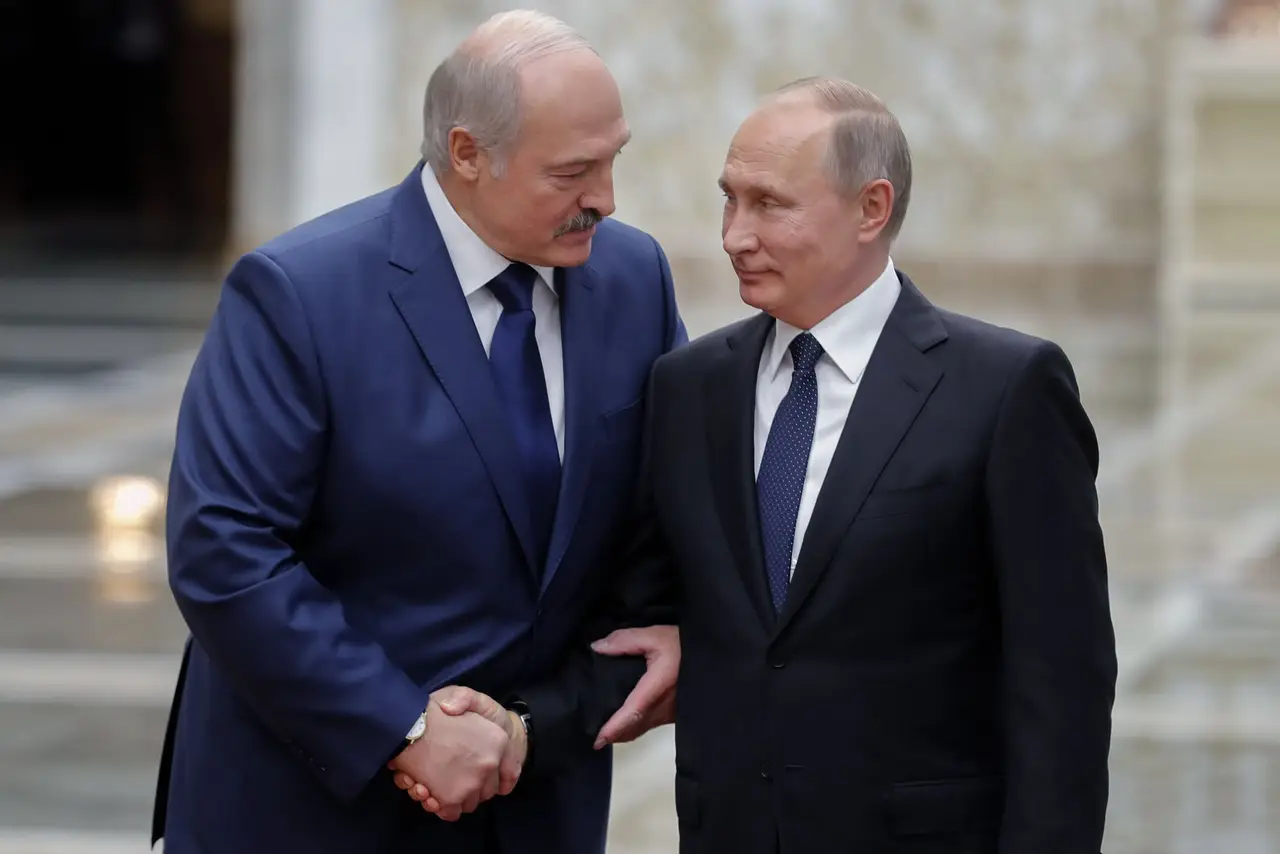
Ever since the collapse of the Soviet Union, Belarus has been regarded as a very close ally of Russia. Belarusian President Lukashenko signed numerous agreements — first with Russian President Yeltsin and later with Putin — to promote bilateral cooperation in the economic, political, and military spheres (Masters, 2023). Among these is the Union State Treaty signed in 1999, which serves as the primary legal basis for the strategic partnership between the two states (Russian Federation and Republic of Belarus, 1999). To date, bilateral cooperation has continued, resulting in Belarus playing a key role in Russia’s aggression against Ukraine. In this regard, Belarus allowed the Russian military to launch an attack from its territory against Ukraine at the start of the conflict, continues to host Russian tactical nuclear weapons and has facilitated further military integration through the implementation of a joint doctrine in 2024 (Liubakova, 2026). Minsk has thus become one of the very few states to actively support Moscow’s war effort. This background paints a picture of Belarus as a loyal and dependable client state, whose infrastructure, territory, and political alignment collectively constitute an indispensable asset for Russia’s security (Glod, 2026).
However, the following report demonstrates that this perception of Belarus’s role in Russian security is incomplete. Each of the developments that appears to deepen Belarus’s value as a security asset also deepens Russia’s vulnerability. In fact, Russia has been gradually exposed to the escalatory risks of having placed its nuclear weapons and military equipment on the territory whose personalist regime has turned increasingly fragile. As a result, Belarus’s significance to Russian security strategy is conditional rather than structural, since it relies heavily on the survival of Lukashenko’s regime. Treating Belarus as a fixed, stable asset rather than as a contingent and potentially unstable one risks misreading both Russian strategic calculations as well as Western policy’s prospects. This report therefore examines what Moscow gains, what it pays, and why the two cannot be separated.
What Moscow Gains
Belarus’s value to Russia begins with its geography. By sharing a border with Poland, Lithuania and Latvia, Belarus provides Moscow with an effective forward platform against NATO’s eastern flank. Lukashenka himself has referred to his country as the “Belarusian balcony”, highlighting its immediate exposure to the Western threat that in his own telling justifies deeper military fusion with Russia (President of Belarus, 2022). In practical terms the “Belarusian platform” was quickly used by Russia. On 24 February 2022, part of the Russian army attacked Ukraine by crossing the Belarusian border in an attempt to reach Kyiv. At the same time, Russian missiles were launched from Belarusian territory, whilst supply routes, military infrastructure to accommodate Russian aircraft and medical facilities to treat wounded soldiers were made available (Glod, 2026). To date, Belarus continues to be involved, albeit indirectly, in the war in Ukraine. In particular, Lukashenko continues to make his country’s airspace and industries available to support the ongoing Russian attacks in the western regions of Ukraine (McDowall and Kvasha, 2026). According to Andrii Demchenko – spokesperson for the State Border Guard Service of Ukraine – the successful execution of Russian drone attacks against the regions of Rivne, Volyn and Lviv is linked to signals emitted by repeaters deployed in Belarus (Mezha, 2026).
This pattern of military cooperation has gradually evolved into a process of military integration. By January 2023, a Regional Group of Forces of Belarusian and Russian troops was operating on Belarusian soil alongside a permanent Russian presence at bases such as the 43rd Navy Communications Centre and the Volga radar station (Oksentiuk et al., 2025). Months after the invasion began, Belarus hosted Russian nuclear-capable systems (the Iskander, the SS-26, and later the Oreshnik), folding Belarusian territory into Russia’s nuclear posture and extending Moscow’s strategic depth beyond its own borders (Sorg, 2025). Considering these factors, Belarus appears as a significant asset, since it compresses NATO’s warning times and gives Russia a second axis of nuclear signalling without expending its own territory or domestic political capital. In this sense, Belarus functions less as a buffer than as an extension of Russia’s own military space.
Additionally, Belarus is a reliable discursive and diplomatic asset. Lukashenka has consistently echoed Moscow’s framing of the war, casting Ukraine as the aggressor, the West as the destabilising force behind the 2020 protests and Russia’s intervention as a defensive necessity. This rhetorical convergence gives Russia a visible ally willing to validate its narrative internationally, reinforcing the impression of a unified front rather than an isolated aggressor. This support is most visible at the UN General Assembly, where Belarus has repeatedly voted alongside Russia against resolutions condemning the invasion.
At the economic level, Belarus offers Russia a market and logistics corridor that has only grown more valuable as Western sanctions have closed off alternatives for Minsk. The deepening of the Union State integration since 2021, when 28 new “union programmes” covering fiscal, industrial and defence policy came into force, has linked Belarusian production capacity and infrastructure more tightly into the Russian economic orbit on terms increasingly set by Moscow (Massicot et al., 2024). For Minsk, there is effectively no alternative partner able to replace this access.
Taken together, these gains are real: a militarily equipped neighbour, a nuclear forward base, a diplomatic echo chamber and an economic dependency that Russia can leverage on its own terms. The asset argument is genuine. However, the question the next section takes up is what Moscow has had to give up and take on to secure it.
The Price of Leverage
Despite these military advantages at present, it is important to note that the deeper Moscow embeds itself in Belarus, the more it inherits Belarus’s liabilities alongside its assets. The clearest evidence is again military. The 2022 deployment of the Regional Group of Forces and the stationing of Russian nuclear-capable systems on Belarusian soil that same year gave Moscow unprecedented reach into Belarusian military control and command structures (Wyczawski and Dudek, 2025). But such reach was purchased, not given. Lukashenka’s post-2020 isolation from the West left him with no alternative but to accept permanent Russian military basing, which does not reflect an act of alliance solidarity but a forced concession of sovereignty (Astapenia, 2026; Leukavets, 2026). Russia now owns the security guarantee it extended and, with it, the risks attached. However, if Lukashenka’s regime destabilises, the bases, the missiles and the western flank they protect become Moscow’s problem to manage, not Minsk’s. This is the trap of asymmetric dependency resulting from control bought through coercion, which Moscow must continuously maintain on all dimensions (Womack, 2015). Belarus’s economy has been cut off from Western markets since 2020 (Lubitzsch, 2026). As a result, it now runs on Russian subsidies, transit routes, and market access (Mastukevich and Astapenia, 2022). However, such economic dependency may entail side effects since any shock to the Russian economy transmits directly into Belarusian instability, which Moscow then has to absorb. In effect, Moscow pays twice: once to secure Belarus’s loyalty and again to sustain the regime that provides it.
The costs are not only economic. Lukashenka has shown he can resist fully aligning even while performing alignment. He kept Belarusian troops out of direct combat in Ukraine and has never granted de jure recognition to the Donetsk and Luhansk republics, which is a pattern of selective resistance consistent with his earlier refusal to recognise Abkhazia, South Ossetia or Crimea’s annexation (Mudrov, 2020). For Moscow, having Belarus as rhetorically maximalist and at the same time operationally hedged means the alliance’s most vocal member is also its least reliable one. Russia has acquired a partner who can showcase public loyalty but who cannot or will not fully commit militarily. Such a clear gap undercuts the propaganda value of the alliance even as it deepens Belarus’s institutional entanglement.
There is also a reputational cost that runs the other way. By absorbing Belarus’s co-belligerency, Moscow has tied its own international standing to a regime widely regarded — including by close allies like China — as brittle and illegitimate. Every further integration measure, from the Union State security treaty to the extension of Russia’s nuclear posture over Belarusian territory, raises the stakes of a Belarusian succession crisis for Russia itself. Lukashenka is in his early seventies, and Moscow has spent five years building a security architecture whose stability depends on one man’s continued rule, with no institutionalised alternative in place (Frear, 2024). The longer this architecture grows, the more costly any disruption at its centre becomes.
In other words, what Moscow has gained is not a secure asset but an open-ended liability with a ticking clock. Russian leverage over Belarus has come at the price of responsibility for it, and that responsibility only grows as the alliance deepens.
The Dependency Trap
By considering, on the one hand, Moscow’s gains and, on the other, Moscow’s costs, there is a risk of framing Belarusian assets and liability as if these were separate qualities. But this framing understates the problem, because in Belarus’s case they are structurally the same phenomenon viewed from different angles. The real variable is not how much Russia gains or loses, but how much control it actually exercises, and the evidence suggests this control is partial, uneven and harder to consolidate than the scale of integration implies (Kuik, 2016).
Lukashenka’s own statements and behaviour show why. Belarusian foreign policy agency does not disappear under Russian pressure across three registers of hedging; rather, it fragments. Rhetorical alignment with Moscow, or convergence, is policy alignment, voluntary or enforced, that echoes bandwagoning (Kuik, 2016). Selective resistance is rhetorical alignment with Moscow’s narratives that is not matched by concrete policy implementation (Kuik, 2016; Goh, 2005). Diversification toward third parties is proactive engagement with external powers aimed at limiting the risks of entrapment (Marston, 2024, p. 33). In the military domain, Lukashenka’s agency has proven largely performative. He frames decisions such as the deployment of Russian nuclear weapons as his own initiative, but the practical effect is a transfer of command-and-control influence to Moscow (Sorg and Horovitz, 2026). The Regional Group of Forces, deployed from October 2022 and hosting up to 12,000 Russian troops by early 2023, along with permanent Russian presence at bases in Vileyka and Hantsavichy, illustrates the pattern of Belarus framing the arrangement as its sovereign choice, but the practical effect is Russian penetration of Belarusian command-and-control structures (Oksentiuk et al., 2025). Here, dependency looks like an asset for Russia**, at least on paper**.
On territorial recognition, however, the picture inverts. Lukashenka’s refusal to grant de jure status to Donetsk and Luhansk shows him withholding formal alignment even while offering full rhetorical support and even when other Russian allies such as North Korea and Syria took the formal step he declined (Howell, 2024). The same pattern holds on troop deployment. Despite Belarusian territory and infrastructure enabling the 2022 invasion (Mudrov, 2022), no Belarusian soldier has been sent to fight in Ukraine, a restraint Lukashenka ties explicitly to preserving both his non-belligerent pledge and his domestic legitimacy (Țicălău, 2023). Here, the alliance that gives Russia military leverage fails to deliver full diplomatic and military compliance.
This unevenness is the point. Moscow cannot simply purchase total control with subsidies, basing rights and security guarantees, because Lukashenka’s foreign policy is not organised around loyalty to Russia. It is organised around regime survival, and those two objectives only sometimes align (Frear, 2024). When Lukashenka’s survival calculus and Moscow’s strategic interest converge, as with hosting Russian forces after 2022, Belarus behaves like a subordinate. When they diverge, as with keeping Belarusian troops out of direct combat, Belarus hedges. Russia has in fact inherited the task of managing a partner whose compliance is conditional rather than structural. This means the “asset” Russia has built is only as stable as Lukashenka’s continued ability and willingness to keep the two calculations aligned.
Seen this way, asset and liability are not two separate dimensions to weigh against each other. They are two readings of the same underlying condition where Russia has maximised its control over Belarus’s material capabilities (territory, military infrastructure, nuclear basing) while only partially capturing its political will. That gap between material control and political compliance is where the liability lives, and it cannot be closed by further integration, since more integration deepens the dependency without resolving the question of whose interests it ultimately serves. Integration, in other words, buys Moscow presence rather than obedience.
Conclusion
The fragility built into this alliance becomes most visible when the analysis looks past the war in Ukraine to a question the present moment raises but cannot resolve: what happens once Lukashenka will no longer exercise Belarus’s agency?
The nuanced relationship described in this piece rests on a single political figure in Minsk. Treating Belarusian foreign policy as coextensive with Lukashenka’s own statements and decisions is not an analytical convenience, but it reflects the actual absence of any other centre of power in Belarus capable of exercising agency independently. There is no institutional layer beneath the president — no party, parliament or security elite with independent standing — that could inherit either his hedging policies or his periodic resistance to Moscow. When Lukashenka’s presidential power ends, whatever agency Belarus has managed to preserve does not necessarily transfer to a successor. It may simply lapse. In that case, Moscow would lose a counterpart it has never had to replace.
This makes Lukashenka’s succession Russia’s problem, not just Belarus’s. Moscow has spent the war years promoting permanent basing, nuclear deployment, and a 2025 security-guarantees treaty extending mutual defence to internal regime stability, which assumes a stable, personalist counterpart in Minsk capable of managing domestic legitimacy while delivering strategic compliance. A domestic political transition, however it happens, removes the one political actor who has shown any capacity to balance those two demands. A successor aligned more directly to Moscow might resolve the compliance problem but would likely deepen the legitimacy deficit at home, given how closely Lukashenka’s continued distance from full bandwagoning has functioned domestically as a safety valve against public backlash to the war.
Seen this way, the fragmentation running through Belarusian agency is not a fixed condition but a byproduct of one man’s continued balancing act. It holds only as long as someone with Lukashenka’s specific mix of loyalty and calculated resistance is there to manage it. Moscow has yet to be tested on what happens when that balancing act ends, whether the security architecture it has built can survive the removal of the very hedging behaviour it was designed to eliminate. For Western policymakers, this suggests that Belarus’s succession may prove as consequential for European security as the war itself.
References
Astapenia, Ryhor. 2026. “Transforming Belarus from a Russian Asset to a Buffer State for European Security.” Chatham House. Accessed June 30, 2026. https://www.chathamhouse.org/2026/01/transforming-belarus-russian-asset-buffer-state-european-security.
Frear, Matthew. 2024. “The Lukashenko Regime in Belarus.” In Personalism and Personalist Regimes, edited by Alexander Baturo, Luca Anceschi, and Francesco Cavatorta, 171–202. Oxford: Oxford University Press. https://doi.org/10.1093/oso/9780192848567.003.0008.
Goh, Evelyn. 2005. Meeting the China Challenge: The U.S. in Southeast Asian Regional Security Strategies. East-West Center Washington Research Report. Accessed July 3, 2026. https://www.jstor.org/stable/resrep06541.
Glod, Katia. 2026. “The Limits of Russian Control: The Case of Belarus.” New Eurasian Strategies Centre. Accessed September 18, 2026. https://nestcentre.org/the-limits-of-russian-control-the-case-of-belarus/.
Howell, Edward. 2024. North Korea and Russia’s Dangerous Partnership: The Threat to Global Security from the Kim–Putin Axis and How to Respond. Chatham House Research Paper. https://doi.org/10.55317/9781784136321.
Kuik, Cheng-Chwee. 2016. “How Do Weaker States Hedge? Unpacking ASEAN States’ Alignment Behavior towards China.” Journal of Contemporary China 25 (100): 500–514. https://doi.org/10.1080/10670564.2015.1132714.
Leukavets, Volha. 2026. “Belarus-Russia Relations After 2020: Subordination Through Integration.” ISPI. Accessed July 2, 2026. https://www.ispionline.it/en/publication/belarus-russia-relations-after-2020-subordination-through-integration-232998.
Liubakova, Hanna. 2026. “Belarus Is Quietly Preparing to Play a Larger Role in Russia’s Ukraine War.” Atlantic Council, UkraineAlert (blog). Accessed August 15, 2026. https://www.atlanticcouncil.org/blogs/ukrainealert/belarus-is-quietly-preparing-to-play-a-larger-role-in-russias-ukraine-war/.
Lubitzsch, Hendrik. 2026. “Belarus Sanctions Divergence: A Practical Guide for EU-Exposed Companies.” Norton Rose Fulbright. Accessed August 20, 2026. https://www.nortonrosefulbright.com/en/knowledge/publications/017d5c11/belarus-sanctions-divergence-a-practical-guide-for-eu-exposed-companies.
Marston, Hunter S. 2024. “Navigating Great Power Competition: A Neoclassical Realist View of Hedging.” International Relations of the Asia-Pacific 24 (1): 29–63. https://doi.org/10.1093/irap/lcad001.
Massicot, Dara, et al. 2024. Cooperation and Dependence in Belarus-Russia Relations. Santa Monica, CA: RAND Corporation. Accessed June 28, 2026. https://www.rand.org/pubs/research_reports/RRA2061-3.html.
Matsukevich, Pavel, and Ryhor Astapenia. 2022. The Degradation of Belarusian Foreign Policy: A Proposed Course Correction. Center for New Ideas Briefing Paper. Friedrich Ebert Stiftung. Accessed July 1, 2026. /api/wp-media/2022/11/2022_11_IdeaBY_en.pdf.
McDowall, Sophie, and Kateryna Kvasha. 2026. “Belarus Highlights Contribution to Russia’s Defense Industrial Base.” Foundation for Defense of Democracies, July 10, 2026. https://www.fdd.org/analysis/2026/07/10/belarus-highlights-contribution-to-russias-defense-industrial-base/.
Mezha. 2025. “The Situation at the Belarusian-Ukrainian Border Before the Zapad-2025 Exercises.” September 9, 2025. https://mezha.net/eng/news/the-situation-at-the-belarusian-ukrainian-border-before-the-zapad-2025-exercises/.
Mudrov, Sergei A. 2020. “Belarus, Crimea and the Donbas: Belarusian Attitudes to the Post-Maidan Events in Ukraine.” Journal of Contemporary Central and Eastern Europe 28 (1): 85–91. https://doi.org/10.1080/25739638.2020.1807732.
Mudrov, Sergei A. 2022. “‘We Did Not Unleash This War. Our Conscience Is Clear.’ The Russia–Ukraine Military Conflict and Its Perception in Belarus.” Journal of Contemporary Central and Eastern Europe 30 (2): 273–84. https://doi.org/10.1080/25739638.2022.2089390.
Oksentiuk, Anna, Roman Pavlo, Mykola Sinauk, and Ivan Chornogor. 2025. “Allies”: Military Cooperation Between the Russian Federation and the Republic of Belarus. International Renaissance Foundation Policy Paper. Accessed July 29, 2026. https://prismua.org/en/985457-2/.
President of the Republic of Belarus. 2022. “Meeting with Members of Security Council, Leadership of Council of Ministers.” Accessed July 22, 2026. https://president.gov.by/en/media/details/soveshchanie-s-chlenami-soveta-bezopasnosti-i-rukovodstvom-soveta-ministrov-1646152770.
Russian Federation and Republic of Belarus. 1999. Treaty on the Establishment of the Union State. Accessed June 20, 2026. https://treaties.un.org/doc/Publication/UNTS/Volume%202121/v2121.pdf.
Sorg, Anna. 2025. “Nuclear Belarus: Explaining Russian Security Guarantees.” The Nonproliferation Review 32 (1–3): 107–27. https://doi.org/10.1080/10736700.2025.2523702.
Sorg, Anna, and Liviu Horovitz. 2026. “Nuclear Matryoshka: Russia’s Nuclear Deployment to Belarus.” Scandinavian Journal of Military Studies 9 (1): 522–38. https://doi.org/10.31374/sjms.497.
Țicălău, Robert G. 2023. “From Strategic Partner to Co-Aggressor: Russia’s Attempts to Lure Belarus into the War in Ukraine.” Journal of Contemporary Central and Eastern Europe 31 (3): 703–17. https://doi.org/10.1080/25739638.2023.226322.
Womack, Brantly. 2015. “Basic Structure of Asymmetric Relationships.” In Asymmetry and International Relationships, 39–67. Cambridge: Cambridge University Press. https://doi.org/10.1017/CBO9781316459348.
Wyczawski, Tomasz, and Michał Dudek. 2025. “Defence Integration between the Russian Federation and the Republic of Belarus (1992–2023): Legal Foundations, Military Mechanisms, and Implications for European Security.” AI, Law, Politics 1 (1): 62–82. https://doi.org/10.5709/alp-01.01.2025-04.