1. Introduction
The notion of sovereignty originally developed in 1648 with the Peace of Westphalia grounding the very functioning of international law in the interactions among equal sovereign entities ever since. After World War II, however, this classical notion has been severely debated as many feel the need to reshape in terms of human rights.
2. From absolute sovereignty to mass atrocities
In the current international legal framework, sovereignty of states is one of the fundamental principles that is enshrined in Article 2(1) of the UN Charter, reflecting the establishment of territorial sovereignty by the Permanent Court of International Justice in Lotus (1927) and Island of Palmas (1928). Article 2(7) of the UN Charter limits UN intervention in matters essentially within states’ domestic jurisdiction. Separately, the ICJ affirmed the customary international law principle of non-intervention in Nicaragua v. United States (1986).
Originally, the Western Westphalian formulation, compliant with what Bodin (1576) first provided, conceived sovereignty as inherently absolute (Yoon, 2024). However, it is quite evident that such an understanding no longer reflects the perception inferrable nowadays (Acet Ince, 2026). As a matter of fact, while modern international law started developing, thus following 1945, even the concept of sovereignty was internationalized (Besson, 2011).
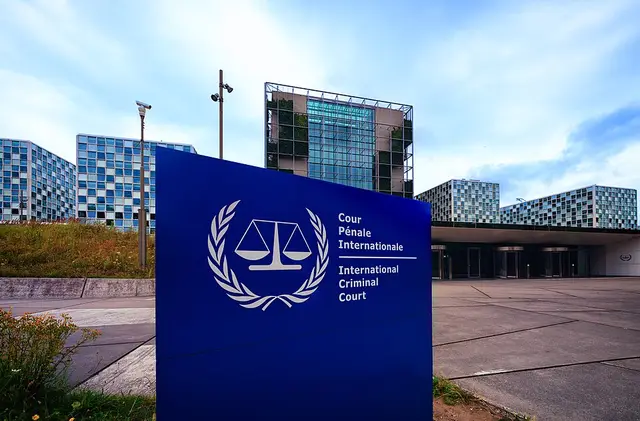
In the post-World War II landscape, a pivotal moment was the enactment of the Universal Declaration of Human Rights (1948), as it shifted the focus from the states being the primary subjects of international law, to the protection of individuals’ rights (McDougal et al., 2019), thus imposing a costraint on the very notion of sovereignty (Kumar & Kumar, 2024). Such relevant intervention was then followed by two other fundamental enactments that affected the understanding of sovereignty. These are the Geneva Convention (1949), binding states to strict humanitarian law obligations in time of conflicts, and the Rome Statute (1998), which in turn allowed to make inroads into sovereign immunities (Acet Ince, 2026).
These two instruments constitute a fundamental step towards conditional sovereignty in terms of human rights protection, but the most relevant advancement was brought about by the development of the doctrine on Responsibility to Protect (Peter, 2024).
3. Conditional sovereignty and Responsibility to Protect
The notion of the Responsibility to Protect (R2P) developed around the early 2000s, and was formally adopted as a key principle of the UN World Summit in 2005. In the Outcome Document, under paragraphs 138 and 139 it was provided that each sovereign entity, hence states, have an obligation to protect their population against the four core mass atrocity crimes: genocide, crimes against humanity, and war crimes, and ethnic cleansing. The latter is not formally codified, while the Rome Statute (1998) provides for the others. The revolutionary provision however refers to the case in which states fail to fulfill such obligations, shifting the duty to protect the population to the international community as a whole, giving ground to the UN Security Council to derogate the principle of sovereignty and non-intervention in order to ensure protection from mass atrocity crimes (Global Centre for the Responsibility to Protect, n.d.).
The possible intervention on such grounds reframed the very notion of sovereignty in terms of its capacity to protect the fundamental rights of its population (Deng et al., 1996).
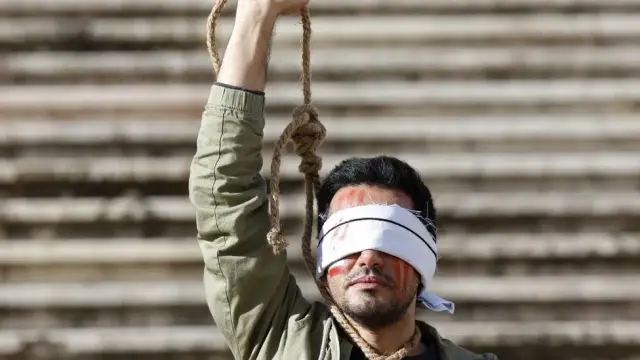
Such doctrine is a paradigmatic instance of how sovereignty in its traditional understanding can and has been overridden by mass atrocities and attempts to prevent them (Tang, 2023). Not only because such violations may allow the UNSC to grant an intervention, but even because it first attempts to hold states to standards within their internal domain.
4. The Kosovo case
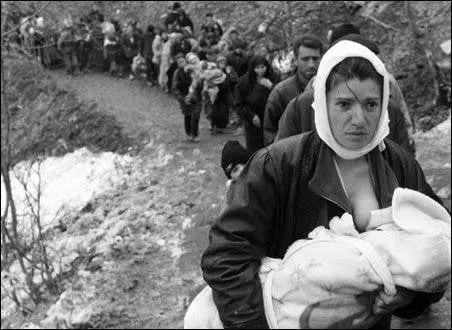
A relevant moment that led to actual development of R2P concerns the 1999 NATO intervention in Kosovo: the UNSC did not, due to political obstacles, approve military intervention, nonetheless, NATO launched Operation Allied Force by grounding such interference on humanitarian justifications (Solana, 1999) and thus constituting the pivotal shift to the possibility of challenging how states treat their own citizens.
There have been many debates on the legality of such intervention, yet the intervention in Kosovo of 1999 and that of the same year in East Timor, which in contrast was authorised by Security Council Resolution 1264 (1999), still provide evidence of a change in the understanding of sovereignty. This understanding became subjected to humanitarian protection and accountability in case of atrocities. This can be better understood if we consider that such activism spiked following the failed prevention of the massacre of 1995 in Srebrenica (Rivera, 2026).
It was not the lack of action on the part of international organization that caused this change in the notion of sovereignty, but the realization that before human rights violations state sovereingty could no longer be ground for justifications, therefore a new understanding came about and was institutionalized by the development of the R2P doctrine.
5. The Rohingya crisis
Despite the relevance of the development of R2P, its application continues to face several problems and annexed critics. The reliance on UNSC Resolutions poses the possibility to states with veto powers to freeze any type of intervention on political grounds, at the same time it risks leading to interventions that are too broad as with the change in government in 2011 in Libya (Nuruzzaman, 2022). It is possible to say that while R2P has had its success, as it has been used in about 100 Resolution (GCR2P, 2026) and triggered good practices and regional mechanisms for the prevention of atrocity crimes; it has also failed several times since its creation, as seen for instance in Sri Lanka, Sudan and Yemen (GCR2P, 2021). Where R2P fails due to UNSC gridlock, international protection of human rights has shifted towards judicial proceedings in the attempt to costrain state authority’s internal conduct by establishing that it is subject to binding international obligations owed to the global comunity (Acet Ince, 2026).
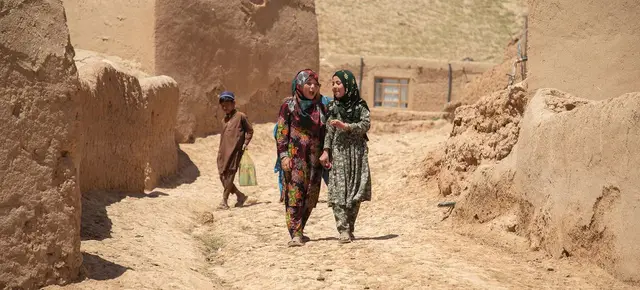
A relevant and ever-progressing case is that of the Rohingya crisis in Myanmar (Singh, Malik, 2026), where the population is subject to continuing campaigns of ethnic cleansing (Amnesty International USA, 2023). In this respect, the role of third states is relevant, such as of The Gambia which has brought a case against Myanmar before the International Court of Justice, claiming a violation of the Genocide Convention (1948). This filing was followed by an order of the Court on the 23rd of January 2020, addressed to Myanmar, directing it to take all the measures possible to prevent acts falling within the scope of the crime of genocide as per the Convention. Importantly, the ICJ rejected the inadmissibility claim advanced by Myanmar in 2022, defining the aim of preventing genocide as being a ‘common interest’ (Independent Investigative Mechanism for Myanmar, n.d.). Both the rejection and the measure ordering Myanmar, a sovereign entity, to take action and protect human rights of its population are evidence of the constraint that human rights pose to the traditional notion of sovereignty also through erga omnes violations. Additionally, Gambia received support from the Organization of Islamic Cooperation and eleven other states submitted a declaration reinstating their common interest in the protection of human rights, including prevention of genocide.
Similarly, in South Africa v. Israel (2024), the ICJ issued provisional measure to protect the plausible, irreparabily harmed rights of Palestinians (Sterio, 2024) establishing a low treshold for the imposition of duty to prevent genocidal acts as a plausible claim of mass atrocity crimes suffices for judicial organs to restrict soveriegn actions (Sterio, 2024).
6. Conclusion
The development of human rights standards and an increasing attitude to the protection thereof has allowed international law to move from the traditional understanding developed in absolute terms with the Peace of Westphalia to a more modern one, marked by the institutionalization of conditional sovereignty where the former is understood in terms of the responsibility that each state owes to its citizens.
R2P has contributed to a reconceptualisation of sovereignty as entailing responsibilities towards populations while it does not create an independent exception to the prohibition on the use of force. It appears that its standing in international law and the legal controversy surrounding its history are matters that will appear at the center of discussion within international law circles for some more while.
References
Acet Ince, G. S. (2026). From sovereignty to human rights: The transformation of international law’s paradigms. International Journal of Eurasia Social Sciences, 17(64), 798–809. https://doi.org/10.70736/ijoess.2185
Amnesty International USA. (2023, June 8). The Rohingya Crisis | Amnesty International USA. https://www.amnestyusa.org/rohingya/
Applying R2P to Myanmar – Global Centre for the Responsibility to Protect. (2021, April 26). Global Centre for the Responsibility to Protect. https://www.globalr2p.org/publications/applying-r2p-to-myanmar/
Besson, S. (2011). Sovereignty. Max Planck Encyclopedia of Public International Law. https://doi.org/10.1093/law:epil/9780199231690/e1472
Bodin, Jean, Les Six livres de la Republique de J. Bodin Angevin. À Monseigneur du Faur, Seigneur de Pibrac, Conseiller du Roy en son Conseil privé, À Paris, Chez Jacques du Puys, Libraire Juré, à la Samaritaine, 1576. Avec privilege du Roy. https://gallica.bnf.fr/ark:/12148/btv1b86268103/f13.item.
Case concerning Military and Paramilitary Activities in and against Nicaragua (Nicaragua v United States of America) (Merits) [1986] ICJ
Cohen, R. (2009, February 20). The responsibility to protect: human rights and humanitarian dimensions. Brookings. https://www.brookings.edu/articles/the-responsibility-to-protect-human-rights-and-humanitarian-dimensions/
Convention on the Prevention and Punishment of the Crime of Genocide, December 9, 1948, 78 U.N.T.S. 277. https://www.un.org/en/genocide-prevention/1948-convention
Deng, F. M., Kimaro, S., Lyons, T., Rothchild, D., & Zartman, I. W. (1996). Sovereignty as responsibility: Conflict management in Africa. Brookings Institution Press.
Geneva Conventions for the Protection of War Victims, August 12, 1949. https://www.icrc.org/en/doc/assets/files/publications/icrc-002-0173.pdf
Kumar, A., & Kumar, S. (2024). Contribution of the declaration of universal human rights in the empowerment of human rights: A legal study. Knowledgeable Research: A Multidisciplinary Journal, 2(6), 8–16.
ICJ – The Gambia v. Myanmar | Independent Investigative Mechanism for Myanmar. (n.d.). https://iimm.un.org/en/icj-gambia-v-myanmar
McDougal, Myres S.; Lasswell, Harold D.; and Chen, Lung-chu, “Human Rights and World Public Order: The Basic Policies of an International Law of Human Dignity” (1980). Books. 29. https://digitalcommons.nyls.edu/fac_books/29
Murdie, Amanda. (2017). R2P, Human Rights, and the Perils of a Bad Human Rights Intervention. Global Responsibility to Protect. 9. 267-293. 10.1163/1875984X-00903004.
Nuruzzaman, M. (2022). “Responsibility to Protect” and the BRICS: A Decade after the Intervention in Libya. Global Studies Quarterly, 2(4), ksac051. https://doi.org/10.1093/isagsq/ksac051
Peter, M. (2024). Global fragmentation and collective security instruments: Weakening the liberal international order from within. Politics and Governance, 12, 1–15.
Rivera, J. (2026) Kosovo: Sovereignty versus the Responsibility to Protect. https://www.militaryhistoryonline.com/modern/kosovo
Rome Statute of the International Criminal Court, July 17, 1998. https://www.icc-cpi.int/sites/default/files/2024-05/Rome-Statute-eng.pdf
Singh, R., Malik, S., & VG, A. (2026). Revisiting the Principle of Non-Intervention in Humanitarian Crises: Towards a Doctrine of Conditional Sovereignty. International Journal of Law Management and Humanities, 9(IV), 316-338.
Sterio, M. (2024, January 26). The ICJ’s Provisional Measures Order in the South Africa v. Israel Case: Unsurprising; Politically and Legally Significant. Opinio Juris. https://opiniojuris.org/2024/01/27/the-icjs-provisional-measures-order-in-the-south-africa-v-israel-case-unsurprising-politically-and-legally-significant/
Summary of the UN Secretary-General’s 2025 Report on R2P, Responsibility to Protect: 20 years of commitment to principled and collective action – Global Centre for the Responsibility to Protect. (2026, June 4). Global Centre for the Responsibility to Protect. https://www.globalr2p.org/publications/summary-2025-report/
Tang, Z. (2023). The Evolution of “State Sovereignty” under International Institutions Ledto Less Use of Force and More Efficient Dispute Settlement. Lecture Notes in Education Psychology and Public Media, 4(1), 190–197.
United Nations. (n.d.). About the responsibility to protect | United Nations. https://www.un.org/en/genocide-prevention/responsibility-protect/about
U.N. Charter art. 2, para. 1. & 7.
United Nations General Assembly. (2005). 2005 World Summit Outcome (Resolution A/RES/60/1). https://undocs.org/A/RES/60/1
United Nations. (1948, December 10). Universal Declaration of Human Rights. https://www.un.org/en/about-us/universal-declaration-of-human-rights
UN Security Council resolutions and presidential statements referencing R2P – Global Centre for the Responsibility to Protect. (2026, June 24). Global Centre for the Responsibility to Protect. https://www.globalr2p.org/resources/un-security-council-resolutions-and-presidential-statements-referencing-r2p/
What is R2P? – Global Centre for the Responsibility to Protect. (n.d.). Global Centre for the Responsibility to Protect. https://www.globalr2p.org/what-is-r2p/
Yoon, K. (2024). The many faces of sovereignty. International Theory, 16(2), 211–236. doi:10.1017/S1752971924000058