




Introduction
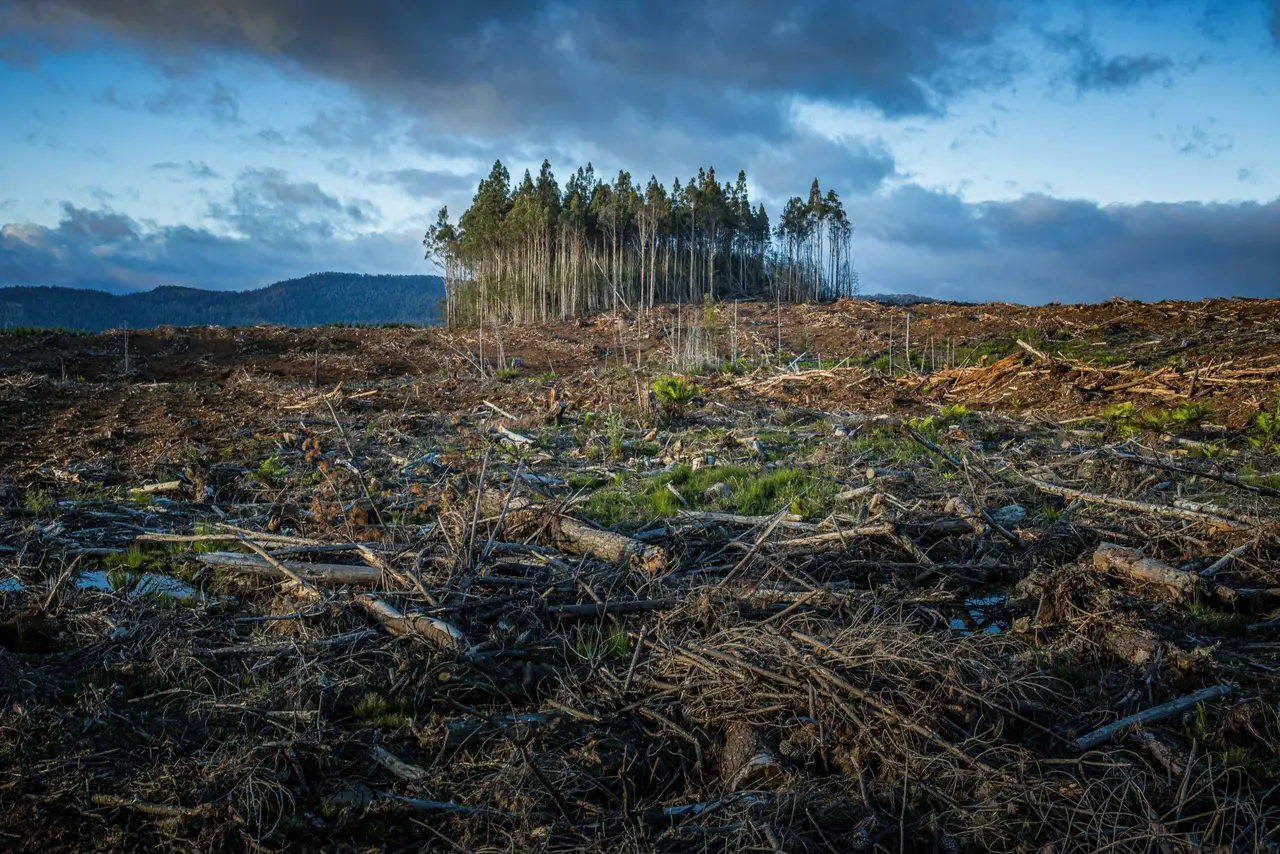
The Yanomami people, indigenous population living in northern Brazil and southern Venezuela, are facing a grave humanitarian and environmental crisis mainly caused by the practice of illegal mining (garimpo) (Leal Filho et al., 2024, p.2). Between 2019 and 2022 alone, the expansion of illegal mining activities and deforestation has rapidly increased under Bolsonaro’s mandate, worsened by the systematic weakening of environmental agencies (Busse & Rogers, 2023, pp. 3, 11-12). As a consequence, rivers are being polluted by mercury, thus making water unsafe for consumption, and large-scale fires are flaring up, furtherly destabilising the territory’s ecosystem (Leal Filho et al., 2024, p.3). The Yanomami communities’ forced displacement to abandon contaminated areas has been recognised as a humanitarian crisis, whose legal dimension still remains only partially addressed (Pinto, 2025, p.8).
This research aims at understanding to what extent Brazilian environmental law and international law recognise the forced displacement endured by the Yanomami indigenous people in Brazil as a result of illegal garimpo as a legally relevant harm.
The analysis tackles the inefficiency of sanctioning mechanisms before the destruction of natural resources, while examining the lack of forced displacement as a distinct, climate-related legally relevant harm. While both the Brazilian legal framework and the international proposal for the recognition of a crime of ecocide exist to offer protection for environmental damages, climate-induced human displacement is still highly overlooked.
The study will proceed through a doctrinal examination of primary sources, namely Brazilian environmental criminal law and the international proposal for a law of ecocide, complemented with secondary sources offering empirical literature on the Yanomami crisis.
The structure will be tripartite: in the first section, the analysis outlines the current legal framework; the second part examines Yanomami displacement as a distinct, climate-related harm; the third section considers how the legal recognition of this harm may be achieved.
The Current Legal Framework
The Brazilian legal system provides for an extensive environmental legal framework. Chapter VI, Article 225 of the Brazilian Constitution (1988) enshrines the right to an ecologically balanced environment, underlining its importance for leading a healthy life.
A specific national environmental law, namely Law 9.605/1998, further penalises crimes committed against the environment, also covering individual and corporate responsibility. It provides a thorough sanctioning system, comprising both administrative and criminal sanctions for activities harming the environment, outlining crimes against flora, fauna, urban planning, cultural heritage, and environmental administration. Despite this comprehensive framework, the scope of protection afforded to affected populations is limited: while national law criminalises acts causing serious repercussions on the environment, it does not recognise human displacement as a legally relevant element under any of these categories (Frisso, 2026, p.1392).
This omission persists at the international level, where the proposal for the crime of ecocide remains ecosystem-centered. The Independent Expert Panel for the Legal Definition of Ecocide (2021) defines ecocide as “illegal or wanton acts with the knowledge that they generate a substantial probability of serious and widespread or long-term damage to the environment”. In this definition, later mirrored in Brazil’s Bill 2933/2023 1, the elements of severity and scale explicitly include the impact on human life, defining “severe” as “harm” that has, inter alia, “serious impact to human life”, and “widespread” as “damage […] suffered […] by a large number of human beings”. The environmental harm is measured through a quantitative ecological criteria (e.g., geographical area affected or duration of the damage), while it omits qualitative and human dimensions, thus failing to account for human displacement as a separate consequence (Frisso, 2026, p. 1393). Interestingly, this is not the only provision where this ecosystem-centered structure is present: in a previous effort to criminalise ecocide, Bill 2787/2019 (para. 2) 2, includes human loss in a separate paragraph, highlighting the persistent dichotomy between human and nature instead of the relationship between these elements (Frisso, 2026, p.1394).
Through this approach, the legal framework fails to recognise the consequences of this gap in the protection of indigenous peoples: a community forced to leave is faced with further damage, adding the loss of land, identity, and community, in addition to the physical damages that loom on a community that decides to stay.
Therefore, despite environmental damage being largely recognised and protected constitutionally, domestically under Law 9.605/1998, and at the international level, the forced migration of the Yanomami people from ancestral land is not considered a constituent element of the environmental crime, nor an aggravating circumstance.
- Bill 2933/2023 is a legislative proposal currently under consideration in the Brazilian Chamber of Deputies and has not been enacted into law yet. ↩︎
- Bill 2782/2019 is a legislative proposal currently undergoing parliamentary review in the Brazilian Federal Senate and has not been enacted into law yet. ↩︎
Yanomami Displacement as autonomous harm
Although not legally protected, the forced displacement of the Yanomami Indigenous People caused by environmental damage and degradation resulting from illegal garimpo represents a separate and distinct harm from ecosystem damage.
Under international law, as well as from a human rights law perspective, forced displacement is largely discussed. The UN Guiding Principles on Internal Displacement define arbitrary displacement as the denial of the right of every human being “to be protected against being arbitrarily displaced from his or her home or place of habitual residence”, absent justifications recognised under international law (United Nations Commission on Human Rights, 1998, Principle 6(1); Lema & Vasquez, 2022, pp. 160-161). Article 7(1)(d) of the ICC Statute describes forced displacement as a crime against humanity, specifically including “deportation or forcible transfer of population” when committed as part of a widespread or systematic attack directed against any civilian population. Applied to the context of the Yanomami people, the “forcible” nature of the displacement does not derive solely from physical force or direct threats. Rather, the deliberate establishment of a coercive environment through the destruction of basic living standards makes the transfer forcible. (ICC, Elements of Crimes, Art. 7, fn. 12; Lema & Vasquez, 2022, p. 162).
The Yanomami ancestral territory has been severely impacted by illegal mining activities: between 2019 and 2022, the incursion of roughly 20,000 garimpeiros drove illegal mining activity to grow by 54% in 2022 (Leal Filho et al, 2024, p. 4). As a result, mercury contamination in rivers reached levels that are 8600% higher than the safety threshold and armed attacks in Yanomami territories were intensified (Leal Filho et al, 2024, pp. 5-6). The devastating humanitarian crisis derived from the conduct of illegal activities and State’s omission forced Yanomami communities to abandon their villages and to seek shelter far from their ancestral land (Hutukara Associação Yanomami, 2022, pp. 55-56, 78).
The recent displacement provokes inevitable damage to the community identity and lifestyle. However, despite protection from displacement being offered both constitutionally and internationally (Brazilian Constitution, Art. 231; ILO Convention 169, Art. 16), the lack of recognition of environmentally-caused displacement within the criminal framework prevents it from being treated as an element of the crime, used as an aggravated circumstance, or serving as a specific foundation for reparation linked to displacement.
Towards Legal Recognition
Enabling forced displacement to be recognised as a legally relevant harm requires specific adjustment to both the Brazilian environmental criminal framework and the international proposal for ecocide.
First, building on this analysis, this paper suggests that forced displacement could be incorporated at domestic level as an aggravating circumstance to Law 9.605/1998. Where environmental crimes result in Indigenous peoples being forced to leave their territory, this consequence would constitute an aggravating element of the crime. Moreover, aggravating circumstances solely require proof of causal nexus, which in this case would be the relation between the environmental crime and displacement that follows.
At the international level, forced displacement could be included as one of the indicators to qualitatively measure the severity and scale of the damage, offering a wider perspective on how the crime is evaluated.
Lastly, since protection from displacement is provided as a constitutional right (Art. 231) and under international law, criminal proceedings linked to environmental crimes should be procedurally mandated to carry on a constitutionally oriented interpretation when determining the sentence. Rather than measuring solely the ecological damage according to law 9.605/1998, judicial decision-making should be procedurally required to consider the constitutional rights infringed by forced displacement when determining the sentence.
Conclusions
This study aimed at shedding light on an often overlooked issue, namely climate-driven human displacement. The case study of the Yanomami people demonstrates how the current legal framework is still behind in acknowledging forced displacement as a specific and direct consequence of environmental damage, in this specific case caused by illegal mining activities.
The study unveiled that both Brazilian environmental criminal law and the international proposal for the crime of ecocide remain primarily ecosystem-centred, assessing harm based on ecological and demographic thresholds, thus leaving displacement uncovered. The consequences of this legal gap carry a tangible human cost: forced displacement caused by environmental degradation results in the collapse of community identity and structure. This issue, overlooked both by the ecocentric scope of current environmental law and ecocide proposal, struggles to find its recognition within the Brazilian context.
The existence of provisions protecting against forced displacement demonstrates that the gap examined in this research is not substantive in nature. The right against forced displacement does exist, but not within environmental criminal law itself. Thus, filling the gap by bridging environmental criminal law with existing constitutional rights rather than creating an entire new legal category could provide a feasible solution to this issue.
References
Busse, P., & Rogers, R. J. (2023). Ecocide: A new legal tool to defend the Amazon [Symposium paper]. Promise Institute Symposium 2023: An International Crime of Ecocide: New Perspectives, UCLA School of Law. https://ecocidelaw.com/portfolio/2829/
Constituição da República Federativa do Brasil de 1988 [Constitution of the Federative Republic of Brazil], arts. 225, 231 (Braz.). https://www.planalto.gov.br/ccivil_03/constituicao/constituicao.htm
Frisso, G. M. (2026). The criminalisation of ecocide in Brazil and Indigenous peoples’ rights. The International Journal of Human Rights, 30(6), 1389–1406.
Hutukara Associação Yanomami, & Associação Wanasseduume Ye’kwana. (2022). Yanomami sob ataque: Garimpo ilegal na Terra Indígena Yanomami e propostas para combatê-lo. https://acervo.socioambiental.org/sites/default/files/documents/yal00067.pdf
Independent Expert Panel for the Legal Definition of Ecocide. (2021). Independent Expert Panel for the Legal Definition of Ecocide: Commentary and core text. Stop Ecocide Foundation. https://www.stopecocide.earth/legal-definition
Indigenous and Tribal Peoples Convention, 1989 (No. 169), June 27, 1989. https://normlex.ilo.org/dyn/nrmlx_en/f?p=NORMLEXPUB:12100:0::NO::P12100_ILO_CODE:C169
International Criminal Court. (2011). Elements of Crimes. https://www.icc-cpi.int/sites/default/files/Publications/Elements-of-Crimes.pdf
Leal Filho, W., Martinelli, Y., Dinis, M. A. P., Rosa, C., & Messias, C. G. (2024). Climate change and environmental degradation in Yanomami People’s Land: Intersectional threats and the need for improved policy-making. Environmental Science & Policy, 162, Article 103931.
Lei nº 9.605, de 12 de fevereiro de 1998 [Environmental Crimes Law] (Braz.). https://www.planalto.gov.br/ccivil_03/leis/l9605.htm
Lema, D., & Vasquez, A. (2022). Forced displacement of Indigenous peoples in the Amazon caused by environmental hardship: A case for human security. Peace Human Rights Governance, 6(2), 159–180. https://doi.org/10.14658/PUPJ-PHRG-2022-2-4
Pinto, S. R. (2025). Negligence or genocide? The humanitarian crisis in the Yanommii Indigenous Land in Brasil. Revista Brasileira de Ciências Sociais, 40, Article e40014. https://doi.org/10.1590/40014/2025
Projeto de Lei nº 2.787, de 2019 [Bill No. 2,787/2019], Senado Federal (Braz.). https://www25.senado.leg.br/web/atividade/materias/-/materia/137437
Projeto de Lei nº 2.933, de 2023 [Bill No. 2,933/2023], Câmara dos Deputados (Braz.). https://www.camara.leg.br/proposicoesWeb/fichadetramitacao?idProposicao=2367513
Rome Statute of the International Criminal Court, July 17, 1998, 2187 U.N.T.S. 90. https://legal.un.org/icc/statute/99_corr/cstatute.htm
United Nations Commission on Human Rights. (1998, February 11). Report of the Representative of the Secretary-General, Mr. Francis M. Deng, submitted pursuant to Commission resolution 1997/39: Addendum: Guiding principles on internal displacement (E/CN.4/1998/53/Add.2). United Nations. https://docs.un.org/en/E/CN.4/1998/53/Add.2