


A conversation with Dr. Stefan Mair, Director and Executive Chairman of the German Institute for International and Security Affairs (SWP)
During a live interview moderated by Alperen Çelik, Dr. Stefan Mair provided a
comprehensive analysis of Germany’s changing foreign policy posture (Zeitenwende), the structural vulnerabilities within European defense supply chains, and the strategic imperatives for long-term European security integration.
Opening the dialogue on national defense, Dr. Mair evaluated the progress of Germany’s epochal defense investment policy. He emphasized that while significant progress is being made toward acquiring heavy armaments like tanks and frigates there is some debate about whether the plans regardings the acquisition of modern technologies like drones are efficent. On defence spending in general, public sentiment remains divided into three distinct segments: roughly 40% support the current defense posture, up to 30% advocate for greater military investment, and another 30% favor reduced defense spending. While overall support for military modernization remains solid, growing polarization from populist parties presents a rising challenge. In the context of NATO and the broader European Union, Dr. Mair noted that Germany’s economic size and fiscal capacity obligate it to assume a leadership role. However, he stressed that this must be executed as “leadership in partnership” alongside key European allies like France, Poland, the UK, and Italy. Projected spending trajectories indicate that Germany could match the combined defense expenditures of France and the UK by 2030, making diplomatic coordination vital to avoid alarming regional neighbors.
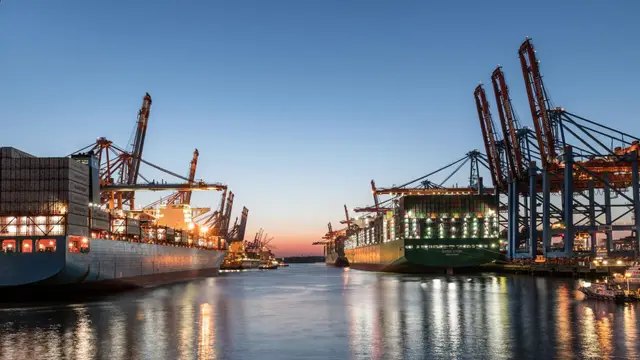
Turning to economic security and industrial vulnerabilities, Dr. Mair pinpointed critical raw materials and semiconductors as the primary points of risk for European supply chains. Germany remains heavily reliant on rare-earth elements processed in China—a country with a history of leveraging resource exports for economic coercion. While German investments in microchips have improved domestic resilience, the continent remains vulnerable to potential supply chain disruptions in East Asia. Regarding Ukraine, Dr. Mair affirmed that Germany can sustain its military and financial support while simultaneously rebuilding the Bundeswehr, provided the conflict maintains its current operational intensity. On domestic security, he acknowledged serious vulnerabilities in European critical infrastructure, pointing to recent hybrid threats and drone incidents as catalysts for pending legislation that may grant German intelligence agencies offensive operational capabilities. He firmly identified Russia as the single greatest external threat facing Europe, citing its ambitions to fragment NATO and establish hegemony over Europe.
Addressing global diplomatic strategy, Dr. Mair discussed the EU’s evolving relationship with China, describing a shift from economic partnership toward systemic rivalry. He stated that China’s ongoing political and economic backing of Russia directly undermines European security interests, rendering a return to a strategic partnership improbable. Regarding third-party allies, he highlighted Turkey as an essential NATO security partner given its strategic geographical position, though acknowledging that balancing foreign policy maneuvers and domestic governance issues create ongoing diplomatic friction with Brussels.
Concluding the discussion on transatlantic strategy and career guidance, Dr. Mair evaluated the concept of European strategic autonomy. He projected that within five to seven years—by around 2030—consistent defense investments could enable Europe to conventionally deter regional threats independently. However, in the interim, Europe remains dependent on American security guarantees despite growing political uncertainty in Washington. Offering final advice to emerging political science professionals, Dr. Mair cautioned against locking oneself too early into a single rigid career path, urging students to maintain strategic adaptability, keep professional options open, and embrace unexpected opportunities.
About the Interviewed: Dr. Stefan Mair is the Director of the German Institute for International and Security Affairs and Executive Chairman of Stiftung Wissenschaft und Politik (SWP). With extensive leadership experience bridging political science, geoeconomics, and foreign policy—including serving a decade on the Executive Board of the Federation of German Industries (BDI)—his research focuses on German and European security policy challenges, trade policy, and global systemic competition. He regularly advises international institutions and policy frameworks on European strategic autonomy, supply chain resilience, and post-Zeitenwende foreign policy dynamics.