


EU Migration Policy and Refugees
Introduction
Since the coup against Muammar Gaddafi in 2011, Libya has become one of the primary transit countries for refugees and migrants crossing the Central Mediterranean to reach Europe. In response, the European Union has increasingly relied on cooperation with Libyan authorities to prevent these crossings. On July 17, 31 Human Rights Organisations published a joint statement, demanding that EU institutions cease all cooperation with Libyan authorities on migration management, operating in a country fragmented by conflict, where militias and state institutions often overlap. This brief argues that the collapse of state authority in Libya and the EU’s continued engagement with Libyan actors have transformed migration into a space of political exploitation, where refugees are continuously subjected to human rights violations.
Libya’s Historical Background
Today’s Libya is fundamentally a product of its past; to understand its current instability and the absence of a coherent migration policy, it is necessary to examine its historical development. The decisive turning point in this long process lies in the specific exercise of power under Muammar Gaddafi and the subsequent collapse of his regime in 2011.
On 1 September 1969, the Free Officers’ Movement, led by Muammar Gaddafi, executed a swift coup d’état that brought an end to the monarchy of King Idris I. The coup was widely welcomed by a population exhausted by the monarch’s inefficient foreign and domestic policies. On the same day, Gaddafi presented the new government via radio, proclaiming the establishment of the Libyan Arab Republic, introducing the new governing body as the Revolutionary Command Council (RCC), and declaring himself Commander-in-Chief.
The initial enthusiasm for the promise of freedom soon gave way to an ideological dictatorship. Gaddafi’s political vision first crystallized in 1975 with the publication of the first volume of The Green Book, outlining his vision of direct democracy through “People’s Committees”. Two years later, on March 2, 1977, he formally established the Great Socialist People’s Libyan Arab Jamahiriya. Gaddafi pitched these reforms as a historic handover of power to the Libyan people, but they achieved the opposite: the parliament was dismantled, political parties were banned, and the Green Book became the supreme ideological doctrine of society. Yet this was less about empowering the public than about stripping away institutional resistance; in fact, by systematically dissolving formal state institutions, Gaddafi erased all checks and balances. This move allowed him to exercise absolute power without the constraints of an autonomous bureaucracy, a unified professional army, or an independent judiciary. Ultimately, this “statelessness” by design left post-Ra’is Libya with no institutional backbone to absorb the shock of his fall.
Gaddafi’s Migration Policies
However, before discussing the fall of the Libyan Jamahiriya, it is necessary to examine Gaddafi’s migration policies. In 2002, he launched an economic development programme that opened Libya’s southern border to African workers, allowing them to enter the country with minimal restrictions. Although these migrants were largely excluded from labour protection and social security, the prospect of comparatively well-paid employment attracted a substantial inflow of workers. By 2010, legal migrants accounted for approximately 10.4% of Libya’s population, while the number of undocumented migrants was estimated at between 1.5 and 2 million.
Libya was certainly neither the first nor the last country to rely on low-cost foreign labour. What made the Libyan case unique was the extent to which migration served as leverage in foreign relations. A prime example was the 2003 confidential bilateral agreement with Italy: Rome deployed police and naval patrols directly into Libyan territory and provided border security equipment, and in return, Tripoli agreed to readmit irregular migrants intercepted after reaching Italy, a mechanism that severely undermined asylum rights. From that moment onwards, migrants ceased to be viewed through a humanitarian lens and became bargaining chips leveraged by Libya to extract political and economic concessions.
Under growing Italian pressure, Libya also tightened its migration legislation by criminalising irregular migration and establishing detention centres for migrants awaiting deportation. These measures marked the beginning of a migration containment strategy that would persist, albeit under very different political circumstances, after the fall of the regime.
The Fall of Gaddafi and the Rise of Militias
In 2011, as the Arab Spring swept the region, widespread protests erupted across Libya, fuelled by discontent over authoritarianism, corruption and the management of the country’s oil wealth. The brutal state response quickly transformed popular unrest into a civil war. NATO’s military intervention tipped the scales, leading to the collapse of the regime and Gaddafi’s death in October 2011. However, the Jamahirya’s demise fractured the country among rival militias and tribal groups, such as the Toubou in the south-east and the Tuareg in the south-west, who fought for dominance of the territory and key migration routes. Years later, even the UN-recognized Government of National Accord (GNA) struggled to extend its authority beyond Tripoli and the west. Nonetheless, the Interim Government backed by the self-declared Libyan National Army (LNA) controls most of Libya’s East. According to Amnesty International “each entity is backed by a myriad of militias and/or armed groups, operating with varying degrees of independence. Both the GNA and LNA claim to rule over parts of southern Libya, while local armed groups exercise effective control on the ground”.
The Libyan civil war created a society defined by fundamental instability and rival groups contesting power, creating severe conditions for migrants who remain in Libya. While Libya once was a destination for foreign workers drawn by a strong economy, post-civil war migrants have used the country as a transit point to set off for Europe. With a country in turmoil, the Post-Gaddafi era is marked by the trade and trafficking of human beings as a central source of income for communities in Libya.
EU–Libya Migration Cooperation after 2011
After the onset of the civil war in 2011 until 2015, EU cooperation focused on humanitarian assistance until the Libyan Political Agreement was reached, a UN-brokered agreement aimed at stabilising the country and its rival parties. The civil war drove many migrants to flee towards Europe, prompting the EU and individual Member States to introduce a series of measures to reinforce their borders and reduce the number of arrivals. Hence, limiting boat arrivals across the Mediterranean, with Libya being one of the main transit countries, became the key European policy focus.
In 2013, the EU launched the European Union Border Assistance Mission in Libya (EUBAM Libya) to support Libyan authorities in developing integrated border management, and in 2014, the EU launched its Joint Operation together with its border control agency, Frontex: Operation Triton. This naval operation was executed in the waters between Italy and Libya, with the aim of supporting Italy with border control, but in practice, the operation shifted the EU’s emphasis towards preventing refugees from entering Italian territory. The European Union Emergency Trust Fund for Africa (EUTF) was primarily introduced at the 2015 Valletta Summit. The fund was envisioned as a tool to “erase the root causes of migration.” While EUR 3.3 billion have been allocated to the fund until 2017, just 375.1 million come from EU Member States. The biggest share of the resources is taken from the European Development Fund, which is originally meant to finance development projects not connected to migration or border management.
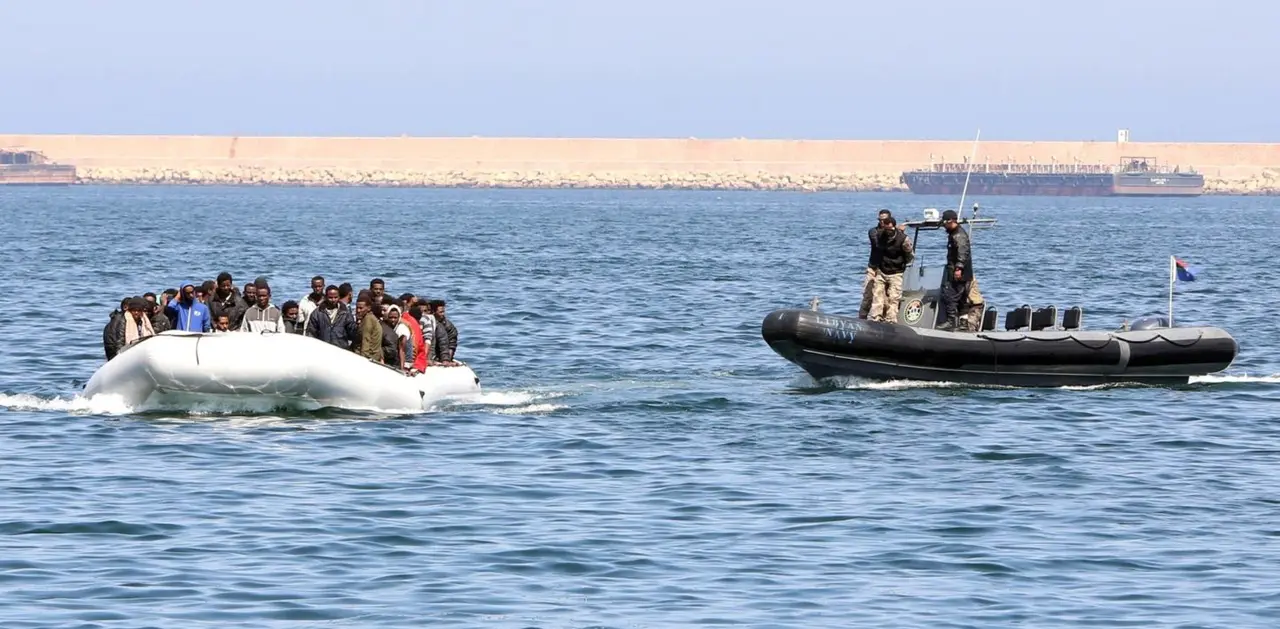
In 2017, EU Member States adopted the Malta Declaration (European Union). Libya is the central player in the Declaration, as the EU offered EUR 200 million for Libya to control its borders and to further strengthen the cooperation and partnership between the EU and Libya. The declaration was adopted shortly after the bilateral memorandum of understanding between Italy and Libya, further endorsing the controversial policy points of enabling and training the Libyan coast guard to intercept refugee boats at sea and return them to Libyan land. These developments, starting in 2017, marked a vital shift in the EU’s migration cooperation and delineated the onset of a European governance relying on the externalisation of migration management by strengthening Libya’s capacity to prevent departures before migrants reach European territory.
Since 2021, EU assistance to Libya is primarily funded through the Neighbourhood, Development and International Cooperation Instrument, starting a new era of the institutionalisation of EU-Libya relations, by allocating €224 million to Libya (2021-2027). While these programmes place greater emphasis on rights-based migration governance in theory, they have been heavily criticised by multiple experts and human rights NGOs for circumventing accountability and enabling human rights violations carried out by Libyan authorities and armed groups. Recent discussions in 2026 on renewing and expanding cooperation with eastern Libyan authorities have intensified public pressure on European Institutions to address these controversies.
Lack of Accountability and Human Rights Implications for Refugees
The recent renewal of the cooperation between Libya and the EU has led to a broad outcry by various human rights organisations. 30 Organisations published a shared statement urging EU Institutions to finally “end all cooperation with Libyan authorities on Migration Control”, specifically with the Libyan Coast Guard (LGC) and the General Administration for Coastal Security (GACS).
Until today, Libya is the only North African country which is not a Party to the 1951 Geneva Convention on Refugees and has no asylum system. Therefore, the technical and financial assistance provided by the EU has facilitated the forced return of refugees into a country where they are likely to be arbitrarily detained under inhumane conditions. The leader, EL Hichri, of the Libyan Mitiga prison is facing 17 charges at the International Criminal Court, including enslavement, sexual violence, and inhumane treatment, specifically victimising racialised immigrants from Sub-Saharan Africa. Migrants, especially racialised migrants from Sub-Saharan Africa, experience widespread and systematic human rights violations in and out of detention centres, as noted by the United Nations Support Mission in Libya and the Office of the United Nations High Commissioner for Human Rights in their February 2026 report. Furthermore, Human Rights Watch underlines that “in 2023 the UN Independent Fact-Finding Mission had called on third countries to cease support to Libyan actors, including to the LCG, involved in what likely amounted to crimes against humanity against refugees and migrants.”
Importantly, non-compliance with International Law and the disregard for Human Rights by Libyan authorities are not limited to inland dynamics. Moreover, the LGC does not comply with Search-and-Rescue obligations and has systematically attacked people in distress at sea, leading to multiple deaths. It has also repeatedly shot at NGO sea rescue ships carrying refugees and migrants, as well as committed physical violence and made threats of violence against the staff and refugees onboard.
As mentioned in the section above, the documentation of these crimes is not recent, and Member States as well as EU Institutions have faced large amounts of criticism since the very start of the migration cooperation. More specifically, it becomes evident that the EU is financing militia-backed authorities with funds that were originally allocated for development projects, now sponsoring the illegal pushbacks of migrants into a country that has a well-documented record of human rights abuses. Thus, the money, officially declared to be used for rescue operations and capacity building, evidently is instrumentalised to avoid responsibilities enshrined in International Refugee Law. Accountability remains a problem despite public campaigns, court trials, and Human Rights advocacy. Recent reports revealed plans for renewed EU-funded Coordination Centres in the eastern region of Libya, initiating yet again an intensification of EU-Libya migration cooperation.
It has become evident that the 2011 collapse of state authority in Libya led to a civil war and a power vacuum, forcing migrants to flee towards Europe. As delineated in this brief, the EU has maintained a long-standing cooperation with different Libyan authorities, thereby legitimating ongoing human rights abuses and, thus, further enabling Libyan armed groups to exploit vulnerable migrants as a source of income and power.