





Financial market infrastructures (FMIs) have become instruments of geopolitical influence and economic statecraft, posing cybersecurity threats for actors highly dependent on a foreign infrastructure.
Central Banks’ Geoeconomics, the Digital Euro, and the Future of European Integration.
Introduction
Politics in the 21st Century has become increasingly influenced by geoeconomic considerations. Following Edward Luttwack’s conceptualization (1990), geoeconomics can be defined as the sublimation of the logic of conflict and war in the grammar and methods of commerce, meaning that the cause and the instruments of conflict must be considered primarily through an economic lens. In this scenario, the emergence of new and innovative payment infrastructures, especially in the form of digital currencies, affects the balance of power between major sovereign actors. In other words, it paves the way for greater competition over economic and financial infrastructures (Nolke, 2025). Rather than national states, Central Banks are the main actors feeding this geoeconomic rivalry (Quaglia & Verdun, 2025).
Growing international tensions and the potential for higher degrees of conflict in different regions of the world, involving major players – such as the US, Russia, China, and the European Union – highlight the risks associated with economic interdependence, thus expanding sovereign actors’ willingness to decrease their digital dependency vis-à-vis other actors (Santaniello, 2025). As Farrell & Newman (2019) put it, “weaponized interdependence” hinges on the idea that some states might be able to coerce others due to their asymmetric control over key network economic structures. Who retains the political authority and dictates the international channels where money, goods, and information are distributed can significantly limit the space for action of other states. Examples of how states leveraged their dominant position within global network infrastructures in the monetary field are: (i) the cut off of twenty-four Iranian financial institutions from the signaling message service provided by SWIFT, or; (ii) the implementation and freezing of North Korean and Russian assets in 2017 and 2022, respectively (Nolke, 2024).
In a multipolar world, sovereignty is not based on territorial elements but is rather conceived in functional terms. The political struggle to gain privileged or exclusive access to transnational digital networks creates a new digital political economy (Pasquale, 2017). It also favours the future establishment of so-called “Digital Currency Areas” (DCAs), where the ownership and access to a particular currency won’t be tied to a country but to a specific (digital) network. According to Brunnermeier et al. (2019), two types of competition will emerge. The first involves full currency competition, in terms of their role as units of account, pricing mechanisms, and inflation rate adjustments. The second requires reduced competition of monetary instruments, when subsumed in the same unit of account, for their role as a medium of exchange.
For these reasons, nations started prioritizing the development of their own payment system. Notably, Central Bank Digital Currencies (CBDCs) play a key role in this development. Digital currencies would protect strategic autonomy and sovereignty, and may also serve to exert soft and de facto power dominance over different world regions. As of July 2025, a total of 137 countries and currency unions, accounting for almost 98% of the share in global GDP, are currently exploring the institution of a CBDC; while advanced progress has been made by 72 countries. For instance, 3 countries have already fully launched their digital currency, and 49 CBDC pilot projects are underway (Atlantic Council, accessed 03/2025).
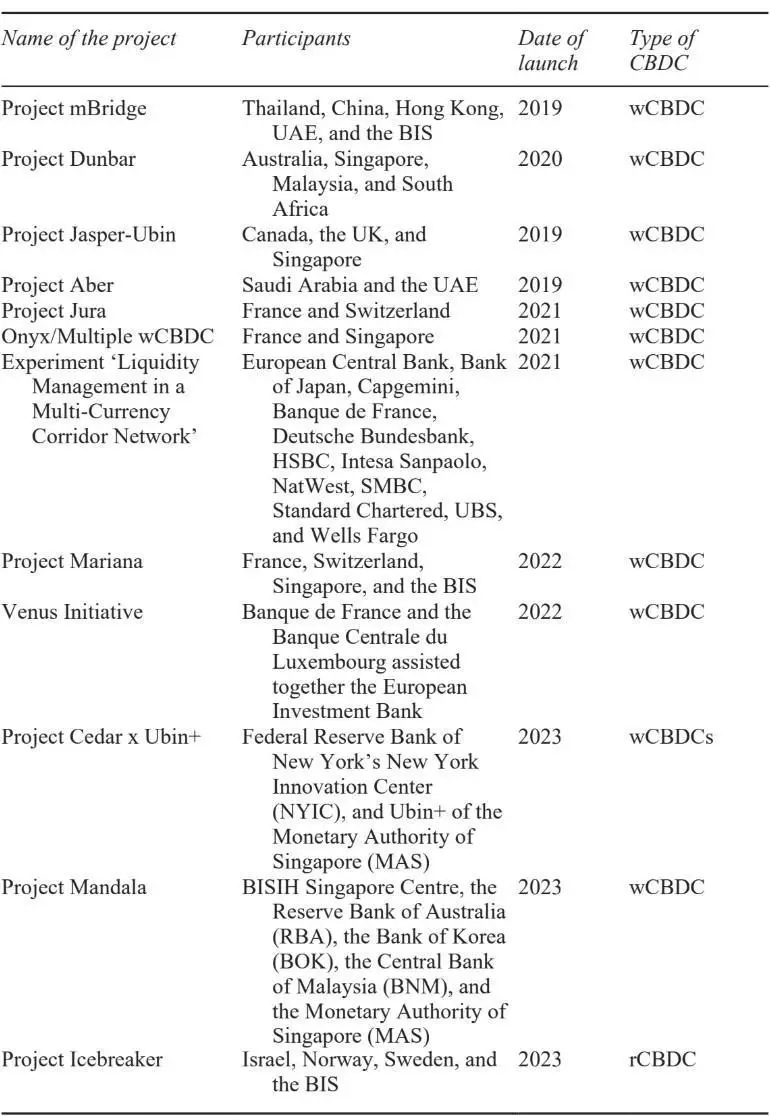
Table 1: Central Bank Digital Currencies initiatives: a summary. Source: Ye, 2025.
Building on this background, this policy report investigates the role of Central Banks as emerging geoeconomic actors, especially focusing on the active role of the European Central Bank (ECB) in promoting the set-up of its digital currency, the Digital Euro, and the impact of these developments on the future of European integration. Section two describes the international environment characterised by the race between China and the US to reach financial digital dominance. Section three will expand on the meaning and significance of digital warfare in an interconnected global scenario. Section four provides a concise overview of different digital financial instruments and their competitors, focusing on the rise of stablecoins and the Chinese Digital Yuan. The final section will explore the structure, scope, and policy environment within which the Digital Euro project is developing, applying theories of European integration to investigate its future development.
US-China race on digital dominance
In the 21st Century, great power competition to reach primacy in technological innovation and control over worldwide digital infrastructures is shaped by the actions of the US and China. So far, the US has been assured by its dominant position and privileged authority on payment infrastructures – the case of SWIFT, as mentioned in the introduction. The conviction that the dollar will maintain its trend-setting international status in the financial field induced American political elites to maintain a passive strategy (Cohen, 2017). Conversely, the Chinese initiative has been more proactive. On the one hand, an intense internal debate regarding the benefits of further internationalising the Renminbi, the Chinese national currency, unfolded (Hofman & Petri, 2025). On the other hand, Chinese governmental agencies initially approved a legislative act in 2017 limiting the acceptance of virtual currencies under Initial Coin Offering (ICO) schemes, and then definitely banned all cryptocurrency transactions in 2021 (Huang & Meyer, 2022). As an alternative strategic objective, Chinese elites put a sustained effort into developing and launching a sovereign digital currency.
The dollar started replacing the sterling as the world’s leading reserve currency in the mid 1920s, and crystallised its dominance after WWII (Eichengreen & Flandreau, 2009). Given its strength and spread, the US has the power to use its national currency as an assertive foreign policy tool, weaponising the dollar and isolating sanctioned countries from global markets. Moreover, the financial transactions network Visa, while explicitly projecting itself as an impartial infrastructure, implicitly and de facto aligns with its US-centered governance hub (Cowan, 2017).
The US retains the status of “chief rule-maker” of the global economic architecture, confronting other players with the alternative of either abiding by its rules or disseminating new digital technologies to empower their positions within the system (Slawotsky, 2022). This is also echoed by the American Department of the Treasury: the emergence of new technologies and adversarial geopolitical considerations might disrupt the current equilibrium and help other powers in reducing their dependency on the Washington-led global payment system (Treasury, 2026). From an American point of view, the Chinese development of its CBDC is an example of how competitors circumvent global financial institutions and pursue strategies of financial statecraft (Huang & Meyer, 2022).
It’s in the US’s interest not to allow for any change in the status quo, since its competitors lack the institutional, economic, and geopolitical features to compete. Whenever a consumer makes a transaction outside of their country using a Bancotact card issued by a national bank, the payment is processed by the Visa or Mastercard networks. In most cases, cards issued by banks rely by default on those two payment circuits, giving the US undisputed control. At the same time, as Bilotta (2024) argues, being the dominant player confronts the US with an innovator’s dilemma, whereby prominent technology firms in the American market fail to recognise the potential of smaller competitors to deliver disruptive innovation.
China has a competitive advantage in the development of a sovereign blockchain service network (BSN) for digital payments. This has been acquired through years of testing on different blockchain applications, reflecting the Chinese geopolitical considerations involving the promotion of a universal digital payment network (UDPN) based on CBDCs from more countries (Ekman, 2021). Importantly, China is not only facing global competition but also a regional one. The Indonesian Chamber of Commerce and Industry concluded negotiations with ASEAN countries to allow QR-code-based payment systems to be the regional digital payment connectivity network (BCG, 2023), within a strategy to support local currency settlement (LCS) mechanisms and strengthen South-East Asian economic cooperation (Bimantara & Nugraha, 2025).
Other international players are trying to develop their proprietary and sovereign alternatives to gain independence from the US and China. Russia is developing the Mir card payment system as a soft power tactic to counteract the dominance of Western financial institutions. This is so because Russia wants to avoid the suspension of transactions enforced by external political and economic actors via international sanctions, as well as to reach full-fledged political multipolarity with the creation of multilateral organisations such as the Eurasian Economic Union (EAEU) (Gricius, 2020). India has also introduced a domestic payment card network, RuPay. The main motivations behind its implementation were to avoid high costs in fees for joining foreign card associations and to allow the economically disadvantaged Indian population to formally join the national economy (Aysan, Ozturk & Selim, 2025).
What is crucial to understand here is that power competition about digital and financial infrastructure is not about domination, but rather gaining control of the system within which the infrastructure was developed.
Cybersecurity, warfare, and digital currencies
Digital financial competition and great power rivalry imply negative externalities and the implementation of digital warfare tactics. Digital warfare covers three areas: espionage, psychological warfare, and sabotage. The latter one comprises strategies aimed at blocking access to electronic services or creating temporary or permanent damage to critical data or physical infrastructures (Hageback & Hedblom, 2022). The case of international economic sanctions discussed in section one can be subsumed under this label.
Moreover, digital currencies might serve as active enablers of sabotage tactics directed towards a competitor, disabling its access to critical data or interfering with the functioning of electronic payment methods. In principle, under the current setting, the US could leverage multiple legal and operational levels to restrict European banks from using payment infrastructures. This can happen in two ways: (i) delivering executive-branch sanctions accompanied by a regulatory action under or outside emergency authorities; (ii) by means of an affirmative congressional legislation forbidding determined corporate behaviours and creating binding statutory obligations (Felicetti & Brescia Morra, 2025).
Financial market infrastructures (FMIs) have become instruments of geopolitical influence and economic statecraft, posing cybersecurity threats for actors highly dependent on a foreign infrastructure (Oppenheimer, 2025). In other words, they are not just neutral and technocratic utilities only, but weaponised instruments of financial diplomacy to obtain two different forms of influence over competitors: (i) via the direct jurisdictional exercise of membership, governance, and connected services; (ii) via the indirect supervision of regulatory frameworks and domestic market access conditions (Saguato, 2025).
Scholars and analysts conceptualised measures of geopolitical and financial risks for international actors. Following Caldara & Iacoviello (2022), geopolitical risk can be defined as “the threat, realisation, and escalation of adverse events associated with wars, terrorism, and any tensions among states and political actors that affect the peaceful course of international relations”. Notably, the European Central Bank developed a framework to categorise geopolitical risk into five groups (ECB, 2026): (i) military conflicts and wars; (ii) infrastructure vulnerabilities, including energy and digital systems; (iii) trade disruptions and sanctions; (iv) capital and financial risks; and (v) political or societal factors. In doing so, it also stressed that financial markets’ digital infrastructures might be markedly vulnerable to geopolitical risks.
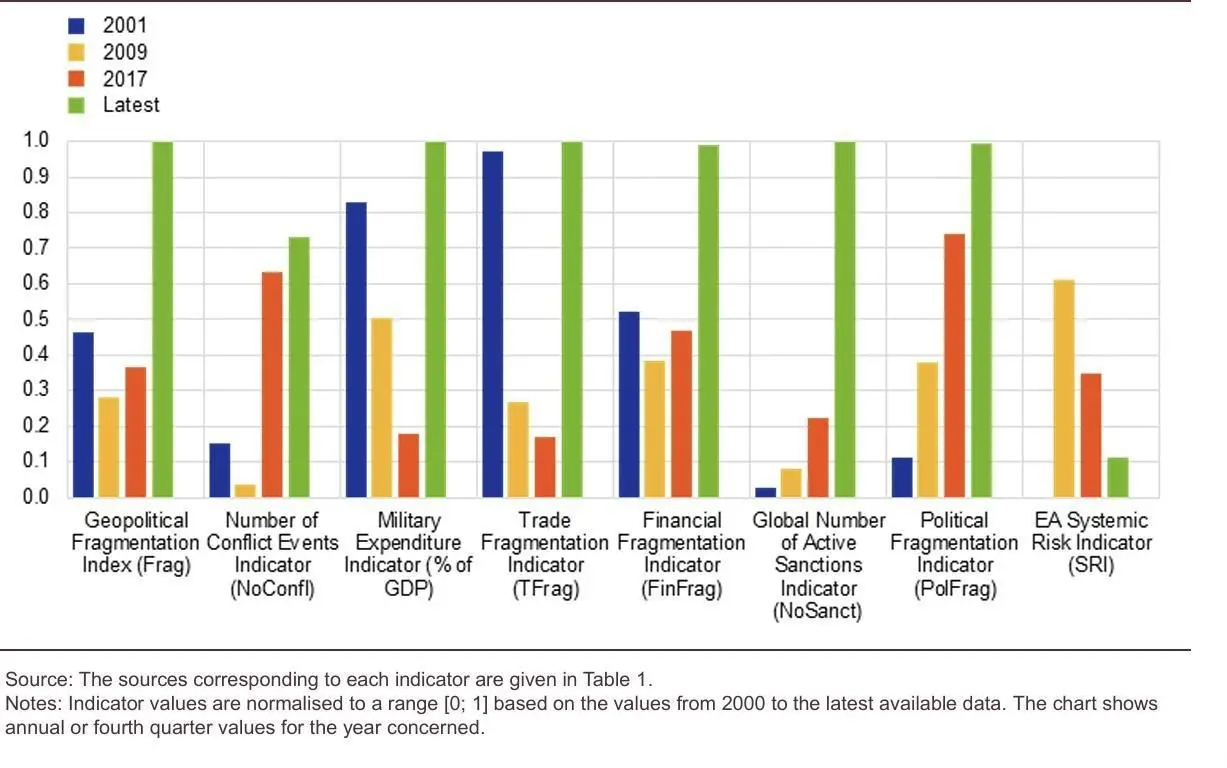
Figure 1: Changes in geopolitical trend indicators selected for the EU. Source: ECB, 2026.
The Geoeconomics of Central Banks
Central banks around the world started developing their own digital currencies out of fear of private actors’ initiatives, such as Meta and Tether, and their stablecoins. Developing a proprietary digital currency represents a strategic lever to enhance countries’ geopolitical autonomy and avoid risks (ECB, 2025). As empirical research shows, multiple domestic CBDC systems are the most compelling option for institutions aiming at individual control of capital flows (Chu & Rathbun, 2025).
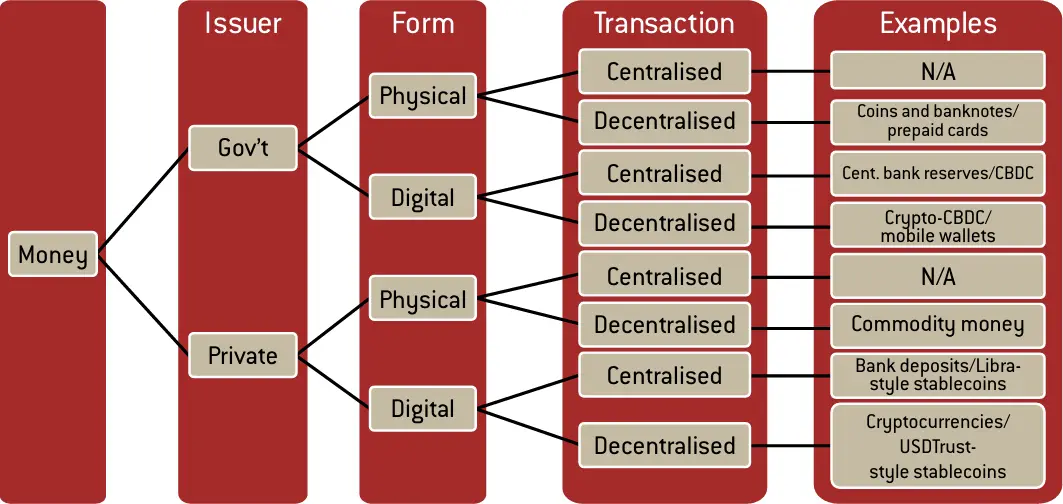
Table 2: A taxonomy of money. Source: Claeys & Demertzis, 2019.
Even if promising, CBDCs also present unfavourable externalities. Central banks would increasingly expose themselves to the same risks faced by traditional financial intermediaries, but also be asked to take a bigger role in the credit allocation process, requiring significant adjustments to their collateral frameworks (Claeys & Demertzis, 2019). Moreover, different types of CBDCs demand a compatible system with agreed international standards for messaging, cryptography, and data exchange. Not only that, but a multilateral payment platform would also require shared rules and technical systems (Bilotta, 2024). In the rest of the section, we will review the main alternative to a CBDC (stablecoins) and its most developed example (the digital yuan).
Stablecoins originated from the cryptocurrency platform Ethereum (De Conti & Guttman, 2025). The European Central Bank defines stablecoins as “digital units of value that use blockchain cryptography”. To maintain value stability, most stablecoins rely on reserve assets associated with a national currency (e.g., dollar) or exchange-traded commodities (e.g., gold) against which their holdings can be redeemed (ECB, 2021). In principle, they are technology-neutral and respond to a proprietary market price – there is no necessary one-to-one value correspondence to their pegged currency. The key technology behind their functioning is a decentralised and distributed ledger network for data sharing, verification, and generation: the blockchain.
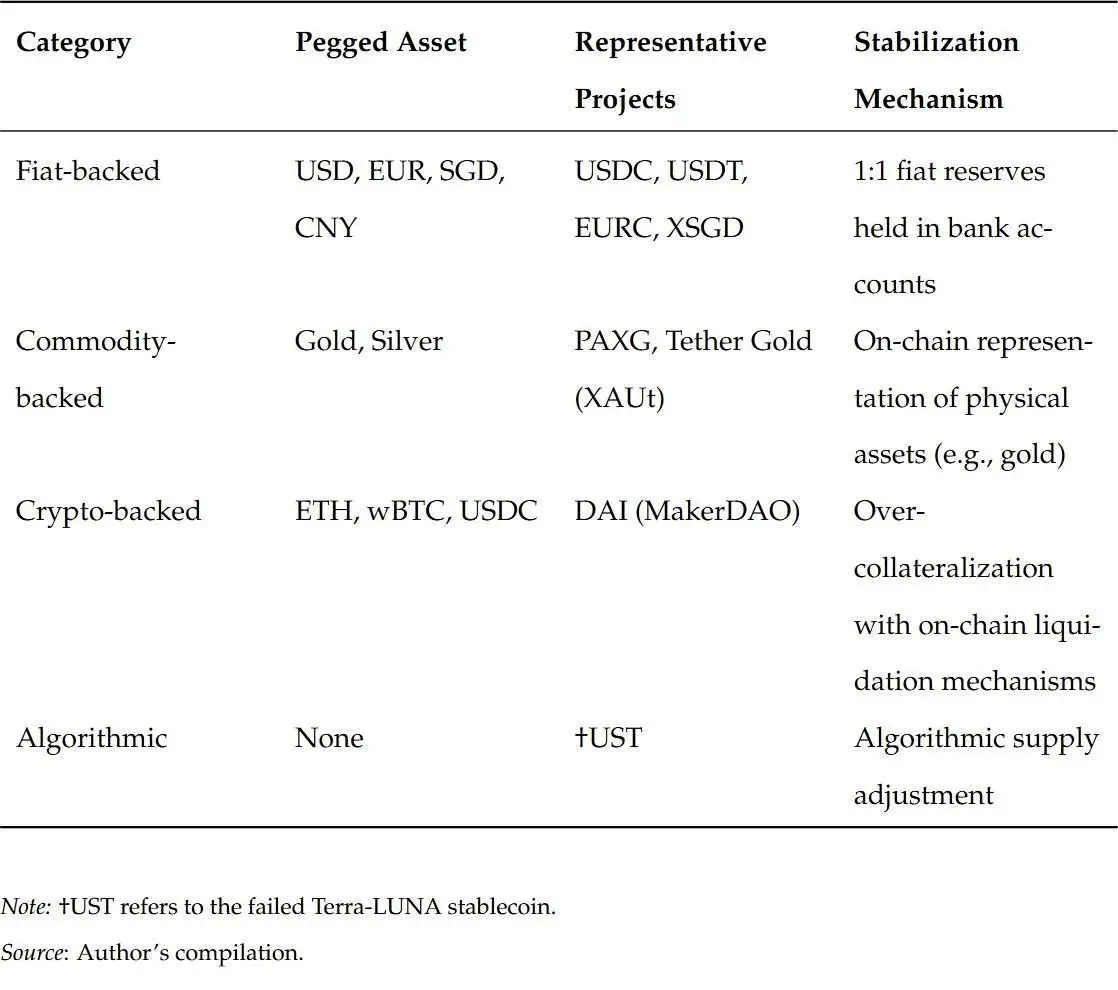
Table 3: Stablecoin types: a comparative summary. Source: Ye, 2025.
Stablecoins are a valid alternative to CBDCs. One of the most relevant examples of stablecoins is Tether, which moved upmarket after seizing a neglected niche in the low-end market by market incumbents (Litpon et al., 2023). Despite its related credit and liquidity risks, entities or governments might prefer a stablecoin-based cross-payment infrastructure to a CBDC. This happens because states that assign more importance to monetary autonomy, payment efficiency, and transaction costs find utility gains in adopting stablecoin-based cross-border payment infrastructures (Ye, 2025). Stablecoins’ decentralised design is particularly appealing to emerging economies due to the combination of macroeconomic pressures they are confronted with: high inflation, volatile exchange rates, and financial exclusion. Dollar-pegged stablecoins are beneficial to small businesses, freelancers, and people working in the informal economy when their countries’ national currency suffers from high inflation (Kotenko, 2025).
The People’s Bank of China (PBOC) launched the Digital Currency Electronic Payment network hosting in 2017 to expand and complement digital and mobile payment infrastructures (Liu, 2021). The Digital Yuan (e-CNY) is structured into a two-tier operational system, arranging its issuance and circulation. The central bank represents the first layer, while commercial banks and telecom operators encompass the second layer (Chen & Nesterov, 2023).
The project is based on a series of strategic considerations. On a baseline level, to provide a form of digital cash to citizens and improve financial inclusion. Domestically, it aims at streamlining and regulating payments, eliciting transparent practices and avoiding ‘shadow banking activities’ (Dong, Neut & Xia, 2021). Legally, the scope is to introduce a digital currency holding a legal tender status attached to the national currency (Fullerton & Morgan, 2022). Externally, it would ensure Chinese independence from US global financial institutions and avoid the risk of sanctions concerning projects connected to the Belt and Road Initiative (BRI) (Bansal & Singh, 2022).
Reports highlighted that the project is advancing slowly, since as of early 2023 the supply of e-CNY accounted for no more than 0,13% of the total central bank reserves and cash in circulation (Orcutt, 2023). Moreover, data show that citizens still prefer AliPay and WeChat mobile payment systems, signalling a strong competition vis-à-vis private actors (Dowd, 2024).
The Digital Euro and EU integration
This section delineates the current European political and regulatory landscape surrounding the Digital Euro project. Drawing from theories of European integration, it then explores the role of the Digital Euro as a strategic enabler for the further consolidation of the European integration project, identifying under which conditions the project might have positive spillover effects on European economic integration.
The Digital Euro project is driven by a desire to secure pan-European financial transactions against increasing geopolitical vulnerabilities: (in)security concerns (Westermeier, 2024). It is indicative of Europe’s progressive integration of international security considerations within its monetary and trade policies (Haroche, 2024). Indeed, some argue that the present-day European industrial strategy actively shapes markets in favour of its bounded political community, with the prominent development of internally and externally oriented financial tools (McNamara, 2024). This is in line with the strategic trajectory of consolidation and rationalisation of FMIs to complete the Capital Markets Union (CMU), as outlined in the ‘Draghi Report’ (2024).
To advance the project, the European Central Bank (ECB) and European Commission (EC) built a mutually reinforcing narrative on the salience of the Digital Euro and its ability not only to meet evolving payments trends and citizens’ needs, but also to create a positive window of opportunity for fostering financial innovation and inclusion, internal market integration, and geopolitical resilience (Heidebrecht, 2025). In doing so, EU officials drew attention mainly to the benefits for European financial firms and SMEs (small and medium enterprises), the increase in private funding to the real economy, and boosting European competitiveness and resilience (Haworth & Quaglia, 2026; ECB, 2024).
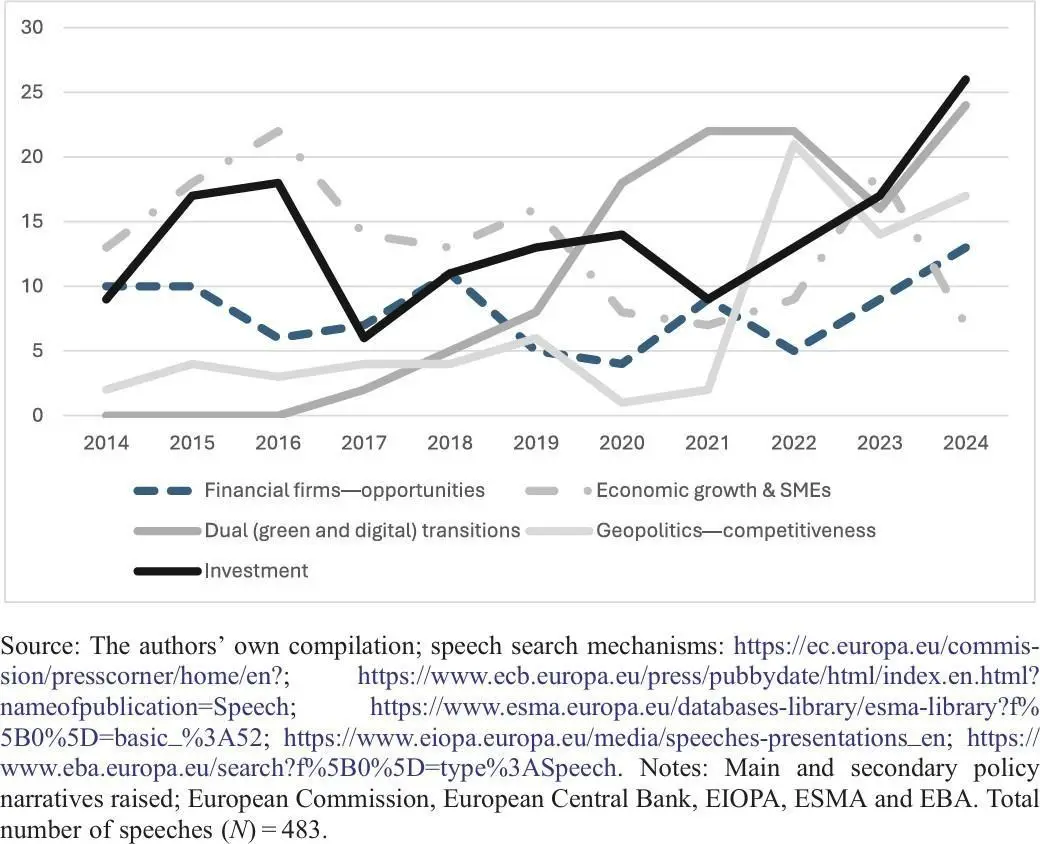
Figure 2: EU Policy Narratives and Financial Integration (2014-2024). Source: Haworth & Quaglia, 2026.
Neofunctionalism is a theory of European integration that predicts further integrative and expansionary policy cycles as mainly driven by the action of European political elites and positive spillovers from one policy domain to another (Haas, 1970; Niemann & Ioannou, 2015). According to major interpretations of postfunctionalism, another major theory of European integration, some phases of European integration are inclined to be characterised by a constraining dissensus between citizens and elites (Down & Wilson, 2008; Hooghe & Marks, 2009). Following a punctuated conceptualisation of politicisation, contentious issues related to European integration offer political actors a set of strategic options to either politicise or de-politicise the public debate, without necessarily resulting in negative public backlashes (Grande & Kriesi, 2016). In such contexts, specific issues can be politicised through institutional discourse, thus sparking public disagreement (Wendler & Hurrelman, 2022). Within the framework of discursive institutionalism, another major theory of European integration, agenda setting and policy change in compound polities can be brought about via a dynamic process based on the coordinative discourse between institutions and public opinion (Schmidt, 2010).
According to Haroche (2023), the growing geopolitical concerns and geoeconomic challenges the ECB is facing from its competitors, coupled with the insufficient economic traction of European external actions, could serve as a positive functional spillover in the European financial and fiscal domain. Following this logic, the ECB could push the development of the Digital Euro as an active enabler for the expansion of the EMU (Economic and Monetary Union). To do so, it should reverse the phenomenon of securitisation experienced in the green policy field (Dupont, 2018), favouring the politicisation of digital financial innovation and building on positive narratives regarding the benefits of a digital currency directly issued by the European Central Bank for the autonomy and sovereignty of European citizens.
References
Atlantic Council. (2025, February). CBDC tracker. https://www.atlanticcouncil.org/cbdctracker/
Aysan, A. F., Ozturk, O., & Selim, N. H. (2025). Local power, global reach: The rise and impact of domestic payment networks in the financial landscape. Journal of Science and Technology Policy Management, 16(1), 143–162. https://doi.org/10.1108/JSTPM-12-2023-0227
Bansal, R., & Singh, S. (2022). China’s digital yuan: An alternative to the dollar-dominated financial system (pp. 1–40). Carnegie Endowment for International Peace.
Bilotta, N. (2024). The geoeconomics of money in the digital age. Taylor & Francis.
Bimantara, A., & Nugraha, R. T. (2025). The politics of international cooperation in cross-border digital payment connectivity: A case study of QR payment system in ASEAN. Sospol, 11(1), 82–99. https://doi.org/10.22219/jurnalsospol.v11i1.38367
Brunnermeier, M. K., James, H., & Landau, J.-P. (2019). The digitalization of money (NBER Working Paper No. 26300). National Bureau of Economic Research. https://doi.org/10.3386/w26300
Caldara, D., & Iacoviello, M. (2022). Measuring geopolitical risk. American Economic Review, 112(4), 1194–1225.
Chen, J., & Nesterov, I. O. (2023). Central bank digital currencies: Digital Yuan and its role in Chinese digital economy development. RUDN Journal of Economics, 31(1), 120–133.
Chu, Y., & Rathbun, N. S. (2025). Monetary sovereignty and central bank digital currencies: Competing models for future cross-border payment platforms. Global Policy, 16(2), 329–340. https://doi.org/10.1111/1758-5899.13495
Claeys, G., & Demertzis, M. (2019). The next generation of digital currencies: In search of stability (Bruegel Policy Brief). Bruegel.
Cohen, B. J. (2017). Renminbi internationalization: A conflict of statecrafts (pp. 1–20). Chatham House.
Cowan, T. C. (2017). Network control in a globalized world: How Visa and Swift’s founding structures serve their stakeholders on the international stage (Doctoral dissertation, Massachusetts Institute of Technology).
De Conti, B., & Guttmann, R. (2025). Digital money: Fragmentation of the monetary regime. Review of Political Economy, 37(5), 1818–1839. https://doi.org/10.1080/09538259.2025.2573356
Dong, J., Neut, A., & Xia, L. (2021). China | All you need to know about the Central Bank Digital Currency e-CNY. BBVA Research.
Dowd, K. (2024). So far, central bank digital currencies have failed. Economic Affairs, 44(1), 71–94. https://doi.org/10.1111/ecaf.12621
Down, I., & Wilson, C. J. (2008). From ‘permissive consensus’ to ‘constraining dissensus’: A polarizing Union? Acta Politica, 43(1), 26–49. https://doi.org/10.1057/palgrave.ap.5500206
Draghi, M. (2024). The future of European competitiveness. European Commission. https://commission.europa.eu/document/download/97e481fd-2dc3-412d-be4c-f152a8232961_en
Dupont, C. (2018). The EU’s collective securitisation of climate change. West European Politics, 42(2), 369–390. https://doi.org/10.1080/01402382.2018.1510199
Eichengreen, B., & Flandreau, M. (2009). The rise and fall of the dollar (or when did the dollar replace sterling as the leading reserve currency?). European Review of Economic History, 13(3), 377–411.
Ekman, A. (2021). China’s blockchain and cryptocurrency ambitions. EUISS Brief, 15, 1–8. European Union Institute for Security Studies.
European Central Bank. (2021). Focus box. https://www.ecb.europa.eu/press/financial-stability-publications/fsr/focus/2021/html/ecb.fsrbox202111_04~45293c08fc.en.html
European Central Bank. (2024, February 16). Keynote speech. https://www.ecb.europa.eu/press/key/date/2024/html/ecb.sp240216~df6f8d9c31.en.html
European Central Bank. (2025, March 20). Speech. https://www.ecb.europa.eu/press/key/date/2025/html/ecb.sp250320_1~41c9459722.en.html
European Central Bank. (2026). Financial stability risks from geoeconomic fragmentation. https://www.ecb.europa.eu/pub/pdf/other/ecb.report202601_financialstabilityrisks.en.pdf
Farrell, H., & Newman, A. L. (2019). Weaponized interdependence: How global economic networks shape state coercion. International Security, 44(1), 42–79. https://doi.org/10.1162/isec_a_00351
Felicetti, R., & Brescia Morra, C. (2025). European strategic autonomy and the cross-border payments market in the era of deglobalization (In-Depth Analysis PE 779.852). European Parliament.
Fullerton, E. J., & Morgan, P. J. (2022). The People’s Republic of China’s digital yuan: Its environment, design, and implications (ADBI Working Paper No. 1306). Asian Development Bank Institute.
Grande, E., & Kriesi, H. (2016). Conclusions: The postfunctionalists were (almost) right. In S. Hutter, E. Grande, & H. Kriesi (Eds.), Politicising Europe (pp. 279–300). Cambridge University Press.
Gricius, G. (2020). Russia’s new soft power: The Mir Card system. Journal of Liberty and International Affairs, 6(2), 32–44.
Haas, E. B. (1970). The study of regional integration: Reflections on the joy and anguish of pretheorizing. International Organization, 24(4), 606–646. https://doi.org/10.1017/S0020818300017495
Hageback, N., & Hedblom, M. (2022). AI for digital warfare. CRC Press.
Haroche, P. (2023). A ‘Geopolitical Commission’: Supranationalism meets global power competition. JCMS: Journal of Common Market Studies, 61(4), 970–987. https://doi.org/10.1111/jcms.13440
Haroche, P. (2024). Geoeconomic Power Europe: When global power competition drives EU integration. JCMS: Journal of Common Market Studies, 62(4), 938–954. https://doi.org/10.1111/jcms.13596
Heidebrecht, S. (2025). How and why EU institutions promote the digital euro: The politics of a central bank digital currency (CBDC). JCMS: Journal of Common Market Studies. https://doi.org/10.1111/jcms.70062
Hofman, B., & Petry, J. (2025). Internationalization of the RMB: Status, options and risks. China Kennisnetwerk.
Hooghe, L., & Marks, G. (2009). A postfunctionalist theory of European integration: From permissive consensus to constraining dissensus. British Journal of Political Science, 39(1), 1–23. https://doi.org/10.1017/S0007123408000409
Howarth, D., & Quaglia, L. (2026). From Capital Markets Union to Savings and Investments Union: The shifting policy narratives on European financial market integration. JCMS: Journal of Common Market Studies. https://doi.org/10.1111/jcms.70081
Huang, Y., & Mayer, M. (2022). Digital currencies, monetary sovereignty, and U.S.–China power competition. Policy & Internet, 14(2), 324–347. https://doi.org/10.1002/poi3.302
Kotenko, D. R. (2025). The role of stablecoins in emerging economies (Bachelor’s thesis or Master’s dissertation). Sumy State University, Sumy, Ukraine.
Liu, X. (2021). China bets on digital currency as the next fintech revolution. Asia Pacific Foundation of Canada. https://www.asiapacific.ca/publication/china-bets-digital-currency-next-fintech-revolution
Luttwak, E. N. (1990). From geopolitics to geo-economics: Logic of conflict, grammar of commerce. The National Interest, (20), 17–23. [suspicious link removed]
McNamara, K. R. (2024). Transforming Europe? The EU’s industrial policy and geopolitical turn. Journal of European Public Policy, 31(9), 2371–2396. https://doi.org/10.1080/13501763.2023.2230247
Niemann, A., & Ioannou, D. (2015). European economic integration in times of crisis: A case of neofunctionalism? Journal of European Public Policy, 22(2), 196–218. https://doi.org/10.1080/13501763.2014.994021
Nölke, A. (2024). Private institutions in infrastructural geoeconomics: Limits to the rise of emerging economies in global finance. Finance and Space, 1(1), 282–298. https://doi.org/10.1080/2833115X.2024.2377643
Nölke, A. (2025). Infrastructural geoeconomics. In The Cambridge global handbook of financial infrastructure (p. 250). Cambridge University Press.
Oppenheimer, H. (2025). Digital interdependence and power politics. British Journal of Political Science, 55, e93. https://doi.org/10.1017/S0007123425000328
Orcutt, M. (2023, August 3). What’s next for China’s digital currency? MIT Technology Review. https://www.technologyreview.com/2023/08/03/1077181/whats-next-for-chinas-digital-currency/
Pasquale, F. (2023). Two visions for data governance: Territorial vs. functional sovereignty. In Data governance and the digital economy. Oxford University Press. https://doi.org/10.1093/oso/9780197582794.003.0002
Quaglia, L., & Verdun, A. (2025). The geoeconomics of Central Banks Digital Currencies (CBDCs): The case of the European Central Bank (ECB). New Political Economy, 30(5), 639–651. https://doi.org/10.1080/13563467.2025.2504390
Saguato, P. (2025). International finance and the geopolitics of market infrastructures. Journal of International Economic Law. https://doi.org/10.1093/jiel/jgaf042
Santaniello, M. (2025). Attributes of digital sovereignty: A conceptual framework. Geopolitics, 1–22. https://doi.org/10.1080/14650045.2025.2521548
Schmidt, V. A. (2010). Taking ideas and discourse seriously: Explaining change through discursive institutionalism as the fourth ‘new institutionalism.’ European Political Science Review, 2(1), 1–25. https://doi.org/10.1017/S175577390999021X
Slawotsky, J. (2022). Digital currencies and great power rivalry: China as a disseminator in the digital age. Asia Pacific Law Review, 30(2), 242–264. https://doi.org/10.1080/10192557.2022.2085412
U.S. Department of the Treasury. (2026). Press release. https://home.treasury.gov/news/press-releases/sb0373
Wendler, F., & Hurrelmann, A. (2022). Discursive postfunctionalism: Theorizing the interface between EU politicization and policy-making. Journal of European Integration, 44(7), 941–959. https://doi.org/10.1080/07036337.2022.2045592
Westermeier, C. (2024). The digital euro: A materialization of (in)security. Review of International Political Economy, 31(5), 1569–1592. https://doi.org/10.1080/09692290.2024.2345613
Ye, W. (2025). Strategic architecture choice in cross-border payments: A sovereign utility framework for CBDCs, stablecoins, and SWIFT [Working paper]. Social Science Research Network. https://doi.org/10.2139/ssrn.5266767
Yulius, D. T., Tjhin, D., Lukiman, Y., Sjahrir, P., Yu, Y., & Wijaya, V. (2023). Interoperable QR code payment ecosystem in ASEAN: What it means for the world. Boston Consulting Group.


