

Does the EU’s Sahel strategy tackle root causes, or does its conditionality-based governance model overlook how climate stress and weak legitimacy mutually reinforce conflict, as shown by the withdrawal of the Alliance of Sahel States from the Economic Community of West African States?
Climate change and conflict have become increasingly intertwined phenomena that are at the forefront of security discourse (Tesfaye 2022). The Sahel is an example of a region that has long been defined by challenging environmental conditions and conflict. It is among the poorest and least developed areas in the world, with the majority of the population living below the poverty line (Sartori and Fattibene 2019). This piece argues that because climate stress and conflict in the Sahel are mutually reinforcing, climate adaptation cannot be treated as a side issue in regional security policy. It must be the center of any strategy that seeks to reduce conflict, including that of the EU’s.
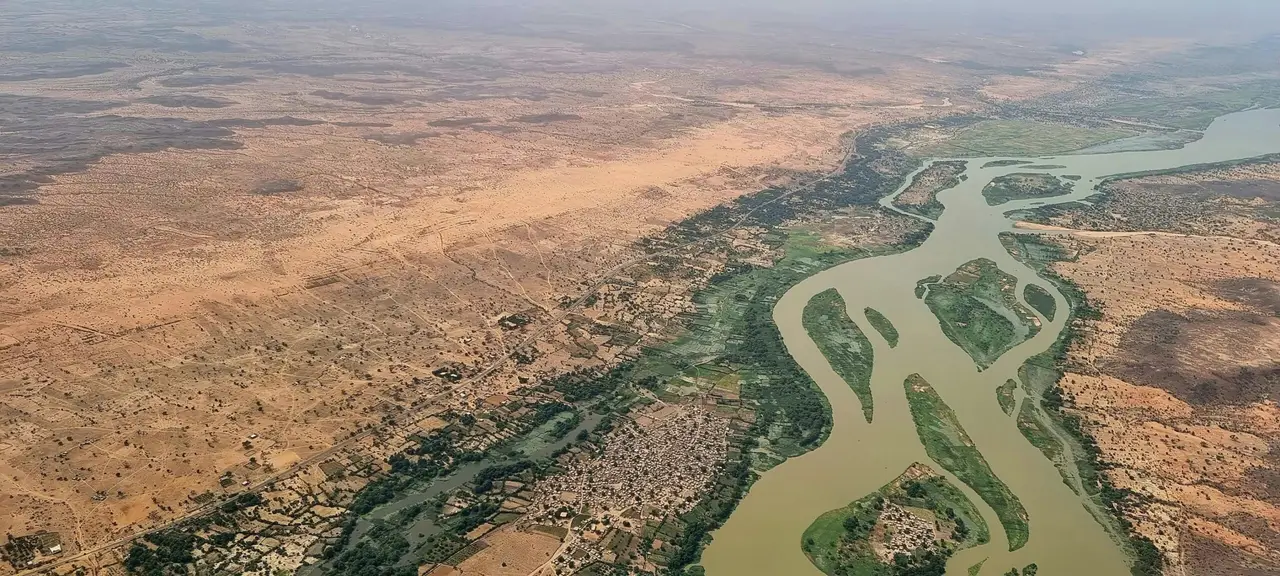
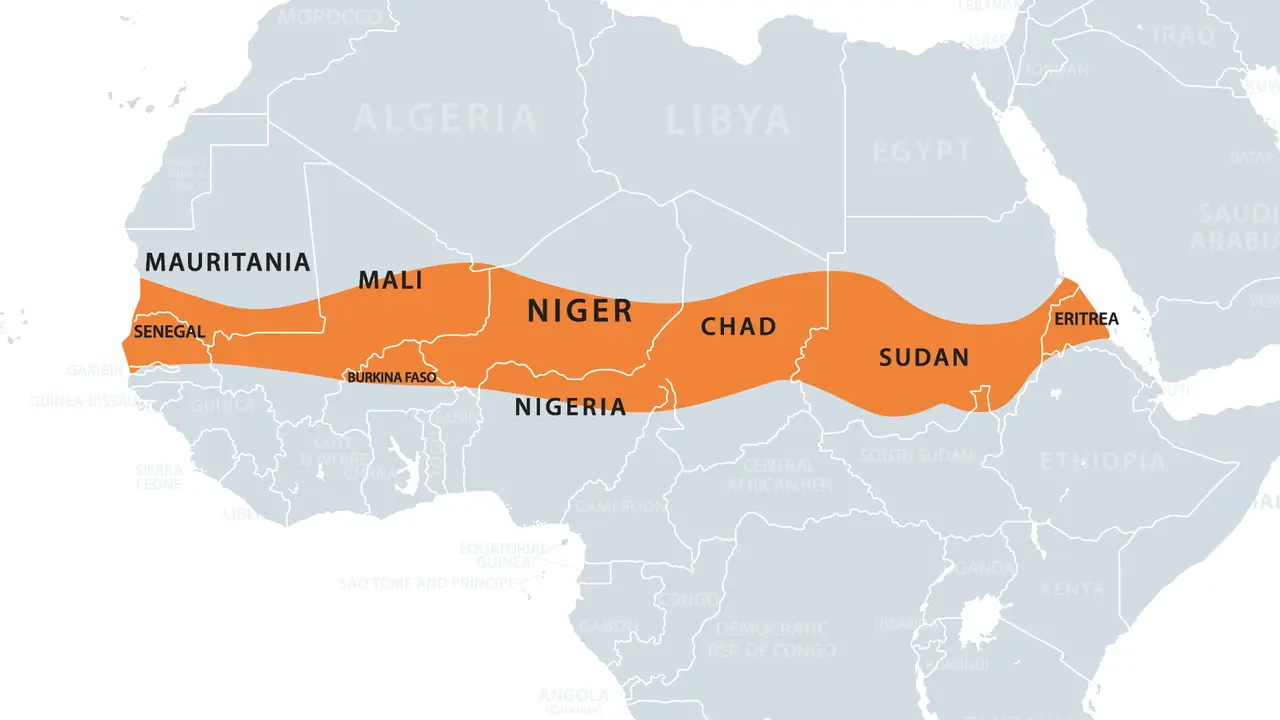
The Sahel is often recognized as a hotspot of climate change, a trend that is only expected to have an increasingly deeper impact on its future (Sartori and Fattibene 2019). Its vulnerability has been clear since the 1960s, when it experienced a 30% decrease in rainfall compared with the 1950s, experiencing a series of droughts. This has also led to huge reductions in agricultural productivity. The region is also losing arable and grazing land to desertification at a striking pace. Some estimates put the southward advance of the Sahara at roughly 1,400 square miles a year (Human Rights Watch 2018), shrinking the land available to both farmers and herders at the same time. Moreover, it is believed that these droughts have played a key role in causing confrontations between farmers and pastoralists, increasing intercommunal tensions, which have escalated latent conflicts to the use of violence (Benjaminsen et al. 2012).
This farmer-pastoralist dynamic is one of the clearest illustrations of the climate-conflict link in the Sahel. Traditionally, pastoralist and farming communities coexisted through seasonal arrangements: herders moved livestock along established corridors during the dry season, timed around farmers’ harvest cycles, so that grazing and cultivation did not compete for the same land at the same time (Benjaminsen et al. 2012). Drought and land degradation have unsettled this balance. As rainfall becomes less predictable, herders are forced to alter traditional migration routes earlier and further than before, often moving into cultivated land still in use, while farmers, facing lower yields, expand cultivation into former grazing corridors to compensate (Benjaminsen et al. 2012). The result is that two livelihoods that once complemented each other are now competing for the same shrinking resource base.
The security crisis is linked to weaknesses in state capacity and government corruption and ineffective policies. It has been both the European Union’s and the United States’ key focus in Africa, with attempts to stabilise the region (Tesfaye 2022), especially to avoid possible spillover of instability to neighboring regions and beyond. It was the first region in Africa for which the EU formulated a dedicated regional strategy in 2011 (Iso-Markku and Tammikko 2020). The strategy underlined that improving security and development in the Sahel is not only in the interest of the Sahel states themselves but also has a direct impact on the EU’s internal security situation (Iso-Markku and Tammikko 2020). However, there is criticism that the West has turned a blind eye to governance shortcomings. Scholars argue that the West’s policy in the region should be framed by a ‘crisis of state legitimacy’ lens (Tesfaye 2022). Overall, longer-term approaches should be taken when creating Sahel policy, focusing on the structural, root-cause problems.
The Sahel is projected to be impacted by climate change, including increasing temperatures and other more frequent weather events, harder than other parts of the world (Tesfaye 2022). Climate change is considered a threat multiplier that compounds the many local risk factors for conflict. Examples of such threats include the spread of violent extremism, a growing demand for international aid, and the proliferation of weak, authoritarian governance (Tesfaye 2022). Moreover, the overall health of the most vulnerable communities in the Sahel is increasingly being threatened, which illustrates how climate change operates as a threat multiplier rather than a standalone cause of insecurity.
The nexus between climate and security is often demonstrated by the violent land-use conflict in the Sahel. Examples include the Darfur conflict in Sudan, the inland delta of the Niger River in Mali, and the clashes between ethnic groups in Nigeria, just to name a few (Benjaminsen et al. 2012). The increasingly unpredictable and extreme weather patterns, the vulnerability of the agricultural sector due to poor infrastructure and land degradation, the fragility of state structures, as well as the spread of violence, are likely to continue in the future and to mutually reinforce one another (Sartori and Fattibene 2019).
This complex situation in the Sahel has challenged the strategy and engagement of the EU and its member states in the region. What complicates this further is the increasing influence of other actors in the region, including Russia, China, and Turkey. The EU has its strength in potentially offering a more reliable partnership due to its predictability. However, it has been questioned in the literature whether the EU’s endeavors in the Sahel are making tangible progress (Meyer et al. 2025).
The EU’s interest in the Sahel increased significantly after the 2015 migration crisis, since a total of 181,000 migrants and refugees arrived in its territory through Niger and Mali as the main transit countries in the central Mediterranean route (Meyer et al. 2025). However, the Commission’s priority lies in cooperation with what they consider legitimate governments and organizations, such as the African Union (AU), as well as the eight regional economic communities (RECs) recognized by the African Union (AU), such as the Economic Community of West African States (ECOWAS), the Community of Sahel-Saharan States (CEN-SAD), and the Economic Community of Central African States (ECCAS), not anti-Western military regimes under significant Russian influence. It therefore generally operates within a framework of conditionality, rewarding countries in the region for democratic progress and good governance, while penalizing those that regress (Meyer et al. 2025). The EU’s dual approach combines security and development, thereby distinguishing it from other actors in the region (Omam 2026). Rather than simply countering threats such as terrorism, the EU has sought to address root causes through governance reforms, institution-building, and economic support (Omam 2026). It has also increasingly promoted its renewed approach of fair and mutually beneficial cooperation based on an equal footing (Meyer et al. 2025).
In 2024, Niger, Mali, and Burkina Faso announced that they would leave ECOWAS and form their own Alliance of Sahel States (AES) due to dissatisfaction with interventions and sanctions aimed at restoring civilian governance following military coups (Mohammed and Arabo 2024). They also withdrew from the G5 Sahel regional organization. This represented a significant challenge for regional stability in the Sahel, as it complicates a coordinated response to the spread of extremist violence and therefore gives insurgent groups more freedom to expand (Mohammed and Arabo 2024). This would escalate security risks and further destabilize neighboring regions, which may, for example, increase irregular migration to Europe (EPRS 2024). This also challenges a central assumption underpinning the EU’s Sahel policy: that external support and institutional reform could create sustainable stability (Omam 2026). This is where the crisis-of-state-legitimacy framing raised earlier becomes directly relevant: the EU’s governance-reform model assumes that legitimacy can, in effect, be built through external support and conditionality. The AES rupture suggests otherwise. It has become clear that external actors can create stability but cannot create political legitimacy where it is absent (Omam 2026).
In this highly challenging context, it is clear that Europe cannot turn its back on the Sahel. The EU simply cannot afford rising insecurity in the region or to lose all of its influence to Russia and China. It must move forward with a fundamental shift, considering its recent approaches in the Sahel have not delivered substantial results. Despite a security-focused agenda, the security situation has continued to worsen. Moreover, there is strong evidence that climate change fuels conflict, for example, due to increasingly scarce resources. This, combined with institutional failures, further exacerbates conflict, and therefore climate change adaptation should be central to any policy seeking to mitigate conflict in the Sahel (Mbaye and Signé 2022).
Keyword
- Threat multiplier: a crisis, particularly climate change, does not create new conflicts in a vacuum but exacerbates pre-existing vulnerabilities (e.g., poverty, weak governance, resource scarcity, and political instability), thereby multiplying the risk of threats such as conflict and violence.
References
Benjaminsen, Tor A., and Boubacar Ba. 2019. Climate Change, Development and Conflict in the Sahel. Oslo: Norwegian Institute of International Affairs (NUPI).
Benjaminsen, Tor A., Koffi Alinon, Halvard Buhaug, and Jill Tove Buseth. 2012. “Does Climate Change Drive Land-Use Conflicts in the Sahel?” Journal of Peace Research 49 (1): 97–111. https://doi.org/10.1177/0022343311427343.
European Parliamentary Research Service. 2024. ‘Sahelexit’ in West Africa: Implications for ECOWAS and the EU. Brussels: European Parliament. European Parliament Think Tank Briefing Document.
Human Rights Watch. “Farmer-Herder Conflicts on the Rise in Africa.” August 6, 2018. https://www.hrw.org/news/2018/08/06/farmer-herder-conflicts-rise-africa.
Iso-Markku, Tuomas, and Teemu Tammikko. 2020. The EU’s Role and Policies in the Sahel: The Need for Reassessment. FIIA Briefing Paper 290. Helsinki: Finnish Institute of International Affairs. September 2020.
Meyer, Angela, Loïc Simonet, and Johannes Späth. 2025. The European Union and the Sahel: The Day After. Policy Analysis 1/2025. Vienna: Austrian Institute for International Affairs.
Mohammed, Adamu, and Umar Abubakar Arabo. 2024. “Regional Stability and Integration: The Implication of the Withdrawal of Burkina Faso, Mali, and Niger from ECOWAS.” ISRG Journal of Arts, Humanities and Social Sciences 2 (6): 175–180. https://doi.org/10.5281/zenodo.15005184
Omam, Patrick. 2026. “The CFSP: Europe’s Sahel Strategy Is Running Out of Time.” Geopolitical Monitor, April 17, 2026. Geopolitical Monitor.
Sartori, Nicolò, and Daniele Fattibene. 2019. “Human Security and Climate Change: Vulnerabilities in the Sahel.” EuroMeSCo Policy Brief No. 94, March 1. Policy Center for the New South.
Schinas, G. 2024. “6. Sahel: Geopolitical Chess in the Southern Tip of the Sahara.” iMEdD Lab, May 10, 2024. https://lab.imedd.org/en/6-sahel-geopolitical-chess-in-the-southern-tip-of-the-sahara/
Tesfaye, Beza. 2022. Climate Change and Conflict in the Sahel. Discussion Paper Series on Managing Global Disorder No. 11. New York: Council on Foreign Relations, Center for Preventive Action.