



Ground robots embed presence into spaces where soldiers remain vulnerable.
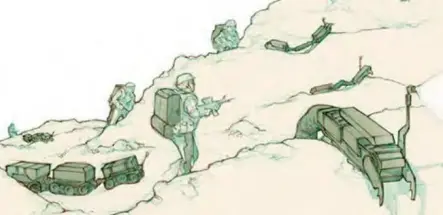
Figure 1. Generic unmanned ground vehicle concepts. Image credit: Gen. Paul F. Gorman, The Future Soldier’s Load and the Mobility of the Nation (2001), public domain U.S. Army image via Wikimedia Commons. The image is used for policy context and does not depict any system discussed in this paper.
Abstract
The war in Ukraine has accelerated a structural change in modern warfare: the battlefield is becoming increasingly unmanned, sensor-saturated, and attritional. While aerial drones have received most public attention, unmanned ground systems are emerging as an increasingly relevant layer of military adaptation. Their battlefield utility remains uneven, but their relevance is growing in support roles: reducing soldiers’ exposure, sustaining logistics, supporting casualty evacuation, and extending awareness where conventional vehicles or personnel face unacceptable risk. For Europe, this raises a strategic question: can the continent build a responsible, sovereign, and interoperable ground robotics ecosystem before dependency and fragmentation become operational liabilities?. This paper argues that quadruped robotic platforms should be understood not as isolated battlefield gadgets, but as one case inside Europe’s wider unmanned ground systems problem. Their relevance lies in mobility across complex terrain, especially in urban, forest, and infrastructure-damaged environments. Their development must remain politically and legally disciplined. A European approach should avoid opaque autonomous weapon systems and prioritize controlled autonomy: bounded, primarily non-lethal support functions, with human judgement central to any use of force.
Introduction: From Airborne Drones to the Ground Layer
Unmanned aerial systems have become a central feature of contemporary warfare. They have changed reconnaissance, targeting, propaganda, and tactical adaptation (Watling & Bronk, 2024; Zabrodskyi et al., 2022). Yet this focus on the air domain risks obscuring a second transformation closer to the soldier: the rise of unmanned ground vehicles (UGVs) and legged robotic platforms. The strategic importance of ground robotics comes from a simple battlefield reality. Indeed, modern front lines are increasingly lethal, transparent, and difficult to supply. Furthermore, artillery, loitering munitions, anti-tank weapons, mines, electronic warfare, and persistent aerial surveillance make movement hazardous (Watling & Sylvia, 2025; Zabrodskyi et al., 2022). The problem is preserving mobility, awareness, sustainment, and force protection under constant detection.
Unmanned ground systems answer part of this problem by transferring risk from soldiers to machines. In this sense, Ukraine’s Ministry of Defence has codified domestic ground robotic systems for logistics and evacuation roles (Ministry of Defence of Ukraine, 2025a, 2025b). Their significance is not that they replace soldiers, but that they remove humans from moments of vulnerability: crossing exposed ground, approaching hazardous areas under specialist supervision, entering damaged structures, or sustaining positions under drone observation.
Quadruped systems occupy a particular place within this transformation. Tracked and wheeled robots are often better for heavy loads, but legged platforms offer advantages in irregular terrain, stairs, rubble, narrow passages, and complex urban settings. Therefore, their value should be assessed through operational use cases rather than public imagery. Ukraine suggests that unmanned ground systems are increasingly relevant; quadrupeds remain a specialized subset for environments where mobility is fragmented, and human exposure is costly (Ministry of Defence of Ukraine, 2025a, 2025b). For Europe, the question is not whether ground robotics will matter, because the evidence from Ukraine suggests it does. Consequently, the more important question is whether Europe will develop these systems within a coherent political, legal, and industrial framework.
The Geopolitical Context: A Continent Relearning Hard Security
Russia’s full-scale invasion of Ukraine forced Europe to confront a security environment that many policymakers had treated as unlikely: high-intensity conventional war on the continent. The result has been a renewed debate on deterrence, defence industrial capacity, strategic autonomy, and resilience. The European Defence Industrial Strategy, presented in March 2024, reflects this shift by emphasizing joint investment, industrial readiness, and a stronger European Defence Technological and Industrial Base (European Commission, 2024). Ground robotics fits directly into this agenda. Hence, it suits the broader debates about military-readiness and political-sovereignty. It also sits within a wider institutional map: the EU Strategic Compass, the European Defence Fund, the European Defence Industrial Strategy (EDIS), the European Defence Industry Programme (EDIP), the European Defence Agency capability development, NATO interoperability requirements, and the Defence Innovation Accelerator for the North Atlantic (DIANA), NATO’s dual-use innovation network (Council of the European Union, 2022, 2026; European Defence Agency, n.d.; NATO, 2025). EDIS is the EU’s 2024 strategic framework for strengthening defence industrial readiness and the European Defence Technological and Industrial Base; EDIP is the EU programme designed to implement parts of that strategy through funding, common procurement support, supply-chain resilience, and industrial reinforcement measures. Many European states have limited military manpower, ageing populations, and societies in which casualty sensitivity can shape political decision-making. In such a context, systems that reduce exposure during logistics, reconnaissance, route inspection, chemical, biological, radiological, nuclear (CBRN) monitoring, hazardous-site assessment, or casualty extraction can support operational endurance while limiting avoidable exposure of personnel (Ministry of Defence of Ukraine, 2025a, 2025b; European Defence Agency, n.d.). At the same time, Europe cannot approach robotic defence systems purely as a market opportunity. The field of military robotics and autonomous systems is politically sensitive because it intersects with autonomy, artificial intelligence, and the debate on lethal autonomous weapon systems.
The International Committee of the Red Cross has repeatedly warned that autonomous systems selecting and applying force without human intervention raise serious humanitarian, legal, and ethical concerns (ICRC, 2020, 2021). Therefore, this concern should shape Europe’s comparative advantage: not the fastest route to uncontrolled autonomy, but the most credible model of responsible military robotics. In this sense, Europe’s policy challenge is to define controlled autonomy compatible with democratic oversight, international humanitarian law, and alliance interoperability.
Why Quadruped Systems Are Strategically Relevant
The following use cases are areas for policy assessment, not claims of universal battlefield effectiveness. Quadruped systems will not transform war alone or replace infantry, armoured vehicles, or drones. Their strategic value is narrower: they can operate where traditional platforms are too large, loud, vulnerable, or dependent on intact infrastructure, particularly in rough, unstructured, or obstacle-dense terrain where legged locomotion can offer mobility advantages (Sherrod et al., 2022).
First, quadruped systems can improve reconnaissance in denied or degraded environments. On the other hand, aerial drones are effective, but not every military problem is visible from above. Hazardous, enclosed, damaged, or inaccessible environments create demand for ground-level sensing, including remote inspection and CBRN reconnaissance functions that allow personnel to collect data from a safer location (Federal Laboratory Consortium, 2010).
A legged robot can move through such spaces while keeping personnel at a greater distance (Federal Laboratory Consortium, 2010; Sherrod et al., 2022). Second, quadruped platforms can support logistics at the tactical edge. Essential supplies, medical equipment, communications support, and power sources must reach positions that may be exposed to artillery or drone observation. Wheeled and tracked UGVs can carry more, but legged systems may reach places where the route is broken, narrow, or obstructed. A European ground robotics ecosystem should treat quadrupeds and conventional UGVs as complementary layers. Third, these systems can contribute to casualty evacuation and medical support. Evacuation under fire is among the most dangerous tasks in war. Even when a robot cannot replace human medics, it can carry supplies, relay information, or reduce the distance humans must cross under threat. This function deserves attention because it aligns technological innovation with humanitarian protection. For instance, public U.S. Army requirements for last tactical mile UGVs explicitly link robotic resupply and casualty evacuation to force protection under persistent surveillance and lethal effects (Department of the Army, 2026).
Fourth, quadruped systems may improve resilience in critical infrastructure scenarios. In this sense, European security policy increasingly recognizes that war is not confined to the front line. For example, ports, energy sites, rail nodes, data centres, pipelines, and military depots are potential targets of sabotage, cyber-physical attacks, or hybrid operations (European Commission: Joint Research Centre, 2023; Hobhouse, 2025). Robots that inspect or monitor hazardous spaces could support authorities, provided that mandates, data rules, and civil-military responsibilities are clearly defined. Finally, legged robots have doctrinal significance. If drones extend the eye and arm of the force, ground robots embed presence into spaces where soldiers remain vulnerable. This shift from remote observation to robotic ground presence requires doctrine, legal review, procurement reform, and public debate (European Defence Agency, n.d.; ICRC, 2006, 2021).
The European Requirement: Sovereignty, Interoperability and Scale
Europe’s challenge is not a lack of talent. Indeed, the EU has robotics research, advanced manufacturing, defence companies, start-ups, universities, and dual-use innovation hubs. The challenge is turning this fragmented base into a fielded capability. Defence innovation often fails because the path from prototype to procurement is slow and fragmented. This is where EDIS becomes relevant. Its emphasis on joint investment, industrial readiness, and European supply chains should be applied to unmanned ground systems. European cooperation would not need to begin as a single grand platform. It could begin as shared requirements: interoperable communications, modular mission roles, cyber resilience, safety certification, export-control compliance, human-control standards, and common testing environments (Council of the European Union, 2026; European Commission, 2024; European Defence Agency, n.d.). Interoperability is essential. If every member state buys isolated systems with incompatible interfaces, data formats, and maintenance chains, Europe will reproduce the fragmentation that has weakened other areas of defence procurement. Robotic systems should be designed from the beginning to operate within NATO and EU command structures, while remaining adaptable to national requirements (European Defence Agency, n.d.; NATO, 2025). Scale is equally important. Indeed, Ukraine’s experience shows that unmanned systems are not boutique assets. They must be attritable, field-repairable, replaceable where necessary, and adaptable through controlled upgrades. RUSI’s analysis of attritable mass argues that Ukraine’s use of uncrewed platforms challenges the Western preference for small numbers of highly sophisticated platforms and shows that systems must be cheap enough to lose, replace and improve rapidly (Drake, 2026). In this sense, European procurement culture often favours high-end platforms with long development cycles. However, ground robotics requires a different rhythm: shorter iteration, field feedback, modular upgrades, and realistic evaluation criteria.
Strategic autonomy also matters. In fact, if Europe relies too heavily on non-European platforms, sensors, cloud services, chips, software stacks, or maintenance pipelines, it risks dependency in a crisis. Similarly, RUSI has warned that Ukraine’s drone success still exposes vulnerabilities when critical components depend on external supply chains, while the European Defence Industrial Strategy stresses the need for a stronger, more responsive, and more innovative European defence industry to act on supply-chain issues (European Commission, 2024; Niederkofler, 2025). Nevertheless, sovereignty in robotics should avoid autarky and require control over critical components, trusted supply chains, transparent software governance, and crisis adaptation.
Autonomy as a Governance Problem
The most sensitive issue is autonomy because it determines how far robotic systems can act without direct human instruction and where legal, ethical, and operational responsibility must remain with human decision-makers (ICRC, 2019, 2021). This is why the debate is often polarized between technological optimism and moral alarm. A better approach is to distinguish autonomy for movement, sensing, logistics, and the use of force. These are not the same political or legal problems. A viable policy framework should distinguish four categories: mobility autonomy, sensing autonomy, support autonomy, and lethal autonomy. The first three can reduce risk and improve reliability. The fourth raises different concerns and should remain subject to human control and judgment to support compliance with international humanitarian law. The ICRC’s position is useful here because it does not reject all autonomy. It calls for limits, predictability, human supervision, and restrictions on systems that would apply force without sufficient human judgment (ICRC, 2020, 2021). A European quadruped robotics doctrine could build on this logic by defining a principle of bounded autonomy: systems may perform mobility, sensing, transport, warning, communications relay, and evacuation-support functions, but decisions involving force must remain with accountable human operators. Meaningful human control should not be treated as a slogan. It requires bounded mission parameters, supervision where force is possible, audit trails, and reliable abort or deactivation options.
Table 1. Four Categories of Military Autonomy and Their Governance Implications
| Category | Primary Function | Typical Role | Main Policy Concern | Governance Requirement |
| Mobility autonomy | Navigation and movement | Route following, obstacle avoidance, and movement through hazardous terrain | Reliability, loss of control, safety | Testing, fail-safe modes, human supervision, mission limits |
| Sensing autonomy | Data collection and interpretation | Mapping, detection, monitoring, situational awareness | Misidentification, privacy, and overreliance on machine outputs | Auditability, data rules, human validation, error assessment |
| Support autonomy | Non-lethal assistance | Logistics, evacuation support, communications relay, supply transport | Mission creep, dual-use ambiguity, cyber vulnerability | Bounded non-lethal roles, cybersecurity standards, legal mandate |
| Lethal autonomy | Use-of-force functions | Any function contributing directly to targeting or force | IHL compliance, accountability, civilian harm, escalation | Meaningful human control, legal review, abort/deactivation options |
Note. Analytical framework. This table does not imply endorsement of autonomous use of force. Any system or configuration affecting the use of force should remain subject to meaningful human control, Article 36-style or equivalent legal review, and international humanitarian law.
Risks and Strategic Limits
The case for quadruped systems should not ignore their limitations. Legged robots are mechanically complex, energy-constrained, and often less efficient for heavy transport than wheeled or tracked systems (Bodrov et al., 2018; Sherrod et al., 2022). They may also be vulnerable to electronic warfare, cyber intrusion, capture, spoofing, physical disablement, sensor feeds, maps, or mission logs that create data-security risks if compromised (ICRC, 2023; Watling & Sylvia, 2025).
Political risk also matters. For example, public images of robotic dogs in military settings can quickly generate anxiety about ‘killer robots’, even when the actual use case is reconnaissance, logistics, or rescue. This concern is consistent with wider humanitarian and ethical debates over autonomy, artificial intelligence, and the use of force (ICRC, 2021, 2023). Therefore, democratic legitimacy is part of capability: systems that cannot be explained to the public, audited by institutions or bound by law will face resistance and may lose strategic value. Finally, robotics should not become an excuse for strategic avoidance. Machines can reduce risk, but they cannot solve political objectives, command failures or unclear mandates. A robot can carry supplies; it cannot define strategy. Consequently, defence innovation must remain subordinated to policy.
Implications for European Defence Policy
First and foremost, European policymakers face a procurement and governance problem. In this sense, small national orders, slow certification, incompatible systems, and limited field iteration would weaken any ground robotics effort. The main trade-off is whether Europe can regulate early enough to make innovation usable, trusted, and interoperable. Therefore, a credible policy framework should connect funding, requirements, testing, and legal review. In this framework, the European Commission, EDF, and EDIP can support funding, industrial scale, and common standards (Council of the European Union, 2026; European Commission, 2024). The European Defence Agency can also translate lessons from Ukraine into capability requirements (European Defence Agency, n.d.). While procurement should remain a member-state responsibility, NATO and DIANA can support interoperability testing and dual-use validation (NATO, 2025). Finally, member states should align procurement and legal review, while industry should prioritize modularity, auditability, and cyber resilience.
Policy Recommendations
First, European institutions and member states should consider a dedicated unmanned ground systems track within the broader defence industrial agenda. Its purpose should be to create shared requirements, testing standards, and procurement pathways for logistics, reconnaissance, CBRN, infrastructure protection, and casualty support. Second, Europe should adopt a clear doctrine of controlled autonomy that distinguishes mobility autonomy, sensing autonomy, support autonomy, and lethal autonomy, while requiring meaningful human control for any use of force. This doctrine should also avoid being a mere political slogan, but be specific enough to guide procurement, legal review, testing, and authorization. Third, NATO and EU member states should develop common test environments for ground robotics. In this sense, DIANA’s network provides a useful model for validation, but not a substitute for procurement decisions. Testing should include contested communications, urban and damaged terrain, adverse weather, cyber resilience, interoperability, and human-control safeguards (NATO, 2025). Fourth, procurement should prioritize modularity and repairability. Indeed, European forces need systems that can be repaired, adapted, and integrated with non-lethal or legally reviewed mission packages without creating vendor lock-in. Fifth, ethical and legal reviews should be built into development from the beginning. These should include audit trails, human-machine interaction standards, data governance, cybersecurity requirements and rules for operational authorization. For military configurations, software updates, concepts of employment that could affect civilian harm or the use of force, Article 36-style weapons review under Additional Protocol I or equivalent national legal review mechanisms should be treated as a baseline (ICRC, 2006). Sixth, Europe should frame ground robotics as both a military and civil resilience priority. In this sense, disaster response, infrastructure inspection, hazardous material incidents, and medical support can create a dual-use pathway that improves scale, legitimacy, and industrial sustainability. However, civilian use should remain legally mandated, necessary, proportionate, and subject to data-protection safeguards.
Conclusion: A Responsible European Robotics Doctrine
The need for quadruped ground robotics is not based on technological fascination. It is based on a changing security environment in which movement, logistics, visibility, and personnel protection have become strategic problems. The war in Ukraine has shown that unmanned systems are no longer peripheral, but they are part of how forces survive, adapt, and sustain operations under conditions of constant surveillance and attrition. Therefore, their strategic relevance is significant but conditional. Quadruped robotic systems can contribute to defence resilience when deployed under bounded missions, accountable command structures, and legal constraints. They can also support a more sovereign European defence-industrial base. However, this will only be politically sustainable if Europe avoids treating autonomy as an end in itself.
The continent should aim for a model of responsible military robotics: interoperable, auditable, modular, human-controlled, and legally disciplined. Such a model would serve strategic necessity and democratic legitimacy. It would allow Europe to innovate without abandoning the principles that distinguish it from actors operating under weaker oversight frameworks. Future battlefields will not be unmanned in any absolute sense since humans will still define objectives, bear responsibility, and suffer consequences. Nevertheless, the distribution of risk is changing. Consequently, European policymakers should take the ground robotics layer seriously, as unmanned systems, including ground systems, have already entered the battle space. The question is whether Europe will shape that entry according to its own strategic interests and legal values, or whether it will adapt later to standards set by others.
References
Bodrov, A., Cheah, W., Green, P., Watson, S., & Apsley, J. (2018). Joint space reference trajectory to reduce the energy consumption of a six-legged mobile robot. In 2018 25th International Workshop on Electric Drives. https://doi.org/10.1109/IWED.2018.8321378
Council of the European Union. (2022, March 21). A Strategic Compass for a stronger EU security and defence in the next decade. https://www.consilium.europa.eu/en/press/press-releases/2022/03/21/a-strategic-compass-for-a-stronger-eu-security-and-defence-in-the-next-decade/
Council of the European Union. (2026). European defence industry programme. https://www.consilium.europa.eu/en/policies/defence-industry-programme/
Department of the Army. (2026, April 15). Unmanned Ground Vehicle (UGV) Last Tactical Mile Sustainment and Casualty Evacuation (CASEVAC): Commercial Solution Opening Area of Interest 001. Sam.gov. https://govtribe.com/opportunity/federal-contract-opportunity/capability-program-executive-cpe-mission-autonomy-commercial-solution-opening-cso-area-of-interest-001-unmanned-ground-vehicle-last-tactical-mile-sustainment-and-casualty-evacuation-w912ch26sc003
Drake, R. (2026, March 6). One operator, many platforms: Unlocking the full potential of attritable mass. Royal United Services Institute. https://www.rusi.org/explore-our-research/publications/commentary/one-operator-many-platforms-unlocking-full-potential-attritable-mass
European Commission. (2024, March 5). First-ever European Defence Industrial Strategy to enhance Europe’s readiness and security. https://commission.europa.eu/news-and-media/news/first-ever-european-defence-industrial-strategy-enhance-europes-readiness-and-security-2024-03-05_en
European Commission: Joint Research Centre. (2023). Fortifying defence: Strengthening critical energy infrastructure against hybrid threats. Publications Office of the European Union. https://doi.org/10.2760/58406
European Defence Agency. (n.d.). Autonomous systems. https://eda.europa.eu/what-we-do/eu-policies/autonomous-systems
Federal Laboratory Consortium. (2010). CBRN unmanned ground vehicle. https://federallabs.org/flc-highlights/awards/cbrn-unmanned-ground-vehicle-da11655245c064154bb0d5479640ab82
Gorman, P. F. (2001). Unmanned ground vehicles sketch [Image]. In The Future Soldier’s Load and the Mobility of the Nation. Wikimedia Commons. Public domain, U.S. Army. https://commons.wikimedia.org/wiki/File:Unmanned_Ground_Vehicles_sketch.jpg
Hobhouse, C. (2025, August 25). On a war footing: Securing critical energy infrastructure. European Union Institute for Security Studies. https://www.iss.europa.eu/publications/briefs/war-footing-securing-critical-energy-infrastructure
International Committee of the Red Cross. (2006). A guide to the legal review of new weapons, means and methods of warfare: Measures to implement Article 36 of Additional Protocol I of 1977. https://www.icrc.org/en/publication/0902-guide-legal-review-new-weaponsmeans-and-methods-warfare-measures-implement-article
International Committee of the Red Cross. (2019, August 20). Autonomy, artificial intelligence and robotics: Technical aspects of human control. https://www.icrc.org/en/document/autonomy-artificial-intelligence-and-robotics-technical-aspects-human-control
International Committee of the Red Cross. (2020). Limits on autonomy in weapon systems. https://www.icrc.org/en/document/limits-autonomous-weapons
International Committee of the Red Cross. (2021, May 12). ICRC position on autonomous weapon systems. https://www.icrc.org/en/document/icrc-position-autonomous-weapon-systems
International Committee of the Red Cross. (2023, October 6). What you need to know about artificial intelligence in armed conflict. https://www.icrc.org/en/document/what-you-need-know-about-artificial-intelligence-armed-conflict
Ministry of Defence of Ukraine. (2025a, January 30). Noiseless logistics robot adopted for use in the Armed Forces of Ukraine. https://mod.gov.ua/en/news/noiseless-logistics-robot-adopted-for-use-in-the-armed-forces-of-ukraine
Ministry of Defence of Ukraine. (2025b, June 21). ‘Iron Soldiers’: A multifunctional ground robotic system could reinforce the capabilities of our military units. https://mod.gov.ua/en/news/iron-soldiers-a-multifunctional-ground-robotic-system-could-reinforce-the-capabilitiesof-our-military-units
NATO. (2025, June 26). Defence Innovation Accelerator for the North Atlantic (DIANA). https://www.nato.int/en/about-us/organization/nato-structure/defence-innovation-accelerator-for-the-north-atlantic-diana
Niederkofler, M. (2025, December 17). Drones win battles, components win wars. Royal United Services Institute. https://www.rusi.org/explore-our-research/publications/commentary/drones-win-battles-components-win-wars
Sherrod, V. S., Johnson, C. C., & Killpack, M. D. (2022). Design optimization for rough terrain traversal using a compliant, continuum-joint, quadruped robot. Frontiers in Robotics and AI, 9, 860020. https://doi.org/10.3389/frobt.2022.860020
Watling, J., & Bronk, J. (2024, October 15). Protecting the force from uncrewed aerial systems. Royal United Services Institute. https://www.rusi.org/explore-our-research/publications/occasional-papers/protecting-force-uncrewed-aerial-systems
Watling, J., & Sylvia, N. (2025, January 30). Competitive electronic warfare in modern land operations. Royal United Services Institute. https://www.rusi.org/explore-our-research/publications/occasional-papers/competitive-electronic-warfare-modern-land-operations
Zabrodskyi, M., Watling, J., Danylyuk, O. V., & Reynolds, N. (2022, November 30). Preliminary lessons in conventional warfighting from Russia’s invasion of Ukraine: February-July 2022. Royal United Services Institute. https://www.rusi.org/explore-our-research/publications/special-resources/preliminary-lessons-conventional-warfighting-russias-invasion-ukraine-february-july-2022


